Buying Guide
Best Crossbow Bolts of 2026: Our Top 5 Picks
Your crossbow is only as accurate as the bolt it launches - and only as safe as the nock on the back of it. Here is how to buy bolts by the three specs that matter, plus five picks matched to the bows hunters actually own.
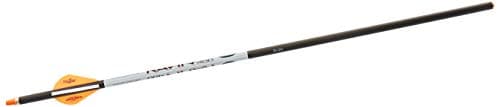
Crossbow marketing spends its breath on the bow — but every shot you will ever take is delivered by a roughly $10-to-$22 carbon tube that gets a fraction of the attention. Bolts (the industry increasingly says crossbow arrows; the words mean the same thing here) determine group size, penetration, and — through one spec most buyers never check — whether your bow is even safe to fire. That spec is the nock, and we will spend real time on it below, because putting the wrong nock on a 400-FPS crossbow is how strings get cut and bows blow up.
This is a research-based guide: published specs and manufacturer fitment rules, not invented range sessions. Three criteria first — straightness, weight, nock — then five picks organized by the bow you actually own.
The best crossbow bolts of 2026 at a glance
| Bolt | Price & buy | Length & straightness | Nock | Best for |
|---|---|---|---|---|
| Black Eagle Executioner | $58.85Buy | 20 or 22 in, ±.003 or ±.001 | Half-moon + flat included | Most full-size crossbows |
| Ravin .001 Premium | $109.99Buy | Per Ravin model, ±.001 | Ravin clip-on (proprietary) | Ravin crossbows only |
| TenPoint EVO-X CenterPunch16 | $119.99Buy | 16 in, ±.001 | Alpha-Nock HP | TenPoint-family compacts |
| CenterPoint 20-in Carbon | View at Amazon | 20 in, straightness not published | CenterPoint-fitted | CenterPoint package bows |
| Carbon Express PileDriver | View at Amazon | 20 or 22 in, ±.004 | Universal moon + C-nock | Heaviest here, 442 gr |
Prices shown are from Amazon as of October 10, 2026 and change often — the button always goes to the current listing. Some links may earn us a commission at no extra cost to you.
One rule overrides every row in that table: confirm the nock type and the minimum arrow length in your crossbow's manual first, then buy within what it allows. Fitment is not a preference here — it is the safety spec, and the nock section explains why.
How we picked
Crossbow arrows are a fitment purchase before they are a quality purchase, so the shortlist was built in that order:
- Fitment first.Each pick is matched to the bows it is actually specified for — nock type and published minimum arrow length — rather than ranked as if any bolt fits any bow.
- Published specs only.Every straightness tolerance, grain weight, insert weight and length below comes from the manufacturer's own current product page (all listed in Sources at the bottom). We have not invented range sessions or group sizes, and we do not quote a spec a maker declines to publish — where straightness is unpublished, the table says so instead of guessing.
- Buyable today. Each pick is a current product you can order through the links on this page, not a discontinued model.
- Nock options where the bow allows them. For the open middle of the market we favour arrows that ship with more than one nock style, because that is what lets you satisfy your manual instead of hoping the factory guessed right.
- Honest cons on every pick— including the ones that cost us a sale: price per arrow, closed systems, loose tolerances.
Which bolt for your crossbow
Nearly every bolt question is really a question about which bow you own. Find your row:
| If you shoot | Buy | Why |
|---|---|---|
| A Ravin crossbow | Ravin .001 Premium | Ravin's clip-on nock is proprietary - the bow is built and warrantied around Ravin's own arrow-and-nock system. |
| A TenPoint, Horton or Wicked Ridge bow | EVO-X CenterPunch16 | Alpha-Nock HP fitment is required. Check your model's minimum length first: 20 in for most, 22 in for the Vapor, 18 in for the Wicked Ridge Rangers, and the 16 in CenterPunch16 only on the compacts it was built for. |
| A CenterPoint package bow | CenterPoint 20-inch carbon | Factory nock, plus the 400-grain-with-a-100-grain-point spec the bow was tuned and warrantied with. |
| A CenterPoint CP400 | CP400 Select arrows | The CP400 takes its own dedicated nock, which CenterPoint also sells on its own - proof of how model-specific nock fitment really is. |
| Most other full-size crossbows | Black Eagle Executioner | 20 and 22 inch, .003 or .001, spine-matched, and both half-moon and flat nocks in the box so you can fit exactly what your manual names. |
| Big-bodied game, penetration over speed | Carbon Express PileDriver | 442 grains finished with a 100-grain point - the heaviest arrow on this page, and the one that trades trajectory for momentum. |
| High-volume practice | The ±.003 version of whatever your bow takes | Same fitment, looser tolerance, less money per shaft you lose to a stump: Ravin's .003 arrows list at $94.99 against $129.99 for the .001 Premium. |
Why the bolt is half your accuracy
A modern crossbow is a machine rest compared to a compound bow — no release-hand flinch, no draw-length variance. That consistency means the arrow becomes the biggest remaining variable. A crooked shaft, a heavy-side spine, or a nock that seats the string off-center shows up directly as a flyer, and at 400-plus FPS every flaw is magnified. Upgrading from loose-tolerance bolts to match-grade ones is, dollar for dollar, the cheapest accuracy upgrade in crossbow hunting — usually cheaper than a scope and far cheaper than a new bow. It also protects the money you spent on heads from our broadheads guide: no broadhead flies well from a bad arrow.
Straightness and spine: the accuracy specs
Two numbers describe how true a carbon shaft is:
- Straightness tolerance is how far the shaft deviates from perfectly straight, in inches. The industry sells three grades: ±.006 (bargain), ±.003 (standard hunting), and ±.001 (match grade). At 50 yards from a fast bow, the step from .006 to .003 is visible in your groups; the step from .003 to .001 matters most to long-range shooters and to anyone whose bow shoots better than they can hold.
- Spineis stiffness — how much the shaft flexes under launch force. Crossbow bolts are built far stiffer than vertical-bow arrows because a 200-pound crossbow slams the arrow from behind. You do not choose a spine number the way compound shooters do; you choose the length and model your crossbow maker specifies, and the correct spine comes with it. What matters is consistency: premium makers spine-match shafts within a pack so every bolt flexes identically. That is a real feature, not marketing.
Practical translation: hunt with .003 or better, and buy .001 when the price gap is small or the shots are long. Weight-matching (grains within a pack) rides along with the better grades — TenPoint, for example, weight-sorts its premium packs to within about a grain.
Total weight: the speed-versus-punch dial
Finished bolt weight (shaft, insert, fletching, nock, plus a typical 100-grain point) is the one spec you can tune to your hunting. The crossbow standard lands around 400 grains finished, and the trade runs both directions:
| ~370-400 gr | Fastest, flattest trajectory - the spec most package bows are rated and scoped for. Fine for whitetails at normal ranges. |
|---|---|
| ~400-450 gr | The sweet spot for hunting: modestly slower, noticeably quieter, more momentum for penetration. |
| 450+ gr | Heavy hitters for elk-class game and bone - deepest penetration, most drop. Re-verify your scope's speed dial. |
Length: the number your manual decides
Arrow length is not a preference and not a tuning variable — it is a published minimum per crossbow model, and going under it is a dry-fire risk in the same family as the nock mistake below. TenPoint publishes its minimums plainly, and they are a good illustration of how much they vary inside one brand:
| 20 in | The minimum for most TenPoint, Wicked Ridge and Horton Crossbow Innovations bows - and the length most of the market is built around. |
|---|---|
| 22 in | The minimum for the TenPoint Vapor. |
| 18 in | The minimum for the Wicked Ridge Ranger, Lady Ranger and Ranger X2. |
| 16 in | Not a general-purpose length. TenPoint developed the 16-inch CenterPunch16 specifically for its ultra-compact bows that require a shorter arrow - the Havoc RS440 and Siege RS410. |
Other makers set their own numbers, which is why "20-inch bolts" is a market convention rather than a rule. Two practical consequences: a 16-inch arrow is a system part, not an upgrade you can drop into a full-size bow, and a shorter arrow than your manual allows can sit in front of the rail or the retention spring in a way the bow was never designed for. Look the number up once, write it on the inside of your case lid, and buy to it forever.
Nock compatibility: the safety spec everyone skips
Here is the part of bolt buying that is genuinely about safety, not preference. The nock is the interface between a string moving at hundreds of feet per second and the arrow it is supposed to push. If the string can slip over or under the nock — because the nock is the wrong shape for that bow, or rotated wrong — the string skips the arrow and the bow effectively dry-fires: strings cut, cables derailed, limbs cracked, and occasionally injury. Crossbow makers are strict about nock type for exactly this reason, and using the wrong one voids most warranties.
- Half-moon (moon) nockshave a groove that must be indexed to the string — the most common hunting nock. Many budget and mid-range bows specify them.
- Flat nocks are simple flat backs, favored by some makers (and required by certain models) because there is no groove to mis-index.
- Capture and proprietary nocks— TenPoint's Alpha-Nock, half-moon capture designs, CenterPoint's CP400 nock — wrap or cradle the string. They must be used where specified: TenPoint explicitly requires its own nock system.
- Ravin's clip-on nock is fully proprietary: Ravin arrows and nocks work only as a system, and Ravin bows must only be fired with Ravin-spec components.
Inspect every bolt before you shoot it
A carbon shaft that has hit a rock, clipped a rail, or been pulled from a target the wrong way can carry a crack you cannot see. Fired, it can come apart at the shot. Both CenterPoint and TenPoint publish the same procedure, and it takes about five seconds per arrow:
- Grip the shaft with both hands between the point and the nock, then gently twist, flex and squeeze it and listen for cracking. Rotate and repeat around the full circumference of the shaft.
- Look as well as listen— TenPoint specifically says to check carbon shafts for hairline fractures or cracks, and to check that nothing is bent and the nock is undamaged.
- Any sign of damage means the arrow is finished.CenterPoint's wording is unambiguous: never use an arrow or bolt with any sign of damage, because a cracked or split shaft can fail catastrophically on release. TenPoint warns that a damaged carbon shaft can shatter and scatter fragments.
For Ravin bows: Ravin .001 Premium Match-Grade Arrows
If you own a Ravin, this section is short because your choice is made: Ravin bows are engineered — and warrantied — around Ravin's own arrow-and-clip-nock system. Within that system, the smart buy is the .001 Premium line at $129.99 per six: match-grade ±.001 straightness, pure-carbon construction, and the clip nock that locks onto the string of a bow whose arrow rides a frictionless rail rather than a flight groove. A lighted version runs the same $129.99, and the standard .003 arrows at $94.99 are the value option for practice volume.
The honest cons are the ones every Ravin owner already knows: roughly $16-to-$22 per arrow hurts when a stump wins, and you cannot shop around — third-party shafts with clip nocks exist but put your warranty and, more importantly, your dry-fire risk on you. Budget arrows into the cost of Ravin ownership; we said the same in our best crossbow for the money guide.
Premium pick: TenPoint EVO-X CenterPunch16
For TenPoint and Wicked Ridge shooters — and as a benchmark for what a no-compromise crossbow arrow looks like — the EVO-X CenterPunch16 is the reference. Each 16-inch shaft is inspected to ±.001, packs are weight-matched within about one grain, and the finished arrow weighs410 grains, within a grain, with a heavy 92-grain brass insert driving front-of-center to 17 percent— a recipe for deep penetration and boringly repeatable groups. The Alpha-Nock HP, with its deep string groove and elongated ears, is TenPoint's answer to the nock-safety problem above: the string cannot easily ride over or under it.
The honest cons: they are premium-priced, and the 16-inch length plus Alpha-Nock fitment means they belong on the TenPoint-family bows they were designed for — this is a system arrow, not a universal one. If your bow takes them, they are the best arrows it can eat.
Best all-around: Black Eagle Executioner
For the huge middle of the market — full-size crossbows from Barnett, Killer Instinct, Excalibur-adjacent brands, and older bows of every stripe — the Black Eagle Executioner is the enthusiast favorite, and the reason is flexibility done right. Shafts come in 20 and 22 inches, in your choice of ±.003 (value) or ±.001(match) straightness, spine-matched, with stout 3-inch vanes — and, crucially, Black Eagle ships them with both half-moon and flat nockswith brass inserts, so you can fit the exact nock your manual demands instead of hoping the factory guessed right. Bare arrows run about 323–326 grains, putting a finished bolt with a 100-grain head right in the 425-grain hunting sweet spot.
The honest cons: no capture or proprietary nock options means they are wrong for TenPoint and Ravin bows, and the price of the .001 version creeps toward CenterPunch territory. For everyone else, this is the best blend of tolerance, tunability, and price on the page — Black Eagle lists fletched packs from $49.99.
For CenterPoint bows: CenterPoint carbon arrows
CenterPoint's house arrows are the low-drama answer for the brand's enormous installed base. The standard 20-inch, 400-grain carbon six-pack runs $59.99 with Blazer-style vanes and the factory nock your Amped, Sniper, or Sinister was tuned and warrantied with; a three-pack with lighted nocks lists at $69.99, and CP400 Selectarrows ($49.99 per six) serve the CP400 with its own dedicated nock — CenterPoint even sells those nocks separately, which tells you how model-specific nock fitment really is.
The honest cons: straightness tolerance is not published, so treat these as solid factory arrows rather than match-grade — hunters chasing tighter 50-yard groups from a CenterPoint should step up to an Executioner fitted with the same nock style. But as spare-and-replacement ammo that keeps the warranty conversation simple, buying the bow-maker's arrow is the sensible default.
Budget heavy hitter: Carbon Express PileDriver
The PileDriver Crossbolt is the classic answer to a specific question: how do I get heavy, hard-hitting, tough bolts without spending Ravin money? At 442 grains finished with a 100-grain point, the 20-inch PileDriver is the heaviest arrow here — it gives up a little speed and drop in exchange for momentum that punches through deer and keeps shooting after abuse that cracks lighter shafts. The current packs use an inserted moon-nock universal system(with capture-style C-nocks available for bows that need them), and six-packs routinely street-price in the $40s — cheap enough to practice with the same bolt you hunt.
The honest cons: ±.004 straightness is the loosest tolerance on this page, so expect hunting accuracy rather than match accuracy, and the extra weight means your speed-dial scope needs re-verifying (our sight-in guide covers how). As a budget workhorse for whitetail ranges, it has earned two decades of loyalty honestly.
The bottom line
Buy bolts in this order: the nock your manual requires, then a finished weight at or above your bow's minimum (heavier for penetration, lighter-but-legal for trajectory), then the best straightness you can afford— .003 to hunt, .001 to reach. In practice: Ravin owners buy Ravin .001 Premium, TenPoint-family owners buy CenterPunch16, CenterPoint owners restock with CenterPoint's own carbons, and everyone else starts with the Black Eagle Executioner — or the Carbon Express PileDriver when budget and bone-crushing weight top the list. Then screw on a head from our broadheads guide and verify the whole system at the ranges you actually hunt.
Frequently asked questions
What are the best crossbow bolts in 2026?
There is no single winner, because bolt choice is a fitment decision before it is a quality one. For the broad middle of the market our top pick is the Black Eagle Executioner: 20 or 22 inch, your choice of ±.003 or ±.001 straightness, spine-matched, and supplied with both half-moon and flat nocks so you can fit whatever your manual specifies. Ravin owners buy Ravin's .001 Premium arrows, TenPoint-family owners buy the 410-grain EVO-X CenterPunch16, CenterPoint owners restock with CenterPoint's own 20-inch carbons, and hunters who want maximum penetration take the 442-grain Carbon Express PileDriver.
What length crossbow bolts do I need?
Whatever length your crossbow's manual states as its minimum - it varies by model even inside one brand. TenPoint publishes a 20-inch minimum for most TenPoint, Wicked Ridge and Horton crossbows, 22 inches for the TenPoint Vapor, and 18 inches for the Wicked Ridge Ranger, Lady Ranger and Ranger X2. Its 16-inch CenterPunch16 arrow is not a general-purpose short bolt: TenPoint developed it specifically for ultra-compact bows that require it, the Havoc RS440 and Siege RS410. Never go under your model's published minimum.
How often should I replace crossbow bolts?
There is no shot count - you replace a bolt when it fails inspection, and you inspect before every use. CenterPoint's published procedure is to grip the shaft firmly with both hands between the point and the nock, then gently twist, flex and squeeze it while listening for cracking, rotating around the whole shaft. TenPoint adds that you should check carbon shafts for hairline fractures and confirm nothing is bent and the nock is undamaged. Any sign of damage and the arrow is done: CenterPoint says never use an arrow with any sign of damage because it can fail catastrophically on release, and TenPoint warns a damaged carbon shaft can shatter.
Are carbon or aluminum crossbow bolts better?
TenPoint, which sells both, declines to name a universal winner - and that is the honest answer. Its comparison gives aluminum a lower price, a stiffer spine and easy repair with the right equipment, but notes aluminum can bend in practice or on a harvest and is very difficult to straighten again. Carbon weighs less for faster, flatter shooting, does not bend the way aluminum does so it is far less likely to develop accuracy problems from repeated shooting, but costs more and is harder to repair. TenPoint's conclusion: buy the bolt that fits your budget, your repair preferences and gives you the most confidence in the shot.
Do I need lighted nocks on crossbow bolts?
They are a convenience, not a performance part - they make a hit easy to see and a bolt easy to find in low light, which helps you read the shot and recover the arrow. The cost is small but real and it varies by brand: Ravin charges the same $129.99 for lighted and non-lighted .001 Premium arrows and sells lighted nocks separately for $44.99, while CenterPoint's 3-pack with lighted nocks lists at $69.99 against $59.99 for a 6-pack of standard arrows. Two cautions: a lighted nock must still be the nock type your bow requires, and lighted-nock legality varies by state, so check your current regulations before hunting with them.
What is the difference between a crossbow bolt and a crossbow arrow?
Nothing, in modern usage - they are two names for the same projectile. Historically a bolt was a short, unfletched quarrel, and some manufacturers (like Ravin and TenPoint) prefer 'arrow' for today's fletched carbon shafts, while retailers still say 'bolt.' Buy by length, weight, straightness, and nock type, not by which word the box uses.
What straightness tolerance do I need in crossbow bolts?
Hunt with ±.003 or better; buy ±.001 match-grade if you shoot past 40 yards or want the bolt to never be the excuse. The budget ±.006 grade shows up in group sizes from fast bows. Consistency features that ride along with better grades - spine-matching and weight-matching within a pack - matter as much as the straightness number itself.
Why does crossbow nock type matter so much?
Because the wrong nock can let the string slip over or under the arrow at the shot, which is effectively a dry fire - it can cut the string, derail cables, crack limbs, and injure the shooter. Half-moon, flat, capture, Alpha-Nock, and Ravin clip-on nocks are not interchangeable. Your crossbow manual specifies exactly one acceptable type; using anything else is unsafe and usually voids the warranty.
How heavy should my crossbow bolts be?
Around 400 grains finished (including a 100-grain point) is the standard most bows are rated and scoped for. 400-450 grains is the hunting sweet spot - quieter and deeper-penetrating for a modest trajectory cost - and 450+ grain setups like the 442-grain Carbon Express PileDriver favor penetration on big-bodied game. Never go below the manufacturer's stated minimum arrow weight: that risks dry-fire damage.
Can I use any brand of bolt in my Ravin or TenPoint crossbow?
Treat them as closed systems. Ravin bows are designed and warrantied only around Ravin's proprietary clip-nock arrows. TenPoint requires its Alpha-Nock system, as on the EVO-X CenterPunch16 arrows. Most other full-size crossbows accept standard 20-22 inch bolts - like the Black Eagle Executioner, which ships with both half-moon and flat nocks - as long as you fit the exact nock type and meet the minimum weight your manual specifies.
Sources
- Ravin - arrows and nocks lineup and pricing
- TenPoint - EVO-X CenterPunch16 premium carbon arrows
- Black Eagle Arrows - Executioner crossbow arrows
- CenterPoint Archery - crossbow arrows
- Carbon Express (Feradyne) - PileDriver Crossbolt
- Lancaster Archery Supply - PileDriver Crossbolt published specs (442 gr, .348 in)
- TenPoint - minimum arrow length by crossbow model
- TenPoint - should I inspect my arrows for damage prior to each shot?
- TenPoint - are the best crossbow hunting bolts aluminum or carbon?
- CenterPoint Archery - arrow / bolt safety and inspection
Keep reading
Gearing up before your next hunt?
See how we evaluate gear, then dig into the reviews and buying guides — written without inventory to sell.