Buying Guide
Best Broadheads for Crossbows: What 400 FPS Changes
A broadhead that flies perfectly from a 300-FPS compound can fly sideways from a 450-FPS crossbow. Here is how speed rewrites the fixed-versus-mechanical decision - and five heads built to survive it.
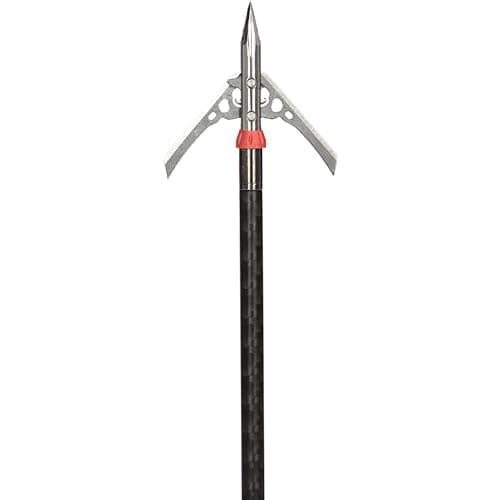
Broadhead advice has a shelf life, and crossbow speed is what expired it. Most of the received wisdom about fixed versus mechanical heads was written when 300 FPS was fast. Today an ordinary hunting crossbow shoots 400 FPS and flagships push 450-plus — and at those speeds, small aerodynamic flaws become big ones. Blades act like rudders. Heads that were never tested past 350 FPS can open mid-flight. The broadhead question is no longer "fixed or mechanical?" — it is "what is rated to survive my speed?"
This guide is research-based: we lean on manufacturer speed ratings, published specs, and the consistent patterns in owner and editorial testing rather than claiming range days we have not had. The five picks below all have a specific job, and every one of them has an honest weakness we will tell you about.
The speed problem, in plain terms
Two things go wrong when you push a broadhead past roughly 400 FPS. First, steering: any fixed blade surface ahead of the fletching acts like a canard. The faster the arrow, the more a tiny misalignment or a puff of crosswind leverages the whole arrow off line — which is why big fixed blades that grouped fine at compound speeds can string shots unpredictably from a fast crossbow, and why point of impact drifts away from field points as speed climbs.
Second, premature deployment: mechanical blades are held closed by o-rings, collars, clips, or springs, and the violence of a 400-plus-FPS launch — plus air pressure against the blade edges in flight — can pop weak retention systems open early. A mechanical that deploys at launch flies like a badminton birdie. That is why the heads on this page either come from makers who publish high-speed ratings or use rear-deploying designs where airflow pushes the blades closed in flight rather than open.
Fixed vs mechanical at crossbow speeds
Both styles kill deer cleanly every season. The trade-offs just shift with speed:
- Mechanical headsfly nearly like field points because the blades hide in the ferrule during flight — a bigger advantage the faster you shoot. They also cut wider (2 inches and up). The costs: retention must be speed-rated, deployment eats a little energy, and big cuts penetrate less on heavy bone. At 400-plus FPS a modern crossbow has energy to spare, which is exactly why mechanicals have become the default crossbow recommendation.
- Fixed headshave no moving parts to fail, penetrate deepest, and shrug off shoulder bone. The cost is flight: at high speed only compact, well-machined fixed heads — think 1 to 1.125-inch cuts with short profiles — keep field-point accuracy. Choose fixed if you hunt big-bodied game, expect quartering shots, or simply refuse to trust moving parts; just keep the head small and spin-test every arrow.
Weight, cut, and retention: the three specs that matter
Once you have picked a style, three numbers separate the good heads from the gimmicks:
| Weight (grain) | 100 grains is the crossbow standard and what package bows are tuned for; 125 shifts balance forward for penetration. Never go below your crossbow maker's minimum total arrow weight. |
|---|---|
| Cutting diameter | Roughly 1-1.125 in for fixed at speed; 1.5-2 in for mechanicals. Bigger holes bleed better, smaller holes punch deeper - pick your priority. |
| Blade retention / speed rating | The crossbow-specific spec: look for an explicit 400+ FPS rating, rear-deploy geometry, or crossbow-specific SKUs. Compound-era retention is the #1 failure at crossbow speed. |
One more quiet factor: blade thickness. Heavier 0.035-inch-class blades survive bone and stay reusable; whisper-thin blades cut beautifully and bend the first time they meet a rib at 150 ft-lbs. Every pick below uses blades on the stout end for its class. And remember the broadhead is only half the flight equation — a crooked or underspined arrow ruins the best head, so pair this guide with our roundup of the best crossbow bolts.
The picks at a glance
| Broadhead | Type | Weight | Cut | Speed story | Typical price |
|---|---|---|---|---|---|
| Rage Hypodermic Crossbow NC | Mechanical (rear-deploy) | 100 gr | 2 in | Crossbow-specific, no collar | ~$40-50 / 3 |
| SEVR Titanium 2.0 | Mechanical (rear-deploy) | 100 or 125 gr | 2 in | Rated for fastest crossbows | Sold per head, premium |
| Ravin Titanium | Mechanical (rear-deploy) | 100 gr | 2 in | Built for Ravin speeds | ~$99.99 / 3 |
| Slick Trick Magnum 100 | Fixed, 4-blade | 100 gr | 1.125 in | Compact profile flies at speed | ~$40-50 / 4 |
| Muzzy Trocar HBX | Hybrid (fixed + mech) | 100 gr | 1 in fixed + 1.625 in mech | Crossbow-specific hybrid | ~$30-40 / 3 |
Prices are typical street ranges as of 2026 — broadhead pricing moves constantly, so verify before buying.
Best overall: Rage Hypodermic Crossbow NC
The Hypodermic is the best-selling mechanical in bowhunting for a reason, and the Crossbow NC version is the one tuned for this job: NC stands for no collar— blade retention comes from a finger-lock design in the ferrule rather than the plastic shock collars that crossbow shooters used to lose or crack. You get the signature hypodermic-needle tip, a 2-inch cut from two rear-deploying 0.035-inch blades, and the field-point-like flight that made the Hypodermic famous, in a 100-grain head built for crossbow launch forces.
The honest cons: two-blade heads leave slit-shaped wounds that can close up more than three-blade cuts, replacement blades cost real money, and like all wide mechanicals it gives up penetration on heavy shoulder bone. But as a default for a 380-to-450-FPS crossbow aimed at whitetails, it is the pick with the deepest track record. Check the Rage Hypodermic Crossbow NC price on Amazon.
Premium pick: SEVR Titanium 2.0
SEVR heads are what a mechanical looks like when it is designed from scratch in the high-speed era. The Titanium 2.0 pairs a one-piece machined titanium ferrule with rear-deploying blades that pivot if they strike bone at an angle — the blade gives instead of breaking — and SEVR rates its heads for the fastest crossbows sold. The killer feature is Practice Lock: a set screw locks the blades shut so you can practice with the exact head you will hunt with, then swap in fresh blades for the season. That converts broadhead verification from an expense into a habit.
Trade-offs: SEVR sells direct-to-consumer per head at premium prices, so a full quiver costs more than a boxed three-pack of anything else here, and the pivoting-blade design, while clever, has more moving parts than a fixed head purist will ever accept. If you want the best-engineered mechanical for a 450-plus-FPS bow — a Ravin R500-class machine, say — this is it.
For Ravin owners: Ravin Titanium Broadheads
Ravin is the rare crossbow maker that engineers its own broadheads, and if you shoot a Ravin, the logic is hard to argue with: these 100-grain, rear-deploying heads were designed around the launch forces and arrow system of the fastest production crossbows made, with a 2-inch cut, a single-piece ferrule, and an internal spring clipholding the blades — no o-rings or collars to degrade — and Ravin rates their accuracy to 125 yards. The flagship Titanium version uses a Ti6AL4V ferrule at $99.99 per three; the identical-geometry Steel version runs $74.99 and gives up nothing but a few grams of ferrule exotica.
The honest cons: they are priced like Ravin products, and while they shoot fine from any crossbow that takes 100-grain heads, non-Ravin owners can buy equal performance for less elsewhere on this page. Ravin shooters, though, get a matched system — bow, arrow, and head engineered together — which pairs naturally with the match-grade arrows in our bolts guide.
Best fixed blade: Slick Trick Magnum 100
If you want zero moving parts, the Slick Trick Magnum is the fixed head that best survives crossbow speed. The reason is geometry: a short, compact ferrule and a modest 1.125-inch, four-blade cut give the wind almost nothing to steer, which is why Slick Tricks are the fixed heads most often reported to match field-point impact from fast bows. The four 0.035-inch stainless bladesproduce a nasty plus-shaped wound totaling about 2.25 inches of cutting edge, and the whole head is famously tough — bone hits bend blades, you replace the blades, the ferrule soldiers on.
The honest cons: a 1.125-inch hole is half what the mechanicals here cut, so blood trails can be shorter on marginal hits, and even this head deserves a paper-tune and a 50-yard verification before hunting — fixed does not mean foolproof at 430 FPS. For quartering shots, elk-class game, or hunters who simply sleep better with solid steel, this is the pick.
Best hybrid: Muzzy Trocar HBX
The Trocar HBX is the have-it-both-ways head, and it is built specifically for crossbows. A solid-steel Trocar chisel tip leads two fixed 1-inch blades; behind them, two mechanical blades deploy to 1.625 incheson impact. If the mechanicals somehow fail, you still have a bone-splitting fixed head in the animal — that is the hybrid insurance policy. Blades are 0.035-inch stainless, the head weighs the standard 100 grains, and street pricing typically undercuts the pure mechanicals on this page.
The honest cons: hybrids present more blade surface in flight than a closed mechanical, so at the very top of the speed range (450-plus FPS) they demand more careful tuning than a Hypodermic or SEVR — verify your groups. And the two-stage cut, while wicked, is not quite the single clean 2-inch slot a big mechanical leaves. As a budget-friendly do-it-all for bows in the 350-to-430-FPS band, it is the value play.
The bottom line
For most crossbow hunters, buy the Rage Hypodermic Crossbow NC and verify it flies with your bolts. Shooting a genuine speed demon, or want to practice with your actual heads? Spend up for the SEVR Titanium 2.0. Ravin owners should keep the system matched with Ravin's own heads. If you distrust moving parts or hunt heavy bone, the Slick Trick Magnum is the fixed head that still flies at speed, and the Muzzy Trocar HBXsplits the difference for less money. Whichever you choose, the broadhead is a system component — match it to straight, correctly nocked arrows (our crossbow bolts guide covers that) and to a bow you have actually verified at the ranges you hunt.
Frequently asked questions
Are fixed or mechanical broadheads better for a crossbow?
At modern crossbow speeds, mechanicals are the default: their blades stay hidden in flight, so they fly close to field points even at 400+ FPS, and crossbows have abundant energy to fund their wider 2-inch cuts. Fixed heads win for penetration, heavy bone, and reliability - but at speed only compact designs around 1 to 1.125 inches, like the Slick Trick Magnum, reliably hold field-point accuracy.
What broadheads work with crossbows over 400 FPS?
Use heads with speed-rated retention: rear-deploying mechanicals designed for crossbows, such as the Rage Hypodermic Crossbow NC (no-collar finger lock), SEVR Titanium 2.0 (rated for the fastest crossbows), and Ravin's own broadheads, or compact fixed heads like the Slick Trick Magnum. Compound-era mechanicals with light o-ring retention are the classic failure at these speeds - they can open in flight.
What grain broadhead should I shoot from my crossbow?
100 grains is the standard crossbow weight and what nearly all package bows and factory bolts are tuned around. 125 grains adds front-of-center for penetration if your arrows support it. The safety-critical rule: never let your total arrow-plus-head weight fall below your crossbow manufacturer's stated minimum, which can damage the bow and void the warranty - it behaves like a partial dry fire.
Do I need to practice with my actual broadheads?
Yes - at crossbow speeds point of impact routinely differs between field points and broadheads, and between broadhead models. Verify at 30 and 50 yards before hunting. SEVR's Practice Lock feature lets you lock the blades closed and practice with the same head you hunt with; for other brands, buy an extra pack or the maker's matched practice heads and confirm your groups overlap field points.
Will Ravin broadheads work in a non-Ravin crossbow?
Mechanically yes - they are standard-thread 100-grain heads and will fit any bolt that accepts screw-in points. They are engineered and priced around Ravin's high-speed arrow system, though, so non-Ravin shooters usually get equal performance for less from a Rage, SEVR, or Muzzy. For Ravin owners the appeal is a factory-matched bow, arrow, and broadhead system rated to 125 yards.
Sources
Keep reading
Gearing up before your next hunt?
See how we evaluate gear, then dig into the reviews and buying guides — written without inventory to sell.