Buying Guide
Best Cellular Trail Cameras (2026)
Real-time scouting without spooking your ground - here is how cellular cameras actually work, what to ignore on the spec sheet, and five cameras worth your money.
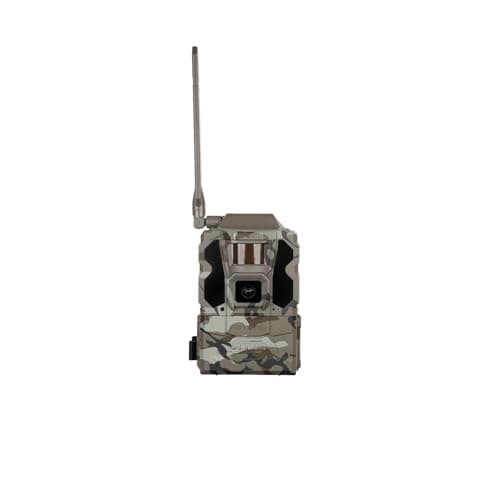
A cellular trail camera sends its photos to your phone the moment it takes them, which changes how you scout: instead of walking in to swap SD cards — and dragging your scent all over the property every time — you get intel delivered while you sit at home. Fewer intrusions into a hunting area means less pressure on the deer and more honest information about what is actually moving. That is the whole pitch, and it is a good one.
The catch is that the category is full of spec-sheet noise — inflated megapixel numbers, confusing plan tiers, and coverage worries that do not hold up. This guide explains how these cameras work, which specs matter and which to ignore, and then names five cameras worth buying. Prices are approximate as of 2026; verify current pricing before you buy.
How cellular trail cameras work
Inside a cellular trail camera is a SIM card and a cellular modem, just like your phone. When the camera's motion sensor triggers, it captures a photo and transmits it over the 4G/LTE network to an app on your phone. Because it uses the cellular network, it needs a paid data plan— that is a recurring cost on top of the camera itself, and it is the part first-time buyers most often forget to budget for.
The benefit that justifies the plan is real-time scouting with far fewer physical checks. You learn which bucks are using a food plot, what time they show up, and how that shifts week to week — all without repeatedly walking in to pull cards and educating the deer to your presence. For the payoff to matter, though, the camera has to trigger fast, see far enough, and send images clear enough to identify animals. That is what the buying criteria are about.
What to look for
Beyond "does it send to my phone," a handful of specs actually change your experience in the field:
- Trigger speed.How fast the camera fires after it detects motion. The top cameras are quick — the Moultrie Edge 3 and Spypoint Flex are rated around 0.5 seconds, and the Tactacam X-Pro sensor comes in under 0.5 — which is the difference between a centered animal and an empty frame with a tail leaving it.
- Detection range. How far out the sensor picks up movement. The best cameras reach roughly 80-100 feet, which is plenty for most food plots, feeders, and trail pinches.
- Battery and solar. Most cellular cameras run on 8-16 AA batteries, and lithium AAs are strongly recommended— they last far longer and handle cold better than alkaline. Many models also offer a solar panel or built-in solar to stretch or eliminate battery swaps, which is worth it on remote cameras you rarely visit. Panels are model-specific rather than universal — see our trail camera battery and solar panel guide for which one fits.
- Plan cost.Recurring data plans are tiered, and they vary a lot by brand — Tactacam runs roughly $5-13 per month, Spypoint from free up to about $15, Stealth Cam about $5-20, and Moultrie about $10-35. Match the tier to how many photos your camera realistically sends, and factor the yearly cost into the true price of the camera.
The megapixel myth
Here is the single most misleading number on a trail-camera box. Manufacturers advertise resolutions like 16, 24, even 40 megapixels — but those figures are almost always interpolated, meaning the camera's software upscales the image after the fact. The native sensor that actually captures the light is typically only around 4-5 megapixels. Interpolation cannot add detail that the sensor never recorded; it just makes a bigger file out of the same information.
Carrier coverage and data plans
A common misconception stops people from buying: "my phone is on Verizon, so I need a Verizon camera." That is not how it works. The camera has its own SIM and does not need to match your phone's carrier— what matters is which network has the strongest signal at the camera's location, which may be totally different from the carrier you use at home.
Better still, many modern cellular cameras use a dual-SIM or auto-carrier setup that automatically connects to whichever network is strongest at the site — the Spypoint Flex is a good example. So choose your camera on its features and plan, then let it find the best signal. If you have a spot with genuinely poor coverage across all carriers, a model with an external antenna option can help, but for most properties a dual-carrier camera simply handles it.
| Does the carrier need to match my phone? | No - pick the camera with the strongest signal at the site |
|---|---|
| Dual-SIM / auto-carrier | Auto-selects the strongest network - common on newer models |
| Plan is required | Yes - a paid data plan is on top of the camera price |
| Free option | Spypoint offers a free tier (about 100 photos per month) |
The picks at a glance
Five cellular cameras that cover the main needs, from a reliable best-overall to a live-video specialist. All prices approximate as of 2026 — verify current pricing and plan costs before buying.
| Camera | Best for | Approx. price | Data plan | Standout |
|---|---|---|---|---|
| Tactacam Reveal Ultra | Best overall | ~$200 | $5-13/mo | Reliability and support |
| Spypoint Flex | Best budget | Under $150 | Free-$15/mo | Free tier, dual-SIM |
| Moultrie Edge 3 | Best value | ~$99 | $10-35/mo | onX integration, 0.5s trigger |
| Stealth Cam Deceptor Max | Best night photos | ~$120 | $5-20/mo | Night image quality |
| Spartan GoLive 2 | Best live video | ~$330 | Varies | On-demand live video |
Best overall: Tactacam Reveal Ultra
Outdoor Life named the Tactacam Reveal Ultra its Best Overall cellular trail camera, and the reasons are the ones that matter over a full season: it is reliable, produces good image quality, and is backed by customer support hunters actually praise — not a given in this category. It runs about $200, with plans in the $5-13 per month range. If you want a camera that just works and you would rather not gamble, this is the safe, sensible pick.
Who it's for: the hunter who wants dependable, no-drama performance and responsive support, and is willing to pay a fair mid-range price for it.
Best budget: Spypoint Flex
The Spypoint Flex is the camera to beat on price. It typically runs under $150, and it is one of the few cellular cameras with a genuine free data plan— about 100 photos per month at no cost, which is enough to run a camera casually without a subscription. It also uses dual-SIM auto-carrier technology to connect to the strongest available network automatically, so coverage worries mostly disappear. Its 0.5-second trigger speed keeps it competitive with pricier cameras.
Who it's for: the budget-conscious buyer, anyone running several cameras who wants to keep recurring costs down, and first-timers who want to try cellular scouting without committing to a monthly plan.
Best value: Moultrie Edge 3
The Moultrie Edge 3 packs a lot of camera into roughly $99. It pairs a fast 0.5-second trigger with a strong companion app, and its integration with onXmapping is a genuinely useful touch — you can see camera locations and detections on the same map you use to plan hunts. Plans run about $10-35 per month depending on volume. For the money, it is one of the easiest cameras to recommend.
Who it's for: the value-minded hunter who wants modern features and good software without a premium price, especially anyone already using onX to map their property.
Best night photos: Stealth Cam Deceptor Max
A lot of the deer you care about move after dark, so night image quality is not a nice-to-have — it is often the whole point. The Stealth Cam Deceptor Max, around $120, stands out specifically for its night photos, capturing clearer low-light images than many cameras in its class. Plans run roughly $5-20 per month. If your best intel comes in the dark, this is the camera built for it.
Who it's for:hunters who need to identify bucks moving at night — which, as our guide to when deer move explains, is when a lot of mature-buck activity actually happens.
Best live video: Spartan GoLive 2
The Spartan GoLive 2 is the specialist of the group. At around $330 it is the most expensive camera here, and what you pay for is on-demand live video— the ability to pull up a real-time feed from the camera rather than waiting on triggered stills. That is a niche capability, but for scouting a specific food source or checking a spot before you commit to a sit, nothing else on this list does it.
Who it's for: the serious scout who wants live eyes on a key location and will pay a premium (in both camera and data cost) for it. For most hunters, the triggered-photo cameras above are the smarter buy.
The bottom line
Cellular cameras are the most setup-sensitive of the lot, because every false trigger costs battery and plan data. See how to set up a trail camera before you hang one.
For most hunters, the Tactacam Reveal Ultrais the smartest all-around buy — reliable, good images, and support that stands behind it. To keep costs down, the Spypoint Flex and its free plan are hard to beat, while the Moultrie Edge 3 is the value champ with excellent software. Reach for the Stealth Cam Deceptor Max when night photos are your priority, and the Spartan GoLive 2when you want live video and will pay for it. Whichever you choose, judge image quality by real sample photos, budget for the data plan, and remember the camera does not need to share your phone's carrier.
Trail-camera intel is only as good as your timing and your access. Pair your scouting with our guide to when deer move, get your feet sorted with the best hunting boots, and stay hidden with the right camo for your terrain.
Frequently asked questions
Do cellular trail cameras need a data plan?
Yes. A cellular trail camera has its own SIM and cellular modem, and it transmits photos over the 4G/LTE network to an app on your phone, which requires a paid data plan. Plans are tiered and vary by brand - roughly $5-13 a month for Tactacam, free up to about $15 for Spypoint, $5-20 for Stealth Cam, and $10-35 for Moultrie. Budget the recurring plan cost into the true price of any cellular camera.
Are trail camera megapixels accurate?
Usually not. Advertised resolutions of 16, 24, or 40 megapixels are typically interpolated - the camera's software upscales the image after capture. The native sensor that actually records light is usually only about 4-5 megapixels, and interpolation cannot add detail the sensor never captured. Judge image quality by real day and night sample photos, not the advertised megapixel number.
Does a cellular trail camera have to match my phone's carrier?
No. The camera has its own SIM, so it does not need to be on the same carrier as your phone. What matters is which network has the strongest signal at the camera's location. Many modern cameras, like the Spypoint Flex, use dual-SIM or auto-carrier technology to connect to the strongest available network automatically.
What is the best cellular trail camera overall?
Outdoor Life names the Tactacam Reveal Ultra (around $200) its Best Overall for reliability, good image quality, and strong customer support, with plans about $5-13 per month. For a budget pick, the Spypoint Flex (under $150) offers a free plan and dual-SIM coverage; for value, the Moultrie Edge 3 (around $99) has a fast trigger and onX integration.
Sources
Keep reading
- Gifts for hunters under $100 →
- Tree stand day pack list →
- Best trail camera batteries and solar panels →
- When do deer move? →
- Best hunting boots →
- Best hunting camo by species →
- Best cold-weather hunting clothes →
- Best deer feeders →
- Best ground blinds →
- Trail cameras that work with US Cellular →
- Cellular trail camera plans compared →
Gearing up before your next hunt?
See how we evaluate gear, then dig into the reviews and buying guides — written without inventory to sell.