Buying Guide
Best Air Rifles of 2026: Our Top 5 Picks
Break-barrel or PCP? .177 or .22? The powerplant and caliber decisions matter more than any single model - so here is the 2026 shortlist up front, then how to make those two calls, then five picks that cover every budget from $100 plinker to serious hunting PCP.
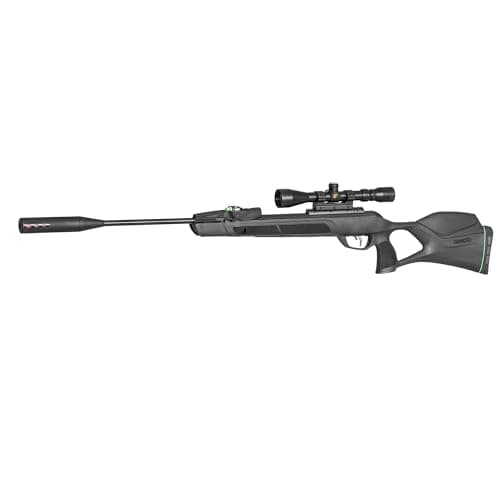
Air rifles get sold on velocity numbers, and velocity numbers are the least useful way to pick one. The decisions that actually determine whether you end up with the right gun are made earlier: which powerplant fits your budget and patience, which caliber fits the job, and whether you can read a spec sheet past the marketing FPS. Get those three right and the model picks itself; get them wrong and no amount of speed saves you.
So, like all our guides, this one teaches the criteria first and names names second. The five best air rifles of 2026 below cover the whole sensible range — from a $100 backyard workhorse to a serious hunting PCP — each with its honest cons attached. Prices update daily from the live listings, so check the current number before you buy. And a safety note up front: an air rifle is a real gun that demands real muzzle discipline, and city and county rules on discharging one vary — check your local ordinances before the first pellet flies.
The best air rifles of 2026 at a glance
Five rifles, five distinct jobs — four .22s and one .25 — all current production and all buyable through ordinary retail channels. Energy figures are with lead pellets, not the alloy numbers on the box, and every price is the current live listing rather than a number we typed once and forgot:
| Rifle | Price & buy | Powerplant / caliber | Real lead energy | Best for |
|---|---|---|---|---|
| Benjamin Marauder (Semi-Auto) | $707.98Buy | PCP, 3,000 PSI / .22 | ~840-940 FPS, up to ~33 FPE | Best overall |
| Hatsan Mod 95 Vortex QE | View at Amazon | Gas-piston break-barrel / .22 | 800 FPS published, ~21 FPE | Budget break-barrel |
| Air Venturi Avenger | View at Amazon | Regulated PCP, 4,351 PSI / .25 | 900 FPS rated, ~45 FPE | Best PCP value |
| Gamo Swarm Magnum 10X GEN3i | $288.48Buy | Gas-piston break-barrel, 10-shot / .22 | 900s FPS, ~30 FPE | Small-game hunting |
| Crosman 362 | $123.94Buy | Multi-pump pneumatic / .22 | ~600-700 FPS, ~13 FPE at 8 pumps | Plinking & learning |
Prices shown are from Amazon as of October 9, 2026 and change often — the button always goes to the current listing. Some links may earn us a commission at no extra cost to you.
How we picked
We do not sell air rifles, so nothing below is inventory we need to move. Each pick had to be current production, available through normal retail channels, and backed by published manufacturer specs plus at least one independent chronograph test — because the only velocity number worth quoting is one somebody measured with lead pellets. We then sorted the field by job rather than by price, so each slot answers a different question: one gun for everything, cheapest gun that still hunts, most performance per dollar, most power with no fill gear, and most fun per dollar. Our testing and review standards explain the whole process, and every number on this page traces to a source at the bottom.
Types: break-barrel vs multi-pump vs PCP vs CO2
The powerplant is the biggest fork in the road, because it sets your cost, your shooting rhythm, and how hard the gun is to shoot well.
- Break-barrel (spring or gas piston).Cock the barrel once, shoot once. Fully self-contained — no pumps, tanks, or compressors — and the cheapest way to real hunting power. The catch: the piston's forward slam creates a double recoil that punishes loose technique and eats cheap scopes. Break-barrels reward a consistent, relaxed hold (search "artillery hold") and a little practice. Our break-barrel guide goes deeper on the spring-versus-gas-piston question.
- Multi-pump pneumatic.You pump the forearm several strokes per shot — more pumps, more power. Recoilless, simple, self-contained, and inherently variable-power, which makes a multi-pump the classic learning gun and backyard pest tool. The cost is effort and time between shots; nobody fires fast follow-ups from one.
- PCP (pre-charged pneumatic).An onboard reservoir is filled to roughly 3,000-4,500 PSI from a hand pump, tank, or compressor, giving you dozens of recoilless, accurate, quiet shots per fill — usually from a multi-shot magazine. PCPs are the accuracy and consistency kings, and they now start around $300. The catch is the support gear: budget for a hand pump (cheap, sweaty) or a compressor or tank (convenient, $200+). If that is the direction you are leaning, our PCP guide covers the category on its own.
- CO2. Cheap, recoilless, and fun, but the physics make it a poor choice for hunting or serious accuracy. CO2 sits at roughly 852 PSI at 70°F and its pressure tracks temperature, so velocity moves with the weather. Airgun Depot warns against shooting much below 60°F— you risk a jam or a pellet stuck in the barrel — and because CO2 acts as a refrigerant, firing fast cools the cylinder and drops pressure, wanting 12-15 seconds between shots to recover. Good plinkers, bad hunting rifles; nothing below is CO2.
Rule of thumb: tightest budget and total independence — break-barrel or multi-pump. Best accuracy per dollar and you can stomach the fill gear — PCP, which is exactly why PCPs now dominate enthusiast sales charts. If you want the two front-runners side by side, we compare them directly in PCP vs break barrel.
Caliber: .177 vs .22 vs .25
Caliber is a job decision, not a bigger-is-better contest:
| .177 | Target shooting and plinking - flattest trajectory, cheapest and most widely stocked pellets; light for clean kills on game beyond close range |
|---|---|
| .22 | The small-game hunting standard - meaningfully more pellet energy on squirrels, rabbits, and pests at a small trajectory cost |
| .25 | Specialist heavy-hitter for larger pests at PCP power levels; expensive pellets and rainbow trajectory from lower-powered guns |
Pyramyd Air's hunting chart lines the calibers up against quarry and energy, and it is the clearest summary of the trade anywhere: .177 for birds under two pounds at about 8 FPE; .22for 2-20 pound game — squirrel, rabbit, groundhog, pheasant — at about 10 FPE; .25 for 20-35 pound animals such as fox and bobcat, needing 35-50 FPE and, realistically, a PCP to make it; and .30 and uponly for deer-sized game at 80-100 FPE or more. Effective range for a rifle in any of those calibers runs roughly 30-75 yards depending on powerplant — and the ethical end of that band sits a lot closer than the paper end.
Running cost tilts the other way. When Hard Air Magazine priced more than 400 pellet SKUs, the median lead pellet cost 2.7 cents in .177, 4.0 cents in .22, and 5.3 cents in .25, and .177 accounted for 208 of the SKUs surveyed (54% of the market) against 135 in .22. Treat those cents as a ratio rather than today's checkout price, but the shape holds: the bigger the bore, the more each shot costs and the fewer pellets you get to try.
If you will ever point the gun at an animal, buy a .22— the heavier pellet carries more energy and kills small game far more decisively than a .177, which is why nearly every pick below is a .22. If hunting is the whole reason you are shopping, our best air rifles for hunting guide sorts picks by quarry and covers the state caliber rules that decide what you can legally use, and our best .22 air rifles guidegoes caliber-deep. Dedicated paper-punchers and casual can-rollers can save money on .177 pellets — our best air rifles for target shooting guide sorts picks around paper accuracy and recoilless powerplants — and .25 only starts making sense in powerful PCPs, which is exactly why the one .25 below is a regulated PCP with the energy to use it.
Which air rifle for your use case
Most buying mistakes are really use-case mistakes: a magnum springer bought for basement paper, or a $120 multi-pump bought to shoot raccoons. Find your row, then read that pick's section below.
| What you actually want to do | What to buy | Our pick |
|---|---|---|
| Backyard or basement paper and cans | Recoilless and quiet beats powerful - a multi-pump or low-power PCP, plus a real backstop | Crosman 362 |
| Rats, starlings, and pigeons around outbuildings | Moderated .22 with modest power for short ranges and lower ricochet risk | Hatsan Mod 95 Vortex QE |
| Squirrels and rabbits at 25-40 yards | .22 clearing 12 FPE at the animal, with a scope that survives the powerplant | Gamo Swarm Magnum |
| Groundhog- and raccoon-class pests | Regulated PCP in .25 - Pyramyd Air puts 20-35 pound animals at 35-50 FPE | Air Venturi Avenger .25 |
| One accurate, quiet rifle to do all of it | Shrouded multi-shot .22 PCP you can grow into, plus the fill gear to feed it | Benjamin Marauder |
| Never own a pump, tank, or compressor | Gas-piston break-barrel - all the power is in the box | Gamo Swarm Magnum |
Two use-case notes that save money. If the shooting is mostly in a garage, barn, or suburban backyard, noise matters more than power — start with our quietest air rifles guide and put the savings into a proper pellet trap or backstop, which is the difference between a hobby and a hole in the siding. And if the answer is "all of the above, eventually," buy the .22 — it is the only caliber here that is genuinely competent at both paper and quarry.
Real power vs marketing FPS
The number on the box is the gun's best case with featherweight alloy pellets nobody should hunt with. A break-barrel advertised at 1,300 FPS in .22 typically sends the lead hunting pellets you will actually shoot in the 900s; an "up to 875 FPS" multi-pump chronographs around 600-700 with real lead. That is not a scandal — every maker plays the same game — but it means you should compare guns on muzzle energy in foot-pounds (FPE) with lead pellets, not box FPS.
There is also a ceiling on useful velocity. Airgun Depot puts the sound barrier for pellets between 1,060 and 1,200 FPSdepending on conditions — and a pellet pushed through it destabilizes and cracks, trading accuracy and quiet for a headline number. That is the real reason a heavy lead pellet in the 800s outshoots an alloy pellet in the 1,200s.
One more spec that matters more than speed: noise. Shrouded or moderated barrels (standard on the PCPs below, and Hatsan's QuietEnergy moderator on the budget break-barrel) keep backyard practice neighbor-friendly — and quiet guns get shot more, which makes you better.
Buyer's guide: eight things that decide it
Once powerplant and caliber are settled, these are the specs that decide whether you keep shooting the gun or quietly list it in six months.
- 1. Trigger.Nothing hides a bad trigger. A fully adjustable two-stage unit — the Marauder's match-style trigger, Hatsan's Quattro — does more for your groups than another 100 FPS, and it is the clearest tell between a $200 rifle and a $600 one.
- 2. Cocking effort and weight.A magnum springer asks for real force every shot — the Swarm Magnum wants about 41 pounds — and the Marauder is 7.1 pounds bare, before optics. Both are fine on a bench and tiring on a walk. If a smaller shooter will use it, weigh the cocking effort before the FPS.
- 3. Rail type and a scope stop.Airguns traditionally use a 3/8-inch (11mm) dovetail, though Airgun Depot notes Weaver/Picatinny rails are becoming more common — so confirm which one your rifle has before you buy rings, and use an adapter rather than force. On any spring or gas-piston rifle, mount rings with a scope stop pinseated in the rail notch: Pyramyd Air's guidance is that the rear ring must butt against the stop to keep the mount from walking backward under piston recoil. A one-piece mount helps too — Airgun Depot notes it grips over a longer surface and lessens the need for a stop. Glass choices are in our air rifle scope guide.
- 4. Noise and moderation. A shrouded or moderated barrel is what makes a rifle usable where you live. Hatsan rates its QuietEnergy moderator as cutting downrange noise by up to half; PCP shrouds do the same job. If neighbors are close, this spec outranks power.
- 5. Shot count and the fill path (PCPs).Ask two questions: how many consistent shots per fill, and how will you fill it. A regulator is what turns "30 usable shots" into "80" on the same rifle, and the fill choice is a hand pump (cheapest, hardest work) or a compressor/tank ($200+, painless).
- 6. Pellet fit.Barrels have preferences and they are not negotiable. Buy three or four domed lead pellets in different weights, shoot groups, and let the rifle pick — our pellet guide narrows the field to the ones worth testing.
- 7. Total cost of ownership. The rifle is the down payment. Add pellets (a few cents a shot, more in the bigger bores), a scope that survives your powerplant, a trap or backstop, and for a PCP the pump or compressor. A $200 break-barrel and a $400 PCP can end up much closer together than the stickers suggest.
- 8. Legality where you shoot.City and county rules on discharging an air rifle vary, and state hunting rules vary more — caliber and energy minimums differ enough that a rifle legal for a species in one state is illegal in the next. Read your own wildlife agency's current regulations; our hunting guide walks through the examples.
Best overall .22: Benjamin Marauder
The Benjamin Marauder has been the default recommendation for a first serious PCP for over a decade, and the current guns show why. You get a fully shrouded barrel that makes it one of the quietest hunting-power air rifles in production, a 10-round auto-indexing magazine, an adjustable two-stage match-style trigger that breaks around three pounds out of the box, and genuine hunting power — Benjamin rates the .22 up to 1,000 FPS, and independent chronograph testing puts real lead hunting pellets in the 840-940 FPS range for up to roughly 33 FPE. Synthetic-stock guns list around $550; a factory-regulated version (about $150 more) stretches consistent shots per fill from roughly 30 to as many as 80.
Honest cons: at 7.1 pounds bare it is no featherweight, you need fill gear like any PCP, and the unregulated version's usable shot string is modest until you tune or step up to the regulated model.
One buying note: the classic bolt-action Marauder sells through dedicated airgun dealers rather than Amazon — what Amazon stocks is the Semi-Auto Marauder (SAM) at about $708, the same shrouded, 10-shot Marauder platform with a regulated, semi-automatic action that fires as fast as you can pull the trigger. The price link below goes to the SAM; either action earns the best-overall slot.
Who it's for: the shooter who wants one accurate, quiet, hunt-capable .22 to grow into rather than out of. We break the platform down fully in our Benjamin Marauder .22 review.
Best budget break-barrel: Hatsan Mod 95 Vortex QE
If the budget says one box and no fill gear, the Hatsan Mod 95 Vortex QE .22 is the sensible pick, and at roughly $200for the scope combo it is the least expensive rifle here that still hunts. It runs Hatsan's Vortex gas piston— smoother-shooting and less temperature-sensitive than a metal spring — behind a QuietEnergy integrated sound moderator that Hatsan rates as cutting downrange noise by up to half, and it ships with a 3-9x32 Optima scope. Two touches you rarely get at this price: a genuine Turkish walnut stock and Hatsan's fully adjustable two-stage Quattro trigger. Hatsan advertises 1,000 FPS in .22 with alloy pellets and publishes an honest 800 FPS with lead— roughly 20 FPE, comfortably past our 12 FPE bar for pests and small game with careful shot placement.
Honest cons: the bundled scope is serviceable at best, cocking effort is real for smaller shooters, and like every break-barrel it demands a consistent artillery-style hold before it groups. It is a $200 rifle that shoots like a more expensive one only after you do your part.
Who it's for: the pest-control pragmatist or first-time buyer who wants a self-contained .22 for the least money that is still a real gun.
Best PCP value: Air Venturi Avenger .25
The Avenger is the gun that broke PCP pricing, and the version Amazon actually stocks is the .25— the caliber where the platform's power makes the most sense. For roughly $400 you get features that cost triple that a few years ago: an externally adjustable regulator, adjustable hammer spring, a 4,351 PSI (300 bar) fill, and a shrouded barrel — with Air Venturi rating the .25 at up to 900 FPS and about 45 FPE, genuine authority for raccoon-class pests and larger small game. Reviewers from Hard Air Magazine to Outdoor Life keep reaching the same conclusion about the platform: nothing else near the price matches its tunability and consistency. The .177 and .22 Avengers carry the same value story but sell through dedicated airgun dealers such as Pyramyd Air and Airgun Depot rather than Amazon — worth the detour if you want the cheaper pellets of the smaller bores.
Honest cons: fit and finish are budget-tier — the stock is plasticky and the trigger, while adjustable, is not a Marauder trigger. The big .25 pellets cost more per tin and drop more at range than a .22's, all the adjustability invites tinkering that can eat a weekend, and you still need fill gear.
Who it's for: the value hunter who wants regulated-PCP consistency and real knockdown at the absolute minimum spend, and does not mind that the money all went into the machinery rather than the furniture.
Best for small-game hunting: Gamo Swarm Magnum 10X GEN3i
The Swarm Magnum answers the break-barrel's oldest complaint — the slow, fiddly reload — with a horizontal 10-shot inertia-fed magazinethat indexes the next pellet automatically as you cock the barrel. Behind it sits Gamo's most powerful 33mm IGT Mach 1 gas piston: advertised at 1,300 FPS in .22 with alloy, which translates to lead-pellet velocities in the 900s and roughly 30 FPE — genuine squirrel-through-raccoon authority that clears our 12 FPE hunting bar with a wide margin, no air tank required.
Honest cons: it takes about 41 pounds of cocking effort, it is long and muzzle-heavy, the magnum piston is hold-sensitive and hard on cheap optics (the bundled 3-9x40 is a start-point, not a keeper — see our air rifle scope guidefor glass that survives a magnum springer), and follow-up shots still require re-cocking — the mag just removes the fumbling.
Who it's for: the small-game and pest hunter who wants maximum self-contained knockdown without buying into PCP fill gear. We break the platform down fully in our Gamo Swarm Magnum review.
Best target and plinking pick: Crosman 362
The Crosman 362 is the modern version of the multi-pump most of us learned on, upgraded to a genuinely useful .22. Two pumps make it a quiet basement-and-backyard plinker; the full eight pumps push lead pellets into the 600s FPS for about 13 FPE — enough for close-range pest work. It is light at around 4.5 pounds, recoilless, dead simple, and typically $100-140. Field & Stream's testing found it light, handy, affordable, and reasonably accurate, which is exactly the assignment.
Honest cons: it is single-shot and slow by design — eight pumps between full-power shots is a workout — and the plastic breech and basic open sights show the budget (the aftermarket steel-breech upgrade fixes scope mounting).
Who it's for: new shooters, backyard target sessions, and anyone who wants the most fun per dollar in the category. Full breakdown in our Crosman 362 review.
The bottom line
Three guides worth reading next: if the budget is firm, our best air rifles under $200 explains why a recoilless pump gun beats a magnum break barrel at that price; once the rifle arrives, how to sight in an air rifle covers the parallax and hold problems that stop people getting groups; and air rifle brands compared maps who is good at what.
Pick the powerplant first, the caliber second, and the model last. If you want one rifle that does everything well and you will buy fill gear, the Benjamin Marauder .22 is the best overall and the Air Venturi Avenger gets you regulated-PCP performance for hundreds less. If self-contained simplicity matters more, the Gamo Swarm Magnum is the hunting hammer, the Hatsan Mod 95 is the budget version of the same idea, and the Crosman 362is the cheap, cheerful trainer that still earns a place in the safe. Whatever you choose, buy quality lead pellets in three or four weights and let your barrel tell you which it likes — pellet choice moves groups more than any spec on the box.
Settled on one? The comparison table at the top of this guide carries the current price and a buy button for all five, or start with the two we recommend most often:
Frequently asked questions
What is the best air rifle in 2026?
For most buyers, the Benjamin Marauder .22 - a shrouded, 10-shot PCP that independent chronograph testing puts at 840-940 FPS with lead pellets for up to roughly 33 FPE. It is quiet, accurate and hunt-capable, but like every PCP it needs a hand pump, tank or compressor. If you will never own fill gear, the Gamo Swarm Magnum 10X GEN3i .22 delivers about 30 FPE straight out of the box, and the Hatsan Mod 95 Vortex QE is the budget version of the same idea.
Is a .177 or .22 air rifle better for hunting?
.22 - decisively. The heavier .22 pellet delivers meaningfully more energy on target, and the common field standard for cleanly taking squirrel- and rabbit-sized game is roughly 12 FPE at the animal, which .22 hunting rifles clear with margin. Pyramyd Air's hunting chart puts .22 at 2-20 pound game needing about 10 FPE, versus .177 for birds under two pounds at about 8 FPE. A .177 shoots flatter and its pellets cost less - the median lead pellet ran 2.7 cents in .177 against 4.0 cents in .22 in Hard Air Magazine's survey of more than 400 pellet SKUs - making it the better pure target caliber, but for animals the .22 is the standard.
How much should I spend on an air rifle?
Three tiers cover almost everyone. Around $100-150 buys a multi-pump like the Crosman 362 that is ideal for learning and backyard plinking. Around $200-330 buys a gas-piston break-barrel with real hunting energy and nothing else to buy. From about $400 up you are into PCPs, where a regulated rifle like the Air Venturi Avenger delivers shot-to-shot consistency the springers cannot - but budget another $50-100 for a hand pump or $200+ for a compressor, plus a scope, pellets and a backstop.
Do air rifles really shoot 1,300 FPS?
Only with ultralight alloy pellets no one should hunt with. Advertised FPS numbers are best-case marketing figures; with the lead pellets you will actually shoot, a break-barrel advertised at 1,300 FPS in .22 typically runs in the 900s, and an 'up to 875 FPS' multi-pump chronographs around 600-700. There is also a ceiling on useful speed: Airgun Depot puts the pellet sound barrier between 1,060 and 1,200 FPS, and a pellet pushed past it destabilizes and cracks. Compare rifles on muzzle energy (FPE) with lead pellets instead of box velocity.
How far can an air rifle shoot accurately?
Pyramyd Air puts the effective range of a hunting air rifle at roughly 30-75 yards depending on the powerplant, with PCPs at the long end and multi-pumps at the short end. Ethical hunting range is shorter than paper range: the field standard is head shots inside 25-35 yards, because a pellet sheds energy quickly and the number that matters is the energy arriving at the animal, not at the muzzle.
What extra gear does a PCP air rifle need?
A way to fill the onboard reservoir to roughly 3,000-4,500 PSI: a high-pressure hand pump (cheapest, sweatiest), a pre-filled SCBA-style tank, or a dedicated compressor. Budget at least $50-100 for a hand pump or $200+ for a compressor on top of the rifle. Break-barrels and multi-pumps need nothing but pellets, which is their enduring advantage.
Do I need a special scope and mount for an air rifle?
Usually yes. Airguns traditionally use a 3/8-inch (11mm) dovetail rail, though Airgun Depot notes Weaver/Picatinny rails are becoming more common - so confirm which rail your rifle has before buying rings. On any spring or gas-piston rifle, use rings with a scope stop pin seated in the rail notch; Pyramyd Air's guidance is that the rear ring must butt against the stop or the mount walks backward under piston recoil. The scope itself must be rated for spring-piston recoil, which destroys ordinary rimfire scopes.
Why does my break-barrel air rifle group poorly?
Usually technique, not the gun. Spring and gas-piston rifles recoil in two directions as the piston slams forward, so they group best with a loose, consistent 'artillery hold' - rest the forearm lightly on your open palm and let the rifle recoil freely. Also make sure your scope is rated for spring-piston recoil and that your rings carry a scope stop pin, then try three or four pellet weights, because barrels have preferences.
Is a CO2 air rifle a good choice for hunting?
No. CO2 pressure tracks temperature - roughly 852 PSI at 70 degrees Fahrenheit - so velocity moves with the weather, and Airgun Depot warns against shooting much below 60 degrees because of jamming and stuck-pellet risk. Because CO2 acts as a refrigerant, firing quickly cools the cylinder and drops pressure, needing 12-15 seconds between shots to recover. CO2 rifles are fun, cheap plinkers; for hunting, buy a break-barrel, multi-pump or PCP.
Are air rifles legal to shoot in my backyard?
It depends entirely on your city and county ordinances - some treat air rifles like firearms for discharge purposes, others allow them with restrictions. Check local rules before shooting, always use a safe backstop, and remember a .22 pellet at hunting power is dangerous well past 100 yards. Quiet, shrouded models help with neighbors, but legality comes first.
Sources
- Benjamin Airguns — Marauder Synthetic specifications
- Hard Air Magazine — Benjamin Marauder .22 test review
- Gamo USA — Swarm Magnum 10X GEN3i .22 product page
- HatsanUSA — Mod 95 Combo Vortex QE specifications
- Outdoor Life — Air Venturi Avenger review
- Pyramyd Air — Benjamin Marauder Semi-Auto (SAM) specifications
- Airgun Depot — Air Venturi Avenger specifications
- Field & Stream — Crosman 362 tested and reviewed
- Pyramyd Air — Air Rifle Hunting: powerplants and calibers by quarry (.177 at 8 FPE for birds under 2 lbs; .22 at 10 FPE for 2-20 lb game; .25 at 35-50 FPE for 20-35 lb animals; 30-75 yard effective rifle range)
- Hard Air Magazine — What's the average price of airgun pellets? (median lead cost per pellet: 2.7 cents .177, 4.0 cents .22, 5.3 cents .25; 208 of the 400+ SKUs surveyed were .177, 54% of the market, against 135 in .22)
- Airgun Depot — CO2 cartridge pressure (852.8 PSI at 70°F; do not shoot much below 60°F; 12-15 seconds between shots to recover pressure)
- Airgun Depot — Sound barrier FPS (pellets go supersonic between 1,060 and 1,200 FPS and destabilize)
- Airgun Depot — Air rifle scope mounting basics (3/8-inch/11mm dovetails traditional, Weaver/Picatinny increasingly common; one-piece mounts grip over a longer surface and lessen the need for a scope stop)
- Pyramyd Air — How to choose a scope mount (11mm the most popular dovetail size; on spring-powered rifles the rear ring must butt against the scope stop)
Keep reading
- Best pellet traps and backstops →
- Best air rifles for hunting →
- Best air rifles for target shooting →
- Best air rifle pellets →
- Best air rifle scopes →
- Benjamin Marauder .22 review →
- Gamo Swarm Magnum review →
- Crosman 362 review →
- Best PCP air rifles →
- Best break barrel air rifles →
- Quietest air rifles →
- PCP vs break barrel →
- Best .22 air rifles →
- Air rifle brands compared →
Gearing up before your next hunt?
See how we evaluate gear, then dig into the reviews and buying guides — written without inventory to sell.