Air Rifle Review
Crosman 362 Review: The Budget .22 Multi-Pump That Earns Its Keep
Around $100 buys a recoilless, variable-power .22 that plinks quietly on two pumps and takes squirrels on eight. We look at what the 362 actually delivers, where the budget shows, and who should spend more.
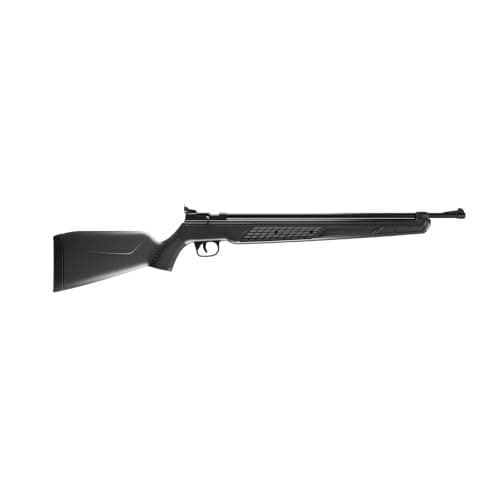
The best cheap air rifle to actually own: a simple, recoilless, variable-power .22 that does real work for around $100 - as long as you accept single-shot pace and some plastic.
- Best for
- New shooters, backyard plinkers, and budget pest controllers who want a genuinely useful .22 with zero fill gear and near-zero fuss.
- Price context
- Budget tier - $139.90 list on crosman.com and commonly street-priced around $100 (as of 2026). Verify current pricing before buying.
Every shooter's safe should probably contain one honest, cheap, do-everything air rifle, and for three generations that meant a Crosman multi-pump. The 362 is the modern version of that idea: a .22-caliber pump gun launched in 2021 that keeps the formula — simple pneumatic action, power you choose one stroke at a time — and modernizes the stock, the ergonomics, and the barrel. At a list price of $139.90 and a street price that regularly sits near $100, it is the budget pick in our best air rifles guide, and this review is the long version of why.
We don't sell air rifles, so we have no reason to upsell you past it — or to pretend its plastic parts are something they are not.
What the 362 is
The 362 is a single-shot, bolt-action, multi-pump pneumatic: you stroke the forearm between two and eight times, chamber one pellet, and every shot is recoilless compressed air — no spring slam, no CO2 cartridges that go soft in the cold, no 3,000 PSI reservoir to fill. It wears a rifled, fluted steel barrel, a fixed front sight with a fully adjustable rear, and a weather-resistant textured synthetic stock with a ridged rubber buttpad that gives you something to pull against while pumping. At roughly 35.6 inches and 4.5 pounds, it is short, light, and genuinely handy — a rifle a new or younger shooter can actually manage.
Crosman rates it "up to 875 FPS" with alloy pellets and about 13 ft-lbs of muzzle energyat maximum pumps — which, as we cover below, is honest small-pest power, not magnum-airgun power.
Variable power: the multi-pump superpower
The feature that makes a multi-pump more than a cheap alternative is that you set the power every shot. Two or three pumps makes the 362 a quiet, low-energy basement-and-backyard plinker that will not bury pellets in the fence. The full eight pumps turns the same rifle into a legitimate close-range small-game and pest tool. No break-barrel or PCP gives you that range with a flick of intent.
| 2-3 pumps | Quiet backyard plinking and new-shooter training at short range |
|---|---|
| 4-6 pumps | General target work - more speed, still moderate effort and noise |
| 7-8 pumps | Full power (~13 FPE) - squirrel-sized pests at close range, with a louder report |
The flip side is baked into the design: eight strokes take real effort and perhaps twenty seconds, and then you have exactly one shot. The 362 enforces a deliberate pace — Crosman itself frames the gun around deliberate shooting and control. As a training rifle that is a feature; as a fast follow-up pest gun it is the whole limitation.
Real velocities and accuracy
Ignore the 875 FPS box number — that is a light-alloy best case. With the lead pellets you should actually shoot, published testing is consistent: Crosman's own lead figure is around 700 FPS, and Hard Air Magazine chronographed a five-shot string averaging 611 FPS with heavy 18.13-grain lead pelletsat full pumps — tightly bunched between 596 and 619 FPS, which speaks well of the pump system's consistency. Work the math and the 362 lives around 12-14 FPE at maximum power: right at the common field standard for squirrel-sized game, provided you keep shots close (inside roughly 20-25 yards) and place them precisely.
Accuracy reports follow the same pattern — Field & Stream's testing called it light, handy, and reasonably accurate. The recoilless action means it has none of a break-barrel's hold sensitivity: rest it, squeeze, and it puts pellets where the sights point. The open sights are the limiting instrument, and quality domed lead .22 pellets tighten groups more than any other dollar you can spend on it.
Where the budget shows
A $100 rifle makes $100 compromises, and the 362's are well documented. The breech, bolt handle, and trigger internals are plastic; they work, but they feel like what they are, and the plastic breech is the reason scoping the stock gun is awkward. The trigger is a basic non-adjustable affair — usable, not match-grade. There is no sound moderation, so full-power shots produce a distinct crack the neighbors can hear. And there are no sling mounts or other niceties on the base gun.
None of that is a dealbreaker at the price — it is the price. What matters is that Crosman spent the money where it counts: a rifled steel barrel, a consistent pump assembly, and a stock you can actually pump against.
The upgrade path
Part of the 362's appeal is that it plugs into Crosman's decades-deep multi-pump aftermarket. The single most popular move is the steel breech upgrade— a factory-supported swap that replaces the plastic breech with a metal one carrying a proper dovetail rail, turning the 362 into a scope-ready rifle for modest money — and because the pneumatic action is recoilless, you can mount almost any of the best air rifle scopes on it without worrying about the two-way recoil that kills glass on springers. From there the hobbyist path runs deep: aftermarket triggers, flat-top pistons and valves, and more. Few $100 guns double as a platform; this one does, which is why airgun tinkerers adopted it almost immediately after launch.
Who it's for - and who should spend more
Buy the 362 ifyou want the most genuinely useful air rifle the least money buys: a first rifle for a new or young shooter (with supervision), a truck-and-garden pest gun, or a cheap, cheerful trainer that builds real marksmanship habits shot by deliberate shot. It is also the right pick if you want zero support gear — no CO2, no pumps-and-tanks ecosystem, nothing but pellets.
Spend more if you shoot volume or hunt seriously. Eight pumps per full-power shot gets old across a long pest session, 13 FPE runs out of authority past close range, and the crack of an unmoderated .22 limits where you can use it. The Benjamin Marauder .22solves all three — quiet shroud, 10-shot magazine, nearly triple the energy — for roughly five times the price plus fill gear. That gap is exactly the decision our air rifle buying guide walks through.
The verdict
For how the 362 stacks up against the break barrels it competes with at the same money, see best air rifles under $200.
The Crosman 362 is what honest budget gear looks like: it spends its few dollars on the barrel and the pump, wears its plastic openly, and does exactly what it claims — quiet plinking on two pumps, real 12-14 FPE pest work on eight, and recoilless accuracy throughout. It will not keep up with a PCP and was never meant to. As a first air rifle, a trainer, or the knock-around .22 that lives by the back door, it is the easiest recommendation in the category — and the standard against which every other $100 air rifle should be judged.
What we liked
- Variable power by pump count - quiet two-pump plinker and 13 FPE pest gun in one rifle
- Recoilless pneumatic action is easy to shoot accurately and easy on optics
- Light (~4.5 lbs), short, and completely self-contained - no fill gear, no CO2
- Around $100 street price with a rifled steel barrel and decades of Crosman parts support
- Big aftermarket - the steel-breech upgrade adds a proper dovetail for optics
What gave us pause
- Single shot, and eight pumps between full-power shots is slow, real work
- Plastic breech, bolt, and trigger parts show the budget
- Basic open sights; scoping it properly wants the steel-breech upgrade
- No sound moderation - full-power shots have a distinct crack
- Lead-pellet velocities live in the 600s, not the 875 FPS on the box
Frequently asked questions
How fast does the Crosman 362 really shoot?
Crosman advertises up to 875 FPS, which reflects light alloy pellets. With lead pellets - what you should actually shoot - Crosman's own figure is about 700 FPS, and Hard Air Magazine chronographed roughly 611 FPS average with heavy 18.13-grain lead at full pumps. That works out to around 12-14 ft-lbs of energy at maximum power.
Can the Crosman 362 kill squirrels?
At full power (eight pumps), yes - at close range with precise shot placement. Its roughly 13 FPE sits right at the common field standard for squirrel-sized game, so treat it as a 20-25 yard head-shot tool, not a general hunting rifle. For more margin and range, step up to a PCP like the Benjamin Marauder .22.
How many pumps does the Crosman 362 take?
Two to eight pumps per shot - never more, per Crosman's manual, or you risk valve damage. Two to three pumps gives quiet backyard plinking power; the full eight delivers maximum velocity and energy. Power scaling with pump count is the multi-pump design's defining feature.
Can you put a scope on a Crosman 362?
Not well in stock form - the standard breech is plastic and the rifle ships with open sights. The widely used solution is Crosman's steel breech upgrade kit, which adds a proper dovetail rail for scopes or a red dot. The recoilless pneumatic action is gentle on optics, so even inexpensive glass survives fine.
Is the Crosman 362 loud?
It scales with power. On two or three pumps it is neighbor-friendly quiet; at the full eight pumps a .22 pellet leaving at 600+ FPS makes a distinct crack, and there is no shroud or moderator to tame it. If quiet full-power shooting is a hard requirement, a shrouded PCP like the Benjamin Marauder is the better tool - check local discharge rules either way.
Sources
Keep reading
Gearing up before your next hunt?
See how we evaluate gear, then dig into the reviews and buying guides — written without inventory to sell.