Buying Guide
Best Climbing Tree Stands of 2026: Our Top 5 Picks
A climber turns any straight tree into a 20-foot vantage point you carry on your back. Here is how to weigh packability against comfort, which five stands earn the trip in - and the harness rules that keep a great morning from becoming a fall.
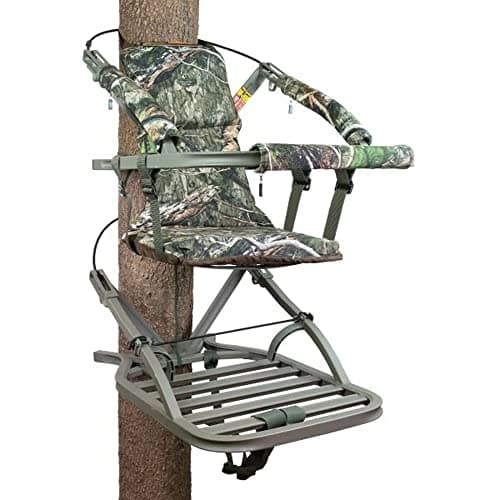
The climbing stand is the most self-reliant tool in whitetail hunting: no ladder to haul, no preset to hang, no permission slip from last season's scouting. Find a straight tree downwind of fresh sign, and twenty minutes later you are eighteen feet up it. That freedom is why climbers remain the mobile hunter's pick decades after their invention — and why buying the right one matters, because you will carry every ounce of it, sit on every design decision in it, and trust your bones to it.
This guide is research-based — manufacturer specs and the consistent verdicts across published editorial testing and long-term owner feedback — and it is honest about the market: one brand, Summit, dominates the category for good reasons, so three of our five picks wear the same badge and we will tell you exactly why (and when to buy the outsider instead).
The best climbing tree stands of 2026 at a glance
| Stand | Price & buy | Weight | Capacity | Platform | Best for |
|---|---|---|---|---|---|
| Summit Viper SD | $374.99Buy | 20 lbs | 300 lbs | 20 x 36 in | Best overall |
| Summit OpenShot SD | $359.99Buy | 15 lbs | 300 lbs | 20 x 32 in | Bowhunters |
| Summit Goliath SD | $472.37Buy | 21 lbs | 350 lbs | 20 x 36 in, wider seat frame | Bigger hunters, all-day sits |
| XOP Revolt | $699.99Buy | 11.7 lbs | 300 lbs | 26 x 18.5 in | Deep mobile hunts |
| Summit Viper Pro SD | $499.99Buy | 22 lbs | 300 lbs | 20 x 36 in | Comfort-first upgrade |
Prices shown are from Amazon as of October 10, 2026 and change often — the button always goes to the current listing. Some links may earn us a commission at no extra cost to you.
All four Summit climbers above are published to fit trees from 8 to 20 inches in diameter— which is the spec that decides whether a climber works on your ground at all, before any of the others matter. Read the tree section first if you have not set a climber before.
How we picked
This is a research-based roundup, and we would rather tell you how it was built than imply field tests we did not run:
- Published specs, from the maker.Every weight, capacity, platform and seat dimension on this page comes from Summit's and XOP's own current product pages or a dealer's published spec sheet — all listed in Sources. Where we say "about," the maker does not publish an exact figure.
- Certification is a filter, not a tiebreaker. We only include stands certified to TMA-recognised ASTM standards; XOP publishes ASTM F2123-21 and F3249-20 for the Revolt.
- Weight is judged against the walk, not in the abstract. A 20-lb stand is light for a half-mile and heavy for two miles, so the picks are organised by how far you carry them rather than ranked on ounces.
- Capacity is read as a loaded number— hunter plus late-season clothing plus pack plus weapon — which is why a 350-lb stand is in the lineup.
- Honest cons on every stand, including the one brand that dominates the category: three of five picks are Summits, and we say exactly when to buy the outsider.
Which climber for your hunt
Climbers differ less in quality than in what they are for. Find the row that describes your season:
| If this is your hunt | Buy | Why |
|---|---|---|
| Gun and bow, within about half a mile of the truck | Summit Viper SD | 20 lbs, 300 lbs, a 20 x 36 in platform and a padded front bar that doubles as a gun rest. The default for a reason. |
| Archery only, moving on fresh sign most weeks | Summit OpenShot SD | No front bar means a fully open shooting lane, and deleting it drops carry weight to 15 lbs on the same 300-lb frame. |
| You plus winter layers plus pack approach 300 lbs | Summit Goliath SD | 350-lb rating and a 24.5 in seat frame against the Viper's 22.5 in, for 1 lb more. Capacity headroom is a safety margin, not a luxury. |
| A mile or more of public-land walk-in | XOP Revolt | 11.7 lbs and a flat-folding profile, ASTM F2123-21 / F3249-20 certified, 26 x 18.5 in platform. You trade padding and price for the lightest full-featured climber here. |
| Dark-to-dark November sits, short walk | Summit Viper Pro SD | 22 lbs for a plusher seat, the Quick Draw PRO cable system, a wraparound armpad and a FasTrack accessory rail. Same height, same 300 lbs - you are buying feel. |
| Crooked, limby or multi-trunk timber | Sticks and a hang-on instead | No climber on this page works on a tree it cannot grip. If your ground has no clean 8-20 in trunks, this is the wrong category - not the wrong stand. |
How climbers work - and the tree they need
A climber is two aluminum frames — a seat unit and a platform — that each grip the trunk with a cable or belt loop. You stand on the platform, lift the seat frame with your hands or torso, sit into it, then curl your feet under the platform and drag it up beneath you. Repeat, inchworm-style, until you reach height; the frames bite the bark under your weight and hold you there. Descending reverses the process.
The catch is the tree. Climbers need a reasonably straight trunk, roughly 8 to 20 inches in diameter depending on the stand, with no limbs from the ground to your set height — telephone-pole hardwoods, southern pines, straight oaks. Shagbark hickories, gnarly multi-trunk trees, and limby field-edge cedars are ladder-stand or saddle country. If your ground has no clean trunks, no climber on this page fixes that — that is where a stick-and-hang-on setup earns its keep, and our guide to the best climbing sticks and hang-on stands covers the height math and the platforms. Know your timber before you buy.
Weight, capacity, comfort: the trade triangle
Every climbing stand is a compromise among three things, and knowing which corner you live in makes the pick easy:
- Carry weight and packability. Stands run from about 11 to 25-plus pounds, worn on your back over whatever distance you hunt from the truck. Under 15 pounds is genuinely mobile; around 20 is fine for half-mile walks; heavier stands are for short hauls and long sits. Flat-folding designs ride quieter and snag less brush than bulky-folding ones.
- Capacity and platform.Weight ratings (typically 300 or 350 pounds) include you, your clothes, your pack, and your bow — winter gear adds up fast, so buy honest headroom. Bigger hunters and fidgety all-day sitters want the larger platform; it is amazing how small 20 inches by 25 inches feels at hour six.
- Comfort and noise.Foam-padded seats, backrests, and quiet coatings are what let you outlast the other guy. Summit's signature move — expanding foam inside the tubes and dead-quiet cable systems — is a big reason its stands top editorial noise tests year after year. A stand that clanks at 6 a.m. costs you deer.
Match the corner to your hunting: long walks favor weight, long sits favor comfort, and big bodies favor capacity. Nobody gets all three cheap.
Safety first: the non-negotiables
Best overall: Summit Viper SD
The Viper SD is the default climbing stand in America, and the boring truth is that it earned it. Twenty pounds on your back, a 300-pound rating, Summit's foam-filled tubes and Dead Metal sound dampening (the SD in the name), and the padded front bar that makes the sit-and-climb motion nearly effortless — then doubles as a gun rest at height. The foam seat raises for bow shots and lowers for rifle sits, and the QuickDraw cable system sets up without tools or noise. Editorial testers keep calling it the quietest climber going; three decades of owners keep agreeing.
| Carry weight | 20 lbs |
|---|---|
| Capacity | 300 lbs (hunter + gear) |
| Platform / seat frame | 20 in W x 36 in D / 22.5 in W x 37.5 in D |
| Seat | 12 in W x 18 in L bottom, 12 in W x 20 in H back |
| Tree diameter | 8-20 in |
| List price | $399.99 MSRP at Summit |
| Notables | Dead Metal SD dampening, QuickDraw cables, raisable seat, FAS harness included, 5-year limited warranty |
The honest cons: the front bar that makes climbing easy sits exactly where a low-hanging bow limb wants to be — bowhunters manage, but the OpenShot below exists for a reason — and 20 pounds is mid-pack, not mobile-elite. If you hunt both gun and bow within a mile of the truck, this is the pick.
Best for bowhunters: Summit OpenShot SD
The OpenShot is the Viper's answer to the bowhunter's complaint. Deleting the front bar leaves a fully open shooting lane— draw, cant the bow, shoot straight down over the platform edge, no aluminum in the way — and drops carry weight to a genuinely mobile 15 pounds. Same 300-pound rating, same Dead Metal quieting, same tool-free cable attachment; the 20-by-32-inch platform frame gives up little to its big brother.
| Carry weight | 15 lbs - the lightest stand Summit makes |
|---|---|
| Capacity | 300 lbs |
| Style | Open-front sit-and-climb |
| Platform frame | 20 in W x 32 in D |
| Seat | 16 in W x 12 in L x 3 in D |
| Tree diameter | 8-20 in |
| List price | $399.99 MSRP at Summit |
The honest cons mirror the benefit: without a front bar the climb takes more arm and core effort and feels less secure to newcomers (your tether matters even more here), and there is no built-in gun rest for rifle season. For the archer who moves on fresh sign weekly — the same hunter reading our deer movement guidebefore every sit — the OpenShot is the best blend of weight and shootability in the lineup.
Best for bigger hunters: Summit Goliath SD
Most stands quietly assume a 180-pound hunter in September clothes. The Goliath SD assumes reality: a 350-pound capacity, a wider frame, and more platform real estate, with the same foam-quieted construction and front-bar climbing ease as the Viper. Editorial reviewers routinely hand it the all-day-comfort crown — the extra room matters as much for a mobile 200-pounder in a heavy parka with a loaded pack as it does for genuinely big hunters.
| Carry weight | 21 lbs |
|---|---|
| Capacity | 350 lbs |
| Style | Sit-and-climb with front bar, wide seat frame |
| Platform / seat frame | 20 in W x 36 in D / 24.5 in W x 37.5 in D |
| Tree diameter | 8-20 in |
| List price | $469.99 MSRP at Summit |
| Notables | Dead Metal SD dampening, padded raisable seat, FAS harness included |
The honest cons: the width that makes it comfortable also makes it bulkier through brush — this is a stand for a few hundred yards of walking, not a two-mile burn. Remember the capacity math from above: you plus winter layers plus pack plus weapon. If that sum flirts with 300, the Goliath is not a luxury, it is the correct spec.
Ultralight mobile: XOP climbing stands
The classic ultralight in this category, Lone Wolf's hand climber, has been discontinued — and XOP, founded by treestand designers from that lineage, has claimed the crown. The XOP Revoltis the current statement piece: a hand climber in XOP's proprietary I7 alloy that the company publishes at 11.7 pounds— it calls it the lightest full-featured climber on the market — folding flat against your back over a 26-by-18.5-inch platform. XOP's heavier Ambush (about 18 pounds) adds platform size for hunters who want the weight savings without the hand-climber learning curve.
| Carry weight | 11.7 lbs (Revolt); about 18 lbs (Ambush) |
|---|---|
| Capacity | 300 lbs |
| Platform / seat | 26 in x 18.5 in / 16 in x 8 in |
| Certification | ASTM F2123-21 and F3249-20 |
| Style | Flat-folding I7-alloy hand climber |
| Best for | Long walk-ins, public land, run-and-gun sits |
The honest cons: hand climbers demand technique and fitness — you lift the seat frame with your arms rather than a sit-and-stand motion, and there is no padded bar cradling you on the way up — and you pay ultralight prices for less padding than a Summit. Sitting comfort is adequate, not plush. This is the specialist tool for the hunter whose stand rides a mile-plus on public dirt, chasing the rut with the rut checklist mindset.
Premium pick: Summit Viper Pro SD
The Viper Pro SD is what Summit built when it asked what the Viper would be with the budget cap removed: upgraded aluminum construction, a plusher contoured seat, refined cable hardware, and quality-of-life touches throughout, at an MSRP of $529.99. The climbing geometry and 300-pound rating carry over, so the pitch is simple — the most comfortable, most refined version of the most proven climber design on the market.
| Carry weight | 22 lbs |
|---|---|
| Capacity | 300 lbs |
| Platform | 20 in W x 36 in D |
| Tree diameter | 8-20 in |
| Style | Sit-and-climb with front bar, Quick Draw PRO cables, FasTrack accessory rail, wraparound armpad |
| List price | $529.99 MSRP at Summit |
The honest cons: at $529.99 against the Viper SD's $399.99 it costs a third more without hanging you a single foot higher or making you any harder to smell — the upgrade is entirely in feel. If you sit dark-to-dark in November, feel is worth real money; if you hunt three Saturdays a season, buy the regular Viper and spend the difference on a cell camera.
The bottom line
Most hunters should buy the Summit Viper SD and never think about it again. Bowhunters who want an unobstructed draw should take the OpenShot SD; bigger hunters and all-day sitters, the 350-pound Goliath SD. The mobile public-land crowd should pay up for an XOP in the 12-to-18-pound class, and comfort maximalists get the Viper Pro SD. Whatever you choose: straight tree, full-body harness from the ground up, tethered climb, stand sections tied together. The stand gets you the vantage point — the safety system is what gets you home to use it again. Pair your perch with warm feet from our hunting boots guide and you are set for the season.
Frequently asked questions
What is the best climbing tree stand in 2026?
For most hunters, the Summit Viper SD - 20 lbs on your back, a 300-lb capacity, a 20 x 36 in platform frame, and the padded front bar that makes the sit-and-climb motion nearly effortless and doubles as a gun rest at height. Bowhunters who want an unobstructed shooting lane should take the 15-lb Summit OpenShot SD instead; hunters whose loaded weight approaches 300 lbs should move up to the 350-lb Summit Goliath SD; and anyone walking a mile or more of public land should pay up for the 11.7-lb XOP Revolt.
How much does a good climbing tree stand cost?
Summit's own published MSRPs show the ladder clearly: the steel Viper is $249.99, the aluminium Viper SD, OpenShot SD and Mini Viper SD are $399.99, the 350-lb Goliath SD is $469.99, the Dual Threat PRO SD is $499.99, and the Viper PRO SD, Titan SD and 180-degree Max SD top out at $529.99. Ultralight specialist climbers cost more, not less - XOP lists the 11.7-lb Revolt at $699.99. Budget for a harness and a lifeline on top if your stand does not include them.
Can you bowhunt from a climbing tree stand?
Yes, but the front bar decides how pleasant it is. A closed-front climber like the Viper SD puts aluminium exactly where a bow limb wants to be on a steep downward shot - manageable, but a compromise. Summit's answer is the OpenShot SD, which deletes the bar for a fully open shooting lane and drops carry weight to 15 lbs on the same 300-lb frame. The trade-offs are honest: without the bar the climb takes more arm and core effort, and there is no built-in gun rest for rifle season.
Are climbing tree stands certified, and does it matter?
It matters, and you should buy only stands certified to TMA-recognised ASTM standards. ASTM F3249 is the standard covering treestands, climbing sticks and tripod/tower stands, setting minimum labelling, instruction, safety-device and physical-testing requirements. Makers publish the numbers when they hold them - XOP lists ASTM F2123-21 and F3249-20 for the Revolt. Certification tells you the stand and its fall-arrest system were tested; it does not protect you if you climb untethered, which is how nearly all treestand falls happen.
What is the best climbing tree stand for the money?
The Summit Viper SD is the consensus best overall: 20 pounds, a 300-pound rating, famously quiet foam-filled construction, and a padded front bar that makes climbing nearly effortless, at a mid-tier price well under Summit's premium Viper Pro. Bowhunters who want an open shooting lane should look at the 15-pound Summit OpenShot SD instead.
Are climbing tree stands safe?
They are as safe as the system you use with them. Certified stands (TMA-recognized ASTM standards) are strong and stable; the danger is the hunter climbing untethered. Wear the included full-body fall-arrest harness from the ground up, stay connected to the tree during the climb, tie the seat and platform sections together, haul your weapon up on a line, and carry a phone reachable while suspended. Most treestand falls happen during transitions and nearly all are preventable.
What kind of tree do I need for a climbing stand?
A straight trunk roughly 8 to 20 inches in diameter with no limbs between the ground and your hunting height - think straight oaks, hickories with smooth bark, and southern pines. Climbers cannot handle crooked, multi-trunked, or limby trees; if your woods lack clean trunks, a ladder stand, hang-on, or saddle is the better tool.
How heavy a climbing stand should I buy?
Match weight to your walk. Ultralight hand climbers around 12 pounds (like XOP's Revolt) suit mile-plus public-land hikes; 15-pound stands like the Summit OpenShot handle regular mobile hunting; 20-pound stands like the Viper SD are fine within roughly a half mile; and 25-pound comfort stands like the Goliath SD are for short hauls and long sits. Remember you carry it in the dark, over deadfalls, in layers.
What does the weight capacity on a tree stand include?
Everything that goes up the tree with you: your body, boots, winter clothing, pack, and weapon. A 250-pound hunter in late-season gear with a loaded pack can push 300 pounds in total. If your realistic loaded weight approaches a stand's 300-pound rating, step up to a 350-pound stand like the Summit Goliath SD - capacity headroom is a safety margin, not a luxury.
Sources
- Summit Treestands - climbing treestand lineup and specs
- Field & Stream - best climbing tree stands, tested
- Outdoor Life - best climbing tree stands
- GearJunkie - best tree stands of 2025-2026
- XOP Outdoors - Revolt climbing stand
- XOP Outdoors - Revolt product page (11.7 lb, 300 lb, ASTM F2123-21 / F3249-20)
- Summit Treestands - OpenShot SD published specs
- Summit Treestands - Goliath SD published specs
- Summit Treestands - Viper PRO SD published specs
- Lancaster Archery Supply - Summit Viper SD platform and seat dimensions
Keep reading
Gearing up before your next hunt?
See how we evaluate gear, then dig into the reviews and buying guides — written without inventory to sell.