Buying Guide
Best Hunting Backpacks (2026)
A hunting pack has one job the hiking aisle never planned for: carrying an animal out. Here is how to choose by capacity, frame, and fit - plus five picks from a $100 day pack to a backcountry hauler.
A hiking backpack and a hunting backpack look like the same product until the moment an elk hits the ground four miles from the truck. Hiking packs are engineered around 30-pound loads of soft gear; a hunting pack has to swallow that same kit, ride silently through brush, carry a rifle or bow hands-free — and then, on the best day of the season, haul 80-plus pounds of meat and antler without folding. That last job is the one that separates the category, and it is the reason pack frames, load shelves, and lifetime warranties dominate this market instead of ounce-counting.
This guide starts with the four decisions that sort the market — capacity, frame and hauling design, fit, and weapon carry — then gives five picks spanning a $100 whitetail day pack to a dedicated backcountry hauler. Our recommendations are built on manufacturer specifications and independent published testing (GearJunkie's long-running pack test among them), not invented pack-outs. Prices are approximate as of 2026; verify before buying.
Capacity: match the pack to the hunt
Hunting packs are sized in cubic inches (divide by about 61 for liters), and honest sizing beats aspirational sizing — a half-empty 6,000 sags and rattles, while an overstuffed 1,800 hangs gear off carabiners like wind chimes. Rough guide:
| 1,500-2,500 ci | Day hunts - treestand whitetail, morning sits, truck-based Western days |
|---|---|
| 2,500-4,500 ci | All-day to overnight - extra layers, kill kit, water, a spike-out if you pack tight |
| 4,500-6,500 ci | Multi-day backcountry - camp on your back for 3-7 days |
| Expandable systems | Frame + swappable or compressible bags - one pack that day-hunts and packs out |
The most useful trend of the last decade is that last row: packs built as a frame systemthat compresses small for day hunts but expands — or swaps bags — when there is meat to move. If you hunt the West or ever plan to, buying into a frame system means one purchase covers scouting trips, day hunts, and pack-outs. Whitetail hunters who measure walks in hundreds of yards can ignore all of this and buy the smaller, simpler, cheaper pack — and will be happier for it.
Frames and meat hauling
The frame is what you are actually paying for in a serious hunting pack. Under 30 pounds, almost anything works. At 70-100 pounds of boned-out elk, only a real frame — internal stays or an external frame sheet — moves the weight off your shoulders and onto your hips, where your skeleton can carry it.
- The load shelf (meat shelf) is the defining hunting-pack feature: the bag separates from the frame so a meat-filled game bag rides pinned between them, tight to your spine where heavy weight belongs, with your gear rebuckled outside it. The Mystery Ranch, Kings, and ALPS picks below all have one.
- Batwing and panel designslike the Badlands 2200 haul meat by compression instead — less capacity than a true shelf, but faster and simpler for deer-sized loads.
- Suspension quality— a stiff waist belt that transfers weight without buckling, and load-lifter straps that pull the mass toward your back — matters more than fabric or features once loads get heavy.
One thing no frame fixes: the pack-out starts with the knife. Boning meat off the bone in the field is what turns a 200-pound animal into a 70-pound load, and a blade that quits halfway through is how a load shelf ends up unused. Camp Quiver's roundup of the best hunting knives covers the fixed blades and replaceable-blade systems that hold an edge through a whole elk.
Fit: the spec nobody reads
A pack that does not fit your torso will hurt at any price. Two measurements matter: torso length(the bony bump at the base of your neck to the top of your hip bones — not your height) and waist size, because the belt should ride on the crest of your hips, not your stomach. Premium packs come in sizes or adjust across a range; the Kings pick below has an adjustable torso, and Mystery Ranch's adjustable yoke is a big part of its reputation. When you try a pack, load it with 40 real pounds — every pack is comfortable empty — and walk stairs: weight should sit on your hips, straps should not gap at the shoulder, and nothing should sway.
Weapon carry and quiet fabrics
Hands-free weapon carry is a hunting-pack exclusive worth using: side scabbards and fold-out boots for rifles, bow hooks and lash systems for archery gear. On a long hike in, climbing a ridge with poles, or dragging a deer, getting the weapon onto the pack is a safety upgrade as much as a comfort one — check that the system balances the load centered rather than pulling to one side, and that you can re-arm quickly when you spot game.
Fabric matters differently for hunters, too. Hiking packs use crinkly high-tech laminates that sound like a chip bag on every branch; hunting packs use brushed or fleece-faced polyester and Cordurathat stay quiet. Water resistance beats waterproofing here — most makers (including Kings on the pick below) include a rain fly for the real storms, and a contractor bag inside protects the sleeping bag for free. Finally, check the warranty: Badlands famously covers its packs unconditionally for life, and a hauling pack is exactly the product where that promise pays.
The picks at a glance
Five packs covering the field from budget day pack to backcountry hauler. Prices are approximate as of 2026 — verify current pricing before buying.
| Pack | Capacity | Weight | Load shelf | Best for | Approx. price |
|---|---|---|---|---|---|
| Mystery Ranch Metcalf | 50-75L versions | ~6 lb | Yes | Backcountry hauling | ~$630-670 |
| Badlands 2200 | ~2,250 ci | ~5.5 lb | Batwing haul | All-around whitetail/Western | ~$250-300 |
| Kings XKG Summit 2700 | 2,700 ci | 5.85 lb | Yes | Value frame pack | ~$490 |
| ALPS OutdoorZ Pursuit | ~2,700 ci | ~4 lb | Lash-based | Budget day pack | ~$100-130 |
| Eberlestock Brute Scout | 1,800 ci | Not published | No | Day pack, fast scouting | ~$199 |
Best hauler: Mystery Ranch Metcalf
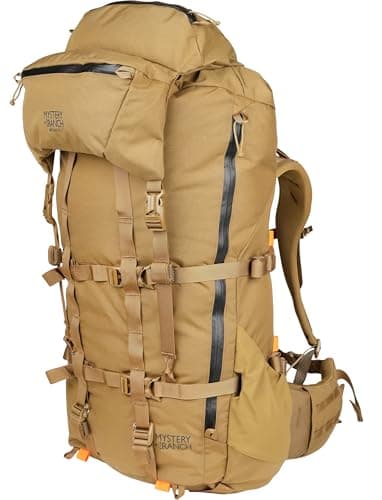
Ask a guide what pack is on the mules' backs when there are no mules, and Mystery Ranch comes up first. The Metcalf is the brand's workhorse Western hunting pack: the adjustable Guide Light MT frame with a true load shelf, a torso-adjustable yoke that fits it to your back rather than hoping, and the overbuilt construction that made the Bozeman brand's reputation with military and fire crews. Mule Deer Foundation named it their best overall Western pack, and the consistent theme in published reviews is that it carries genuinely heavy loads — the 80-pound-plus kind — with composure budget frames cannot fake. Expect roughly $630-670 depending on size and pattern.
Honest cons: at around 6 poundsit is heavy before you load it — ultralight rivals from Stone Glacier and Exo Mountain Gear (sold direct, and worth cross-shopping if you count ounces) undercut it by more than a pound — and the price plus Mystery Ranch's buckle-heavy design language is not for everyone.
Who it's for: the elk and mule deer hunter who will genuinely pack meat, wants one frame system for day hunts through week-long trips, and values proven durability over the last few ounces.
Best all-around: Badlands 2200
The Badlands 2200 may be the most-carried hunting pack in America, and two decades of production have not made it obsolete: about 2,250 cubic inches in a batwing design that opens flat, a built-in meat-hauling compression system that handles a boned-out deer, a real (if soft) frame and hip belt, and Badlands' famous unconditional lifetime warranty— they fix anything, no receipt, forever. Street price typically runs $250-300. It is the pack for the hunter who does a bit of everything: treestand sits, day trips out West, gear-heavy late-season hunts.
Honest cons: at roughly 5.5 pounds it is heavy for its capacity, the suspension tops out well short of a true frame hauler — a full elk quarter is asking too much — and the pocket-rich batwing layout is love-it-or-hate-it. Camo-pattern availability shifts year to year.
Who it's for: the whitetail-first hunter who takes an annual Western trip and wants one do-most-things pack backed by the best warranty in the business.
Best value frame pack: Kings Camo XKG Summit 2700
Kings Camo built its brand on delivering premium-tier function under premium-tier prices — the same case we examined in our XKG clothing review — and the new XKG Summit 2700 brings that pitch to frame packs. For $489.99 you get what the big names charge $650-plus for: an adjustable external frame with a true load shelf, 500D Cordura with a PU weatherproof coating, YKK zippers, full horseshoe access, five compression points with weapon-locking buckles, and — a detail we appreciate — an included rain fly and cam/gun boot that are paid add-ons elsewhere. Total system weight is a competitive 5.85 pounds.
Honest cons: the Summit series is new for 2026, so there is no long-term durability record yet — the industry press coverage is positive, but multi-season owner feedback simply does not exist the way it does for Mystery Ranch — and Kings' dealer network is thinner, so trying before buying is harder. The 2,700ci bag is also day-to-overnight sized; multi-day hunters should look at the larger Summit 5200.
Who it's for:the Western hunter who wants genuine load-shelf hauling and adjustable fit without paying the boutique-brand premium — the value pick of the frame-pack tier.
Best budget: ALPS OutdoorZ Pursuit
The ALPS OutdoorZ Pursuit is the standing answer to "first hunting pack, real budget." For roughly $100-130 you get about 2,700 cubic inches with a proper (if basic) frame and hip belt, a front lash system that carries a bow or rifle, a blaze-orange rain cover, a drop-down shelf pocket, and quiet brushed fabric — a feature list that reads like packs at twice the price. It has been a best-seller for years, and the enormous owner base rates it well for exactly what it is: honest entry-level function.
Honest cons: the suspension is the compromise — comfortable with day-hunt loads, overmatched by serious meat weight — and zippers and buckles are built to the price, so hard backcountry use will find the limits. It is a pack to start with, not end with.
Who it's for: new hunters, occasional Western trips with light loads, and anyone who would rather spend the savings on tags and fuel this season.
Best day pack: Eberlestock Brute Scout
Eberlestock has spent years building the thinking hunter's day pack, and the Brute Scout is the current one: a streamlined 1,800-cubic-inch bag on an internal frame sheet with an integrated aluminum stay, so it holds its shape and its posture under a load a frameless day pack would let sag. An air-mesh shoulder harness keeps early-season sweat down, there is a hydration hanger and a top zip pocket for the things you reach for without stopping, and front and side compression straps carry a bow, a tripod or a shed on the outside. It lists around $199— verify current pricing.
Honest cons: it is a day pack, full stop — no load shelf, modest capacity, and a meat-hauling job means multiple trips or a second pack. There is no built-in rifle scabbard either; Eberlestock now sells weapon carry as a separate scabbard that mounts to the pack, so budget for it if hands-free rifle carry is the reason you are shopping. And it is new enough that owner feedback is still thin — a handful of ratings rather than hundreds.
Who it's for:the mobile day hunter — scouting, ridgeline miles, fast spot-and-stalk — who wants a quiet, disciplined pack that does not tempt overpacking.
The bottom line
Buy for the hunts on your calendar, not the ones in the films. If real pack-outs are in your future, the Mystery Ranch Metcalf is the proven hauler and the Kings XKG Summit 2700 delivers the same load-shelf architecture for meaningfully less. For everything short of that, the Badlands 2200 is the lifetime-warranty all-rounder, the Eberlestock Brute Scout is the day pack for fast miles, and the ALPS OutdoorZ Pursuitproves a first pack does not need to cost three figures twice over. Fit it to your torso, test it with real weight, and keep a kill kit and contractor bag in the bottom — the best pack is the one that is ready when everything goes right.
What goes in the pack matters as much as the pack: see our cold-weather layering guide for the clothing system, headlamp picks for the hours it gets used most, and boots to carry it all.
Frequently asked questions
What size hunting backpack do I need?
Match capacity to hunt length: 1,500-2,500 cubic inches covers day hunts and treestand sits; 2,500-4,500 handles all-day to overnight trips; 4,500-6,500 carries multi-day backcountry camps. If you hunt the West, consider a frame system that compresses for day hunts and expands (or swaps bags) for pack-outs - one purchase covers everything. Buying honest beats buying aspirational; oversized packs sag and rattle half-empty.
What is a load shelf on a hunting pack?
A load shelf (or meat shelf) lets the pack bag separate from the frame so a meat-filled game bag rides pinned between them, tight against your spine where heavy weight carries best, with your gear rebuckled outside it. It is the defining feature of serious Western hunting packs like the Mystery Ranch Metcalf and Kings XKG Summit, and the main thing separating them from hiking packs of the same size.
Are expensive hunting packs worth it for whitetail hunting?
Usually not. Treestand and blind hunters on ground where a deer can be dragged or carted rarely need a $500 frame hauler - a $100-300 pack like the ALPS OutdoorZ Pursuit or Badlands 2200 carries the layers, calls, and kill kit just as well, quieter budgets included. The frame-pack premium buys heavy-load comfort you only cash in when boned-out meat goes on your back miles from the truck.
How should a hunting backpack fit?
Fit is torso length, not height: measure from the bony bump at the base of your neck to the top of your hip bones, and match it to the pack's size or adjustment range. The hip belt should ride on the crest of your hips and carry most of the weight. Test any pack with 40 real pounds loaded - every pack feels good empty - and walk stairs: no shoulder gap, no sway, weight on the hips.
Can you carry a rifle or bow on a hunting backpack?
Yes - hands-free weapon carry is one of the best reasons to buy a hunting-specific pack. Designs range from add-on scabbards (Eberlestock sells one that mounts to its packs) to lash-and-boot systems on frame packs like the Kings XKG Summit and ALPS Pursuit. Look for carry that centers the weapon's weight rather than pulling to one side, and that lets you re-arm quickly when you spot game.
Sources
- GearJunkie - best backpacks for big-game hunting
- Kings Camo - XKG Summit 2700 backpack
- Petersen's Hunting - Kings Camo XKG Summit series announcement
- Mule Deer Foundation - best packs for mule deer hunting
- Badlands - 2200 hunting pack
- Mystery Ranch - Metcalf pack
- Eberlestock Brute Scout Day Pack - manufacturer listing copy (1,800 cubic inches, internal frame sheet with integrated aluminum stay, air-mesh shoulder harness, hydration hanger, top zip and stretch front pockets, front and side compression straps; $199.00 on 2026-09-25)
- Eberlestock - X2 Pack V2 product page (current X2 is a 40L pack at $329.00 with MOLLE compatible with the separate Bolt Action Scabbard; the older 1,900 ci built-in-scabbard X2 we previously listed is no longer sold, verified 2026-09-25)
Keep reading
Gearing up before your next hunt?
See how we evaluate gear, then dig into the reviews and buying guides — written without inventory to sell.