Buying Guide
Best Headlamps for Hunting (2026)
Every hunt starts and ends in the dark. Here is what actually matters in a headlamp - red-light modes, beam pattern, and batteries that do not quit in the cold - plus five picks worth strapping on.
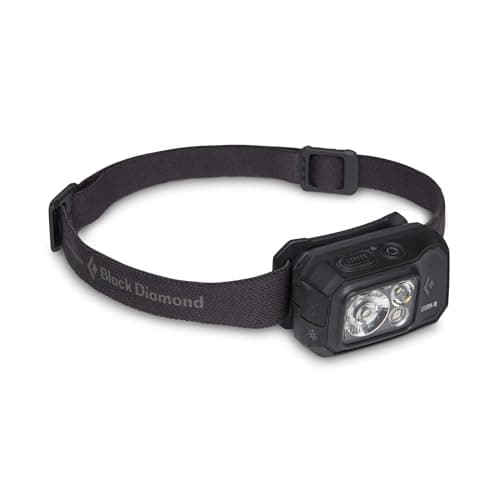
A headlamp is the one piece of gear that touches every single hunt. You wear it walking in before shooting light, tracking after sunset, gutting an animal in the dark, and stumbling back to the truck — and yet most hunters grab whatever was cheap at the hardware store and then wonder why the beam dies in November. The general "best headlamp" lists are written for campers and runners; a hunter's requirements are meaningfully different, and two of them — red-light modes and cold-weather battery behavior — are exactly the specs those lists gloss over.
So this guide starts with the four criteria that matter when the destination is a treestand rather than a campsite, then names five headlamps that earn a place in a hunting pack. We have not fabricated any field testing here — picks and claims are built from manufacturer specifications and independent published testing, principally Outdoor Life's hunting headlamp test, and we say so where a number comes from someone's stopwatch rather than a spec sheet. Prices are approximate as of 2026; verify before buying.
Red light: why it matters for hunters
White light does two bad things on the way to a stand: it wrecks your own night vision for many minutes after you switch it off, and it sweeps the woods like a lighthouse announcing your arrival. A red modeaddresses both. Red light preserves your dark adaptation far better than white, and deer — whose eyes are most sensitive to the blue and green end of the spectrum — appear far less reactive to dim red light than to a white beam.
Be honest about the limits: red light is not an invisibility cloak. A deer can still see a bright red beam swinging through the timber, and it will absolutely still hear you. Treat red mode as pressure reduction, not stealth technology — use the dimmest setting that lets you walk, and keep it pointed at the ground.
Some hunting lamps add green and blue modes. Green is popular with predator and hog hunters, since those species also react less to it than to white light. Blue is often marketed for blood tracking; owner opinions are genuinely mixed and we have found no controlled evidence it beats a good bright white beam, so treat blood-tracking modes as a bonus, not a buying reason.
Lumens vs beam pattern: the number that lies
Lumens measure total light output, and the marketing arms race has pushed headline numbers past 2,000. But raw lumens matter less than how the light is shaped:
- Floodbeams spread light wide and even — ideal for camp chores, field dressing, and anything at arm's length. A dim, wide beam beats a bright, narrow one for close work.
- Spotbeams throw a tight column far downrange — what you want for following a blood trail, picking out a reflective trail tack, or checking what just snapped a branch.
- The sweet spot is a lamp that does both, ideally at the same time. Most of the picks below offer dedicated flood and spot settings or a combined mode.
In practice, 300-500 lumens covers nearly everything a hunter does, and you will spend most of the night at far lower settings to protect your night vision and battery. The 1,000-plus lumen turbo modes are for two jobs: after-dark blood trailing and finding a downed animal — genuinely valuable, but minutes-per-hunt features, not all-night settings. Also check the ANSI-rated runtime at high, not just the maximum lumen number; some lamps hold their advertised brightness for only a short burst before stepping down.
Batteries in the cold
The spec sheets are written at room temperature; your hunts are not. Battery chemistry is the difference between a lamp that works on a January stand exit and one that dies in your pocket:
| Alkaline AAA/AA | Worst in cold - voltage sags badly below freezing. Fine as backups in mild weather only |
|---|---|
| Lithium AAA/AA | Excellent in cold and light - the best disposable choice for winter hunts |
| Rechargeable li-ion | Good cold performance and cheap to run, but a dead cell in the field cannot be swapped unless the lamp also takes disposables |
| Hybrid designs | Run a rechargeable pack day-to-day, drop in lithium AAAs when it dies - the best of both for hunters |
That last row is why we weight hybrid-power lampsheavily for hunting. The Coast WPH34R and Petzl Actik Core below both run a rechargeable cell for everyday economy and accept ordinary AAA batteries in a pinch — which means a $4 pack of lithiums in your bino harness is a full recharge you can perform in the dark with gloves on. Whatever you buy, carry the lamp inside a warm layer on cold sits and top off rechargeables before every hunt.
Weight, comfort, and controls
A lamp you notice is a lamp you leave home. Under about 3 ounces you stop feeling it; past 6 ounces, front-heavy lamps bounce when you walk and press on your forehead during long sits, which is why heavier high-output models move the battery to a rear pack for balance. Two more details earn their keep in the field: glove-friendly controls that do not require a phone-screen touch or a fingernail, and a lockout function so the lamp cannot switch itself on inside your pack and arrive dead — a small feature that has saved more hunts than any turbo mode. An IPX4 water-resistance rating handles rain; IP67 survives a dunk in the marsh.
The picks at a glance
Five lamps that cover the field from a 1.4-ounce featherweight to a 2,000-lumen tracker. Prices are approximate as of 2026 — verify current pricing before buying.
| Headlamp | Max lumens | Weight | Power | Best for | Approx. price |
|---|---|---|---|---|---|
| Black Diamond Storm 500-R | 500 | ~3.5 oz | Rechargeable | Best overall | ~$75 |
| Coast WPH34R | 2,000 | 8.4 oz | Hybrid (ZX955 pack or 3x AAA) | Best red light | ~$80 direct |
| BioLite Range 500 | 500 | Not published | Rechargeable (USB-C) | Fast recharge, IP67 | ~$70 |
| Petzl Actik Core | 600 | ~3.1 oz | Hybrid (CORE or AAA) | Hybrid power value | ~$80 |
| Nitecore NU25 UL | 400 | 1.4 oz | Rechargeable | Ultralight | ~$37 |
Best overall: Black Diamond Storm 500-R
The Storm 500-R is Outdoor Life's best-overall hunting headlamp, and the reasons map neatly onto what this guide says matters: a simple, sturdy, fully sealed rechargeable design that shrugged off their submersion test, 500 lumens with a quality flood and spot arrangement, and red, green, and blue night-vision modes in a package around $75. It is waterproof enough for a duck blind, bright enough for a blood trail, and compact enough to live in a bino harness all season.
Honest cons: the touch-sensitive boost control can trigger accidentally — Outdoor Life's main complaint — and it is recharge-only, so on a multi-day backcountry hunt you are managing a USB-C cable and a power bank rather than spare AAAs.
Who it's for:the hunter who wants one do-everything lamp with real night-vision modes and foul-weather sealing at a fair price — the default pick for most people reading this.
Best red light: Coast WPH34R
Most red modes are polite little proximity lights. The Coast WPH34R's is not — Outdoor Life named it their best red light specifically because its red beam is bright and focused enough to actually walk and work by, alongside a 2,000-lumen white maximum for tracking. Just as important for hunters, it runs a hybrid power system— rechargeable lithium pack or plain AAAs — and the light body detaches from the strap to work as a handheld flashlight, which is exactly what you want when following a blood trail bent over at the waist.
Honest cons: at 8.4 ouncesit is the heaviest lamp here, and testers found it front-heavy enough to be uncomfortable on long wears without snugging the strap down. This is a work light for walking in, tracking, and dragging out — not the lamp for an all-night ultralight mission. Coast also sells it direct at $79.99 rather than through Amazon: the model Amazon stocks is the sibling WPH32R, which shares the 2,000-lumen output, the red beam modes, the IP68 rating and the detachable body, but is USB-C rechargeable only with no AAA fallback. The buy link below goes to that one, because it is the one you can actually order today.
Who it's for:hunters who live in their red mode — predator hunters, early-entry treestand hunters — and anyone who wants serious tracking power and AAA-backup insurance in one unit.
Best fast recharge: BioLite Range 500
BioLite has retired the rear-battery HeadLamp 800 Pro from Amazon, and the Range 500 is the lamp that replaced it in the lineup. The spec that earns it a slot here is charging speed: BioLite publishes 0 to 80 percent in 30 minutes, and an extra hour of light from an eight-minute charge— which is the difference between a dead lamp and a usable one when you notice it in the truck. Around that you get 500 lumens with a 100-metre beam, white and red modes, a published 200 hours on low and six hours on high, an IP67 submersible rating rather than mere splash resistance, a moisture-wicking band and a three-year warranty, at about $70.
Honest cons: 500 lumens matches the Storm rather than beating it, so this is not the pick if you want the brightest beam on the page; the six-hour high-mode figure means an all-night tracking job runs it down; there is no disposable-battery fallback, so the cold-sit insurance is a power bank rather than AAAs; and BioLite does not publish a weight for it.
Who it's for:the hunter who charges between sits rather than before the season — and anyone who wants a genuinely waterproof rechargeable for under $75.
Best hybrid power: Petzl Actik Core
The Actik Core has been the quiet standard for hybrid-power headlamps for years, and the current version outputs 600 lumens from a lamp that weighs about 3 ounces and costs around $80. The trick is Petzl's CORE system: it ships with a rechargeable USB-C cell, and the same compartment accepts three ordinary AAAs with no adapter. Recharge for pennies all season, carry lithium AAAs for the coldest sits, and never own a dead headlamp again. It has a red mode for walking in, mixed flood and spot beams, and the reflective headband is a nice find-it-in-the- truck touch.
Honest cons: the red mode is a proximity light, not a Coast-style red spotlight; it is IPX4 splash-resistant rather than fully waterproof, so the duck blind favors the Storm; and the button sequence to reach red takes a little muscle memory.
Who it's for:the hunter who wants the cheapest-to-run, hardest-to-kill power strategy in a light, comfortable everyday lamp — arguably the most practical pick on this page for cold-country hunters.
Best ultralight: Nitecore NU25 UL
At 1.4 ounceswith its minimalist cord-style headband, the Nitecore NU25 UL is the lamp you forget you are wearing — and at around $37, the cheapest pick here. It puts out up to 400 lumens, includes both a red mode and a high-CRI flood for natural color at close range (genuinely useful when field dressing), and charges over USB-C. In Outdoor Life's runtime test it beat its own advertised numbers, running more than four hours against a promised two and a half.
Honest cons: the thin band gives up some stability under a heavy toboggan or when scrambling, maximum throw is modest next to the Coast, and there is no disposable-battery option. It is a specialist — the perfect always-in-the-pack backup or mobile-hunter primary, not a tracking light.
Who it's for:ultralight backcountry hunters counting ounces, and every hunter who should own a second headlamp in the bottom of the pack — which is all of them.
The bottom line
Most hunters should start with the Black Diamond Storm 500-R— sealed, simple, real night-vision modes, fair price. If you live in red light or need a serious tracking beam, the Coast WPH34R is the specialist; if you top a lamp up between sits rather than before the season, the BioLite Range 500 refills fastest. The Petzl Actik Core is the smartest power strategy for cold country with its AAA fallback, and the Nitecore NU25 ULis the featherweight everyone should stash as a backup. Whichever you choose: lithium or rechargeable power in winter, red light on the walk in, and always — always — a second light in the pack.
The lamp gets you there in the dark; the rest of the kit keeps you there. See our guides to the best hunting boots and cold-weather layering for the sit itself, and when deer move for why those pre-dawn walks are worth it.
Frequently asked questions
Does red light really keep deer from seeing you?
Partially. Deer eyes are most sensitive to the blue-green end of the spectrum, so they appear far less reactive to dim red light than to white light - but a bright red beam swinging through the timber is still visible to them, and they can still hear you. Use red mode at the dimmest useful setting, keep it pointed at the ground, and treat it as pressure reduction rather than invisibility.
How many lumens do I need in a hunting headlamp?
Less than the marketing suggests. 300-500 lumens covers walking in, field dressing, and camp work, and you will run far lower settings most of the night to protect night vision and battery. The 1,000+ lumen modes earn their keep for exactly two jobs: blood trailing and finding downed game after dark. Beam pattern matters more than raw lumens - a lamp with both flood and spot beats a brighter lamp with only one.
What batteries work best in a headlamp in cold weather?
Lithium. Alkaline batteries sag badly below freezing, while lithium AAs/AAAs keep working in deep cold and weigh less. Rechargeable li-ion cells handle cold reasonably well but cannot be swapped in the field unless the lamp also accepts disposables - which is why hybrid designs like the Petzl Actik Core and Coast WPH34R are so practical for hunters. Carry the lamp inside a warm layer on cold sits and start every hunt fully charged.
Are blue light modes actually useful for blood tracking?
The evidence is mixed. Blue modes are marketed for making blood stand out, but owner reports are genuinely split and we have found no controlled testing showing blue beats a good bright white beam at close range. Treat blood-tracking modes as a free bonus, not a reason to choose one lamp over another. A strong, focused white or red beam and a slow, methodical trailing pace matter far more.
Should I carry a backup headlamp?
Yes - a dead light in the dark is a safety problem, not just an inconvenience. The cheapest insurance is an ultralight second lamp like the Nitecore NU25 UL (1.4 oz) living permanently in your pack, or spare lithium AAAs if your primary lamp accepts disposables. A lockout feature on your primary lamp helps too, preventing it from switching on inside your pack and arriving dead.
Sources
- Outdoor Life - best headlamps for hunting (field test)
- GearJunkie - best headlamps for hunting
- Petzl - Actik Core specifications
- Coast - WPH34R specifications (2,000 lumens, IP68, ZX955 rechargeable pack or 3x AAA, 8.36 oz, $79.99 direct and in stock on 2026-09-25; no longer listed on Amazon)
- Coast WPH32R - Amazon listing copy (2,000 lumens, 180 m beam, IP68 waterproof, five output modes including red beams, magnetic tailcap, detachable light body; $49.97 on 2026-09-25)
- BioLite - Range 500 headlamp specifications (500 lumens, 100 m beam, 200 hours low / 6 hours high, IP67 submersible, white and red modes, USB-C 0-80% in 30 minutes, 8-minute charge for 1 hour of light, moisture-wicking band, 3-year warranty, $69.95; verified 2026-09-25)
- BioLite - HeadLamp 800 Pro (still sold direct at $149.95 but no longer listed on Amazon, checked 2026-09-25)
Keep reading
Gearing up before your next hunt?
See how we evaluate gear, then dig into the reviews and buying guides — written without inventory to sell.