Buying Guide
Best Crossbow Cocking Devices: What Actually Fits Your Bow
A crank is not an accessory you pick by price. It is a part that either bolts to your stock or does not. Here is how to read the fitment lists, why the effort-reduction percentages are not comparable, and the ten cocking aids worth buying.
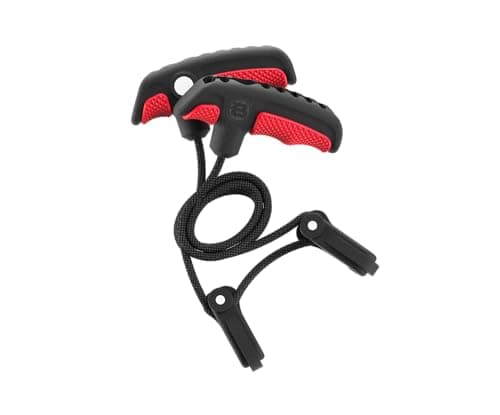
Almost every guide to crossbow cocking devices is written as though you get to choose one. You mostly do not. A crank cocking device mounts to a specific stock, on a specific crossbow family, and if your bow is not on the fitment list then the best crank in the world is the wrong answer for you.
That single fact reorders the whole category. Price, effort reduction, noise and de-cocking all matter, but they matter afteryou have found the short list of devices that physically attach to your bow. So this guide is built the way the purchase actually works: fitment first, then the claims that manufacturers make and how to compare them honestly, then the picks — grouped by the crossbow you already own rather than by price.
If you want the technique rather than the hardware, our guide to cocking and de-cocking a crossbow covers the centering method that fixes most mystery accuracy problems. This page is about what to buy.
Fitment first: a crank is a part, not an accessory
A rope cocker is genuinely close to universal. It anchors in the stock’s cocking hook or notch, its claws grip the string either side of the rail, and it works on most bows that have a stirrup and somewhere to seat the rope. A crank is the opposite. It bolts to a mounting point that the manufacturer designed into that model, and the mounting points are not shared across brands or even across a brand’s own lineup.
Barnett makes the point better than any warning label could. Its crank cocking device line is not one product with one price — it is six separate SKUs (Standard, Tactical, Explorer, Hyper Raptor, HyperGhost and a sled-style Standard), each built for a different family of bows and none of them interchangeable. The Standard CCD, part number BAR20020, publishes a fitment list running to dozens of models — Raptor FX, FX2 and FX3, Whitetail Hunter and Whitetail Pro STR, Recruit, Assault 350, Avenger, Ghost 350 through 420, Wildcat, Vindicator, Hellcat, Droptine, Brotherhood and more — and then names the exception outright: it does not fit the Hyper Whitetail 410.
CenterPoint is even more explicit. Its Power Draw crank is described as being for CenterPoint crossbows built on MIL-SPEC buffer tubes, naming the Amped 425 and Sniper Elite 385, and then publishes an incompatibility list by SKU: C0001, C0002, C0006, C0007, C0009, C0016, the CP400 and the Specialist XL370. The CP400 gets its own dedicated crank because the general one does not fit it.
Why 50%, 70% and 93% cannot be compared
Every maker in this category publishes an effort-reduction number and almost none of them are measuring the same thing. Laid side by side, the published claims look like this:
| Rope cockers (most brands) | Reduces cocking effort by about 50% |
|---|---|
| TenPoint Rope Sled | Reduces crossbow cocking effort by 50% |
| CenterPoint Power Draw | Up to 70% reduction in draw weight |
| CenterPoint CP400 Silent Cranking Device | Reduces draw weight by up to 80%, without a sound |
| Barnett Standard Crank Cocking Device | Reduces cocking tension by up to 93%; 13 lbs maximum force |
| Excalibur Charger EXT | Reduces draw effort of any Excalibur crossbow to as little as 12 pounds |
| TenPoint ACUdraw Silent | Reduces draw weight to 5 lbs |
Read that table again and notice which rows are actually useful. A percentage is a ratio against a number the manufacturer does not state, and it changes with your bow: 70 percent off a 185-pound draw weight and 70 percent off a 260-pound draw weight leave your hands doing very different amounts of work. The rows that tell you something you can act on are the ones quoting residual pounds— Barnett’s 13 pounds maximum force, Excalibur’s as little as 12 pounds, TenPoint’s 5 pounds on the ACUdraw Silent. Those are the numbers your shoulder feels.
Two of those figures are also doing something the percentages cannot: they are answering the question a buyer with a shoulder injury, a young shooter or an older hunter is really asking. Whether a device turns a 200-pound bow into a 20-pound pull or a 5-pound pull is the difference between a crank being a convenience and a crank being the reason you still hunt. When a product only publishes a percentage, treat it as marketing and go looking for the pounds.
Why every rope cocker claims about half, and none claim more
Look across rope cockers from Barnett, CenterPoint, Excalibur, TenPoint and a dozen no-name sellers and you will find the same claim on all of them: roughly 50 percent. That is not everyone copying the same brochure. It is geometry. A rope cocker is a simple 2:1 pull — the cord anchors at the stock, doubles back through the claws that grip the string, and returns to the handles in your hands. You move the handles twice as far as the string travels, and in exchange you pull about half the weight. There is no version of the design that beats it, which is why nobody advertises a 70 percent rope.
What that means for buying is genuinely liberating: within rope cockers, you are not shopping for leverage. You are shopping for hardware quality. Roller or glide hooks that release the string cleanly instead of dragging on the serving. Cord that does not stretch unevenly and pull one side ahead of the other. Handles you can grip in gloves. Claws that sit where you put them. That is the whole difference between a budget cord and a name-brand one, and it is why the cheapest listings on any marketplace are a false economy against a serving that costs more to replace than the cocker did.
Writing for Deer & Deer Hunting, Bryan Zabitski put the tiers plainly: a standalone rope cocker and a stock-integrated rope cocker both give you about 50 percent, but the integrated one is faster because it is always attached, while a geared crank drops draw weight by roughly 90 percent and delivers the most consistent string position of the three. That consistency — not the effort saving — is the accuracy argument for a crank.
De-cocking is usually a separate purchase
Here is the trap that catches first-time buyers. Integrated crank systems built into a crossbow — TenPoint’s ACUslide, Ravin’s mechanism, the de-cock models several makers now sell — usually unload the bow as well as cock it. Bolt-on aftermarket cranks, which is what most of this page is, mostly do not, and the ones that do need an extra part or an approved procedure. Neither Barnett nor CenterPoint lists de-cocking as a function of the cranks above. Excalibur’s Charger EXT gets there, but the description is specific about how: the separately sold Fail-Safe Strap “will add support and security, allowing you to quietly and safely de-cock.” Excalibur also sells dedicated de-cocking hooks for its Ceasefire and Dualfire systems, which exist precisely because the crank alone is not the answer.
So budget for the end of the hunt as well as the start of it. If your bow has no factory de-cock function, you have three honest options: a manufacturer-approved de-cocking accessory for your specific model, a portable discharge target, or a de-cocking bolt head fired into soft ground. The last of those costs less than a box of field points, which is why it made this list.
What we looked for
- Published fitment. The maker has to say, in writing, which crossbows the device fits. Devices whose only compatibility claim is a marketplace listing were not considered.
- A stated effort figure. Ideally residual pounds, at minimum a published percentage. Nothing was included on vibes alone.
- Even, centered pull. The whole accuracy case for a cocking aid is that it latches the string in the same place every time. Self-centering cord and claws that hold their position matter more than raw effort saving.
- Honest de-cock status. Whether the device unloads the bow, and what else you need if it does not.
- Currently purchasable.Every pick below was checked for stock and price on the date this guide was published. Two well-regarded CenterPoint items are sold out on CenterPoint’s own store right now and are linked where they are actually available.
The picks at a glance
| Device | Type | Fits | Published effort claim |
|---|---|---|---|
| Barnett Premium RCD | Rope, hook style | Most crossbows | Up to 50% less cocking tension |
| CenterPoint Universal 46-Inch | Rope | Most crossbows | 50%, 46-inch cord, roller glide hooks |
| TenPoint Rope Sled | Rope, sled style | Broad, but not the Nitro X | 50% less cocking effort |
| CenterPoint Power Draw | Crank | CenterPoint MIL-SPEC buffer-tube bows | Up to 70% draw-weight reduction |
| Barnett Standard CCD (BAR20020) | Crank | Long Barnett list; not Hyper Whitetail 410 | Up to 93%; 13 lbs max force |
| Excalibur Charger EXT | Crank, detachable | TwinStrike, Micro, Bulldog series | Down to as little as 12 lbs |
| Excalibur Charger Lite | Crank, detachable | Excalibur, lighter-duty | Excalibur's lighter crank option |
| CenterPoint CP400 Silent Crank | Crank, silent | CP400 only | Up to 80%, without a sound |
| TenPoint ACUdraw | Built-in crank | TenPoint ACUdraw bows; Wicked Ridge via adapter plates | Down to about 5 lbs |
| Ravin Draw Handle (R210) | Draw handle | All Ravin except R18 and R500 Series | Magnetic, mounts either side |
| Allen Titan De-Cocking Head | De-cock only | Standard AMO/ATA arrow threads | Unloads into soft ground |
Best rope cocker for most crossbows: Barnett Premium RCD
If your bow has no integrated system and you are buying one thing, buy a good rope cocker. Barnett’s Premium Rope Cocking Device is the version of that product built to a standard rather than to a price: ambidextrous, hook style, and rated by Barnett to cut cocking tension by up to 50 percent — the ceiling for the design, which is exactly what you want it to claim.
The reason to spend here rather than on a five-dollar cord is the serving on your string. Cheap claws drag; cheap cord stretches unevenly and pulls one limb ahead of the other, which is the mechanism behind half the “my bow suddenly shoots left” posts on crossbow forums. A cocker that holds both sides even is doing accuracy work, not just strength work.
The honest cons:it is still a rope, which means it still needs a stirrup and a standing position — no seated cocking in a treestand. It does not de-cock. And Barnett sells this device in several closely-named variants, so check that the one you add to the cart is the hook style if that is what your stock takes.
Best budget cocking aid: CenterPoint Universal 46-Inch Rope Cocker
CenterPoint’s universal rope cocker is the honest floor of this category. It is a 46-inch cord with roller glide hooks and T-handles, described by CenterPoint as reducing draw weight by 50 percent and designed for use with most crossbows. At the price it lists for, the roller hooks alone justify it over the anonymous marketplace cords sitting beneath it in the search results.
It is also the sensible thing to keep in the truck as a spare. Rope cockers get left in jacket pockets and lost in the dark, and a bow you cannot cock is a hunt you do not take.
The honest cons:the hardware is basic, the handles are small in heavy gloves, and “most crossbows” is CenterPoint’s phrasing, not a fitment list — confirm your stock has somewhere to seat the cord. Note too that this item is currently sold out on CenterPoint’s own store, which is why the buy link goes to Amazon.
Best sled-style rope: TenPoint Rope Sled
A sled rides the rail rather than hanging off two independent claws, which makes an even pull harder to get wrong. TenPoint’s Rope Sled publishes the same 50 percent reduction as every other rope aid — because, as above, that is the design’s ceiling — but it delivers it with the string held square by the sled body instead of by your two hands staying level.
For anyone who has struggled to keep both handles at the same height, or who is cocking a heavy bow at the end of a cold sit, that is the upgrade worth paying for.
The honest cons:TenPoint states plainly that it is not compatible with the Nitro X, and sleds are more stock-sensitive than plain ropes generally — the rail and flight groove have to accept the body. It costs several times what a basic cord does for the same published leverage, and it does not de-cock.
Cheapest real crank: CenterPoint Power Draw
The Power Draw is the least expensive way into a geared crank, and CenterPoint is unusually straight about what it will and will not fit. It is built for CenterPoint crossbows with MIL-SPEC buffer tubes — the Amped 425 and Sniper Elite 385 are named — and CenterPoint publishes the exclusions by SKU rather than leaving you to find out at the range: C0001, C0002, C0006, C0007, C0009, C0016, the CP400 and the Specialist XL370.
Its published claim is up to a 70 percent reduction in draw weight, which is below what the Barnett and Excalibur units claim, but on a 185-pound bow that is the difference between a full-body effort and a seated one.
The honest cons:the 70 percent figure is a percentage with no residual pound number behind it, so you cannot compare it directly to Excalibur’s 12 pounds. De-cocking is not listed as a function. And the fitment is narrow enough that this is a CenterPoint-owner purchase and nobody else’s. It is also currently sold out on CenterPoint’s own store.
Best crank if you own a Barnett: Standard Crank Cocking Device
Barnett’s Standard CCD, part number BAR20020, is the most useful crank on this page for the simple reason that it fits the widest list of bows people actually own. Barnett rates it at up to a 93 percent reduction in cocking tension and — more usefully — states a maximum of 13 pounds of force to operate. That is a real number you can hold against your own strength.
The handle adjusts for right- and left-handed shooters, and the fitment list is long enough that most Raptor, Whitetail, Recruit, Ghost, Wildcat, Droptine and Brotherhood owners are covered. Cross-check yours against Barnett’s published list, because the exception the company names is a current model: the Hyper Whitetail 410 takes a different device.
The honest cons:it is a mounted crank, so it adds weight and a handle to stow, and a deployed handle is a snag hazard on the walk in. De-cocking is not a listed function. And Barnett’s own line has five other cranks — Tactical, Explorer, Hyper Raptor, HyperGhost and a sled-style Standard — so the wrong one is one click away.
Best crank if you own an Excalibur: Charger EXT
Excalibur’s recurve bows are their own world, and the Charger EXT is the answer for them. Excalibur states that it reduces the draw effort of any Excalibur crossbow to as little as 12 pounds, and that it fits the TwinStrike, Micro and Bulldog series, with some earlier models able to be retrofitted. It detaches in seconds, the handle is ambidextrous and removable, and the cable is spring-loaded so it retracts instead of dangling.
It is also the one crank here with a documented path to a quiet de-cock: Excalibur says the Fail-Safe Strap adds the support and security to de-cock quietly and safely. That strap is a separate purchase, and this guide would rather say so than let you assume it is in the box.
The honest cons:it is by some distance the most expensive device on this page, it is useless on any bow that is not an Excalibur, and the de-cock function needs that extra strap. If you want the same idea for less, Excalibur’s Charger Liteis the lighter-duty crank in the same family — fewer bows, less money, same fitment homework.
Best silent crank: CenterPoint CP400 Silent Cranking Device
Noise at the moment of cocking is a real problem if you cock in the stand rather than at the truck, and gear-driven cranks are the loudest thing most crossbow hunters carry. CenterPoint’s CP400 crank, part number AXCCRANKCP4, is built specifically against that: the company rates it at up to an 80 percent draw-weight reduction “without a sound,” with an ambidextrous design and a mounting system made for one bow.
That one bow is the point and the limitation. It is described as exclusively for the CenterPoint CP400, which is also the model CenterPoint’s general-purpose Power Draw explicitly does not fit. If you own a CP400, this is your device; if you do not, it is not.
The honest cons: single-model fitment, a price near the top of this page, and an 80 percent claim with no residual pound figure published against it. It is sold direct by CenterPoint rather than on Amazon, so the link below goes to the manufacturer.
TenPoint, Horton and Wicked Ridge: the ACUdraw family
TenPoint sells cocking as a built-in system rather than a bolt-on, and the family splits by how much effort you want removed. The ACUdraw itself is the crank version, integrated into the stock and published as cutting the force needed to cock the bow to about five pounds — the lowest residual figure of anything in this guide, and the reason TenPoint bows are so often the recommendation for shooters with real physical limitations. Below it sit the portable rope options, the Rope Sled and the ACUsled, which buy you the same 50 percent a plain cord does. Above it, the ACUdraw Silent adds silent cocking at the same five-pound figure.
Compatibility here is stock-specific rather than model-specific, and TenPoint publishes it per variant. The ACUdraw is listed as fitting all TenPoint ACUdraw crossbows and ships with adapter plates for Wicked Ridge models; the portable ACUsled, by contrast, covers most TenPoint, Horton and Wicked Ridge bows but names the Nitro X as an exception. Match your stock to TenPoint’s list before ordering, and treat installation as dealer work unless your manual says otherwise.
The honest cons: this is the most fitment-sensitive purchase on the page, it costs more than some complete crossbows, and the cheaper rope options below it still only buy you the same 50 percent a plain cord does. Buying a TenPoint or Wicked Ridge bow with the cocking system already fitted is usually the better value than retrofitting one.
Ravin owners: the draw handle is the part
Ravin does not sell you a crank because the cocking mechanism is already inside the bow. What you buy instead is the handle that drives it, and the current one is the Ravin Draw Handle, part R210: magnetic, so it stows on the side of the bow instead of in a pocket, and ambidextrous, so it mounts on either side for right- or left-handed cocking.
Ravin lists it as fitting all Ravin crossbow models exceptthe R18 and the R500 Series, both of which take their own dedicated handles. That is the entire compatibility question for Ravin owners, and it is worth getting right — the R18 and R500 handles look similar and are not interchangeable.
The honest cons:this is a replacement or spare part, not an upgrade — it will not make your Ravin easier to cock than it already is. It is priced like an OEM component. And if you own an R18 or an R500, this is the wrong handle; buy the model-specific one. If you are still choosing between Ravin models, our Ravin brand guide covers the lineup.
Cheapest safe de-cock: Allen Titan Bolt De-Cocking Head
If your bow will not de-cock and you are not buying a crank that does, this is the cheapest honest solution in the category. The Allen Titan is a de-cocking head that threads onto a standard AMO/ATA arrow insert: a steel collar wraps the end of the shaft and a soft silicone bulb takes the impact when you fire into soft ground at the end of a sit.
Keep one bolt permanently fitted with it, keep that bolt somewhere you can find it in the dark, and the end-of-hunt problem stops being an improvisation.
The honest cons:Allen is clear that you must not shoot it into hard ground or rocks, and that while it can be used with crossbows shooting 400-plus fps, doing so shortens the head’s life — treat it as a consumable on a fast bow. It also means firing a bolt, which is noise and a lost minute of light. A crossbow with a factory de-cock function is still the better answer; this is the good answer for the bow you already own.
The mistakes that wreck strings and groups
- Buying on brand instead of on fitment. The best-reviewed crank in the category is worthless if your stock has no mounting point for it. Fitment list first, reviews second.
- Assuming a crank de-cocks. Most do not. Check before the season, not at dusk on opening day.
- Letting the cord do the centering by itself. Mark your string an equal distance either side of the rail while the bow is uncocked, then verify the marks after each draw. A quarter inch off-center is worth several inches at 40 yards, and no scope adjustment fixes it.
- Leaving the rope on the string. A cocker left hanging is a snag, a noise source and a way to lose the device. Stow it the moment the string latches.
- Reversing a crank under load. Unless your manual describes it, do not. This is the single most common way people are injured by a cocking device.
- Ignoring the serving.Cheap claws chew the center serving, and a worn serving changes nock fit and grouping before it fails outright. Inspect it whenever you wax the string — our crossbow maintenance guide covers the schedule.
Which should you buy?
If cocking effort is the binding constraint rather than a convenience — a smaller-framed shooter, an injury, or a bow that has to be cocked seated in a stand — it is usually cheaper to buy a crossbow with the system already fitted than to retrofit one. Our guide to crossbows chosen on cocking effort and held weight works through that math.
| If you... | Buy | Why |
|---|---|---|
| Own a bow with no integrated system and want one thing | Barnett Premium Rope Cocking Device | The 50% ceiling every rope hits, built with hardware that does not chew the serving |
| Want a spare for the truck, or the cheapest thing that is not junk | CenterPoint Universal 46-Inch Rope Cocker | Roller glide hooks and a 46-inch cord at the bottom of the price range |
| Struggle to keep both handles level | TenPoint Rope Sled | The sled body holds the string square instead of relying on your hands |
| Own a Barnett on the BAR20020 fitment list | Barnett Standard Crank Cocking Device | Up to 93% less tension and a stated 13 lbs maximum force |
| Own an Excalibur | Charger EXT, or Charger Lite to spend less | Down to as little as 12 lbs, detachable, and de-cocks with the Fail-Safe Strap |
| Own a CenterPoint on a MIL-SPEC buffer tube | CenterPoint Power Draw | The least expensive geared crank here, with the exclusions published by SKU |
| Own a CenterPoint CP400 and cock in the stand | CP400 Silent Cranking Device | Up to 80% reduction with no gear noise; the Power Draw does not fit this bow |
| Have a shoulder injury or are outfitting a youth or older shooter | A TenPoint bow with ACUdraw Silent | Five pounds of residual draw weight is the lowest published figure in the category |
| Own a Ravin other than an R18 or R500 | Ravin Draw Handle (R210) | The magnetic ambidextrous handle for the mechanism already in your bow |
| Cannot de-cock your bow at all | Allen Titan Bolt De-Cocking Head | Cheapest safe unload, provided you have soft ground to shoot into |
The bottom line
For most crossbow owners the honest recommendation is a good rope cocker and nothing else. The Barnett Premium Rope Cocking Devicebuys you the full 50 percent the design allows, keeps the pull even, and costs less than a half-dozen bolts. If you cannot make that work — a shoulder that will not take it, a bow you need to cock seated in a stand, a shooter in the family who cannot draw it at all — then and only then is a crank worth the money, and the right crank is whichever one your bow’s maker lists for your exact model.
Then do the cheap thing everyone skips: sort out de-cocking before opening day rather than at dusk on it. A de-cocking head on a dedicated bolt costs almost nothing and turns the most dangerous minute of the hunt into a routine.
Check the Barnett Premium Rope Cocking Device price on Amazon. If you are still choosing the crossbow itself, our best crossbows roundup and best crossbows for beginnersboth flag which models arrive with a cocking system already fitted — which is usually cheaper than adding one later.
Frequently asked questions
Do I need a cocking device for a crossbow?
Functionally, almost always. Modern hunting crossbows draw between roughly 150 and 300 pounds, and cocking one by hand is both hard and inconsistent - the string latches wherever your two hands happened to end up. A rope cocker halves the effort and, more importantly, pulls both sides of the string evenly, which is what keeps the bow grouping. Many crossbows now ship with a cocking rope or an integrated system in the box, so check before you buy a second one.
Are crossbow cranks universal?
No. Rope cockers are close to universal because they only need a stirrup and somewhere to seat the cord, but cranks bolt to a mounting point designed into a specific model. Barnett sells six different crank cocking devices for different families of its own bows, and CenterPoint's Power Draw publishes a list of its own crossbows it does not fit, including the CP400. Always match your exact model name and SKU against the manufacturer's published fitment list.
How much does a crank reduce crossbow draw weight?
Manufacturers publish very different figures and they are not directly comparable. CenterPoint rates the Power Draw at up to 70 percent and the CP400 Silent Cranking Device at up to 80 percent; Barnett rates its Standard Crank Cocking Device at up to 93 percent with a stated maximum of 13 pounds of force. Excalibur says the Charger EXT brings draw effort down to as little as 12 pounds, and TenPoint's ACUdraw Silent is rated to five pounds. The residual pound figures are the useful ones - a percentage depends on a draw weight the maker does not state.
Why do all rope cockers claim 50 percent?
Because that is the geometry of the design, not a coincidence in the marketing. A rope cocker is a simple 2:1 pull: the cord anchors at the stock, doubles back through the claws on the string, and returns to the handles. You move the handles about twice as far as the string travels and pull about half the weight. No rope cocker beats that, which is why the differences between them are hardware quality - roller hooks, cord that does not stretch unevenly, and handles you can grip in gloves.
Can a crank cocking device de-cock my crossbow?
Usually not on its own. Neither Barnett's nor CenterPoint's crank cocking devices list de-cocking as a function. Excalibur's Charger EXT can de-cock, but the company attributes that to the separately sold Fail-Safe Strap, which it says adds the support and security to de-cock quietly and safely. If your bow has no factory de-cock function, budget separately for a manufacturer-approved de-cocking accessory, a portable discharge target, or a de-cocking bolt head.
What is the difference between a rope cocker and a cocking sled?
A sled rides on the rail and holds the string square as it draws, where a plain rope cocker relies on you keeping both handles level. Both publish the same roughly 50 percent effort reduction because both are the same 2:1 pull. The sled costs more and is more fitment-sensitive - TenPoint states its Rope Sled is not compatible with the Nitro X - but it removes the most common user error in cocking, which is drawing one side ahead of the other.
Will a cocking device improve my accuracy?
Indirectly, and meaningfully. Cocking aids do not change how the bow shoots, but they latch the string in the same place every time, and a string that latches off-center throws bolts left or right no matter how the scope is set. Writing for Deer & Deer Hunting, Bryan Zabitski credits stock-integrated crank cockers with the most consistent string positioning of the three mechanism types for exactly this reason. Mark your string either side of the rail and verify the marks after each draw.
Which cocking device fits a Ravin crossbow?
Ravin crossbows have the cocking mechanism built in, so what you buy is the handle that drives it rather than an aftermarket crank. The current Ravin Draw Handle, part R210, is magnetic and mounts on either side for right- or left-handed cocking, and Ravin lists it as fitting all its models except the R18 and R500 Series, which take their own dedicated handles.
Sources
- Barnett Outdoors - Standard Crank Cocking Device product page (SKU BAR20020, $149.99, reduces cocking tension by up to 93%, 13 lbs maximum force, ambidextrous handle, published fitment list including Raptor FX/FX2/FX3, Whitetail Hunter and Pro STR, Recruit, Assault 350, Avenger, Ghost 350-420, Wildcat, Vindicator, Hellcat, Droptine and Brotherhood; not compatible with Hyper Whitetail 410, SKU BAR78166)
- Barnett Outdoors - Crank Cocking Devices collection (six separate SKUs: Tactical $149.99, Standard $149.99, Explorer $129.99, Hyper Raptor $169.99, HyperGhost $129.99, Sled Style Standard $149.99)
- CenterPoint Archery - Power Draw crossbow cranking device product page (SKU AXCCRANK, $79.99, up to 70% reduction in draw weight, for CenterPoint crossbows with MIL-SPEC buffer tubes including Amped 425 and Sniper Elite 385; not compatible with C0001, C0002, C0006, C0007, C0009, C0016, CP400 and Specialist XL370; listed out of stock on 2026-08-28)
- CenterPoint Archery - CP400 Silent Cranking Device product page (SKU AXCCRANKCP4, $229.99, reduces draw weight by up to 80% without a sound, ambidextrous, exclusively for the CP400 crossbow; in stock on 2026-08-28)
- CenterPoint Archery - Rope Cocker product page (SKU AXCRPCKR, $14.99, reduces draw weight by 50%, roller glide hooks, 46-inch rope with T-handles, designed for use with most crossbows; listed out of stock on 2026-08-28)
- Excalibur Crossbow (US store) - Cocking Aids collection (Charger EXT Crank Cocking Aid $289.99, Charger Lite Crank Cocking Aid $206.99, Rope Cocking Aid $25.99, Ceasefire Rope Cocking Aid $40.99, Fail-Safe Strap $27.99, Ceasefire and Dualfire Decocking Hooks $30.99 each)
- Excalibur Charger EXT manufacturer description as published by GritrSports (SKU 95925: reduces the draw effort of any Excalibur crossbow to as little as 12 pounds, fits TwinStrike, Micro and Bulldog Series, some previous models can be retrofitted, detachable in seconds, ambidextrous removable handle, spring-loaded retractable cable, high-strength aluminum alloys, Fail-Safe Strap allows quiet and safe de-cocking)
- TenPoint Crossbows - ACUdraw Cocking Device product page ($299.99, built into the stock, reduces draw weight to about 5 pounds when operated manually, now includes adapter plates to fit most Wicked Ridge models; verified 2026-09-25)
- Ravin Crossbows - Ravin Draw Handle product page (part R210, $84.99, attaches magnetically to either side, accommodates right- and left-handed cocking, fits all Ravin models except R18 and R500 Series; in stock on 2026-08-28)
- Allen Company - Titan Crossbow Bolt De-Cocking Head (SKU 6106, steel and silicone, standard AMO/ATA arrow threads, silicone bulb absorbs impact when firing into the ground, do not shoot into hard ground or rocks, usable with crossbows over 400 fps at the cost of a shorter head life)
- Deer & Deer Hunting - 'Which Crossbow Cocking Mechanism Is Right for Me?', Bryan Zabitski, 14 November 2018 (standalone rope cocker and stock-integrated rope cocker both about 50% reduction, stock-integrated crank about 90% and the most consistent string positioning)
- Product titles, effort-reduction claims quoted in listing copy, current pricing and stock status verified via the Amazon Creators API, 2026-08-28
Keep reading
Gearing up before your next hunt?
See how we evaluate gear, then dig into the reviews and buying guides — written without inventory to sell.