Buying Guide
Best Crossbow Targets: What Actually Stops a 400-FPS Bolt
The target is the crossbow accessory most people buy twice. Here is why a bag rated for your compound will not survive your crossbow, why outserts destroy bag targets, and the eight targets worth the money.
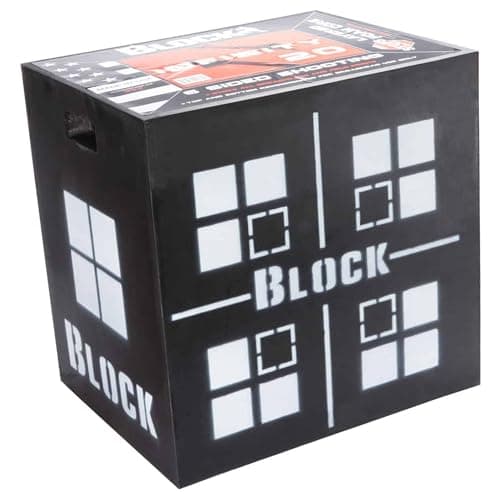
A crossbow target is the one accessory almost everyone buys twice. The first one is whatever bag was already hanging in the garage, or the cheapest foam block on the shelf. Then a 400-fps bolt either buries to the fletchings and refuses to come out, or goes straight through and lands in the fence.
Neither outcome is a defect. Both are what happens when a target built for a compound bow meets an arrow carrying far more energy than it was rated to absorb. The good news is that this is one of the few gear categories where the manufacturers publish the number you actually need — a speed rating — and where matching that number to your bow gets the decision most of the way right on its own. The rest is broadheads, bolt removal, and one warning printed on the side of most bag targets that almost nobody reads.
A crossbow target is a different product, not a marketing label
It is fair to be suspicious when a brand sells the same target twice with “crossbow” added to one of the names. In this category the difference is real, and one product line demonstrates it cleanly. Feradyne’s standard Black Hole four-sided target is rated to 300 fps. The Black Hole Crossbow version — same open layered construction, same friction-based stopping principle — is rated to stop all crossbows shooting 375 fps and above. Same brand, same idea, different core density, and a rating gap wide enough to cover most of the crossbows sold today.
Speed is only half of what the target has to deal with. A crossbow bolt is short, stiff and heavy, and it arrives carrying meaningfully more kinetic energy than a compound arrow at the same velocity. BIGshot is the only maker in this guide that publishes both numbers: its Iron Man Kinetic 650 is rated 650 fps and 250 ft-lbs of kinetic energy. The energy figure is the more honest one, because energy is what the target actually has to convert into heat and friction before the bolt stops.
The outsert warning nobody reads
This is the single most useful thing on this page, and it is printed on the products themselves. Morrell states on its bag targets, including the YJ-450 Plus and the Final Shot, that they are “not recommended for outserts or field points larger than arrow shaft.”
That matters far more to crossbow shooters than to compound shooters, because micro-diameter crossbow bolts are commonly built with outserts rather than inserts. The shaft is too narrow to accept a standard insert, so the point holder slides over the outside of the shaft instead — which also protects the carbon on impact and keeps the broadhead contact area consistent. The small-diameter bolt families sold for modern crossbows are built this way as a matter of course.
A bag target stops an arrow by gripping the shaft along its length. An outsert — or any field point wider than the shaft — punches a hole larger than the shaft that follows it, so the fill never gets to grip. Instead of compressing, it tears. Do that a few hundred times and the bag develops a soft channel that a bolt will eventually walk straight through.
So before you buy a bag, look at the front of your own bolts. If the point screws into a sleeve that sits outside the shaft, buy foam instead, or accept that the bag is a consumable. Our guide to crossbow bolts covers how shaft diameter, weight and the point system fit together.
Broadheads and speed: the hard combination
Here is the constraint that shapes this whole category. The targets with the highest speed ratings are almost all field point only. The 650-fps aramid-core Iron Man is field point only. The 525-fps Delta McKenzie Crossbow Max is field point only. Both Morrell bags are field point only. Writing for Outdoor Life, P.J. Reilly of Lancaster Archery Supply makes the same observation from the other direction: crossbow-specific targets are field-point targets, and broadhead practice means owning something else.
Foam is what takes broadheads, and it comes in two constructions:
- Layered foam— BLOCK and Black Hole. Sheets of foam compressed together stop the arrow by friction along its length rather than by brute resistance, which is why removal is easy. BLOCK’s PolyFusion construction fuses the internal layers to the target wall so the layers stay put and compress evenly. This is the only construction in the guide that carries both a high speed rating and a broadhead approval.
- Solid self-healing foam— Rinehart. There are no layers and no filler; the foam closes back over the hole. It is the most broadhead-tolerant material made and the longest-lived, which is why 3D courses use it. It is also the most expensive, and Rinehart does not publish a speed rating on its own product pages for either the 18-1 or the RhinoBlock XL.
How to read a speed rating
A published fps rating is a stopping guarantee, not a durability promise. It tells you the target will arrest a standard-diameter bolt at that speed when the target is new. It does not tell you how many times.
So buy margin, for two reasons. First, advertised crossbow speeds come from the manufacturer’s own test bolt, usually at the light end of what the bow will shoot — the number on the box is a best case, and a lighter bolt than the one you hunt with will beat it. Second, every target slows down as it ages: layers pack, fill channels, foam loses some of its bite. A target rated exactly at your bow’s speed is at its rating on day one and under it by mid-summer.
As a working rule, a 400-fps bow wants a target rated 450 or better, and anything in the 480 to 515 fps class wants a 520-plus rating or an energy-rated target. If you are not sure where your bow sits, our roundup of the fastest crossbows of 2026 lists published speeds across the current flagship models.
The 3D deer target trap
The target most new crossbow hunters actually want is a life-size foam deer, and it is usually the wrong buy. Look at the ratings: the Delta McKenzie Intruder 3D deer is rated to 350 fps, and the larger Challenger Deer is listed as compatible with 300 to 350 fpsbows. Reilly’s guidance in Outdoor Life on the Delta McKenzie 3D target is blunt: he would not shoot crossbows over 350 fps into it.
Almost every hunting crossbow on sale today is faster than that. Shoot a 400-fps bow into a 3D target rated for 350 and you are paying well over a hundred dollars for a target you will shoot through. If you want anatomy practice — and it is genuinely worth having — get it from a crossbow-rated block with deer vitals printed or sculpted on a face, which is exactly what the RhinoBlock XL and the Morrell bags provide, at speeds your bow actually produces.
What we looked for
| Published speed rating | A number from the manufacturer, not a retailer. Where the maker does not publish one - which is the case on Rinehart's own product pages - we say so instead of borrowing a figure from a listing |
|---|---|
| Energy rating | Rare and valuable. Only BIGshot publishes one here, at 250 ft-lbs. Crossbow bolts are heavy, so energy is the more honest measure of what a target has to absorb |
| Broadhead policy, per face | Not a yes or no. The Black Hole Crossbow takes broadheads on its front and back faces but is field-point-only on the polypropylene-wrapped sides. Read the face, not the box |
| Removal force | The spec that decides whether you practice. Layered foam and bag fill both stop by friction and pull easily; dense stopping cores grip. Reilly reports the Iron Man releases an arrow with two fingers even after a 515 fps hit |
| Shootable faces | Life is a function of how many faces you can rotate through. Six on the BLOCK Infinity and the RhinoBlock XL, eighteen zones on the Rinehart 18-1, four on the Black Hole, two on a bag |
| Replaceable core | Changes the math on an expensive target. The RhinoBlock XL takes a replacement insert, and Morrell's Double Duty cube uses a replaceable cover - both let you renew the target instead of rebuying it |
| Weather resistance | Every target here is described as weather resistant. None of them is waterproof. A soaked foam block stops arrows differently than a dry one, and a soaked bag rots from the inside |
| Size against your yard | A bigger face is more forgiving at distance and more useful for sight-in. A small target is easier to move and store. The 10-inch Final Shot is a discharge target, not a practice target |
The picks at a glance
| Target | Type | Rated to | Broadheads | Best for |
|---|---|---|---|---|
| BLOCK Infinity 22 | Layered foam, 6 faces | 500 fps | Yes - fixed and expandable | The one target most crossbow owners should buy |
| Rinehart 18-1 | Solid self-healing foam, 18 zones | Not published by Rinehart | Yes - including expandables | Broadhead verification and long life |
| Morrell Yellow Jacket YJ-450 Plus | Bag, 100 layers | 450 fps and beyond | No - field point only | High-volume field point practice |
| Black Hole 4-Sided Crossbow | Open layered foam, 4 faces | 375 fps and above | Front and back faces only | The cheapest target that is genuinely crossbow-rated |
| Morrell Yellow Jacket Final Shot | Compact bag, 53 layers | 500 fps | No - field point only | End-of-sit discharge shots |
| BIGshot Iron Man 20 Kinetic 650 | 5-stage aramid core | 650 fps / 250 ft-lbs | No - field point only | 480-515 fps flagships |
| Delta McKenzie Crossbow Max Speedbag | Bag, 2 faces | 525 fps | No - field point only | The largest aiming face here |
| Rinehart RhinoBlock XL | Solid foam, replaceable insert | Not published by Rinehart | Yes | Buying once and replacing the core |
Best overall: BLOCK Infinity 22
The Infinity is the only target in this guide that solves the whole problem in one purchase. Feradyne rates it to stop standard-diameter arrows at up to 500 fps, and it is approved for field points and both fixed and expandable broadheads. Nothing else here does both at that speed.
The construction is PolyFusion: a high-density layered-foam inner core wrapped in an exterior foam wall, with the internal layers fused to the wall so they compress uniformly instead of shifting and channeling. That is what buys the easy bolt removal — layered foam stops a bolt by friction along the shaft rather than by hitting a hard stopping plate. The 22 gives you six shooting faces with five different designs so you can spread shots and rotate as faces wear, it measures 22″ W x 22″ H x 16″ D, and it is made in the USA. Feradyne also publishes a 20 (20″ W x 20″ H x 16″ D) if you want a smaller block.
Honest cons: it is the most expensive foam block here at a little over $160, roughly triple the Black Hole, and a 22-inch cube is heavy enough that you will site it once rather than move it around the yard. Layered foam also gets easier over time rather than harder, so the 500 fps rating belongs to a new target, not a three-season-old one. And if you shoot broadheads heavily rather than occasionally, solid self-healing foam will outlast it.
Best broadhead target: Rinehart 18-1
If broadheads are the reason you are shopping, this is the answer. The 18-1 is a 15-inch cube of solid Rinehart self-healing foam with 18 individual target zones — no layers, no filler, nothing to pack down. Broadheads, field points and expandables all go in and come out, and the foam closes back over the hole rather than keeping it.
Rinehart backs it for a full year and will replace it through an authorized dealer if you genuinely shoot out all 18 sides, which tells you something about how long they expect it to last. It is light enough to carry by its handle to a club shoot or to camp.
Honest cons: Rinehart does not publish an fps rating for the 18-1 on its own product page. Some retailers list a Signature/Competition Series version at 500 fps; we are not treating a retailer listing as a manufacturer spec, so if you shoot a 500-fps flagship, ask Rinehart before you buy rather than assuming. It is also expensive for its size — Rinehart’s MSRP is $189.99 for a 15-inch cube — and solid foam grips harder than layered foam, so field-point removal is noticeably more work than on a bag. Plenty of crossbow shooters buy this one strictly for broadheads and keep a bag for volume.
Easiest bolt removal: Morrell Yellow Jacket YJ-450 Plus
For pure field-point volume — sight-in, testing bolt weights, practicing your hold — a bag is still the most pleasant thing to shoot, and the YJ-450 Plus is the bag to buy. Morrell rates it to stop 450 fps and beyondusing 100 layers of stopping material, built around a patented nucleus center and an Internal Frame System that makes the whole 19″ x 19″ x 19″ cube shootable rather than just the middle. It stands on its own, is weather resistant, has an E-Z tote handle, and is approved for crossbows, compounds and traditional bows.
The reason to want it is removal force. Nothing pulls easier than a bag, and if a target fights you every shot, you shoot less.
Honest cons: field points only— no broadheads — and Morrell explicitly warns against outserts and field points wider than the shaft, which rules it out for micro-diameter bolt owners as discussed above. It is bulky at 19 inches on a side, and it is the kind of target you have to bring inside or cover, because a soaked bag is a dead bag. Morrell’s own store lists it at $84.99 and was out of stock there when we checked.
Best budget: Black Hole 4-Sided Crossbow
This is the cheapest target here that is genuinely crossbow-rated, and the value is striking: Feradyne’s MSRP is $99.99 and it routinely sells for around half that. The 16″ x 16″ x 14″ block is rated to stop all crossbows shooting 375 fps and above, and it uses the open-face layered design that stops bolts with friction rather than force — the same reason it pulls easily. There are aiming points on all four sides and a carry strap.
The face policy is the detail to get right: front and back take broadheads and field points; the polypropylene-wrapped sides are field points only. Shoot broadheads into the wrapped sides and you will cut the wrap.
Honest cons: the 375-fps rating is the lowest in this guide and it reads as a floor rather than a ceiling — Feradyne’s wording is “375 fps and above” — but if you own a 480-fps bow this is not the target to gamble on. Four faces is half the rotation of the BLOCK Infinity, and only two of them take broadheads, so the broadhead-capable surface area is small and wears fast. Treat it as a two-to-three season target for a mid-speed bow rather than a lifetime buy.
Best discharge target: Morrell Yellow Jacket Final Shot
This is the crossbow-specific product no compound shooter needs, and the one most crossbow owners do not buy until they have had a bad moment in the dark. If your crossbow does not de-cock, the only safe way to unload at the end of a sit is to fire a bolt into something designed to stop it. A stump is not that thing.
The Final Shot is a 10″ x 8″ x 15″ bag weighing 9 pounds, with 53 layers of stopping material and a 500 fpsrating — higher than the far larger YJ-450, because it only ever has to take one shot at a time. It is weather resistant, carries by a handle, and stores in a pack or behind a truck seat. Bought as a two-pack, one lives at the stand and one lives at home.
Honest cons: field points only, with the same outsert warning as every other Morrell bag, so keep a field-tipped discharge bolt in your quiver rather than firing your broadhead bolt into it. The small face demands a close, deliberate shot — this is a five-yard product, not a practice target. And it is a genuine consumable; the layers pack down under repeated hits far faster than a full-size bag. Morrell lists the single at $24.99, and the single was unavailable on Amazon when we checked, so the two-pack is the practical buy.
For the fastest crossbows: BIGshot Iron Man 20 Kinetic 650
If you own one of the 480-to-515 fps flagships, this is the target built for you and the only one here with headroom to spare. The Iron Man 20 is rated to 650 fps and 250 ft-lbs of kinetic energythrough a five-stage, multi-layered aramid core — aramid being the fiber family that includes Kevlar. It measures 20″ H x 20″ W x 14″ D and carries 95 marked aiming spots.
What makes it remarkable is not the stopping power but the pulling. Reilly, testing for Outdoor Life, reports that arrow removal can be done with two fingers even when the arrow hit at 515 fps. A dense target that also releases easily is genuinely unusual, and it is why this one keeps showing up in tested roundups.
Honest cons: field points only, so it does not solve broadheads at all. BIGshot recommends bullet-point field tips specifically for longevity, which means your practice tips are part of the purchase decision. At the 50 pounds Amazon lists it is not a target you carry around the yard. It is the most expensive field-point-only option here, and Reilly’s own caution applies — do not keep hammering the same spot, or even an aramid core will develop a channel.
Biggest aiming face: Delta McKenzie Crossbow Max Speedbag
The Crossbow Max is the high-speed bag, and it is the one to pick if your practice is mostly about distance work. It is a 24″ x 24″ x 10″ bag weighing 50 pounds, rated to 525 fps, with two shootable sides carrying high-contrast graphics for visibility. Delta McKenzie lists it at $89.99.
A 24-inch face is a real advantage when you are sighting in at 50 or 60 yards and your groups are not yet where you want them — a miss still lands in the target rather than in the grass. The standard 24″ Speedbag, rated to 475 fps, is the same idea for less money if your bow is slower.
Honest cons: field points only, two faces rather than four or six, and the same outsert caveat that applies to every bag. At 50 pounds with a 10-inch depth it is awkward to move and wants a stand or a frame to hang from. And unlike the foam blocks there is no broadhead face at all — this is strictly the volume half of a two-target setup.
Buy-once broadhead block: Rinehart RhinoBlock XL
The RhinoBlock XL is the long-game answer for a household that shoots both a crossbow and a compound, and it is built around one idea: when the middle wears out, you replace the middle rather than the target. The 18″ H x 18″ W x 13″ D block gives you an 18-inch target zone across six shootable sides, including two 3D deer faces with outlined vitals and an anatomically correct organ display, and roughly 40 distinct aiming zones in total. The core is Rinehart’s solid self-healing foam in a replaceable insert.
That deer face is also the honest way to get anatomy practice at crossbow speeds, given how few actual 3D deer targets are rated above 350 fps.
Honest cons: it is the most expensive target here by a distance — Rinehart’s MSRP is $299.99, with replacement inserts listed at $99.99 — and it was quoted at a two-to-three week shipping estimate on Amazon when we checked, so it is not a buy-it-Friday-shoot-it-Saturday purchase. As with the 18-1, Rinehart publishes no fps rating for it, and Reilly’s Outdoor Life write-up flags the RhinoBlock family as not crossbow-rated. If your bow is at the fast end, treat this as a broadhead-verification and compound target rather than your everyday crossbow block.
How to make any crossbow target last
- Spread your shots. The single biggest life extender, and the one Reilly calls out even on a 650-fps aramid core: do not constantly shoot the same spot. Every target in this guide gives you multiple aiming points for exactly this reason.
- Never aim at the same point twice in a row. At crossbow speeds a bolt that hits the nock of the one already in the target destroys both, and crossbow bolts are not cheap. Move the aiming point, not the rest.
- Rotate faces on a schedule. Turn the block a quarter turn every session rather than when a face already looks bad. Even wear is what the four-, six- and eighteen-zone designs are selling.
- Weather resistant is not waterproof. Every target here uses that phrase. Bring bags in or cover them; a wet bag rots from the inside, and wet foam stops arrows differently than dry foam.
- Pull straight, and use a puller.Levering a bolt out sideways is how outserts loosen and nocks crack. Grip close to the target face and pull along the arrow’s own axis.
- Keep a real backstop behind it. A target you have outgrown is a pass-through waiting to happen, and old targets fail without announcing it. Our crossbow sight-in guide covers safe range setup, which starts with what is behind the target rather than the target itself.
- Have a discharge plan before opening day. If your bow will not de-cock, a dedicated discharge target is the difference between a routine and an improvisation in the dark. See how to cock and de-cock a crossbow.
Which should you buy?
| If you... | Buy | Why |
|---|---|---|
| Want one target that does everything | BLOCK Infinity 22 | 500 fps and broadhead-approved - the only combination of both on this page |
| Shoot 480-515 fps and only need field points | BIGshot Iron Man 20 Kinetic 650 | 650 fps and 250 ft-lbs of headroom, and it still pulls with two fingers |
| Are verifying broadheads before the season | Rinehart 18-1 | Solid self-healing foam and 18 rotatable zones, with a one-year replacement guarantee |
| Practice by the hundred with field points | Morrell YJ-450 Plus or Delta McKenzie Crossbow Max | Bags pull easiest; the Morrell is 450 fps, the Delta McKenzie is 525 fps with a 24-inch face |
| Want crossbow-rated for the least money | Black Hole 4-Sided Crossbow | 375 fps and above, broadheads on two faces, and it sells for around half its MSRP |
| Own a bow that will not de-cock | Morrell Yellow Jacket Final Shot | A 9-pound, 500-fps bag built for exactly one shot at the end of a sit |
| Shoot both a crossbow and a compound for years | Rinehart RhinoBlock XL | Replaceable core and six faces including 3D deer vitals - but no published crossbow rating |
| Shoot micro-diameter bolts with outserts | A foam block, not a bag | Morrell explicitly warns against outserts; foam does not depend on gripping the shaft the same way |
The bottom line
For most crossbow owners the honest answer is the BLOCK Infinity 22. It is rated well above the speed of a typical hunting bow, it takes the broadheads you have to verify every year, and layered foam keeps bolt removal from becoming the reason you stop practicing. If your bow is one of the 500-fps flagships and you are content to verify broadheads elsewhere, the Iron Man 20 Kinetic 650 is the target with real headroom.
Then do the two cheap things. Check whether your bolts use outserts before you buy any bag, because that one detail decides half this category. And put a Final Shot in the truck if your crossbow does not de-cock — it costs less than a pack of bolts, and it is the only piece of gear here that exists purely to keep a cocked bow from being unloaded badly.
Check the BLOCK Infinity 22 price on Amazon. If you are still choosing the bow itself, start with our best crossbows roundup, or with best crossbows for beginnersif this is your first season — both budget for a target, and now you know which one.
Frequently asked questions
What FPS target do I need for a crossbow?
Buy a rating above your bow's advertised speed rather than equal to it. Advertised crossbow speeds come from the maker's own test bolt, usually at the light end, and every target loses stopping power as it ages. A 400 fps bow is well served by a 450-plus rating; a 480 to 515 fps bow wants a 520-plus rating or an energy-rated target such as the BIGshot Iron Man Kinetic 650, which is rated to 650 fps and 250 ft-lbs.
Can I shoot broadheads into a crossbow target?
Only into a target that says you can, and often only into certain faces. The high-speed targets are almost all field point only, including the BIGshot Iron Man Kinetic 650, the Delta McKenzie Crossbow Max and both Morrell bags. Foam blocks take broadheads: the BLOCK Infinity is approved for field points and both fixed and expandable broadheads, while the Black Hole Crossbow accepts broadheads on its front and back faces but is field point only on the polypropylene-wrapped sides.
Why do my bolts get stuck in the target?
Usually because the target stops bolts by density rather than friction, or because it is under-rated for your bow and the bolt is burying deep. Layered foam and bag fill both grip the shaft along its length and release easily; dense stopping cores hold harder. Pull straight along the arrow's axis rather than levering sideways, and consider an arrow puller - levering is how outserts loosen and nocks crack.
Will a regular archery target work for a crossbow?
Usually not, and the ratings show why. Feradyne's standard Black Hole four-sided target is rated to 300 fps, while the Black Hole Crossbow version of the same design is rated to 375 fps and above. Most general archery targets top out between 300 and 380 fps, which is below almost every hunting crossbow sold today.
Can I shoot a crossbow into a 3D deer target?
Check the rating first, because most 3D deer targets are not built for crossbow speeds. The Delta McKenzie Intruder 3D deer is rated to 350 fps and the Challenger Deer is listed as compatible with 300 to 350 fps bows. Writing for Outdoor Life, P.J. Reilly of Lancaster Archery Supply says he would not shoot crossbows over 350 fps into the Delta McKenzie 3D target. For anatomy practice at crossbow speeds, use a crossbow-rated block with deer vitals on a face instead.
Do I need a discharge target?
You need one if your crossbow cannot be de-cocked, because firing a bolt is then the only safe way to unload at the end of a sit. The Morrell Yellow Jacket Final Shot is built for the job: a 9-pound, 10 by 8 by 15 inch bag with 53 layers and a 500 fps rating. Keep a field-tipped bolt for the purpose - it is a field-point-only target, so do not discharge your broadhead bolt into it.
Why does my bag target say not to use outserts?
Because a bag stops an arrow by gripping the shaft, and an outsert punches a hole wider than the shaft that follows it, so the fill tears instead of compressing. Morrell prints exactly that warning on its bag targets: not recommended for outserts or field points larger than arrow shaft. It matters to crossbow shooters in particular, because micro-diameter bolts commonly use outserts - the shaft is too narrow for a standard insert, so the point holder slides over the outside instead.
Sources
- Morrell Targets - Yellow Jacket YJ-450 Plus product page (19x19x19, stops speed 450 FPS and beyond, 100 layers, Internal Frame System, patented nucleus center, crossbow/compound/traditional approved, not recommended for outserts or field points larger than arrow shaft, $84.99)
- Morrell Targets - Yellow Jacket Final Shot Crossbow Target product page (10x8x15, 9 lbs, stops 500 FPS, 53 layers, field point only, same outsert warning, $24.99)
- Feradyne Outdoors - Black Hole Crossbow 4-Sided Layered Foam Archery Target (16x16x14, stops all 375fps+ crossbows, broadheads and field points front and back, field points only on the wrapped sides, SKU B61212, $99.99)
- Rinehart Targets - 18-1 (Eighteen to One) product page (15x15x15, solid self-healing foam, 18 target zones, broadheads/field points/expandables, one-year guarantee with dealer replacement, $189.99, no fps rating published)
- Rinehart Targets - RhinoBlock XL product page (18x18x13, 18-inch target zone, replaceable self-healing foam insert, $299.99, replacement insert $99.99, no fps rating published)
- BIGshot Archery - Ironman Kinetic 650 Ten Point Edition Crossbow Target (20H x 20W x 14D, 650 FPS, 250 FP KE, 5-stage multi-layered aramid core, field point only, bullet point field tips recommended, $189.99)
- Delta McKenzie - Speedbag 24 inch Crossbow Max Bag Target (24x24x10, 50 lbs, 525 FPS, 2 shootable sides, field points only, $89.99)
- Outdoor Life - The Best Archery Targets of 2026, Tested and Reviewed, by P.J. Reilly of Lancaster Archery Supply (IronMan Kinetic 650 rated to 650 fps, 20x20x14, 55 lbs, two-finger arrow removal after a 515 fps hit, field points only; do not constantly shoot the same spot; would not shoot crossbows over 350 fps into the Delta McKenzie 3D target; crossbow-specific targets are field point only)
- BLOCK Infinity manufacturer specifications as published on the Amazon listing (guaranteed to stop standard diameter arrows up to 500 FPS, PolyFusion high-density layered foam core encased in an exterior foam wall, six shooting faces with five designs, field points and both fixed and expandable broadheads, Infinity 20 measures 20in W x 20in H x 16in D and Infinity 22 measures 22in W x 22in H x 16in D, made in USA; the discontinued crossbow-specific Infinity Crossbow 16 was rated to 520 FPS and is no longer listed, verified 2026-09-25)
- Delta McKenzie - Intruder 3D Deer target (350 FPS rated) and Challenger Deer 3D target (300-350 FPS bow compatible), per manufacturer listing copy
- Victory Archery - Crossbow Performance Explained (micro-diameter crossbow shaft construction and why small-diameter bolts use an outsert rather than an internal insert)
- Product titles, specifications, current pricing and stock status verified via the Amazon Creators API, 2026-08-26
Keep reading
Gearing up before your next hunt?
See how we evaluate gear, then dig into the reviews and buying guides — written without inventory to sell.