Buying Guide
Best Crossbow Cocking Devices Under $50
Under $50 you are buying a rope aid, and every rope aid in the category publishes the same 50 percent figure - because that is the design ceiling, not a feature one brand has beaten. So the band is decided by something else entirely: whether the device holds both sides of the string even.
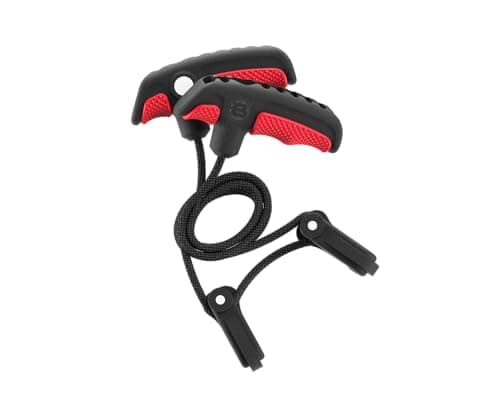
The verdict: the best crossbow cocking device under $50 is the Barnett Premium Rope Cocking Device— ambidextrous, hook style, published by Barnett as reducing cocking tension up to 50 percent, and built to a standard rather than to a price. It is for the owner of a crossbow with no integrated cocking system who is buying one thing. The budget pick is the CenterPoint Universal 46-Inch Rope Cocker: a 46-inch cord with low friction roller hooks and the same published 50 percent, for the least money in the category. If your rail and flight groove will take it, the TenPoint Rope Sled is the one device here that holds the string square for you instead of relying on your two hands staying level.
The framing that makes this band worth its own page rather than a cheaper slice of our full cocking device guide: under $50 you are buying a rope aid, not a crank. Cranks start above the band and run to several hundred dollars. That single division decides everything — it means standing to cock, it means a stirrup, it means no seated cocking in a treestand, and it means no de-cocking. Those are real limits, and this page is organized around them rather than around pretending the band reaches further than it does.
The best cocking devices under $50 at a glance
| Device | Price & buy | Published reduction | Type | De-cocks? | Best for |
|---|---|---|---|---|---|
| Barnett Premium Rope Cocking Device | $24.99Buy | Up to 50% | Hook-style rope, ambidextrous | No | Best overall; widest fitment |
| CenterPoint Universal 46-Inch Rope Cocker | $14.99Buy | 50% | 46-inch rope, roller hooks, T-handles | No | Budget pick; truck spare |
| TenPoint Rope Sled | $39.99Buy | 50% | Sled rides the rail | No | An even pull without hand discipline |
| Allen Titan De-Cocking Head | $15.99Buy | Not applicable | Threads onto a standard arrow insert | Yes - by firing into soft ground | The end-of-hunt problem |
Prices shown are from Amazon as of November 21, 2026 and change often — the button always goes to the current listing. Some links may earn us a commission at no extra cost to you.
Everything here had a live, buyable price under $50 when we built the page. The cranks from our full guideall sit above the band — the cheapest, the CenterPoint Power Draw, starts above it and the integrated systems run several times higher. That division is the band, and it is why this page exists.
What $50 buys - and what it cannot
The good news: a good rope aid is not a compromise for most hunters. It is light, it fits in a pocket, there is nothing on it to fail mechanically, and it delivers the same published tension reduction as the most expensive rope aid made. For a bow you cock once at the beginning of a sit, standing on the ground, a $25 rope is the right purchase.
Here is the honest list of what the band does not buy:
- Seated cocking. A rope aid needs a stirrup and a standing position with your foot in it. If you hunt from a treestand and want to cock in the stand, you need a crank, and a crank is above this band. This is the single biggest reason to spend more.
- De-cocking. No rope aid de-cocks. Not one of them. See the de-cocking gapbelow — this is the hole in the band and it has a cheap partial answer.
- More than 50 percent reduction. Cranks publish 70 percent and higher. Rope aids publish 50, universally, because of leverage geometry rather than build quality. If a 200-pound draw at 50 percent is still too much for you, the band cannot help.
- Any published figure beyond the percentage. No rope aid in this band publishes a cord material, a breaking strength, a service interval or a weight. The percentage and the fitment language are the entire spec sheet.
Why every rope aid publishes the same 50 percent
This is the finding that should change how you shop the band, so here it is plainly: all three rope aids on this page publish the same reduction, and so does every competitor. Barnett states up to 50 percent. CenterPoint states 50 percent. TenPoint states 50 percent.
That is not three companies copying each other. It is the geometry of the design: a rope aid is a pulley arrangement whose mechanical advantage is set by how the cord runs, and that arrangement tops out at roughly half. A rope cocker claiming 70 percent would be claiming something the design does not do.
The spec nobody publishes: an even pull
A rope cocker has two claws that hook the string either side of the rail, and your two hands pull the handles. If one hand gets ahead of the other, the string is drawn unevenly and one limb loads ahead of its partner. Do that consistently and the bow shoots consistently off where it did before.
This is the mechanism behind a large share of the sudden point-of-impact shifts crossbow owners report, and it is also the reason to spend $25 rather than $5. Cheap claws drag on the serving; cheap cord stretches unevenly and pulls one side ahead. A cocker that holds both sides even is doing accuracy work, not just strength work — and none of it appears on a spec sheet.
| Hook and claw quality | The claws sit on the string serving, which is a consumable. Smooth, correctly shaped hooks spread the load; rough ones abrade the serving every single cock. CenterPoint publishes low friction roller hooks, which is the clearest statement of intent in the band. |
|---|---|
| Cord that does not stretch unevenly | Nobody publishes a cord material or a breaking strength. What you can judge is construction - a braided cord with sealed, finished ends against an anonymous cord with a knot. Replace any rope aid whose cord is visibly fuzzing. |
| A sled instead of two claws | A sled body rides the rail and holds the string square mechanically, which removes your hands from the equation. This is the only genuine design upgrade available under $50 - see the TenPoint Rope Sled below - and it is also the most fitment-sensitive option here. |
| Handles you can use in gloves | T-handles on a cold November morning with heavy gloves are a different object from T-handles in a shop. Small handles are the commonest complaint about budget cockers and the hardest thing to judge from a listing photo. |
Best overall: Barnett Premium Rope Cocking Device
Best for: the owner of a crossbow with no integrated system who is buying one cocking aid and wants it to be the right one.
Barnett publishes this as an ambidextrous, hook style rope cocking device with easy installation, rated to reduce cocking tension up to 50 percent. It is the version of this product built to a standard rather than to a price, and the reason to buy it over an anonymous cord is the serving on your string: better hooks and better cord mean an even pull, and an even pull is what keeps your zero.
Hook style also matters for fitment. A hook-style cocker works on the widest range of stocks because it does not need a rail profile to accept a body — which is exactly what the sled does need. If you do not know what your bow will accept, this is the safe answer.
Honest cons:it is still a rope, which means a stirrup and a standing position, and no seated cocking in a treestand. It does not de-cock. And Barnett sells this device in several closely-named variants, so check that the one in your cart is the hook style if that is what your stock takes. Beyond the percentage and the words “ambidextrous” and “hook style”, Barnett publishes nothing about it.
Budget pick: CenterPoint Universal 46-Inch Rope Cocker
Best for: the cheapest sensible cocking aid, and the spare that lives in the truck.
CenterPoint publishes a universal 46-inch design that reduces draw effort by 50 percent with low friction roller hooksand T-handles. The roller hooks are the specification that justifies it over the anonymous marketplace cords sitting beneath it in the search results — rollers reduce the drag across the serving, which is the part of your string you cannot replace in the field.
It is also the sensible thing to keep in the truck as a spare, and that is not a throwaway recommendation. Rope cockers get left in jacket pockets and lost in the dark, and a crossbow you cannot cock is a hunt you do not take. At this price, owning two is the cheap insurance.
Honest cons:the hardware is basic and the T-handles are small in heavy gloves — the commonest complaint in the budget tier. “Universal” is CenterPoint’s phrasing, not a fitment list, so confirm your stock has somewhere to seat the cord. It does not de-cock, and it needs a stirrup and a standing position like every rope aid here.
Best for an even pull: TenPoint Rope Sled
Best for: anyone who has struggled to keep both handles level, and anyone cocking a heavy bow at the end of a cold sit.
A sled rides the rail rather than hanging off two independent claws, which makes an uneven pull much harder to produce. TenPoint publishes the same 50 percentreduction as every other rope aid — because that is the ceiling — but it delivers it with the string held square by the sled body rather than by your hands staying level.
That is the one genuine design upgrade available inside this band. If your groups have moved for no reason you can identify, or if you find your hands shaking on the handles after four hours in the cold, this is the device that removes the variable. It is also the most expensive item here, which makes sense: you are paying for a mechanism rather than a cord.
Honest cons: TenPoint states plainly that it is not compatible with the Nitro X, and sleds are more stock-sensitive than plain ropes generally — the rail and flight groove have to accept the body, so check yours before ordering. It costs several times what a basic cord does for the same published leverage. And it does not de-cock.
The de-cocking gap: Allen Titan de-cocking head
Best for: the bow that will not de-cock, owned by someone who is not buying a crank.
Here is the hole in this price band. No rope aid de-cocks, which means at the end of every sit you either fire a bolt or walk back to the truck with a cocked crossbow. The cheapest honest answer is a de-cocking head: Allen publishes the Titan as threading onto standard arrow threads— a steel collar around the shaft end and a soft bulb that takes the impact when you fire into soft ground.
Keep one bolt permanently fitted with it, keep that bolt somewhere you can find it in the dark, and the end-of-hunt problem stops being an improvisation. At under $20 it is the cheapest meaningful safety purchase a crossbow owner can make.
Honest cons: Allen is clear that you must not shoot it into hard ground or rocks, and that while it can be used with crossbows shooting 400-plus fps, doing so shortens the head’s life — treat it as a consumable on a fast bow. Using it also means firing a bolt, which is noise and a lost minute of light. A crossbow with a factory de-cock function, or a crank that de-cocks, is the better answer; this is the good answer for the bow you already own.
When you should spend more than $50
Three situations where the honest answer is a crank, and we would rather say so:
- You cock in a treestand. A rope aid needs a stirrup and your bodyweight standing over it. A crank works seated, one-handed, with the bow in your lap. If this is how you hunt, the band cannot serve you.
- Fifty percent of your draw weight is still too much.A 50 percent reduction on a heavy modern crossbow is still a real pull. Cranks publish 70 percent and higher — the CenterPoint Power Draw publishes 70 percent and a mil-spec buffer tube mount.
- You want de-cocking built in. Several cranks de-cock, which removes the fired-bolt workaround entirely. Our full cocking device guide covers which systems do and what each fits, because a crank is a part rather than an accessory and fitment is not optional.
The bottom line
Buy the Barnett Premium Rope Cocking Deviceunless you have a specific reason not to — it has the widest fitment, it is built to a standard, and it publishes the category ceiling. Take the CenterPoint Universal 46-inch if price is the constraint, and buy two. Take the TenPoint Rope Sled if your rail will accept it and you want the string held square mechanically. And add the Allen Titan de-cocking head whatever else you buy, because no rope aid de-cocks and the end of the sit comes every time.
Then use it the same way every time. The habits that wreck strings and groups — uneven pulls, a cocker seated badly, cocking with the safety off — are covered in our full cocking device guide, and the sight-in consequences are in our how to sight in a crossbow guide. Cock the bow the way you sighted it in, and the 50 percent figure stops being the interesting number.
Frequently asked questions
What is the best crossbow cocking device under $50?
The Barnett Premium Rope Cocking Device. Barnett publishes it as ambidextrous, hook style and rated to reduce cocking tension up to 50 percent, and hook style fits the widest range of stocks. What you pay for over an anonymous cord is even tension on both limbs, because cheap claws drag on the string serving and cheap cord stretches unevenly - an uneven pull is behind a large share of the unexplained point-of-impact shifts crossbow owners report. The CenterPoint Universal 46-inch is the budget pick and publishes low friction roller hooks.
Why do all crossbow rope cockers claim 50 percent?
Because 50 percent is the design ceiling, not a feature one brand has beaten. A rope aid is a pulley arrangement whose mechanical advantage is set by how the cord runs, and that arrangement tops out at roughly half the draw weight. Barnett publishes up to 50 percent, CenterPoint publishes 50 percent and TenPoint publishes 50 percent - identical figures from three companies. So stop comparing the percentages and compare the things that differ: fitment, hook and cord quality, and whether the handles work in heavy gloves.
Can you get a crossbow crank for under $50?
No. Cranks start above the band and run to several hundred dollars for integrated systems, which is the single division that defines this price tier. Under $50 you are buying a rope aid, and that means cocking while standing with your foot in the stirrup, a published 50 percent reduction rather than the 70 percent and higher that cranks publish, and no de-cocking. If you need to cock seated in a treestand, or 50 percent of your draw weight is still too much, you need to spend more.
Do crossbow rope cockers de-cock a crossbow?
No - not one of them, at any price. That is the hole in this band, and the cheapest honest answer is a de-cocking head like the Allen Titan, which threads onto standard arrow threads and lets you fire safely into soft ground at the end of a sit. Allen is explicit that you must not shoot it into hard ground or rocks, and that using it on crossbows over 400 fps shortens its life, so treat it as a consumable on a fast bow. A crossbow with a factory de-cock function, or a crank that de-cocks, is the better long-term answer.
Is a rope sled better than a rope cocker?
For keeping the pull even, yes - and that is the one thing worth upgrading for inside this band. A sled body rides the rail and holds the string square mechanically, so your hands no longer have to stay level; two independent claws rely on you. The trade is fitment: TenPoint states the Rope Sled is not compatible with the Nitro X, and sleds generally need a rail and flight groove that will accept the body. A hook-style rope cocker fits more crossbows, which is why it is our overall pick.
Can a cocking device change where my crossbow shoots?
Yes, and this is the most underrated thing about the category. If one hand gets ahead of the other on a rope cocker, the string is drawn unevenly and one limb loads before its partner - do that consistently and the bow shoots consistently off its zero. Cheap claws dragging on the serving and cord that stretches unevenly both make this worse. The fixes are to buy a cocker whose hardware holds both sides even, and to cock the bow the same way every single time, including the way you cocked it when you sighted it in.
Sources
- Barnett Premium Rope Cocking Device - published listing specification (ambidextrous, hook style, reduces cocking tension up to 50%, easy installation)
- CenterPoint Universal 46-Inch Rope Cocker - published listing specification (universal 46-inch design, reduces draw effort by 50%, low friction roller hooks)
- TenPoint Rope Sled - published listing specification (reduces crossbow cocking effort by 50%, not compatible with Nitro X)
- Allen Company Titan Crossbow Bolt De-Cocking Head - published listing specification (standard arrow threads)
- CenterPoint Power Draw Crossbow Crank - published listing specification (cuts draw weight by 70%, mil-spec buffer tube mount), named as the tier above the band
Keep reading
Gearing up before your next hunt?
See how we evaluate gear, then dig into the reviews and buying guides — written without inventory to sell.