Buying Guide
The Best Hunting Socks, Sorted by Temperature Band
Socks are the cheapest part of a cold-weather system and the part that decides whether the rest of it works. They are also where hunters make the single most common cold-feet mistake: adding thickness until the boot is tight, which cuts circulation and makes the problem worse.
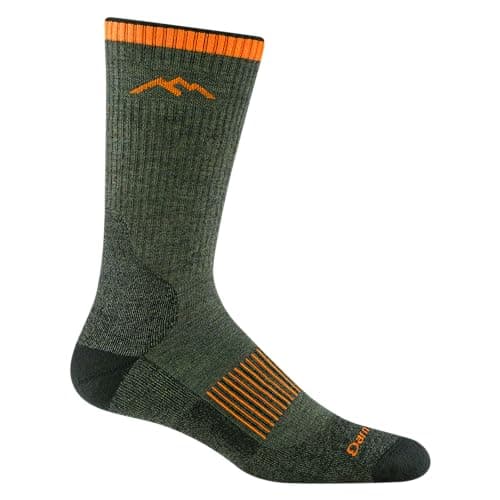
Every hunter who has ever had cold feet has tried the same fix: a thicker sock. It is the wrong answer often enough that it deserves to be the first thing on this page.
Boots are sized with a finite internal volume. Fill that volume with a thick sock and you compress the space around your foot, which does two bad things at once: it squeezes the air gap that was doing the insulating, and it restricts blood flow to the exact tissue you are trying to keep warm. A tight boot with a heavy sock is colder than a properly fitted boot with a medium sock.
Get that right and socks become what they should be - the cheapest, highest-return part of a cold-weather system.
The boot-volume mistake
The test is simple. Put on the sock you plan to hunt in, lace the boot normally, and see whether you can wiggle your toes freely and lift your heel slightly without the boot gripping the top of your foot. If you cannot, the sock is too thick for that boot.
If you genuinely need more warmth than the boot can take, the answer is a warmer boot, a heated sock or insole, or a boot bought a half size up specifically to accommodate heavy socks. It is not more sock in the same boot.
The two-layer system
A liner plus an outer sock outperforms a single sock of the same total thickness, for two reasons that have nothing to do with warmth per se.
- Moisture transfer. The thin liner sits against skin and moves sweat outward into the heavier sock, keeping the skin-contact layer drier. Dry skin at the same temperature feels dramatically warmer than damp skin.
- Friction management. Blisters come from shear between skin and fabric. With two layers, the movement happens between the two socks instead of between the sock and your skin.
Total thickness still has to fit the boot. A micro-weight liner adds almost nothing to volume, which is why it is the correct first upgrade rather than a heavier outer sock.
Merino, synthetic and why cotton is genuinely dangerous
| Material | Strengths | Weaknesses |
|---|---|---|
| Merino wool | Insulates when damp, resists odor across multiple wears, temperature-regulating, soft enough to wear against skin | Costs more, wears through faster in pure form, dries slower than synthetic |
| Merino blend (with nylon/spandex) | The practical standard - wool performance with real durability and shape retention | Blend percentage varies widely and is not always disclosed |
| Synthetic (polyester, polypropylene) | Dries fastest, cheapest, extremely durable | Holds odor, feels clammier at rest, less warm when damp than wool |
| Cotton | None for hunting | Absorbs and holds moisture against skin, loses essentially all insulating value when wet, and stays wet all day |
The cotton problem is worth stating plainly because it is the single most common gear mistake a new hunter makes. A cotton sock that gets damp on the walk in stays damp for the entire sit, and wet fabric against skin conducts heat away far faster than dry fabric. NIOSH's cold stress guidance points at the same fundamentals - layers, waterproof insulated boots, and keeping heat in - and a wet cotton sock defeats all of it.
Weight by temperature band and activity
There are no official temperature ratings for socks, so the honest way to present this is by how you hunt rather than by a number on a thermometer. Activity level shifts every band - a hunter walking hard needs a lighter sock than a hunter sitting still at the same temperature.
| Conditions | Sitting still | Walking / covering ground |
|---|---|---|
| Warm early season | Lightweight merino, no liner | Lightweight merino, liner if blister-prone |
| Cool fall (roughly 40-55F) | Midweight cushion | Lightweight to midweight |
| Cold (roughly 20-40F) | Heavyweight or max cushion | Midweight, plus a liner |
| Hard cold (below about 20F) | Max cushion, or heated socks over a liner | Midweight plus liner - you will generate heat |
Note the pattern: the same temperature calls for a different sock depending on whether you are moving. This is exactly the logic that governs boot insulation too - Rocky's own insulation guidance describes 200g as suited to cool weather at lower activity levels but workable in colder weather if you are continuously active, and the same relationship holds for socks.
Sock height: match it to the boot
Sock height is not cosmetic. The sock has to extend past the top of the boot cuff, or the cuff edge rubs directly on skin - which produces a raw band around the calf after a few miles.
- Crew - fine with a 6-inch to 8-inch boot.
- Tall crew / boot height - the default for most 8-inch to 10-inch hunting boots.
- Over-the-calf (OTC) - for tall rubber boots, snake boots, waders and anything 16 inches or taller. Also the choice if you tuck pants into boots, since it stops the pant seam from sitting against skin.
The picks at a glance
| Sock | Weight | Best for |
|---|---|---|
| Darn Tough Hunting Boot Midweight | Midweight | The one sock most hunters should own |
| Darn Tough Heavyweight Full Cushion | Heavyweight | Cold, sedentary stand sits |
| Smartwool Hunt Classic Max Cushion | Max cushion | Long sits, maximum underfoot padding |
| Smartwool Hunt Classic Light Cushion | Light | Early season and hunters who walk |
| Carhartt Arctic Heavyweight Merino | Heavyweight | Cold weather value |
| Fox River Castile liner | Micro | The layer under everything else |
Best overall: Darn Tough hunting socks
Darn Tough socks are knit in Vermont from merino blends and carry an unconditional lifetime guarantee - if they wear through, the company replaces them. For a consumable item that is an unusual proposition, and it changes the value calculation on a $30 sock.
The midweight with cushion is the one to buy first: warm enough for most of the season, thin enough not to crowd a boot, and cushioned under the foot where a stand platform or a rocky ridge is unforgiving.
The heavyweight full-cushion version is the cold-weather stand sock. The lightweight is for early season and hunters covering ground. The over-the-calf midweight is the one for tall rubber boots.
Best for cold sits: Smartwool Hunt Classic
Smartwool's Hunt Classic line is the direct competitor, generally at a slightly lower price, with a cushioning system that puts more padding underfoot than most hunting socks. For a hunter who spends five hours with their weight on a small metal platform, that padding is not a luxury.
The Maximum Cushion tall crew is the cold-sit pick; the over-the-calf version handles tall boots. The Light Cushion is the early-season and walking option, and there is a camo version if you want it, though nothing about a sock is visible to a deer.
Carhartt merino boot socks
Carhartt's merino blend boot socks are the value entry into real wool. The Arctic heavyweight is the cold-weather version, and the over-the-calf model covers tall boots. They are not as refined as Darn Tough or Smartwool and there is no lifetime guarantee, but the material performance is there.
Best budget picks
If the budget is genuinely tight, two options are worth knowing. The Carhartt synthetic-wool blend boot sock costs about half what a full merino sock does and still avoids the cotton trap. The Fox River Wick Dry Outlander is a long-standing thermal-lined boot sock built for exactly this job.
Buy either of these plus a liner rather than one expensive sock. The system beats the single item.
Liner socks
The cheapest genuinely effective upgrade in the entire cold-weather system. A micro-weight merino liner adds almost no volume to the boot, moves sweat away from skin, and takes the shear that would otherwise become a blister.
Buy two pairs. The liner is the layer that benefits most from being changed mid-day on a hard hunt, and it dries fast enough that a spare pair inside a jacket pocket is a genuinely useful thing to carry.
How socks work with heated gear
If you run heated socks, they replace the outer sock, not the liner. Keep the thin merino liner underneath - it still handles moisture, and the heating element works better against a dry layer than a damp one.
If you run heated insoles instead, your sock choice does not change at all, which is the main argument for insoles when your boots are already snug. Either way, do not size up the sock to compensate for heat you have already added.
Full comparison in our heated hunting gear guide.
Making them last
- Wash inside out, cold or warm, tumble dry low.High heat is what shrinks wool and breaks down the elastic that holds the sock's shape.
- Skip the fabric softener.It coats the fibers and destroys wool's ability to move moisture, which is the entire reason you bought it.
- Never dry them on a heater or by a fire. Direct radiant heat scorches wool fibers and the damage is permanent.
- Rotate pairs. Merino recovers loft with a rest day, and a sock worn every day for a week never gets to dry out completely.
The bottom line
Buy the Darn Tough midweight as your default hunting sock, and a micro-weight merino liner to go under it. That combination covers most of a season.
Add a max-cushion or heavyweight pair for cold, still sits - and check that it still fits your boot before you rely on it.
Do not add thickness to fix cold feet. Check boot fit first, then look at insulation rating, then look at heated socks or insoles.
Related: boot insulation by temperature, best hunting boots, and how to stay warm on a long sit.
Frequently asked questions
Do thicker socks make your feet warmer when hunting?
Only up to the point where the boot still fits. Boots have a fixed internal volume, and filling it with a thick sock compresses the insulating air space and restricts circulation to the foot - which makes your feet colder, not warmer. The correct test is whether you can wiggle your toes freely and lift your heel slightly with the boot laced. If you cannot, the sock is too thick for that boot.
Are merino wool socks worth it for hunting?
Yes, for two reasons that matter in the field. Merino continues to insulate when it is damp, which synthetic does less well and cotton does not do at all, and it resists odor across multiple wears - useful on a multi-day hunt where laundry is not an option. Most hunting socks are merino blends with nylon for durability, which is the practical standard rather than a compromise.
Should you wear liner socks for hunting?
Yes, and it is the cheapest effective upgrade in the whole cold-weather system. A micro-weight merino liner adds almost no volume inside the boot while moving sweat away from your skin and absorbing the friction that would otherwise become a blister. Dry skin at the same temperature feels significantly warmer than damp skin, which is why the two-layer system beats a single sock of equal thickness.
Why are cotton socks bad for hunting?
Cotton absorbs moisture and holds it against your skin instead of moving it outward, and it loses essentially all of its insulating value when wet. A cotton sock that gets damp on the walk in stays damp for the whole sit, and wet fabric conducts heat away from skin far faster than dry fabric. It is the most common gear mistake a new hunter makes and it is entirely avoidable.
What sock height should I wear with hunting boots?
The sock must extend past the top of the boot cuff, or the cuff rubs directly on skin and creates a raw band around the calf. A crew sock works with 6- to 8-inch boots, a tall crew or boot-height sock suits most 8- to 10-inch hunting boots, and over-the-calf socks are the right choice for tall rubber boots, snake boots and waders - or any time you tuck your pants into your boots.
Sources
- Rocky Boots - insulation guide (200G described as great for cool weather at lower activity levels but workable in colder weather when continuously active; 400G for cooler weather at low activity or fairly cold weather when active; 600G for cold weather at low to moderate activity; 800G typically the heaviest advisable when moving non-stop)
- CDC / NIOSH - cold stress overview and prevention (several loose layers for insulation, waterproof insulated boots, headwear because hats reduce body heat escaping from the head)
- Amazon product catalog - live availability, current pricing, weight and height options, and product images verified for every sock listed on this page (checked 2026-09-06)
Keep reading
Gearing up before your next hunt?
See how we evaluate gear, then dig into the reviews and buying guides — written without inventory to sell.