Buying Guide
Best Hunting Base Layers: Merino, Synthetic, and What Actually Keeps You Warm
The layer against your skin decides whether the $400 jacket over it works. Here is how to pick weight and fiber for the way you actually hunt - plus five base layers that earn their price.
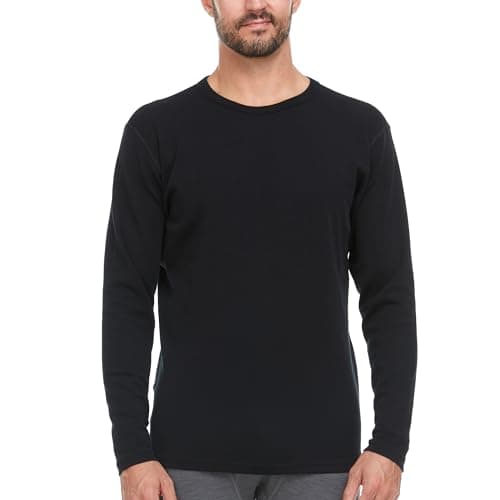
Base layers are the least glamorous purchase in hunting apparel and the one that most often decides whether the rest of the system works. An expensive insulated jacket over a cotton t-shirt is a wet, cold jacket by 8 a.m. A correctly chosen base layer under a mid-priced jacket is warm all day. The layer next to your skin is not there to insulate — it is there to move sweat away from you and keep insulating after it has.
This guide covers the two fibers, the weight classes (which are labeled confusingly by almost every brand), the fit details that matter, and five specific base layers we would actually buy. Prices are approximate mid-2026 street figures — the live price boxes below are the number to trust.
What a base layer is actually for
Three jobs, in order of importance:
- Move moisture off your skin. Sweat conducts heat away from you roughly 25 times faster than air does. A hunter who sweats through the walk in and then sits still is not cold because the temperature dropped; he is cold because he is wet.
- Keep insulating when it fails.You will sweat. The question is what happens next. This is where merino separates itself — its fibers hold their loft, and therefore their trapped air, when damp.
- Add a little warmth of its own. Real but secondary. A heavyweight base layer is warm; it is still not a substitute for a mid-layer.
Merino vs synthetic: the honest trade
| Merino wool | Synthetic (polyester / poly blends) | |
|---|---|---|
| Warmth for the weight | Better - crimped fibers trap more air per gram | Good, but needs more fabric for the same warmth |
| Warm when damp | Yes - springy fibers keep their air pockets wet or dry | Loses more insulating value when saturated |
| Drying speed | Slower | Faster - the clear synthetic win |
| Odor after multiple days | Naturally antimicrobial; commonly 3-4 wears before it turns | Roughly one wear without a treatment like Polygiene |
| Durability / abrasion | More delicate, especially in fine gauges | Tougher, handles pack straps and repeat washing better |
| Cost | Higher - typically $80-125 for a quality top | Lower - $30-55 buys a good one |
| Best at | Sitting still, multi-day hunts, cold and damp | High-output hiking, warm weather, hard use, tight budgets |
For most hunting, merino wins, and the reason is the specific shape of hunting activity: a hard sweaty approach followed by hours of sitting still. That profile punishes exactly what synthetics are worst at (staying warm once damp) and rewards exactly what merino is best at. The multi-day odor advantage matters too — on a backcountry hunt, a merino top that stays wearable for four days is one less thing in the pack, and less human scent for a whitetail to work with.
Synthetic wins in three real situations: high-output western hunting where drying speed beats damp warmth, early-season warm weather, and any budget where a $40 synthetic now beats a $110 merino someday. A synthetic base layer you own outperforms a merino one you are saving for.
Blends split the difference honestly — merino with a nylon core adds durability at some cost to next-to-skin feel — and are worth considering if you have worn holes in pure merino before.
Weight classes, in plain terms
Base layer weight is quoted in grams per square meter (gsm) of fabric, and brands label the same number as "lightweight" or "midweight" depending on their marketing. The number is the honest spec:
| ~150 gsm (lightweight) | Early season, warm weather, and high-output movement. Wicking first, warmth barely at all. Also the right choice under a heavy insulated system, where the mid-layer does the work |
|---|---|
| ~200-250 gsm (midweight) | The all-around answer for most whitetail hunting. Warm enough to sit in on a frosty morning under a jacket, breathable enough to walk in. If you buy one base layer, buy this |
| ~300-400 gsm (heavyweight) | Late season, stand hunting in genuine cold, and anyone who runs cold sitting. A 400g merino top is a serious insulator on its own - and too warm to walk a mile in |
| Bottoms follow the same scale | Most hunters can run one class lighter on the bottom than the top, because legs generate heat and torsos lose it |
The most common mistake is buying one heavyweight set and wearing it all season. Two sets — a light and a mid, or a mid and a heavy — cover far more days than one very warm set, because you can shed rather than sweat. Layering theory in full is in our cold-weather hunting clothes guide.
Fit, cut and the details that matter
- Snug, not compressive. A base layer has to touch skin to wick. Loose fabric traps a layer of humid air instead of moving it. Compression-tight is only necessary if you actually want compression.
- Long torso, or you will regret it. Look for a drop tail or an explicitly long body. A base layer that untucks when you draw a bow at full extension is a cold gap in the worst possible place.
- Flatlock seams. Raised seams under a pack strap or a bow sling create hot spots on a long approach.
- Crew vs quarter-zip vs mock.A quarter-zip is the most versatile: it dumps heat on the walk in and seals up in the stand. A mock neck adds warmth without a hood’s bulk. Crews are simplest and cheapest.
- Thumbholes and cuff length matter more than they sound. A cuff that stays put when you pull a glove on keeps the wrist gap closed.
- Wash it right.Household detergent contains optical brighteners that make fabric glow in the ultraviolet a deer sees well — see camo patterns explained. Use a UV-free hunting detergent and skip the fabric softener, which coats fibers and kills wicking.
The picks at a glance
| Base layer | Fiber | Weight class | Best for | Approx. price |
|---|---|---|---|---|
| Minus33 Merino 705 Midweight Crew | 100% merino | Midweight | Best all-around | ~$90 |
| MERIWOOL Heavyweight 400g | 100% merino | Heavyweight (400g) | Sitting cold, late season | ~$95 |
| Smartwool Classic Thermal Merino Crew | Merino | Midweight | Best fit and finish | ~$100-125 |
| Under Armour ColdGear Armour Mock | Synthetic | Light-mid | Budget, high-output | ~$40 |
| Merino.tech Merino Base Layer Set | Merino | Mid/heavyweight set | Best value two-piece | ~$105-125 |
Prices are approximate mid-2026 brackets; verify current pricing before buying.
Best all-around: Minus33 Merino Wool 705 Midweight Crew
The Minus33 705 is the base layer we would hand a hunter who wants one top to cover most of the season. It is 100 percent merino in a midweight knit— the class that works from a frosty October morning to a January stand sit under a real jacket — from a New Hampshire company that has been doing exactly this for a long time and prices it at roughly $90 (verify current pricing) rather than the premium-brand $130.
What you get for that: full merino warmth-when-damp behavior, the multi-day odor resistance that makes a backcountry hunt bearable, flatlock seams, and a body long enough to stay tucked. What you do not get: technical-brand fit polish. Minus33’s cut runs relaxed and boxy compared with a Smartwool, which some hunters prefer under a jacket and others find sloppy.
Honest cons: pure merino at this gauge is less abrasion-resistant than a blend — pack straps and repeated snags eventually tell — and it dries slowly enough that a soaked top on a two-day hunt stays damp. Sizing runs generous; most people size down.
Who it’s for: the whitetail hunter buying one good base layer, and anyone who wants full merino without a premium logo.
Best for sitting cold: MERIWOOL Heavyweight 400g
If your problem is not the walk in but the four hours after it, this is the answer. MERIWOOL’s heavyweight is 400 grams per square meter of 100 percent merino— roughly double a standard midweight — and it functions as a base layer and a light mid-layer at once. On a late-season stand sit in single digits, that is exactly what you want against your skin, and it typically runs around $95 (verify current pricing), which is remarkable for the amount of wool involved.
The trade is obvious and worth stating plainly: you cannot hike in this.A 400g merino top under a jacket on a half-mile approach will soak you, and then you are relying on merino’s damp-warmth advantage instead of not being wet in the first place. Carry it and change at the stand, or accept a slow, deliberate walk in.
Honest cons: heavyweight merino is bulky under fitted outerwear, it takes a long time to dry once genuinely wet, and at this weight the fabric is heavy enough that a soaked top is real pack weight. Sizing runs true to slightly generous.
Who it’s for: stand and blind hunters in cold country, and anyone who shivers through sits their partners find comfortable.
Best fit and finish: Smartwool Classic Thermal Merino Crew
Smartwool is the brand that made merino base layers mainstream, and the Classic Thermal is the reason. It is a midweight merino crew with the fit dialed the way an outdoor-apparel company with decades of iteration gets it: articulated, long in the body, flat-seamed where straps ride, and cut close enough to wick properly without being a compression garment. Street price lands around $100-125 (verify current pricing).
Is it warmer than the Minus33? Not meaningfully — both are midweight merino and physics is physics. What you are buying is fit, finish, and a supportive warranty. For a lot of hunters that is worth $20-30; for others it is not. We would not tell you it shoots straighter.
Honest cons: the price premium is real and buys refinement rather than performance, and Smartwool’s finer merino gauges have a long-standing reputation for wearing through at elbows and pack contact points faster than heavier knits. It is also the most likely of these five to be sold in colors better suited to skiing than to a treestand.
Who it’s for: hunters who also hike, ski or work outdoors and want one base layer that fits well enough to wear every day.
Best budget and best for high output: Under Armour ColdGear Armour Compression Mock
The synthetic pick, and the one that makes the most sense for a specific hunter: the one who walks a long way. The ColdGear Armour Mock is a fitted synthetic with a brushed interior, and it does the two things synthetics do best — move sweat fast and dry fast — for around $40 (verify current pricing), a third of the merino picks.
The mock neck is genuinely useful in hunting: it closes the gap at your collar without the bulk of a hood or the constriction of a gaiter, and it disappears under a jacket. For western spot-and-stalk, early-season sits, and anyone who generates a lot of heat moving, this is the right fiber choice rather than the cheap one.
Honest cons: it is a synthetic, so it holds odor after one hard day — a real consideration for whitetail hunters trying to manage scent — and it loses more insulating value than merino when it is soaked. The compression fit is not for everyone, and Under Armour’s hunting-relevant colorways come and go.
Who it’s for: high-output hunters, warm-weather seasons, and first-time buyers who need to spend the rest of the budget on boots.
Best value set: Merino.tech Merino Wool Base Layer Set
Buying a top and bottom separately usually costs more than buying a set, and Merino.tech’s two-piece is the value play here — a merino top and bottom together for roughly what a single premium-brand top costs, typically in the $105-125 range (verify current pricing) depending on weight and size.
The pitch is simple: most hunters underweight the bottom half. A merino top over synthetic long johns is a half-solved problem, and cold legs on a stand sit end hunts as reliably as a cold torso. Getting both in merino in one purchase is the pragmatic move.
Honest cons: this is a direct-to-Amazon brand, so finish details — seam placement, cuff construction, colorfastness — are a step below Smartwool, and consistency between production runs is less predictable than with the established names. Confirm the weight class you are actually ordering, since the same listing spans midweight and heavyweight options.
Who it’s for: hunters kitting out from scratch who want head-to-toe merino without a $250 outlay.
The Kings XKG option
Kings Camo’s XKG line includes merino base layers built specifically for hunting rather than adapted from an outdoor-lifestyle range — camo or hunting-appropriate solids, cuts designed to sit under a hunting jacket, and pricing that undercuts the premium technical brands substantially. If you are already building an XKG system, buying the base layer from the same line keeps fit and layering thickness consistent, which is a genuine practical advantage.
We cover where Kings does and does not close the gap against the premium brands in our Kings Camo vs Sitka comparison and the Kings XKG review.
The bottom line
Buy merino if you sit still and hunt cold; buy synthetic if you move hard and hunt warm; buy two weights before you buy one expensive one. For most whitetail hunters the Minus33 705 midweight is the correct single purchase. Add the MERIWOOL 400g when the temperature drops below what you can sit through, and the Under Armour ColdGear mock when the walk is long enough that drying speed beats damp warmth.
Then build outward: cold-weather layering for the mid and outer layers, rain gear for the shell, and camo selection for the outside of the whole system.
Frequently asked questions
Is merino wool or synthetic better for hunting base layers?
Merino for most hunting. The classic hunting pattern - sweat on the walk in, then sit still for hours - punishes synthetics, which lose more insulating value when damp, and rewards merino, whose crimped fibers keep trapping air wet or dry. Merino also resists odor for roughly three to four wears versus about one for untreated synthetics. Choose synthetic when drying speed matters more: high-output western hunting, warm weather, or a tight budget.
What weight base layer do I need for deer hunting?
A midweight, roughly 200-250 gsm, covers the most days for the most hunters - warm enough for a frosty stand sit under a jacket, breathable enough to walk in. Go to a 300-400 gsm heavyweight if you sit still in genuine cold, and drop to a ~150 gsm lightweight for early season or under a heavily insulated system.
Can I wear a cotton shirt under hunting clothes?
No. Cotton absorbs many times its weight in moisture, loses essentially all insulating value when wet, and dries slowly. It is the single most common cause of hunters getting dangerously cold, and no amount of insulation over it fixes the problem.
How should a hunting base layer fit?
Snug enough to stay in contact with skin - that contact is what makes wicking work - but not compressive unless you specifically want compression. Look for a long body or drop tail so it does not untuck at full draw, and flatlock seams so pack straps do not create hot spots.
How do I wash merino hunting base layers?
Cold or warm wash on gentle with a UV-free hunting detergent, and skip the fabric softener - it coats fibers and destroys wicking. Ordinary household detergents contain optical brighteners that fluoresce in ultraviolet light, which deer see well, so washing camo and base layers with the family laundry can make them noticeably brighter to game.
Do I need merino bottoms too, or just a top?
Bottoms are the half most hunters skip and then regret on a long, cold sit. Legs are a large surface area sitting motionless against a cold seat, and a merino top over cotton or thin synthetic long johns is a half-solved problem. Buying a set is usually cheaper than buying the two pieces separately.
Sources
- ProHunt - hunting base layer guide: merino wool vs synthetic in the field
- Alpkit - base layer reality check: merino wool vs synthetic for active pursuits
- Better Trail - merino wool vs synthetic base layers
- Hillman Hunting - merino vs synthetics for multi-day hunts
- The Trek - gear wars: merino wool vs synthetic base layers
- Atsko - how game animals see and smell (UV brighteners)
- Kings Camo - XKG series
Keep reading
Gearing up before your next hunt?
See how we evaluate gear, then dig into the reviews and buying guides — written without inventory to sell.