Buying Guide
Best Heated Hunting Gear: An Honest Assessment
Battery-heated clothing works. It just does not work the way the packaging implies, it does not work for as long as the packaging claims, and two of the five categories are far better buys than the other three. Here is what to spend money on, in what order, and what to expect when it is genuinely cold.
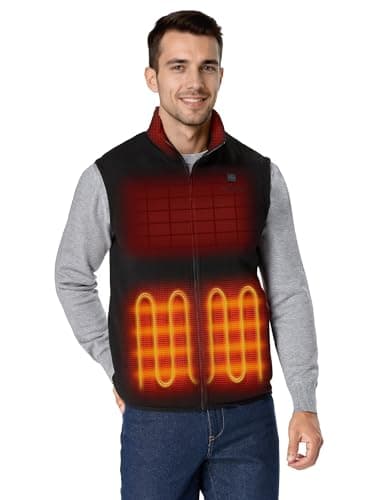
Heated hunting gear has a credibility problem, and it is mostly self-inflicted. The claims are stated in ideal conditions, the runtimes assume the lowest heat setting, and the category most heavily marketed to hunters - heated gloves - is the one that works least well for the way hunters actually use their hands.
None of that means the technology does not work. It does. A heated vest genuinely extends how long you can sit in the cold, and heated socks genuinely solve the problem that ends more November sits than anything else. But the ranking of what to buy is not the ranking the marketing suggests.
This page tells you which categories earn their money, what to realistically expect from a battery in the cold, and where the whole idea breaks down.
How heated gear actually keeps you warm
Understanding one piece of physiology reorders the whole shopping list. When your body senses it is losing heat, it constricts blood vessels in the extremities to protect core temperature. That is why your fingers and toes go first: your body is deliberately sacrificing them.
The consequence is counterintuitive. Heating your core convinces your body it does not need to defend itself, which lets circulation return to your hands and feet. Heating your hands directly treats the symptom. Both work, but the core-first approach makes the whole system warmer, which is why a heated vest outperforms heated gloves at keeping fingers usable.
The five categories, ranked
| Category | Verdict | Why |
|---|---|---|
| Heated vest | Buy first | Heats the core, which restores circulation everywhere else |
| Heated socks | Buy second | Feet are the most common reason a stand sit ends early |
| Heated muff | Buy third | Efficient, and the only hand solution that keeps fingers sensitive |
| Heated insoles | Situational | Good for boots too tight for heated socks; thin batteries, short runtime |
| Heated gloves | Usually skip | Bulk kills dexterity, and they are the least efficient use of battery |
The battery truth nobody advertises
Three things are consistently true across every brand in this category:
- Advertised runtime is the lowest heat setting.An "up to 8 hours" claim means eight hours on low. On high, expect a fraction of that - frequently two to three hours.
- Lithium-ion capacity falls as temperature falls. The same battery that runs a heated sock for six hours at 50 degrees will not do six hours at 15 degrees. This is the exact condition in which you bought the product.
- Cycling beats continuous use. Every experienced user of heated gear ends up running it in bursts - on for twenty minutes when the cold bites, off for an hour - rather than continuously. Plan your day around that and the runtime problem largely disappears.
Practical consequence: buy a spare battery, keep it inside your jacket where your body heat keeps it warm, and start the day with the heat off.
What heated gear cannot replace
Heated gear is an addition to a layering system, not a replacement for one. NIOSH's cold stress guidance is straightforward about the fundamentals: wear several layers of loose clothing for better insulation, wear waterproof insulated boots, and cover your head, because hats reduce body heat escaping from the head.
A heated vest over a cotton t-shirt and a light jacket will disappoint you. The same vest as a mid layer over merino and under a windproof shell will change your season. If your base system is wrong, fix that first - see our layering guide and guide to staying warm on a long sit.
Two more limits worth naming. Battery-heated garments are not designed to be soaked, so a heated vest is a mid layer under a shell, never an outer layer in rain. And the wiring makes garments slightly stiffer and noisier than the same garment without it, which matters more to a bowhunter than to a rifle hunter.
Heated vests: the best purchase in the category
If you buy one heated item, buy a vest. It puts heat on the chest and upper back, which is the core-warming path described above, and it does it without adding any bulk to the arms - so nothing about your shooting or drawing changes.
ORORO is the most widely available brand in this space and sells the same idea in three shells:
- Fleece vest - the best hunting choice. It layers cleanly under a shell, it is the quietest of the three, and fleece already insulates on its own if the battery dies.
- Puffer vest - warmest without power, but the shell fabric is the noisiest, which matters at bow range.
- Softshell vest - water and wind resistant, meant to be worn as an outer layer in dry cold.
Heated socks
The second-best buy, and for stand hunters specifically it might be the first. Cold feet end more sits than cold hands do, because you can put hands in a pocket and you cannot do anything about your feet without climbing down.
Heated socks put the element under the toes and across the top of the foot, which is where the circulation problem actually is. Look for a model with the battery at the calf rather than the ankle, so the boot cuff does not press on it.
Two rules for using them. Do not walk in on the heat - you will sweat, and damp socks conduct heat away faster than dry ones, cancelling the benefit. And do not size up your boots to fit them; a tight boot restricts circulation, which is the thing you are trying to fix.
The unheated sock system underneath still matters - see our hunting sock guide.
Heated insoles
Heated insoles solve the same problem as heated socks with a different trade-off. They go in a boot you already own without changing sock thickness, which is genuinely useful if your boots are snug. In exchange, the battery has to be thin, which means less capacity and shorter runtime, and the heat is under the foot rather than over the toes.
Buy insoles if your boots are tight or if you swap between several pairs. Buy socks if you have room.
Heated hand muffs
A muff is the most thermally efficient way to warm hands, because it heats a small enclosed air space rather than trying to push heat through a glove into a moving hand. The heated version adds an element to that enclosed space and removes the need to feed it disposable warmers all season.
The critical advantage over gloves: your hands come out bare or lightly gloved, warm and fully sensitive, in a single motion. For anyone operating a release, a trigger or a call, that is the whole argument.
There is also a cheaper route: an unheated muff plus disposable or rechargeable warmers tucked inside. It performs nearly as well and costs a third as much.
Heated gloves: the weakest category
Heated gloves are the most-marketed and least-useful heated product for hunting, for three reasons.
- Bulk. The wiring and battery pocket add thickness exactly where you need feel - the trigger finger and the release hand.
- Efficiency.A glove has enormous surface area exposed to moving air, so a large share of the battery's output is heating the outdoors.
- The removal problem. To shoot well you take them off, and taking them off is two hands of movement at the worst possible moment.
Where they do make sense: a driven hunt, a waterfowl blind where you are handling wet decoys in the dark, a long glassing session in the wind, or any situation where you are using your hands rather than waiting to shoot.
For most hunters, flip-top mitts over a thin liner are the better answer. See our hunting glove guide.
Rechargeable hand warmers
The cheapest way into the category and the item most likely to still be used in three years. A rechargeable warmer is a battery you can turn off, which is the main advantage over disposables, and it doubles as a phone power bank in a stand.
Full comparison with disposables in our hand warmer guide.
The bowhunter exception
If you shoot a bow, the ranking changes. Skip heated gloves entirely - the bulk on the release hand is disqualifying, and the removal motion is worse than for a rifle hunter because the animal is closer.
Buy in this order instead: a muff first, a vest second, socks third. And choose the fleece vest over the puffer, because a slick nylon shell against a bow arm is audible at twenty yards.
More on this in gifts for bowhunters and the bow season checklist.
What to check before you buy
- Fabric noise. Rub the shell material. If it rustles in a quiet room, it will be audible in a quiet woodlot.
- Battery placement. A battery in a chest pocket is fine; a battery in a hip pocket sits under a harness belt, and a battery at the ankle sits under a boot cuff.
- Washability. Hunting clothes get bloody. Check whether the garment is machine washable with the battery removed.
- Battery standard. USB-C rechargeable batteries can be topped up from the same power bank you already carry. Proprietary connectors cannot.
- Warmth without power. Ask what the garment is when the battery dies. A heated fleece is still a fleece. A thin heated shell is a thin shell.
The bottom line
Buy a heated fleece vest first. It is the only item here that improves the whole system rather than one extremity, and it is the most useful off the mountain too.
Buy heated socks second if you sit still in cold weather, or heated insoles if your boots are tight.
Buy a muff third - heated if the budget allows, unheated with a rechargeable warmer inside if not.
Skip heated gloves unless you are doing hands-on work in the cold rather than waiting for a shot.
And fix the layering system underneath first. Heat added to a bad system is money spent twice.
Frequently asked questions
Does heated hunting gear actually work?
Yes, with two caveats. Advertised runtimes assume the lowest heat setting, and lithium-ion battery capacity drops as temperature drops, so a sock rated for eight hours will deliver noticeably less in genuinely cold weather. Used in bursts rather than continuously - on for twenty minutes when the cold bites, off for an hour - the runtime issue largely disappears and the gear does what it claims.
Is a heated vest or heated gloves better for hunting?
A vest, for most hunters. When your body senses heat loss it constricts blood vessels in the extremities to protect core temperature, which is why fingers and toes go first. Warming the core signals that defense is unnecessary and lets circulation return to the hands, improving the whole system. Heated gloves treat the symptom directly, add bulk exactly where you need dexterity, and lose a large share of their output to moving air.
Can heated clothing replace a layering system?
No. NIOSH cold stress guidance still applies: several loose layers for insulation, waterproof insulated boots, and a hat, since hats reduce heat escaping from the head. A heated vest is a mid layer that adds warmth to a working system, not a substitute for one. Worn over a cotton shirt and under a thin jacket it will underdeliver; worn over merino and under a windproof shell it is transformative.
How long do heated socks last on a hunt?
Expect meaningfully less than the box claims. Advertised figures are for the lowest heat setting, and battery capacity falls in cold weather, which is exactly when you are using them. Most hunters get a full day by running the heat in bursts instead of continuously, starting the day with it off, and carrying a spare battery inside their jacket where body heat keeps it warm.
Should bowhunters use heated gear?
Yes, but in a different order. Skip heated gloves - the bulk on the release hand is disqualifying and removing them is a two-handed movement at close range. Prioritize a heated hand muff, which lets bare, warm, sensitive hands come out in one motion, then a heated fleece vest rather than a puffer, since a slick nylon shell is audible against a bow arm at twenty yards.
Sources
- CDC / NIOSH - cold stress overview and prevention (recommends wearing several layers of loose clothing for better insulation, waterproof insulated boots and headwear, noting that hats reduce body heat escaping from the head, and cautioning that some clothing may restrict movement)
- Amazon product catalog - live availability, current pricing, configuration and product images verified for every item listed on this page (checked 2026-09-06)
Keep reading
Gearing up before your next hunt?
See how we evaluate gear, then dig into the reviews and buying guides — written without inventory to sell.