Buying Guide
Best Propane Heaters for Hunting Blinds
A heater is what turns a four-hour sit into an all-day one, and in a sealed hub blind it is also the only piece of hunting equipment that can genuinely hurt you. Two published safety features separate the heaters worth owning from everything else - and more heat is not the goal.
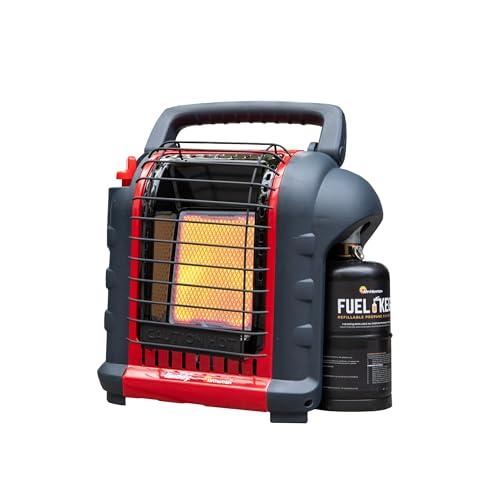
The verdict: the best propane heater for a hunting blind is the Mr. Heater 9,000 BTU Portable Buddy— the output that matches a one or two-person hub blind without demanding more ventilation than a blind hunter wants to give. It is for the hunter sitting a pop-up blind through cold mornings who wants working hands at first light. The budget pick is the Mr. Heater 3,800 BTU Little Buddy, and in a genuinely small blind its lower output is a feature rather than a compromise. If you hunt a permanent shooting house or a four-person blind, the 12,000 BTU Hunting Buddy is the one with the output to fill it.
Read the safety section before you read the picks. A propane heater in an enclosed blind is a combustion appliance in a sealed fabric box, and the two features that make that acceptable — an oxygen depletion sensor and an automatic tip-over shutoff— are not universal in the wider portable heater market. Every heater on this page has both. We have not listed a cheaper heater that lacks them, and we would not.
The best hunting blind heaters at a glance
| Heater | Price & buy | Published output | Suits | Camo? | Best for |
|---|---|---|---|---|---|
| Mr. Heater Portable Buddy | $89.97Buy | 9,000 BTU | One or two-person hub blind | No | Best overall |
| Mr. Heater Little Buddy | $69.99Buy | 3,800 BTU | Small one-person blind, mild cold | No | Budget pick |
| Mr. Heater Hunting Buddy | $126.00Buy | 12,000 BTU | Shooting house, large or multi-person blind | Yes | Biggest blinds; hardest cold |
Prices shown are from Amazon as of November 21, 2026 and change often — the button always goes to the current listing. Some links may earn us a commission at no extra cost to you.
Three heaters, one family. That is not laziness on our part — see why one maker owns this category below. The useful decision here is output, and output maps directly onto the size of the space you are heating.
The two features that are non-negotiable
A propane heater burns fuel and consumes oxygen. In a garage with the door cracked that is unremarkable. In a hub blind with the windows zipped shut against a north wind, it is the one genuine hazard in a day of hunting. Two published features address it, and both are present on every heater on this page:
| An oxygen depletion sensor (ODS) | A pilot-based sensor that shuts the heater off when the oxygen level in the space drops. This is the feature that makes a radiant propane heater defensible in an enclosed blind at all, because the failure it guards against - oxygen falling before you notice you are drowsy - is one you cannot reliably detect yourself. Do not buy a heater for a blind without it. |
|---|---|
| An automatic tip-over shutoff | Cuts the gas if the heater is knocked over. In a blind you are sitting in the dark, within a foot or two of the heater, with a bow or rifle, a pack and your boots in the same space. Heaters get kicked. A tip-over cutoff turns that from a fire into an inconvenience. |
| Radiant, not forced-air | All three picks are radiant heaters: they warm objects and people in front of them rather than blowing heated air around. For a blind that is both the quieter choice - no fan - and the more useful one, because you want your hands and feet warm, not the air near the ceiling. |
Why more BTUs is the wrong goal
BTU output is the only specification that separates these three heaters, and the instinct is to buy the biggest number. In a blind that instinct is wrong, for three reasons that compound:
- Ventilation demand scales with output.A bigger heater consumes more oxygen and produces more combustion by-product, which means more open window. In a blind, open window is exactly what you were trying to avoid — it is wind, noise and backlighting.
- Fuel burn scales with output. A 12,000 BTU heater empties a one-pound cylinder in a fraction of the time a 3,800 BTU heater does. On an all-day sit that is the difference between one cylinder and three, and a cylinder change in a blind is noise and movement at the worst possible moment.
- A hub blind is a small volume. These are not rooms. A two-person pop-up blind holds a few dozen cubic feet of air, much of which escapes continuously through the fabric. Nine thousand BTUs of radiant heat aimed at your boots does more for you than twelve thousand aimed at the air.
Match the output to the space. Small one-person blind in moderate cold: the Little Buddy. One or two-person hub blind in real winter: the Portable Buddy. A permanent shooting house, an insulated box blind, or three hunters and a heater that has to reach all of them: the Hunting Buddy.
Why one maker owns this category
Every heater on this page is a Mr. Heater, and we want to be straight about why. It is not a brand preference and it is not sponsorship. It is that the portable radiant propane heaters sold into hunting with bothpublished safety cutoffs, in blind-appropriate output sizes, at prices hunters actually pay, are Mr. Heater’s Buddy line. The market has alternatives; what it does not have is a competitor publishing the same safety specification across three output tiers.
The honest consequence for you as a buyer: this is not a brand comparison. There is no point agonising over which maker to trust. The decision is which output your blind needs, and whether you want the camo finish. Everything below is organized that way.
Best overall: Mr. Heater 9,000 BTU Portable Buddy
Best for:a one or two-person hub blind in genuine winter cold — the commonest blind setup there is.
This is the heater to buy, and it is our pick in the ground blind hunting kit for the same reason: at 9,000 BTU it is the output that matches the space. It is a portable radiant propane heaterthat runs off a one-pound cylinder, carries the oxygen depletion sensor and tip-over shutoff, and puts its heat where a seated hunter needs it — forward and low, at hands and boots.
The practical case for the middle size is fuel. A Portable Buddy on a one-pound cylinder runs long enough to cover a morning sit without a change, which matters more than peak output because a cylinder change means unzipping, rustling and a propane smell at the exact wrong time. Nine thousand BTUs is also an output level you can run with a modest window gap rather than a wide one.
Honest cons:it is not camouflaged, and in a blind with a light-colored heater sitting by an open window that is a real consideration — the Hunting Buddy exists because of it. Mr. Heater publishes the BTU output and the safety features on this listing but no run time, no weight and no clearance figure, so you are matching output to space by judgement rather than by a published number. And 9,000 BTUs will not keep a large insulated box blind warm in single digits; it is sized for fabric blinds.
Budget pick: Mr. Heater 3,800 BTU Little Buddy
Best for: a small one-person blind, mild cold, and anyone who wants the longest run time from a single cylinder.
The Little Buddy is the cheapest heater here and the one most people should consider before the bigger ones. Mr. Heater publishes 3,800 BTU of portable radiant output with the same safety architecture as its larger siblings. In a tight one-person pop-up, that is a surprising amount of heat, because the volume you are heating is genuinely small.
Its real advantage is run time. The lowest output on the page burns the least fuel, which means the fewest cylinder changes on a long sit — and, on the walk in, the least weight of spare cylinders in your pack. For a mobile hunter moving a blind around a property, that is the heater that actually gets carried.
Honest cons: 3,800 BTU runs out of authority when the temperature drops into the twenties and below, especially in a blind with a window open for ventilation. It is also not camouflaged. And as with every heater in this family, Mr. Heater publishes the output and the safety features but no run time or weight figure, so the fuel-economy advantage is a physical certainty rather than a published one.
Best for big blinds: Mr. Heater 12,000 BTU Hunting Buddy
Best for: a permanent shooting house, an insulated box blind, or a blind with more than two hunters in it.
The Hunting Buddy is the only heater in the family built specifically for this use, and it shows in two published ways: 12,000 BTU— the most output here — and a camo finish. The camo is not cosmetic. A heater sits low in a blind near a window, and a bright appliance inside a dark interior is one more thing that does not belong in a treeline.
Twelve thousand BTUs is the right call when the space is genuinely bigger: a wooden shooting house with a plywood floor and glass windows holds and loses far more heat than a fabric hub, and a heater that is correct for the hub will feel like a candle in the house. It is also the pick for a blind with three people in it, where the heat has to reach more than one set of boots.
Honest cons:this is the heater where the BTU trap bites. It consumes the most oxygen, needs the most ventilation and burns through cylinders fastest, and in a small pop-up blind all three of those are costs with no matching benefit — buy the Portable Buddy for a fabric blind. It is also the most expensive heater on the page, and Mr. Heater publishes no run time, weight or clearance figure for it either.
The ventilation rules, stated plainly
These are not suggestions and they are the reason this page is organized around safety rather than output:
- Keep a window or vent open, always. Every time the heater is lit. An oxygen depletion sensor is a backstop, not a substitute for fresh air. Choose a window on the downwind side so you get ventilation without a draught across your hands.
- Put it where it cannot be kicked. Forward and to one side, out of the line your boots travel when you stand to shoot. Tip-over shutoff is a safety net; not knocking it over is the plan.
- Follow the published clearances. Blind fabric, a jacket on the floor and a pack are all combustible, and they are all within reach of a heater in a small blind. Read the manual that ships with it.
- Never run it while you sleep. Including the nap that a warm blind at midday makes very tempting.
- Carry a spare cylinder and change it outside. A cylinder change inside a blind fills the blind with propane smell, which costs you the scent discipline you spent all morning maintaining.
Staying warm without a heater
A heater is not the only answer and it is not always the right one. If you hunt a tree stand, a saddle, or any open setup, a propane heater is not an option at all — and in a blind it is worth knowing how much of the job can be done without combustion.
Chemical warmers in the pockets and boots solve hands and feet, which is where cold actually ends a sit; our hand warmer guide covers the air-activated and rechargeable options. Battery-heated gloves, vests and insoles do the same job with a switch, and our heated hunting gear guidecovers what is worth the batteries. And the cheapest fix of all is layering correctly in the first place — our staying warm in a tree stand guide and layering guide are the honest first step before you buy any appliance.
The bottom line
Buy the 9,000 BTU Portable Buddyfor a fabric hub blind in real winter — it is the right output for the space and the best balance of heat against fuel burn and ventilation demand. Buy the 3,800 BTU Little Buddy for a small one-person blind, mild cold, or a setup you carry. Buy the 12,000 BTU Hunting Buddyonly if the space is genuinely large or holds several hunters — and take the camo finish as a bonus rather than the reason.
Then remember what the heater is for. It buys you the last two hours of a sit, which is often when deer move. The other two purchases that buy the same thing are a chair you can sit in all day and the blackout discipline our blind kit guidecovers — and between the three, the chair is the one hunters skip most often.
Frequently asked questions
What is the best propane heater for a hunting blind?
The Mr. Heater 9,000 BTU Portable Buddy. Nine thousand BTUs is the output that matches a one or two-person hub blind: enough radiant heat to keep hands and feet working through a cold sit without the ventilation demand and fuel burn of a bigger unit. Like every heater we recommend for an enclosed blind it carries an oxygen depletion sensor and an automatic tip-over shutoff. The 3,800 BTU Little Buddy is the budget pick and the right choice for a small one-person blind, and the 12,000 BTU Hunting Buddy is for shooting houses and multi-person blinds.
Is it safe to use a propane heater in a ground blind?
Only with the right heater and the right habits. Use a heater with an oxygen depletion sensor, which shuts the unit off when oxygen in the space drops, and an automatic tip-over shutoff - a blind is a small space with your boots and gear within a foot of the heater. Then keep a window or vent open every time it is lit, follow the published clearances, keep combustible gear away from it, and never run it while you sleep. The sensor is a backstop, not permission to seal the blind.
How many BTUs do I need to heat a hunting blind?
Fewer than you would expect, and matching the output to the space matters more than maximising it. A small one-person pop-up is served by 3,800 BTU. A one or two-person hub blind in real winter wants about 9,000 BTU. A permanent shooting house, an insulated box blind or three hunters in one blind is where 12,000 BTU earns its place. Buying bigger than the space needs costs you three things at once: more ventilation (more open window), faster fuel burn (more cylinder changes), and more money.
Do I need a carbon monoxide detector in a hunting blind?
An oxygen depletion sensor is not a carbon monoxide detector, and nothing on this page is a substitute for ventilation. Every heater here has an ODS, which cuts the gas when oxygen in the space falls - but the correct practice is still to keep a window or vent open whenever the heater is running, follow the manufacturer's ventilation instructions, and never run a heater while sleeping. A blind is a small, low, enclosed space with a hunter sitting still in it for hours, which is exactly the situation those warnings are written for.
Why are all the hunting blind heaters the same brand?
Because Mr. Heater's Buddy line is what the category actually consists of. The portable radiant propane heaters sold into hunting that publish both an oxygen depletion sensor and a tip-over shutoff, in blind-appropriate output sizes, at hunting prices, are the Little Buddy, the Portable Buddy and the Hunting Buddy. There are alternatives on the wider market; there is no competitor publishing the same safety specification across three output tiers. The practical effect is that your decision is about output and finish, not about brand.
What can I use instead of a propane heater in a tree stand?
A propane heater is not an option in a tree stand or saddle, so the job falls to your clothing and to warmers. Air-activated chemical hand and toe warmers solve hands and feet, which is where cold actually ends a sit; battery-heated gloves, vests and insoles do the same with a switch. The cheapest and most effective fix is layering properly in the first place - a sweat-free walk in, an insulating mid layer and a windproof shell on top once you are settled. Our hand warmer, heated gear and tree-stand warmth guides cover each in turn.
Sources
Keep reading
Gearing up before your next hunt?
See how we evaluate gear, then dig into the reviews and buying guides — written without inventory to sell.