Buying Guide
Best Trail Cameras: Cellular and SD Picks (2026)
The first decision is not which camera - it is whether you need photos sent to your phone at all. Here is how to choose between cellular and SD-card game cameras, and five models worth hanging on a tree.
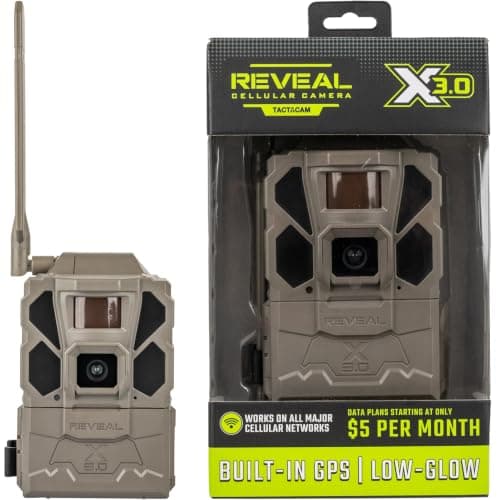
Walk the trail-camera aisle in 2026 and you will see two different products wearing the same camo shell. One is a cellular camera that sends every photo to your phone over the LTE network for a monthly plan fee. The other is a traditional SD-card camera that quietly stacks images on a memory card until you walk in and pull it. Both are called game cameras, both strap to the same tree, and they suit genuinely different hunters — which is why the first question in this guide is not "which brand" but "which kind."
This guide walks that decision first, then the specs that actually change your scouting — trigger speed, flash type, and the battery-and-card logistics nobody budgets for — and finishes with five cameras we would actually hang: two cellular, three SD, from a budget cam to a professional-grade workhorse. All prices are approximate as of 2026; verify current pricing before you buy. And if you already know you want photos on your phone, our dedicated cellular trail camera guide goes deeper on plans, carriers, and five cellular-only picks.
Cellular or SD card: the real first decision
A cellular camera's pitch is intrusion-free intel: photos arrive on your phone the moment they are taken, so you stop walking into your best spots to swap cards — and stop dragging scent through them every time. For pressured whitetail ground, a target buck you are trying to pattern, or a lease two hours from home, that is a genuine advantage, not a gadget.
The cost is literal: cellular cameras need a paid data plan, typically somewhere between free-tier-limited and about $15 per month per camera depending on brand and photo volume. Run six cameras and the subscriptions quietly become the biggest line item in your scouting budget. SD cameras have no recurring cost at all — you pay once, then feed them batteries.
| Choose cellular when | The spot is far away, pressure-sensitive, or you are patterning a specific animal in near-real time |
|---|---|
| Choose SD when | You check the property anyway, run many cameras, do long-term inventory, or want zero monthly fees |
| Coverage caveat | Cellular needs usable signal at the tree - deep canyons and dead zones still favor SD |
| Mixed fleet | Many hunters run cellular on key spots and cheap SD cams everywhere else - often the smartest setup |
Notice the last row. This is not really an either-or decision for a lot of hunters: a common and sensible setup is one or two cellular cameras on the spots that matter most, backed by a handful of inexpensive SD cameras doing census work on field edges and secondary trails. The picks below are chosen so you can build exactly that kind of fleet.
Trigger speed and recovery: the specs that fill the frame
Trigger speedis how fast the camera fires after its motion sensor trips. On a feeder or a mineral site it barely matters — the animal stands there. On a trail or a scrape line it matters enormously: a deer walking at a few miles per hour can clear the frame of a slow camera entirely, leaving you a folder of hindquarters and empty woods. Look for 0.5 seconds or faster on trails; the best cameras here run 0.1 to 0.4 seconds.
Recovery time— how quickly the camera can fire again — is the spec sheet's quiet sibling and arguably more important for counting deer. A camera that needs many seconds between shots records one deer when five walked past. Fast-recovery cameras like the Reconyx and the Browning below capture the whole string, which is the difference between knowing a doe came through and knowing a doe came through with a shooter buck eighty yards behind her.
Flash types: no-glow, low-glow, red-glow
Every trail camera needs light to shoot at night, and how visibly it makes that light is a real strategic choice:
- No-glow (940nm infrared).Emits no visible light at all. Best for mature bucks that have been educated by cameras, and for public land or anywhere theft is a risk — humans cannot see the flash either. The trade-off is slightly dimmer, shorter-range night images.
- Low-glow (850nm infrared). Produces a faint red ember at the lens, visible if an animal or person looks straight at it. Brighter night images and longer flash range than no-glow. A sensible default for private ground.
- White flash. A visible strobe, now rare outside photography-oriented models. It produces full-color night photos but announces the camera to everything in the woods.
Whether infrared flash actually spooks deer is debated among hunters — some swear mature bucks avoid low-glow cameras, others run them for years on the same scrapes without issue, and we have not found controlled research that settles it. The conservative play costs little: buy no-glow for pressured spots and do not overthink it elsewhere.
Batteries, cards, and running costs
The sticker price is only the entry fee. Most cameras run on 8 to 12 AA batteries, and lithium AAs are worth the premium— they hold voltage in the cold and routinely last several times longer than alkalines, which matters when the camera is an hour's walk in. Many cellular models now take solar panels that can keep a camera alive for a season or more without a visit; on a remote set, that accessory pays for itself.
Which batteries and which panel is its own decision, and panels are not universal — our guide to trail camera batteries and solar panels covers lithium versus rechargeable, the voltage trap that makes a full battery read empty, and which panel fits which camera.
- SD cards:buy a name-brand Class 10 card, format it in the camera (not just your computer), and check the camera's maximum supported size — the Browning below accepts up to 512GB, which at video settings is a full season of storage.
- Plans (cellular only): budget the yearly plan cost into the real price. A $100 cellular camera on a $10 monthly plan costs more over two seasons than a $300 SD camera.
- Theft: a security box and a cable lock cost less than replacing one stolen camera. Cellular cameras with GPS, like the Tactacam below, add a recovery angle SD cameras cannot.
The picks at a glance
Five cameras that cover both sides of the cellular/SD fork and every budget tier. Prices are approximate as of 2026 — verify current pricing (and plan costs, where relevant) before buying.
| Camera | Type | Best for | Approx. price | Standout |
|---|---|---|---|---|
| Tactacam Reveal X 3.0 | Cellular | Best cellular overall | ~$120-150 + plan | Auto-carrier, GPS, battery life |
| Spypoint Flex M | Cellular | Best budget cellular | ~$80-100 + plan | Free plan tier available |
| Browning Recon Force Elite HP5 | SD | Best SD overall | ~$150 | 0.1-0.7s trigger, 1080/60 video |
| Reconyx HyperFire 2 | SD | Pro-grade reliability | ~$500-600 (dealer only) | 5-year warranty, made in USA |
| GardePro A3S | SD | Best budget SD | ~$50-60 | No-glow night flash, cheap fleet cam |
Best cellular: Tactacam Reveal X 3.0
Tactacam's Reveal line has earned a reputation for doing the unglamorous things right — reliable transmission, honest battery life, responsive support — and the Reveal X 3.0 is the current sweet spot in that line. It ships with an integrated multi-carrier SIM that automatically connects to the strongest network at the tree, a low-glow IR flash the company rates past 90 feet, built-in GPS for theft tracking, and battery life Tactacam rates in months on lithium AAs at a typical photo cadence. Street price typically lands in the $120-150 rangebefore the data plan (roughly $5-13 per month) — verify current pricing.
Honest cons: independent testing at Trailcampro measured its detection range around 60 feet — adequate for trails and plot edges, but less reach than the Browning below — and like every cellular camera it is a subscription you are signing up for, not just a purchase.
Who it's for: the hunter who wants dependable photos-to-phone scouting on their best spots without spending Reconyx money. For the full cellular field, including the step-up Reveal Ultra, see our cellular trail camera guide.
Best budget cellular: Spypoint Flex M
The Spypoint Flex M is the cheapest sensible way into cellular scouting. It regularly street prices under $100— frequently around $80 on sale — and pairs dual-SIM auto-carrier connectivity with the feature that defines Spypoint's value case: a genuine free plan tier of roughly 100 photos per month. That means you can run the camera casually all off-season without paying a subscription at all, then bump to a paid tier when activity heats up in October.
The compromises are the ones you would expect at the price: image quality is serviceable rather than beautiful, and heavy photo volume will push you onto a paid plan like any other cellular camera. But performing above its price class is exactly what has made the Flex family the default budget recommendation across the industry.
Who it's for: first-time cellular buyers, and anyone scaling a multi-camera fleet where per-unit cost and per-month fees multiply fast.
Best SD camera: Browning Recon Force Elite HP5
If you do not need photos on your phone, the Browning Recon Force Elite HP5 shows how much camera your money buys without a modem in it. For roughly $150 you get an adjustable 0.1-0.7 second trigger, detection range adjustable out to about 100 feet, 1080p video at 60 frames per second with sound— genuinely watchable footage, not a slideshow — a 2-inch color screen for aiming and review at the tree, and support for SD cards up to 512GB. Trailcampro's independent testing has repeatedly put the HP5 family at or near the top of its annual rankings.
Honest cons: it is still a walk-in camera — every card pull is an intrusion into your spot — and Browning's advertised 24MP stills are interpolated like everyone else's. Judge it on its excellent sample images, which is where it wins anyway.
Who it's for: the hunter who checks cameras on their normal rhythm anyway and wants the best image and video quality per dollar in the category, with zero monthly fees.
Pro-grade: Reconyx HyperFire 2
Reconyx is what biologists, researchers, and land managers hang when the data actually has to be there in the spring. The HyperFire 2 is built in the USA, backed by a 5-year warranty that is unheard of in this category, and engineered for endurance: a fast quarter-second trigger, rapid recovery that catches every deer in a string, a NoGlow GEN3 infrared flash Reconyx rates to 150 feet, and battery life measured in seasons rather than weeks on a set of 12 lithium AAs. Its native sensor is a modest 3.1MP — and its night images still out-identify cameras advertising ten times the megapixels, which tells you everything about how honest the rest of the spec sheet is.
Honest cons: at roughly $500-600 it costs three or four Brownings, video is not its strength, and nobody needs one on a feeder. This is a buy-once tool for long-term inventory sets, harsh climates, and people who are done replacing dead cameras every other season. It is also the one camera here you cannot simply add to a cart: Reconyx sells through specialist dealers such as Trailcampro rather than on Amazon, so we have no buy link for it and no commission either way.
Who it's for: serious land managers and hunters running year-round camera surveys who value reliability and longevity over sticker price.
Best budget SD: GardePro A3S
Every camera fleet needs cheap census cams, and the GardePro A3S is one of the best-reviewed ways to fill that role. It typically sells for $50-60, has been a long-running Amazon best-seller with a very large verified-owner base, and covers the essentials surprisingly well for the money: a no-glow 940nm night flash, a trigger GardePro rates at a fast fraction of a second, and 1080p video. Owner feedback patterns consistently praise its night image quality relative to price.
Honest cons: treat the advertised megapixels as marketing (they are heavily interpolated), expect build quality and weather sealing a tier below Browning, and do not expect Reconyx-class longevity — at this price, the camera is closer to a consumable. That is fine: its job is to be everywhere your good cameras are not.
Who it's for: filling out a fleet, low-stakes sets, first-time buyers testing whether trail cameras fit how they hunt, and anywhere you would lose sleep hanging a $500 camera.
The bottom line
Buying the camera is the easy half. Most trail camera disappointment comes from height, direction and trigger settings rather than the hardware — see how to set up a trail camera. If your cameras are watching a feed site, our deer feeder guide covers what your state allows.
Decide cellular-or-SD first and the rest falls into place. If you want photos on your phone, the Tactacam Reveal X 3.0 is the dependable pick and the Spypoint Flex M is the cheap seat with a free plan. If you would rather skip subscriptions, the Browning Recon Force Elite HP5 is the best all-around camera for the money, the Reconyx HyperFire 2 is the buy-once professional tool, and the GardePro A3S fills every remaining tree for pocket change. Run lithium batteries, judge image quality by samples instead of megapixels, and put no-glow flash anywhere pressure or theft is a concern.
Camera intel pays off when you act on it well: our guide to when deer move turns photo timestamps into a hunt plan, and the right boots get you to the tree quietly in the first place.
Frequently asked questions
Are cellular trail cameras worth the monthly fee?
They are worth it when the camera guards a spot you cannot or should not visit often - a distant lease, a pressured bedding-area edge, or a specific buck you are patterning in real time. Every card pull on an SD camera is an intrusion that spreads scent and pressure; cellular cameras eliminate that. If you check the property regularly anyway or run many cameras, SD models with no recurring cost make more sense. Many hunters run both: cellular on key spots, cheap SD cameras for census work.
What trigger speed do I need in a game camera?
On trails and scrape lines, look for 0.5 seconds or faster - a walking deer can clear a slow camera's frame entirely. On feeders and mineral sites, trigger speed barely matters because animals linger. Recovery time (how fast the camera can fire again) is just as important for counting deer accurately; fast-recovery cameras catch the whole string of animals instead of just the first one.
What is the difference between no-glow and low-glow trail cameras?
No-glow cameras use 940nm infrared that is completely invisible to animals and people, making them best for pressured deer and theft-prone areas, at the cost of slightly dimmer night images. Low-glow cameras use 850nm infrared that shows a faint red glow at the lens but produces brighter, longer-range night photos. Whether IR flash actually spooks deer is debated and unproven either way - the safe play is no-glow on sensitive sets.
Are trail camera megapixel ratings real?
Mostly not. Advertised figures like 24, 36, or 48 megapixels are interpolated - software upscaling of a native sensor that is typically only 3-5 megapixels. Upscaling cannot add detail the sensor never captured. Compare real day and night sample photos instead. Reconyx, the most respected brand in the category, advertises a modest 3.1MP native resolution and still produces some of the most identifiable night images available.
What batteries are best for trail cameras?
Lithium AAs. They hold voltage in freezing temperatures and routinely last several times longer than alkalines, which matters most on remote sets and cellular cameras that transmit photos. For cellular models left out all season, a compatible solar panel can stretch battery life to a season or more and usually pays for itself in batteries saved.
Sources
Keep reading
Gearing up before your next hunt?
See how we evaluate gear, then dig into the reviews and buying guides — written without inventory to sell.