Buying Guide
Trail Cameras That Work With US Cellular: What Changed in 2026
UScellular's wireless business was bought by T-Mobile and closed in August 2025. That reframes the question every hunter in the old coverage footprint has been asking.
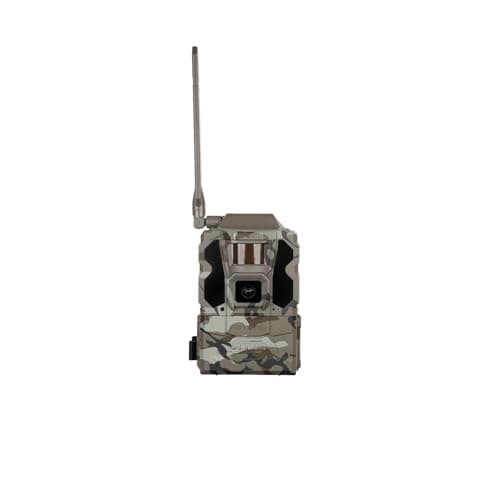
There is no such thing as a “US Cellular trail camera,” and after August 2025 there is less reason than ever to look for one. T-Mobile completed its acquisition of UScellular’s wireless operations, so the network that used to be the only good signal across much of the upper Midwest and rural Plains now sits inside T-Mobile.
What you actually need is a camera whose SIM can reach whichever carrier is strongest at your tree. Every camera below does that. The rest of this guide explains how that works, and how to find out what your signal actually is before you spend money.
What actually happened to UScellular
T-Mobile agreed in May 2024 to buy substantially all of UScellular’s wireless operations and selected spectrum for approximately $4.4 billion, and the deal closed on August 1, 2025. UScellular’s customers have been migrating to T-Mobile since, with prepaid service scheduled for discontinuation during summer 2026 and prepaid plan changes closed off from May 1, 2026.
For a hunter, the practical translation is short: in the counties where UScellular used to be the only carrier with usable bars, that coverage is now T-Mobile coverage. If your camera can talk to T-Mobile, it can use the towers you were asking about.
The short answer
| Can I buy a camera that runs on US Cellular? | No brand sells a UScellular-branded trail camera SIM, and following the T-Mobile acquisition there is no reason to want one. Buy a multi-carrier camera instead |
|---|---|
| What should I actually look for? | A camera with either an auto-switching multi-carrier SIM (Tactacam, Moultrie) or dual pre-activated SIMs (Spypoint, some Bushnell models). Both let the camera find the strongest available network |
| Will my old UScellular phone still work? | Nearly all UScellular devices continue to operate on T-Mobile's network; some required a SIM swap, and affected customers were notified directly. Check your account status with T-Mobile |
| What decides whether a camera works at my stand? | Signal strength at that specific tree - not the brand on the box. A camera that cannot reach a tower is an expensive SD-card camera |
How trail camera SIMs actually work
Cellular trail cameras do not have a phone plan in the sense you are used to. The manufacturer buys wholesale data and issues you a SIM that is locked to their platform, which is why you pay the camera brand rather than a carrier. There are two architectures.
| Approach | How it works | Brands | Practical effect |
|---|---|---|---|
| Multi-carrier auto-switching | One SIM with agreements across several carriers. The camera scans and locks onto the strongest available network | Tactacam, Moultrie | Set it and forget it. The camera re-selects if conditions change |
| Dual pre-activated SIM | Two carrier SIMs installed at the factory; the camera picks whichever is stronger | Spypoint, some Bushnell models | Same practical result via different hardware. Coverage depends on which two carriers |
| Single-carrier (legacy) | One carrier's SIM, chosen at purchase - you bought an 'AT&T model' or a 'Verizon model' | Older cameras across most brands | The architecture that created this problem. Avoid on the used market unless you know your carrier |
The takeaway: buy a current-generation camera from a brand using one of the first two approaches and the carrier question largely takes care of itself. Our best cellular trail cameras guide ranks these models on image quality, trigger speed and battery life rather than on connectivity.
How to check signal before you buy
This is the step that decides whether any of this works, and it takes twenty minutes.
- Walk to the actual tree. Not the field edge, not the truck. Signal in rolling timber can vary enormously over a hundred yards.
- Check bars on more than one carrier.Borrow a phone on a different network, or look at coverage maps for T-Mobile, AT&T and Verizon for that exact spot. If only one carrier has service there, you need a camera that can reach that one.
- Test at the height the camera will hang. Signal three feet off the ground and signal at ten feet are genuinely different, and higher is usually better.
- Note whether you have LTE or just voice. A bar of signal that only carries calls will not upload photos. You need data.
- Buy from a retailer with a returns window. Set the camera up, confirm it uploads, and only then commit. This is the single most useful piece of advice in this guide.
Auto-carrier: Tactacam Reveal Ultra
Tactacam’s Reveal line uses a multi-carrier SIM that scans and locks onto the strongest available network, so there is no model to choose by carrier and no SIM to swap. That is the behavior you want in former UScellular territory, where the strongest network varies from one ridge to the next.
The other reason Tactacam suits a multi-camera setup is the billing structure: its plans are priced so that adding cameras costs less per camera, which we cover in the data plan comparison.
Honest cons: the app experience is functional rather than polished, and the free tier is non-existent — you are on a paid plan from day one.
Broadest carrier support: Moultrie Edge 3
Moultrie Mobile also uses a multi-carrier approach, and the Edge 3 is reported to support the broadest set of carriers of the cameras here. If your property sits in a genuine coverage seam — where the only usable signal belongs to whichever carrier happens to have a tower on the far ridge — the widest carrier list is the most useful specification on the box.
Setup is the other strength: Moultrie’s activation flow is among the simplest, which matters when you are standing in the dark at a tree trying to get a camera online before a hunt.
Honest cons: Moultrie bills per camera, so a four-camera setup costs four subscriptions. That adds up faster than Tactacam’s structure.
Dual-SIM: Spypoint Flex
Spypoint takes the dual-SIM route — two pre-activated carrier SIMs in the camera, with the unit selecting whichever is stronger. In practice that covers the terrain-driven coverage shifts that plague single-carrier cameras.
The reason to start here if you are unsure: Spypoint is the only major brand with a genuinely free entry plan at 100 photos a month. That makes the Flex the cheapest way to find out whether a spot has usable signal at all, before you commit to a subscription anywhere.
Honest cons: 100 photos a month is not many on a good trail — a busy pinch point will burn through it in days — so treat the free tier as a signal test rather than a long-term plan.
Weak signal: Stealth Cam Deceptor Max
If your problem is that the signal at your spot is marginal rather than absent, the variable that matters most is how much data the camera insists on sending. The Deceptor Max produces the best night images of the cameras we cover, and image quality settings are the lever you use to make a weak connection work — smaller transmitted images upload where full-resolution ones time out.
Honest cons: Stealth Cam’s subscription pricing is the steepest here for a single camera, and it bills per camera. See the plan comparison before committing.
Making a weak-signal spot work
If you have one bar of data rather than none, several things genuinely help:
- Hang higher.Ten to twelve feet up and angled down usually gains signal over a waist-height mount, and it reduces how often deer notice the camera — useful when you are patterning deer and cannot afford to educate them.
- Reduce transmitted image size. Most apps let you send thumbnails and request the full-resolution version on demand. On a weak link this is the difference between working and not.
- Lower the upload frequency. Batching uploads to four times a day rather than instantly gives the camera longer windows to find a usable connection.
- Use an external antenna where supported. Several models accept one, and a better antenna is far cheaper than moving the camera to a spot with no deer.
- Add solar.A marginal signal means the radio works harder and the batteries drain faster. Solar removes the trips in to change them — which is the entire point of a cellular camera.
The bottom line
Stop searching for a US Cellular trail camera. The network is T-Mobile now, and the cameras worth owning do not lock to a carrier anyway. Buy a current multi-carrier or dual-SIM model, check the signal at the actual tree before you commit, and keep the receipt until you have seen the first photo arrive on your phone.
Check the Tactacam Reveal Ultra price on Amazon. For the full field, see our best cellular trail cameras guide, and for the ongoing cost see our data plan comparison.
Frequently asked questions
What trail cameras work with US Cellular?
No trail camera brand sells a UScellular-specific SIM, and since T-Mobile completed its acquisition of UScellular's wireless operations on August 1, 2025, that coverage is now T-Mobile coverage. Buy a camera with a multi-carrier auto-switching SIM (Tactacam, Moultrie) or dual pre-activated SIMs (Spypoint) and it will use whichever network is strongest at your tree.
Did T-Mobile buy US Cellular?
Yes. T-Mobile agreed in May 2024 to acquire substantially all of UScellular's wireless operations and selected spectrum for approximately $4.4 billion, and the transaction closed on August 1, 2025. UScellular customers have been migrating to T-Mobile since, with prepaid service scheduled for discontinuation during summer 2026.
How do I know if a cellular trail camera will work on my property?
Walk to the exact tree with a phone and check for LTE data - not just voice bars - at roughly the height the camera will hang. Check more than one carrier if you can. Then buy from a retailer with a returns window, set the camera up, and confirm it actually uploads before you commit to a subscription.
What is the difference between a multi-carrier and a dual-SIM trail camera?
A multi-carrier camera has one SIM with agreements across several networks and scans for the strongest; Tactacam and Moultrie work this way. A dual-SIM camera has two carrier SIMs pre-installed and picks the stronger of the two; Spypoint and some Bushnell models work this way. The practical result is similar - both avoid the old problem of buying an 'AT&T model' that has no service at your stand.
Can I make a cellular trail camera work with a weak signal?
Often yes. Hang it higher and angled down, reduce the transmitted image size so the camera sends thumbnails rather than full-resolution files, batch uploads to a few times a day instead of instantly, and fit an external antenna if the model supports one. Adding solar helps too, because a weak signal makes the radio work harder and drains batteries faster.
Do I still need a data plan for a trail camera?
Yes. Cellular cameras carry a manufacturer-issued SIM and you subscribe through the camera brand rather than a carrier. Plans range from a free 100-photo tier through to unlimited, and billing structures differ significantly between brands - some charge per camera, others cover several cameras on one plan.
Sources
- T-Mobile Newsroom - T-Mobile completes UScellular acquisition (closed August 1, 2025)
- T-Mobile US, Inc. Form 10-K FY2025 - UScellular purchase agreement terms and consideration
- T-Mobile for Business - UScellular account migration guidance
- Trailcampro - cellular trail camera data plans and brand platform details
- Product availability and pricing verified via the Amazon Creators API, 2026-08-19
Keep reading
Gearing up before your next hunt?
See how we evaluate gear, then dig into the reviews and buying guides — written without inventory to sell.