Buying Guide
Scent Control Clothing: An Honest Look at What Actually Works
Carbon garments do adsorb odor - that part held up in court and in a lab. Whether that translates into deer you would not otherwise have killed is a different question, and the answer starts with the wind.
Scent-control clothing is the most argued-about category in hunting gear, and most of the argument happens because two different questions get treated as one. Question one: does activated carbon adsorb human odor? Question two: does wearing a carbon garment result in deer you would not otherwise have killed?
The first question has a documented answer. The second does not, and anyone who tells you it does is selling something. Here is what we can actually say, and where we would put the money.
The claim, and what the testing showed
Activated carbon works by adsorption — odor molecules bind to the enormous surface area inside porous carbon particles instead of passing through the fabric. That is established chemistry; it is the same principle as a water filter or a gas mask cartridge.
The category was tested adversarially in a way most hunting gear never is. A consumer lawsuit against ScentLok went to federal court, and independent laboratory testing was performed at Rutgers University as part of that case. That testing reported that carbon-lined garments blocked or adsorbed roughly 96 to 99+ percent of the odor compounds tested at highly elevated concentrations, and essentially all of the surrogate body-odor compounds, with the fabrics remaining effective after washing and drying. Dr. Tom Hartman, who directed the mass-spectrometry lab involved, was quoted saying activated-carbon products tended to outperform other fabric types in those tests.
Why hunters still argue about it
The honest gap between the lab and the woods comes down to four things:
- A garment is not a sealed system. You breathe, and breath is a major odor source that no jacket touches. Your face, neck and hands are exposed. Odor escapes at cuffs, collars and hems.
- Carbon saturates.Adsorption capacity is finite. Manufacturers specify regeneration routines — typically heat in a dryer — and a garment worn for days without that routine is not performing like a fresh one.
- The threshold is unknown.Even a 99 percent reduction leaves something, and a whitetail’s olfactory sensitivity is orders of magnitude beyond ours. Nobody has published a credible figure for "how low is low enough."
- Field results are unfalsifiable anecdotes."A doe walked past me at 15 yards downwind" is a real experience and also happens to hunters wearing cotton.
Experienced hunters who use carbon garments regularly — including people with no reason to undersell them — generally describe them as helping at the margin rather than defeating a deer’s nose. Today’s carbon garments are also built as comfortable, good-looking hunting outerwear first, which necessarily trades away some of the extremity that would make them maximally effective at odor control.
Our position: treat scent-control clothing as a margin, not a plan. Buy the jacket because it is a good jacket, and treat the carbon as a bonus.
The scent-control hierarchy that actually matters
If your goal is to not get winded, spend your effort in this order. The first three are free and they dominate everything below them.
| Priority | Action | Cost | Impact |
|---|---|---|---|
| 1 | Hunt the wind. Pick the stand by the forecast, and do not hunt a stand the wind is wrong for | Free | Decisive |
| 2 | Control your access route. Do not walk through the area you expect deer to come from | Free | Very high |
| 3 | Use thermals. Morning air falls, evening air rises - set up above or below accordingly | Free | Very high |
| 4 | Basic hygiene: unscented soap, clean clothes, no truck-cab or cooking odors on your gear | Low | High |
| 5 | Store hunting clothes sealed and away from house and vehicle odors | Low | High |
| 6 | Rubber boots and a clean access trail | Low-moderate | Moderate |
| 7 | Field sprays on boots, pack and outer layer | Low | Moderate |
| 8 | Ozone storage for gear between hunts | Moderate | Moderate |
| 9 | Carbon scent-control garments | High | Marginal - a supplement, not a substitute |
Note what sits at the top and what sits at the bottom. A hunter with a $600 carbon suit who hunts a stand with the wrong wind is beaten. A hunter in a $60 jacket who respects the wind and controls access is not.
Carbon, ozone and sprays: how each works
| Activated carbon garments | Adsorb odor compounds into porous carbon bonded to a fabric layer. Documented to work in lab conditions; capacity is finite and requires periodic heat regeneration per the manufacturer's instructions. Best treated as reducing what escapes your outer layer |
|---|---|
| Ozone generators and gear bags | Ozone (O3) is a strong oxidizer that breaks down odor molecules on stored gear. Genuinely effective on equipment in an enclosed bag. Ozone is a respiratory irritant - never run a generator in an occupied space, and follow the off-gassing instructions |
| Antimicrobial / enzymatic sprays | Target the bacteria that convert sweat into odor, rather than masking it. The most cost-effective item in the category and the easiest to apply where it counts: boots, pack straps, hat brim, cuffs |
| Odor-masking / natural sprays | Overwhelm or interfere with detection rather than eliminate. Effect is debated; harmless and cheap |
| Silver and zeolite treatments | Antimicrobial fabric treatments that slow odor generation. Real but modest, and they degrade with washing |
| Merino wool base layers | Naturally antimicrobial, commonly good for three to four wears before odor develops. The cheapest genuine scent advantage most hunters can buy - see our base layer guide |
The picks at a glance
| Product | Type | Where it fits | Approx. price |
|---|---|---|---|
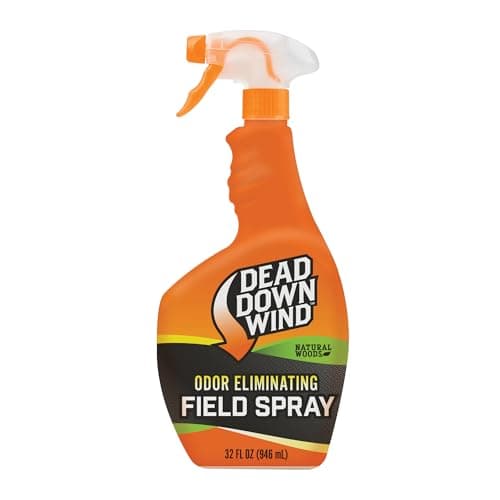
| Dead Down Wind Evolve Field Spray | Enzymatic field spray | Boots, pack, outer layer, every hunt | ~$9-16 |
| Nose Jammer Field Spray | Natural masking spray | The masking approach, if you prefer it | ~$15 |
| Hunters Specialties Scent-A-Way Max | Odorless field spray | Bulk 32 oz value for gear and clothing | ~$10-14 |
| Scent Crusher Gear Duffle 2.0 | Ozone storage bag | Between-hunt gear storage | ~$130 |
| ScentLok Savanna Aero Fuse | Lightweight carbon jacket | Early season and warm weather | ~$140 |
| ScentLok BE:1 Reactor Layering Jacket | Insulated carbon layer | Mid and late season | ~$140 |
Prices are approximate mid-2026 brackets; verify before buying.
Best value: field sprays
If you buy one thing in this category, buy spray. It costs under $15, you apply it exactly where odor concentrates — boots, cuffs, hat brim, pack straps, the underside of the stand rail — and it addresses the bacterial process that creates odor in the first place rather than trying to trap it after the fact.
Dead Down Wind Evolve Field Spray (around $9-16, verify current pricing) is the enzymatic option and the best value in the category, particularly in the refill sizes. Hunters Specialties Scent-A-Way Max in the 32-ounce bottle (around $10-14) is the bulk play — spray everything, including the truck seat and the inside of your boots, without counting ounces. Nose Jammer (around $15) takes the natural-masking approach instead, using aromatic compounds associated with common vegetation.
Honest cons: sprays evaporate and their working life on a garment is measured in hours, not days; reapply at the truck and again at the stand. The masking approach in particular is the least scientifically supported branch of the category — it is cheap enough that this matters little, but do not build a strategy on it.
Best storage system: Scent Crusher ozone gear duffle
Ozone belongs in a bag, not on a stand. In an enclosed duffle, an ozone generator oxidizes odor molecules on stored clothing and equipment, which addresses a genuinely underrated problem: gear that picks up house, garage, truck and campfire odors between hunts. The Scent Crusher Odor Eliminating Gear Duffle 2.0 at around $130 (verify current pricing) integrates the generator into the bag, which is what makes people actually use it.
This is the piece of scent-control equipment we are most comfortable recommending on the merits, because the mechanism is unambiguous and the use case — storage, not field use — matches what it does well.
Honest cons and one safety note. Ozone is a respiratory irritant.Run the cycle with the bag closed, in a ventilated space, and let gear off-gas before wearing it — follow the manufacturer’s instructions rather than improvising. Ozone also degrades some elastics and rubber over long repeated exposure. And the in-field ozone devices marketed as a treestand scent shield are a much weaker proposition than the storage case: open air disperses ozone immediately.
Best warm-weather carbon: ScentLok Savanna Aero Fuse
Early-season scent control is a real problem, because early season means heat and heat means sweat. The Savanna Aero Fuseis ScentLok’s lightweight carbon jacket at around $140 (verify current pricing), built to be worn in September and October rather than as an insulating layer.
Judged purely as a hunting jacket — quiet face, light, packable, useful pattern range — it holds up. The carbon is the reason to choose it over an equivalent non-carbon jacket rather than the reason to buy a jacket at all.
Honest cons: you are paying a premium over an equivalent jacket without the technology, the carbon layer needs the heat-regeneration routine to keep working, and it is a light jacket — not a mid-season answer. See best camo for whitetail for the non-carbon alternatives at the same price.
Best insulated carbon layer: ScentLok BE:1 Reactor
The BE:1 Reactor insulated layering jacket, around $140 (verify current pricing), is the mid-and-late-season counterpart: an insulated carbon layer designed to go under a shell or be worn alone on moderate days.
Layering is where carbon garments make the most sense structurally, because the technology is trying to intercept odor before it leaves your clothing system. A carbon layer buried under a non-carbon shell is doing more useful work than a carbon shell over a non-carbon mid-layer.
Honest cons: same premium, same maintenance routine, and the insulation level is moderate rather than late-season-severe. ScentLok’s sizing runs athletic; order with layering room.
The routine that makes any of it work
- Wash hunting clothes in a scent-free, UV-free detergent.One product solves two problems — ordinary detergent adds both fragrance and optical brighteners that make fabric glow to a deer’s UV-sensitive eyes. See camo patterns explained.
- Dry separately and store sealed. A tote or a scent-free bag, not a closet with the family laundry.
- Regenerate carbon garments per the manufacturer’s instructions— usually a dryer cycle on the specified setting. Skipping this is why people conclude the technology does not work.
- Dress at the truck or the field edge, not at home. Outer layers should never ride in a vehicle cab.
- Rubber boots, and do not wear them anywhere but hunting. Your boots touch the ground the deer will walk on.
- Spray at the truck and again at the stand.
- Then hunt the wind anyway. All six of the above are a hedge against a mistake, not a license to make one.
The bottom line
The lab evidence for carbon adsorption is real and was tested adversarially. The field benefit is smaller than the marketing suggests and impossible to isolate from everything else a careful hunter does. Buy in this order: a field spray because it is $12 and it works where odor actually concentrates; merino base layers because the antimicrobial benefit is free once you own them; an ozone storage bag if you hunt often enough that between-hunt contamination is a real problem; and a carbon garment if you want it and the jacket is good on its own merits.
And then hunt the wind. It is free, it is decisive, and it is the only item on this page that works every time.
Check the Dead Down Wind Evolve field spray price on Amazon.
Frequently asked questions
Does scent control clothing actually work?
The fabric does what it claims in a laboratory. Independent testing at Rutgers University, performed as part of federal litigation over the claims, reported carbon-lined garments blocking or adsorbing roughly 96 to 99+ percent of tested odor compounds and remaining effective after washing and drying. Whether that reduction translates into deer you would not otherwise have killed is unproven - a garment does not capture your breath, face, hands or boots, and nobody has established how low your scent needs to go before a whitetail stops reacting.
Is activated carbon hunting clothing worth the money?
As a supplement, sometimes; as a strategy, no. Hunting the wind, controlling your access route and playing thermals cost nothing and dominate everything a garment can do. If you buy a carbon jacket, buy one that is a good hunting jacket on its own merits and treat the carbon as a bonus rather than the reason.
Do you have to reactivate carbon hunting clothes?
Yes. Adsorption capacity is finite, and manufacturers specify a regeneration routine - typically a dryer cycle at a stated setting - to drive off adsorbed compounds and restore capacity. A carbon garment worn for several days without regeneration is not performing like a fresh one, and skipping this step is a common reason hunters conclude the technology does not work.
Are ozone generators safe to use on hunting gear?
In a sealed bag or container, used as directed, yes - and that is where they work best, oxidizing odor on stored gear between hunts. Ozone is a respiratory irritant, so never run a generator in an occupied space, always let gear off-gas before wearing it, and follow the manufacturer's instructions rather than improvising. In-field ozone devices are a much weaker proposition, since open air disperses ozone immediately.
What is the cheapest effective scent control?
Hunting the wind, which is free. After that: an enzymatic field spray for under $15 applied to boots, cuffs, hat and pack straps, and merino wool base layers, which are naturally antimicrobial and typically stay wearable for three to four hunts. Both cost a fraction of a carbon garment and address odor closer to its source.
Should I wash hunting clothes in regular detergent?
No, for two separate reasons. Household detergents add fragrance, which is exactly what you are trying to avoid, and they contain optical brighteners that fluoresce under ultraviolet light - which deer see directly, since they lack the UV-filtering lens humans have. A scent-free, UV-free hunting detergent solves both problems in one product.
Sources
- ScentLok Technologies - technology overview and Rutgers testing summary
- ScentLok Technologies - frequently asked questions (carbon regeneration, care)
- MeatEater / Wired to Hunt - ozone, carbon and cover scents: can you beat a whitetail's nose?
- Bill Winke - does activated carbon work?
- Grand View Outdoors - how scent control actually works
- ProHunt - scent control for deer hunting: what works and what doesn't
- Product specs, availability and pricing verified via the Amazon Creators API, 2026-08-13
Keep reading
Gearing up before your next hunt?
See how we evaluate gear, then dig into the reviews and buying guides — written without inventory to sell.