Head to Head
Are Crossbow Broadheads Different? Mostly No, With Three Exceptions
Most broadheads will shoot out of a crossbow and most will kill a deer. But a crossbow arrow is shorter, heavier and much faster than a vertical-bow arrow, and those three differences change what a broadhead has to survive - and how forgiving it is about flying straight.
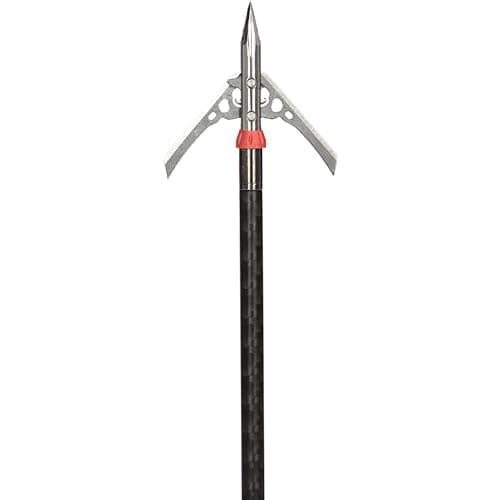
No, crossbow broadheads are not a fundamentally different product — a compound bow head and a crossbow head cut the same way and kill the same way. But there are three specific places where crossbows genuinely demand something different, and all three get worse as arrow speed goes up. If you want the simple answer: buy a compact fixed blade or a purpose-built crossbow mechanical, keep shots inside 40 yards, and check whether the manufacturer publishes a maximum speed rating for the head you are considering.
Our picks are the Rage Hypodermic Crossbow NC if you want a mechanical, the Slick Trick Magnum 100 if you want a fixed blade, and the Muzzy Trocar HBX if you want the hybrid. All three exist in crossbow-appropriate form for the reasons below.
The short answer
| Question | Answer |
|---|---|
| Can I shoot my compound broadheads out of my crossbow? | Usually yes, mechanically - they thread the same 8-32 insert. Whether they fly well and survive is the real question |
| Will a crossbow open a mechanical head? | Essentially always. Most crossbows have ample kinetic energy to open any expandable head at the commonly accepted 40 yards and under |
| Do I need a head that says 'crossbow' on the package? | Not strictly, but the crossbow versions exist for real engineering reasons - retention, durability and flight at speed |
| Does it matter more at 400-plus FPS? | Yes. Speed amplifies every steering force and every impact force. This is the whole reason the category exists |
| Is the arrow part of the answer? | Very much so. Total arrow weight, straightness and front-of-center balance decide how forgiving any head will be |
What actually differs about a crossbow arrow
A crossbow bolt is not a short compound arrow. Three properties set it apart, and each one has a consequence for the head on the front.
| It is much faster | A modern hunting crossbow launches in the 380-500 FPS range where a compound sits nearer 270-340. Aerodynamic steering forces scale with the square of velocity, so any surface that wants to plane - a big fixed blade - gets a far bigger vote on where the arrow goes. |
|---|---|
| It is shorter | A 16-to-22-inch bolt has less distance between the broadhead at the front and the vanes at the back, which means the vanes have less leverage to correct a head that is steering. The same head is less forgiving on a bolt than on a 29-inch arrow. |
| It carries more energy into the target | More energy arriving means more force on blades, ferrules and retention systems at impact. A head that survives compound hits can bend or shear on a crossbow hit into bone or hard ground. |
Notice the direction all three point. They do not say a crossbow needs a different kind of cut. They say a crossbow is less tolerant— of blade area out front, of weak retention, and of flimsy construction. Crossbow-specific heads are the same heads built with less tolerance for error.
The three real exceptions
| 1. Blade retention on mechanical heads | A crossbow launch is violent and instantaneous, and some mechanical heads rely on a rubber shock collar or O-ring to keep blades closed in flight. Crossbow versions typically use a different retention design - Rage's crossbow Hypodermic is a 'no collar' head for exactly this reason - because a blade that opens in flight, or a collar that fails, is a lost arrow at best. |
|---|---|
| 2. Flight stability with large fixed blades | Big, aggressive fixed heads can fly beautifully from a slower vertical bow inside 40 yards and get erratic out of a fast crossbow. Compact fixed heads around one inch of cut diameter are the reliable crossbow answer - they present less planing surface to a much faster airstream. |
| 3. Published speed ratings and warranties | Some manufacturers state a maximum FPS for a head, or decline to warranty it above a speed. This is the one place where the label genuinely binds: check the maker's own statement for the head you want, especially if your crossbow is in the 450-plus FPS class. |
What 'crossbow rated' actually means
The phrase is used loosely. In practice a head marketed for crossbows differs from its vertical-bow sibling in some combination of these ways — and often not all of them:
| Difference | Why it exists | Does it change the cut? |
|---|---|---|
| Different blade retention | A crossbow launch can defeat a collar or O-ring designed for compound acceleration | No - same blades, different way of holding them shut |
| Heavier or thicker ferrule | More impact energy arriving at the target | No, though it may change the head's weight |
| Smaller or swept-back blade geometry | Less planing surface to misbehave at 400-plus FPS | Yes - usually a slightly smaller cut diameter |
| Rear-deploying mechanical design | Rear deployment uses the target rather than the airstream to open blades, which is more predictable at speed | No |
| A published maximum speed | The manufacturer has tested a limit and is telling you | No - but it limits where you can use it |
That is the honest version of “crossbow broadhead.” It is an engineering tolerance statement, not a different weapon’s ammunition.
Fixed or mechanical, at crossbow speed
The fixed-versus-mechanical argument plays out slightly differently on a crossbow than on a compound, and the reason is that the usual objection to mechanicals largely disappears.
| Fixed blade | Mechanical | |
|---|---|---|
| Energy needed to work | None - the blades are already out | Some, to open on impact. Not a practical concern: most crossbows have ample energy inside 40 yards |
| Flight at crossbow speed | Depends entirely on size - compact heads around 1 in fly extremely consistently; large aggressive heads can get erratic | Generally excellent, because the blades are tucked in flight and present almost no planing surface |
| Tuning effort | More. Fixed blades are likelier than expandables to need sighting adjustment when you swap from field tips | Less. Usually closer to field-tip point of impact |
| Penetration | Better, especially on heavy bone - no energy spent opening blades | Expandables need energy to open and often penetrate less than a fixed head of the same weight |
| Durability | Higher. Fewer moving parts to bend or shear on a hard hit | Lower. Blades and retention are consumable, and a crossbow hit is a hard hit |
| Who it suits on a crossbow | Larger or tougher game, longer shots, anyone who values penetration over wound channel | Whitetail and similar game inside 40 yards, and anyone who wants broadheads to fly like field points |
The usual summary holds: a 100-grain expandable is plenty for whitetail and pronghorn, while a fixed blade — especially a heavier one — is the choice for genuinely large game. Either way, keep crossbow shots inside the commonly accepted 40 yards. Our fixed vs mechanical comparison covers the argument in full, including the vertical-bow side.
The grain weight question
One hundred grains is the default and will serve almost everyone. The case for going heavier is real but it is a trade, not an upgrade.
| 100 grain | The standard, the widest selection, and the weight most crossbow arrows are built around. Entirely sufficient for whitetail and similar game. |
|---|---|
| 125 to 150 grain | Published testing has found a heavier broadhead - 150 grains - delivers more consistent arrow flight while inflicting maximum damage and penetration. The cost is velocity: the extra weight up front slows the arrow and steepens the arc. |
| The real mechanism | Weight forward raises front-of-center balance, and higher FOC makes an arrow more stable in flight. That is why a heavy head can fly better - it is a stability effect, not a magic head. |
| What you give up | Speed, and therefore your sight marks. If you change head weight you re-zero, and on a crossbow scope with speed-calibrated reticles that may mean re-checking every ring. |
Our crossbow scope guide explains why a weight change moves every aiming reference on a speed-ring reticle, and how to sight in a crossbow covers doing it properly afterwards.
Best mechanical: Rage Hypodermic Crossbow NC
This is the cleanest illustration of the whole article. It is a rear-deploying mechanical with a 2-inch cutting diameter at 100 grains, and the thing that makes it the crossbow version is the NC — no collar retention system. It does not need a shock collar to hold the blades closed, which removes the component most likely to fail or be fitted wrong on a crossbow launch. Rear deployment also means the blades stay tucked through flight, so there is essentially no planing surface for crossbow speed to act on.
Honest cons: a 2-inch mechanical spends energy opening and will not penetrate like a fixed head of the same weight, and blades are consumable — budget for replacements rather than expecting to reuse them after a hard hit. Keep shots inside 40 yards.
Best fixed blade: Slick Trick Magnum 100
A four-blade fixed head at 100 grains with a 1.125-inch cut, and that cut diameter is precisely why it belongs on a crossbow. Compact fixed heads around an inch fly extremely well and very consistently from a crossbow, because there is simply not much blade surface for a 400-FPS airstream to steer. You also get the fixed-blade advantages that matter most at crossbow energy: nothing to open, nothing to fail, and better penetration into heavy bone.
Honest cons: a 1.125-inch cut is a smaller wound channel than a 2-inch mechanical, and fixed blades are more likely than expandables to need a sighting adjustment when you move from field points to hunting heads. Plan on a tuning session rather than a swap.
Best hybrid: Muzzy Trocar HBX
The Trocar HBX is a crossbow-specific hybrid: a 1-inch fixed cut plus a 1.625-inch mechanical component at 100 grains. The idea is to get the fixed blade’s guaranteed cut and bone-splitting ability with a mechanical’s wound channel, which is a genuinely sensible compromise for crossbow whitetail hunting where you have energy to spare.
Honest cons: hybrids carry the complexity of both designs, so there is more to inspect and more to go wrong than on a simple fixed head. And the fixed component means it has more planing surface than a fully tucked mechanical, so it is worth confirming flight at your actual speed.
The arrow matters as much as the head
Half the broadhead-flight problems blamed on heads are arrow problems. A crossbow bolt’s straightness tolerance, weight consistency and spine do more to determine whether a broadhead flies true than the brand on the ferrule.
The TenPoint EVO-X CenterPunch16 is the example worth knowing: a premium crossbow arrow built to a tight straightness tolerance, which is the specification that decides whether six arrows with identical heads land in the same place. If your broadheads group worse than your field points, check arrow straightness and head alignment before you change heads.
Honest cons: premium arrows cost several times what budget bolts do, and if you lose arrows regularly that is a real operating expense. Our crossbow bolt guide covers the full range, including the Black Eagle Executioner as the value option.
The test that settles it for your bow
Everything above is general. Here is how to find out what is true for your crossbow, your arrows and your chosen head — and it takes about twenty minutes.
| 1. Spin test every arrow with the head installed | Stand the arrow on the broadhead tip and spin it. A wobble means the head is not aligned with the shaft, and no amount of tuning fixes that. Reseat the insert or retire the arrow. |
|---|---|
| 2. Shoot a three-arrow group with field points | This is your baseline. If field points will not group, the problem is the crossbow or the arrows and has nothing to do with broadheads. |
| 3. Shoot the same three arrows with broadheads at 20 yards | Compare group size and point of impact. A group that moves but stays tight is a sighting adjustment. A group that opens up is a flight problem. |
| 4. Repeat at 40 yards | Flight problems are invisible at 20 yards and obvious at 40. If the group opens up only at distance, you have found planing - try a more compact head. |
| 5. Re-zero and confirm | Sight in with the heads you will hunt with, not with field points. Then leave the setup alone. |
| 6. Sharpen or replace after every shot into an animal | A hunting broadhead gets resharpened or replaced after each shot at game. Blades that have been through hide and bone are not hunting-sharp any more. |
The bottom line
Crossbow broadheads are not a separate species. They are the same heads built to tighter tolerances, because a crossbow arrow is faster, shorter and harder-hitting, and all three of those make a head less forgiving. In practice that means: pick a compact fixed blade around an inch of cut, or a rear-deploying mechanical with crossbow-appropriate retention; stay inside 40 yards; and read the manufacturer’s own speed rating if your bow is fast.
The Rage Hypodermic Crossbow NC is the mechanical we would buy, the Slick Trick Magnum 100 the fixed blade, and the Muzzy Trocar HBX the hybrid. Then spend your remaining time spin-testing arrows and shooting groups at 40 yards, because that is where a head either works for your setup or does not. Our crossbow broadhead guide ranks the full field, and crossbow maintenance covers keeping the rest of the system honest.
Frequently asked questions
Are crossbow broadheads different from regular broadheads?
Not fundamentally - they thread the same insert and cut the same way. What differs is tolerance. A crossbow arrow is faster, shorter and carries more energy into the target, so a head has less help from the vanes, faces larger aerodynamic steering forces, and takes a harder impact. Crossbow-specific heads address that with different blade retention, sturdier ferrules and often a more compact blade profile.
Do crossbows need special broadheads?
Usually not strictly, with three exceptions. First, mechanical heads that rely on a rubber shock collar can be defeated by a crossbow launch, which is why crossbow versions often use a different retention design. Second, large aggressive fixed blades that fly well from a slower compound can get erratic at 400-plus FPS. Third, some manufacturers publish a maximum speed rating for a head - check that for your exact model if your crossbow is fast.
Can you use compound bow broadheads on a crossbow?
Mechanically yes, and they will often work fine. The question is whether they fly well at your crossbow's speed and survive the impact. Test it rather than assume it: spin-test each arrow with the head installed, shoot a three-arrow group with field points as a baseline, then shoot the same arrows with broadheads at 20 and again at 40 yards. Flight problems hide at 20 yards and show up at 40.
Fixed or mechanical broadheads for a crossbow?
Either works, and the usual objection to mechanicals largely disappears - most crossbows have ample kinetic energy to open any expandable head inside the commonly accepted 40 yards. Mechanicals generally fly closer to field points and need less tuning; compact fixed blades around an inch of cut fly extremely consistently at crossbow speeds and penetrate better, especially into heavy bone. A 100-grain expandable is plenty for whitetail; a fixed blade is the choice for larger game.
What grain broadhead is best for a crossbow?
One hundred grains is the standard and is sufficient for whitetail and similar game. Published testing has found that a heavier head - 150 grains - delivers more consistent arrow flight with maximum damage and penetration, because the extra weight forward raises front-of-center balance and stabilizes the arrow. The cost is velocity and a steeper arc, so changing head weight means re-zeroing, including re-checking every ring on a speed-calibrated crossbow reticle.
Why do my broadheads not group like my field points?
Most often the arrow, not the head. Spin-test each arrow standing on the broadhead tip: a wobble means the head is not aligned with the shaft, and no tuning fixes that. Arrow straightness tolerance and weight consistency also matter more than the brand on the ferrule. If field points group and broadheads do not, and alignment is good, you are probably seeing a large fixed blade planing at speed - try a more compact head.
How far can you shoot a crossbow with broadheads?
Keep hunting shots inside the commonly accepted 40 yards. That number is not about the crossbow's reach - plenty of bows have energy well beyond it - but about broadhead flight, the animal's reaction time, and your ability to place the arrow precisely. It is also the range inside which mechanical heads reliably have the energy to open properly.
Sources
- Bowhunting.com - 'Broadheads For Crossbow Hunting': most crossbows have enough kinetic energy to open any expandable broadhead as long as shots are kept to the commonly accepted 40 yards or less; fixed blades more than expandables need tuning or sighting adjustment when replacing field tips; fixed blades with 1-inch diameters fly extremely well and very consistently from a crossbow; research has shown a heavier broadhead (150 grains) delivers more consistent arrow flight while inflicting maximum damage and penetration; expandables require energy to open and often do not penetrate as well as fixed blades; a 100-grain expandable suits whitetail and pronghorn; sharpen blades after each shot with a hunting arrow
- Published specifications for the picks - Rage Hypodermic Crossbow NC (rear-deploy mechanical, 100 gr, 2 in cut, no-collar retention), Slick Trick Magnum 100 (fixed four-blade, 100 gr, 1.125 in cut), Muzzy Trocar HBX (hybrid, 100 gr, 1 in fixed plus 1.625 in mechanical)
- The velocity and arrow-length reasoning in this article follows from the published speed ranges of modern hunting crossbows against compound bows and from standard aerodynamics - it is argument from those figures, not a measurement we performed
- Prices, product images and stock status via the Amazon price layer, refreshed daily
Keep reading
Gearing up before your next hunt?
See how we evaluate gear, then dig into the reviews and buying guides — written without inventory to sell.