Buyer's Guide
Best Crossbow Cases: Why the Fit List Is Not a Fit Spec
Crossbow case makers mostly publish a list of crossbow models instead of the inside of the case. These five are compared on whatever dimensions are actually published - and on the three measurements you should take off your own bow before you order anything.
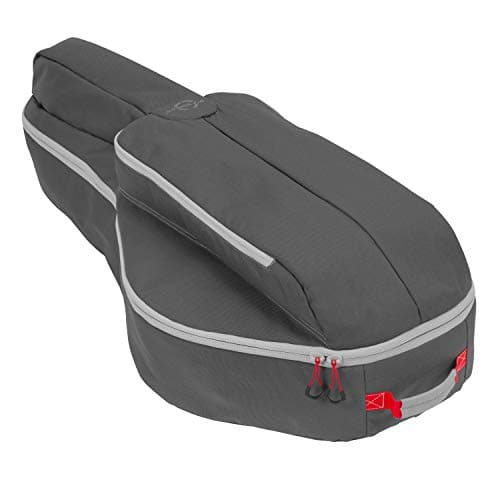
For most hunters the best crossbow case is the Allen Titan Krait: 37 inches long, 19.5 wide and 10.75 deep, tricot-lined and padded, with a carry handle, padded backpack straps, an internal retaining strap and two oversized pockets that swallow bolts and a quiver. It wins because it publishes its dimensions, those dimensions cover the widest span of scoped narrow-limb crossbows on this page, and it costs a small fraction of what a hard case does.
If the bow rides in a truck bed, on an ATV or onto an airplane, the TenPoint STAG Eliteis the one to buy — a semi-hard EVA shell, four D-rings, and the only case here that publishes its interior dimensions. Ravin owners have a model-matched shell with a pre-cut foam insert. If you want to walk the bow in on your back, the Wicked Ridge Ambush Bowpack is built for it. And if your crossbow is one of the genuinely narrow modern designs, the Titan Copperhead at 38 by 16 inches is cut for it.
The verdict
A crossbow case has one job, which is to stop the bow and the optic arriving at the woods different from how they left the house. That makes it the least glamorous purchase in the sport and one of the few that quietly protects everything else you spent money on — a scope knocked off zero in a truck bed costs you a sight-in session at best and a deer at worst.
The problem is that this category is almost impossible to shop on specifications, because most makers do not publish any. The dominant convention is a list of crossbow models the case is said to fit, which tells you nothing about the bow you own if it is not on the list, and nothing at all about whether the case closes with your scope and quiver attached. When one retailer asked about the dimensions of a Ravin soft case, the published answer was that Ravin does not offer specific dimensions and to contact the manufacturer. That is the state of the art.
So this page does two things. It tables every dimension we could find published, and it tells you which three measurements to take off your own crossbow first — because on current evidence that is more reliable than any fit list.
The spec table
Every figure below is the maker's or a named retailer's published number, not something we measured. Where a maker and its own retailers disagree, both figures are shown.
| Case | Shell | Published dimensions | Interior published? | Carry |
|---|---|---|---|---|
| Allen Titan Krait | Soft, padded, tricot-lined | 37 x 19.5 x 10.75 in exterior | No | Handle + padded backpack straps |
| TenPoint STAG Elite | Semi-hard - rigid EVA shell, canvas exterior | 36.5 x 21 x 12 in exterior | Yes - 36 x 19 x 11.5 in | Overmolded rubber handles + four D-rings |
| Ravin Hard Case | Hard - water-resistant polymer shell | None published | No | Handles; pre-cut soft foam insert |
| Wicked Ridge Ambush Bowpack | Soft - water-resistant brushed tricot | 35 x 19 x 11 in (TenPoint); 35 x 17 x 11 in (retailer listings) | No | Backpack straps |
| Allen Titan Copperhead | Soft, padded, tricot-lined | 38 x 16 in | No | Padded backpack straps |
Read that “Interior published?” column again, because it is the single most useful thing on this page. One case out of five tells you how big the inside is. On the STAG Elite, TenPoint publishes 36 by 19 by 11.5 inches of interior against 36.5 by 21 by 12 outside, so you can hold a tape measure against your own bow and know the answer. On everything else you are inferring the inside from the outside and subtracting a guess for the padding.
Note the Ambush Bowpack conflict too: TenPoint's own product page lists 19 inches of width and multiple retailers list 17. Two inches is the difference between a case that closes over your limbs and one that does not, and nobody is going to resolve it for you. Plan against the lower figure.
Why a model list is not a fit spec
Model lists fail for three reasons, and all three are predictable.
They go stale. Crossbow lineups turn over every year or two. A case listed as fitting Wicked Ridge models built in 2019 and newer is making a promise about bows that did not exist when the case was designed, and a case listing eight specific forward-draw models is silent about the ninth.
They assume your optic.This is the failure that actually bites. TenPoint publishes its STAG Elite fit lists explicitly “with standard scope, Garmin XERO X1i, Burris Oracle X, or Vision” — in other words, the Elite is sized to take the big electronic rangefinding scopes. Its own cheaper STAG hard case is listed by retailers as not fitting crossbows with the Garmin XERO or Burris Oracle X mounted. Same brand, same bows, different answer, entirely because of the optic on top. If you run a rangefinding scope, that is the first thing to check and almost nobody mentions it.
They ignore the quiver.Most hunters transport the bow with the quiver attached. Most fit lists do not say whether that was assumed. The cases that give you four or five exterior pockets “specifically designed to fit your quiver with arrows,” as TenPoint puts it, are telling you the answer is no — take the quiver off and put it in a pocket.
The three measurements to take first
Five minutes with a tape measure beats any fit list. Take these three off the bow as you actually transport it, with the scope and any accessories mounted.
| Measure this | Why it decides the case |
|---|---|
| Axle-to-axle width, UNCOCKED | This is the binding number, because a crossbow travels uncocked - cocked width is narrower and irrelevant to the case. Modern narrow-limb bows run roughly 15 to 20 inches uncocked and older wide-limb designs considerably more. Compare it against the case's interior width if published (19 in on the STAG Elite) or against its exterior width minus padding if not. If the figure you measure is within an inch of the case's width, buy the bigger case. |
| Overall length, stirrup tip to stock butt | Cases here publish 35 to 38 inches of length, and that is the dimension that excludes long bows rather than wide ones. Measure with the stirrup folded if yours folds and extended if it does not. A case that is two inches short does not nearly fit - the zipper simply will not close around the stirrup. |
| Height with scope and quiver on | This is the depth figure: 10.75 in on the Titan Krait, 11 in on the Ambush, 11.5 in of interior on the STAG Elite. It is the dimension that a tall rangefinding scope or an attached quiver blows through, and the one most buyers never think to check. Measure from the bottom of the stock to the top of the scope's turret or the top of the quiver, whichever is higher. |
Soft, semi-hard or hard
The three shell types solve three different problems and cost wildly different amounts.
| Shell | What it is for | What it costs you |
|---|---|---|
| Soft padded case | Truck cab, ATV rack, walking in. Light, cheap, packs flat when empty, takes backpack straps. The right answer for the 95 percent of transport that is a drive and a walk. | No crush protection. Anything heavy landing on it reaches the bow, and the scope is the first casualty. |
| Semi-hard (rigid EVA shell) | Truck beds, ATV decks, airline travel. A rigid shell under a fabric exterior, lighter and easier to carry than a true hard case - TenPoint's own framing for the STAG Elite. | Costs several times a soft case, and the rigidity means no give at all on a marginal dimension. |
| Hard polymer case | Maximum protection and the only sensible choice for checked baggage or a bow that rides in an open bed in bad weather. Water-resistant shells, cam-over latches, pressure or air-relief valves, pre-cut foam. | The most expensive option by a wide margin, heavy, bulky to store, and pre-cut foam locks you to specific models. |
Best overall: Allen Titan Krait
The Krait is the case we would buy for a crossbow that lives in a truck and walks to a stand. Allen publishes it at 37 inches long, 19.5 wide and 10.75 deep, tricot-lined and padded, and describes it as fitting most scoped narrow-limb crossbows. It carries a carry handle and padded backpack straps, an internal webbing strap with hook-and-loop to stop the bow sliding around inside, and two oversized zippered pockets sized for bolts and a quiver.
Those dimensions are the reason it is first. A 19.5-inch width covers essentially every narrow-limb crossbow sold today with room for the limbs rather than against them, and 37 inches of length is enough for a full-size forward-draw bow with the stirrup extended. The internal retaining strap is the detail that separates a case from a bag — a crossbow that slides inside its own case on a logging road is still being knocked about.
Honest cons:it is a soft case, so it protects against scuffs, weather and incidental knocks and not against anything heavy landing on it. Allen publishes no interior dimensions, so the usable space is the 37 by 19.5 by 10.75 exterior minus padding you cannot quantify — if your bow measures 19 inches uncocked, this is tighter than it looks on paper. Retailer pricing swings noticeably on this case, which is worth a minute of comparison. And two pockets is fewer than the Copperhead's five, which matters if you like everything in one bag.
Best protection: TenPoint STAG Elite
The STAG Elite is the case for a bow that travels badly. TenPoint builds it around a rigid EVA shell with a rugged canvas exterior and publishes it at 36.5 by 21 by 12 inches outside and 36 by 19 by 11.5 inches inside— the only interior figures on this page. It has four heavy-duty D-rings for strapping it to an ATV or into a truck bed, overmolded rubber handles, a side-hinge design, four exterior zippered compartments sized for a quiver with arrows, two interior hook-and-loop straps to hold the bow, water-resistant construction with weather-resistant zippers, and TenPoint describes it as airline-approved.
Two details make it the pick rather than just the expensive option. First, those published interior dimensions mean you can settle the fit question with a tape measure instead of a model list. Second, TenPoint publishes its fit lists explicitly including the big electronic scopes — the Garmin XERO X1i, the Burris Oracle X and TenPoint's Vision — so if you run a rangefinding optic this is the case designed around it.
Honest cons:the Amazon listing title calls it a hard case and TenPoint calls it “semi-hard construction” — TenPoint's wording is the accurate one, and if you specifically need a rigid polymer shell this is not it. It costs several times what a soft case does. TenPoint publishes no weight for it anywhere we could find, which is an odd omission on a case whose selling point is being lighter than a hard case. And 19 inches of interior width is real but finite — a wide-limb older crossbow will not go in.
Best for Ravin owners: Ravin Hard Case
If you own a Ravin, the maker's own hard case is the shortest route to a confident fit. The listing covers the R9, R15, R10, R10X, R5X, R20, LR, R470 and R500, with a water-resistant polymer shell, and the listing states it accommodates full assemblies and fits the bow with field gear. Retailers describe the Ravin hard-case family as reinforced polymer with a sealed or water-resistant design, cam-over latches, a manual air valve and a pre-cut soft foam insert.
A pre-cut insert is the honest version of a fit guarantee: the foam is cut to the shape of specific bows, so a listed Ravin drops into its own pocket and does not move. That is better protection than any strap arrangement, and on a crossbow whose whole design premise is a narrow cocked width — the subject of our Ravin versus TenPoint comparison— a case cut for that geometry is worth something.
Honest cons:it is the most expensive item on this page by a clear margin, and it is only the right buy if your bow is on that model list — a pre-cut foam insert is exactly as accommodating as the shape it was cut to. Ravin publishes no dimensions for its cases; one retailer's published answer to a dimensions question was that Ravin does not offer them. The Ravin lineup is also broad and has turned over, so check your exact model against the listing rather than assuming “a Ravin” fits. And a hard case is heavy and awkward to store for eleven months of the year.
Best backpack carry: Wicked Ridge Ambush Bowpack
The Ambush is built for the walk rather than the drive. It is a soft bowpack with a water-resistant brushed tricot shell, a padded interior with two hook-and-loop straps to hold the crossbow during travel, and backpack straps as the primary carry method rather than an afterthought. TenPoint publishes it at 35 by 19 by 11 inches; several retailers publish 35 by 17 by 11. Fit is described as Wicked Ridge models from 2019 and newer, with TenPoint also naming specific bows including the Blackhawk 360, Blackhawk XT, Carbon Woodsman 375, Commander M1, Fury 410 De-Cock and Invader 400.
Shorter than the Krait by two inches and narrower on either published figure, this is the case to buy when the bow has to go on your back — over a fence, up a ridge, into a stand — and your hands need to be free. If that is how you hunt, read our treestand hanging guide for the rest of the one-trip-in problem.
Honest cons:the published width conflict is the real problem here — TenPoint says 19 inches, retailers say 17, and nobody reconciles it, so you have to plan against 17 and accept you may be leaving capacity on the table. At 35 inches it is the shortest case on this page, which rules out longer bows. The fit list is Wicked Ridge-centric, so owners of other brands are measuring and hoping. And a soft pack carried on your back offers the least impact protection of anything here, which is a strange trade for a case whose whole purpose is being carried through brush.
Best for narrow bows: Allen Titan Copperhead
The Copperhead is the Krait's narrow sibling: Allen publishes it at 38 by 16 inches and describes it as fitting 15-inch scoped narrow-limb crossbows, in a tricot design with pockets for bolts, quivers and accessories and padded backpack straps. Comparison listings credit it with five pockets.
Sixteen inches of width is the whole point. If your crossbow genuinely measures 15 inches or less uncocked — and a number of the most compact designs do, as our most compact crossbows roundupcovers — a 19.5-inch case is a bow rattling around in dead space. The Copperhead is also an inch longer than the Krait, so a compact-but-long bow is better served here.
Honest cons:16 inches is a hard ceiling, and this is the one case on the page where buying optimistically will simply fail — measure before you order, not after. Allen publishes no depth figure for the Copperhead, only 38 by 16, so scope and quiver clearance is unknown in advance. It costs more than the wider Krait despite being the more specialized case. And like the Krait it is a soft case, with the protection that implies.
Flying with a crossbow
If a crossbow is going on an airplane in the United States it goes in checked baggage, never in the cabin, and the practical requirement is a case that survives being checked. That means a hard shell or a genuinely rigid semi-hard one — TenPoint describes the STAG Elite as airline-approved, which is the only such claim among the cases here.
Two practical notes that do not change: de-cock the bow before it goes in the case — never check or store a cocked crossbow — and pack broadheads separately and securely from the bow, in a hard container of their own.
The case is not a storage solution
This is the mistake worth naming before you spend the money. A case is for transport. Storing a crossbow zipped in a soft case for the off-season traps moisture against the limbs, the rail and the string, and a case that has been rained on and then closed is actively working against you.
Store the bow uncocked, dry, out of the case or with the case open, in a space that does not swing through big humidity changes. Wax the string and rail on the schedule the maker publishes — our crossbow maintenance guidecovers the intervals — and put the bow in the case when it is going somewhere, not when it is going away.
Who should not buy a case
Two buyers should spend the money elsewhere, and one should spend more than they planned.
If the bow only ever rides in a truck cab to a property you own, a padded blanket and a back seat genuinely does most of what a soft case does. Buy bolts, a better broadhead or a target you will actually practice onfirst — practice beats protection if your transport is already gentle.
If your crossbow is older and wide-limbed, none of the narrow-limb cases here fit, and buying one to find out is an expensive measurement. Measure uncocked axle-to-axle first; if you are over 20 inches you need a case explicitly sold for wide bows.
And if the bow rides in an open truck bed, on an ATV rack, or gets checked onto a plane,do not buy a soft case to save money. That is the one scenario where the shell is doing real work, and a semi-hard or hard case is the correct purchase. Everyone else — a drive, a walk, a season of normal handling — is well served by the Titan Krait and the money saved.
Frequently asked questions
What size crossbow case do I need?
Measure three things off your own bow with the scope mounted: uncocked axle-to-axle width, overall length from stirrup tip to stock butt, and height from the bottom of the stock to the top of the scope or quiver. Then compare those against published case dimensions - the cases here run 35 to 38 inches long, 16 to 21 inches wide and 10.75 to 12 inches deep. Uncocked width is the binding figure, because a crossbow travels uncocked. If two of your three measurements are within an inch of the case, buy the larger case.
Do crossbow cases fit with the scope and quiver attached?
Sometimes for the scope, rarely for the quiver. TenPoint publishes its STAG Elite fit lists explicitly with standard scopes and the big rangefinding optics - the Garmin XERO X1i, Burris Oracle X and TenPoint Vision - while its cheaper STAG hard case is listed by retailers as not fitting crossbows with the XERO or Oracle X mounted. On quivers, most cases answer the question by giving you exterior pockets sized for a quiver with arrows, which means detaching it. Check both before ordering if you run a tall electronic scope.
Soft case or hard case for a crossbow?
Soft for a truck cab and a walk to the stand, hard or semi-hard for a truck bed, an ATV rack or checked baggage. A soft padded case handles weather, scuffs and incidental knocks for a fraction of the price and takes backpack straps. A rigid shell is what protects the bow and the optic from something heavy landing on it. The middle option is a semi-hard case like the TenPoint STAG Elite, which uses a rigid EVA shell under a canvas exterior and is lighter to carry than a true polymer hard case.
Why do crossbow case makers publish a model list instead of dimensions?
It is the category convention, and it is not a good one. Of the five cases on this page, only the TenPoint STAG Elite publishes interior dimensions (36 x 19 x 11.5 inches). When one retailer was asked for the dimensions of a Ravin soft case, the published answer was that Ravin does not offer specific dimensions. Model lists go stale as lineups turn over, assume an optic they often do not name, and say nothing about your quiver - which is why measuring your own bow is more reliable than trusting the list.
Can you fly with a crossbow?
In the United States a crossbow travels in checked baggage, never in the cabin, so the requirement is a case that survives being checked - a hard shell or a genuinely rigid semi-hard one. TenPoint describes the STAG Elite as airline-approved. Airline and TSA rules on archery equipment change and individual carriers add their own size and packing requirements, so confirm the current rules with the TSA and your airline before booking. De-cock the bow before it goes in the case and pack broadheads separately in their own hard container.
Should I store my crossbow in its case?
No. A case is for transport, not storage. Storing a crossbow zipped inside a soft case traps moisture against the limbs, rail and string, and a case that was rained on and then closed is worse. Store the bow uncocked and dry, out of the case or with the case open, somewhere without big humidity swings, and wax the string and rail on the maker's published schedule.
Does a crossbow case need to be locked?
For transport in your own vehicle, a lock is a theft deterrent rather than a safety requirement, and most soft cases cannot take one. For checked baggage, locking requirements come from the airline and the TSA rather than from the case maker, and a hard case with provision for TSA-approved locks is the practical choice. Whatever you do, the crossbow should be de-cocked - an uncocked bow is the safety measure, not the lock.
Sources
- Allen Company Titan Krait Crossbow Case published specifications via Lancaster Archery and Sportsman's Warehouse: 37 in long x 19.5 in wide x 10.75 in thick, tricot-lined padding, fits most scoped narrow-limb crossbows, carrying handle, padded backpack straps, internal webbing strap with hook-and-loop, two zippered pockets
- TenPoint STAG Elite Crossbow Case published specifications: rigid EVA shell with rugged canvas exterior, described as semi-hard construction and lighter and easier to carry than traditional hard cases; exterior 36.5 x 21 x 12 in; interior 36 x 19 x 11.5 in; four exterior zippered compartments sized for a quiver with arrows; two interior hook-and-loop straps; four heavy-duty D-rings; overmolded rubber handles; side-hinge design; water-resistant construction with weather-resistant zippers; described as airline-approved; fit lists published for forward-draw and reverse-draw models with standard scope, Garmin XERO X1i, Burris Oracle X or Vision. No weight published
- TenPoint STAG Hard Crossbow Case (the separate, cheaper model) retailer-published specifications and the stated exclusion that it does not fit crossbows with the Garmin XERO or Burris Oracle X scopes - cited on this page as the contrast with the Elite
- Ravin Hard Case listing - fits R9/R15/R10/R10X/R5X/R20/LR/R470/R500, water-resistant polymer shell, accommodates full assemblies, fits bow with field gear. Retailer descriptions of the Ravin hard case family add reinforced polymer, water-resistant/sealed design, cam-over latches, manual air valve and pre-cut soft foam insert. A retailer Q&A states that Ravin does not offer specific dimensions for its cases
- Wicked Ridge by TenPoint Ambush Bowpack published specifications: TenPoint publishes 35 in length x 19 in width x 11 in depth; KYGUNCO and Kinsey's publish 35 x 17 x 11; padded interior with two hook-and-loop straps, water-resistant brushed tricot shell, backpack straps; fit described as Wicked Ridge models 2019 and newer, with a named model list including Blackhawk 360, Blackhawk XT, Carbon Woodsman 375, Commander M1, Fury 410 De-Cock and Invader 400. The width conflict is unresolved and is stated on the page
- Allen Company Titan Copperhead Crossbow Case published specifications: 38 in x 16 in, tricot design, fits 15-inch scoped narrow-limb crossbows, pockets for bolts, quivers and accessories, padded backpack straps. No depth figure published
- Product availability, titles and stock status verified via the Amazon Creators API, 2026-10-28
- Prices, product images and stock status via the Amazon price layer, refreshed daily
Keep reading
Gearing up before your next hunt?
See how we evaluate gear, then dig into the reviews and buying guides — written without inventory to sell.