Buying Guide
The Best Crossbow Scopes, and When Yours Is Worth Replacing
A crossbow scope is a ballistic calculator with a lens on the front. Get the speed range wrong and every line past 30 yards lies to you. Here is how to pick one.
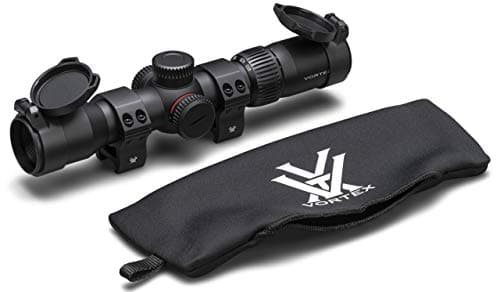
A crossbow scope is not a rifle scope with different branding. It is a pre-computed holdover chart, and every line below the top crosshair is only correct if the scope’s speed setting matches the actual velocity of your bow with your hunting arrows.
That single fact explains most crossbow accuracy complaints past 30 yards. The bow is fine, the shooter is fine, and the second or third line is simply calibrated for a bow that shoots 60 feet per second faster than yours does.
How a crossbow scope actually works
A crossbow arrow leaves the rail at a few hundred feet per second and drops fast — far faster than a bullet. Rather than making you dial elevation for every shot, a crossbow scope stacks multiple aiming points vertically in the reticle. The top crosshair is your 20-yard zero; each line below it corresponds to a further 10 yards.
Those spacings are fixed by the glass. The only way the scope can adapt to a different bow is a speed dial— a rotating ring, usually on the magnification collar, that you set to your bow’s velocity. Turning it changes the effective magnification slightly, which changes the apparent spacing between the lines, which is how one scope covers a range of bow speeds.
If you have ever wondered what all those extra circles and stadia lines are for, our guide to reading a crossbow scope walks through a full reticle line by line.
The spec that matters most: FPS range
Every crossbow scope is built for a velocity band. Buy one outside your bow’s band and the holdovers cannot be corrected by sighting in — you can zero the top crosshair perfectly and still miss high or low at 40 yards.
| 250-425 FPS scopes | Suit recurve crossbows and older or budget compound bows. The Excalibur XB1 sits here. Do not fit one of these to a 450-FPS Ravin |
|---|---|
| 300-450 / 300-460 FPS scopes | The mainstream band. Covers most modern hunting crossbows including CenterPoint, Barnett and mid-range TenPoint and Ravin models |
| Fixed 4x scopes | No speed dial. The reticle is calibrated for one velocity, so verify the listed range matches your bow before buying |
| Above 460 FPS | The 500-FPS class of bows typically ships with a matched factory scope. Aftermarket options in this band are limited and expensive - keep the factory optic |
What we looked for
- Correct speed band for common bows. Non-negotiable, and the reason several highly-reviewed scopes are not on this list.
- Etched glass reticle rather than wire. Etched reticles survive the violent forward shock a crossbow generates. Wire reticles can shift.
- Illumination with usable low settings. Red and green options, and a low setting that does not wash out the target at first light.
- Mounting hardware included. Crossbows use Picatinny or Weaver rails and ring height varies. A scope that ships with rings saves a second order.
- Warranty. The single clearest differentiator between the $60 and $200 options.
Best glass: Vortex Crossfire II 2-7x32
At around $199(verify current pricing), the Crossfire II crossbow kit is the only optic here that competes on glass quality rather than price. Second focal plane, 2-7x magnification, and Vortex’s unconditional lifetime warranty — which is transferable and does not require a receipt.
That warranty is the argument. A crossbow scope lives on a machine that generates severe forward recoil, gets banged into stand rails, and sits outside in freezing rain. Buying the one you can replace for free after five seasons is a rational decision.
Honest cons: it costs more than several complete budget crossbows’ factory optics, the low-light performance at 32mm is good rather than exceptional, and 7x is more magnification than a 50-yard crossbow shot needs.
Best for slower bows: Excalibur XB1 1.5-5x32
The XB1 is calibrated for 250-425 FPS, which is exactly the band recurve crossbows and older compounds live in. If you shoot an Excalibur or any bow under about 425 FPS, this is the correct scope and most of the faster-band options on this page are the wrong one.
It is a 1.5-5x32 with an illuminated reticle at around $160(verify current pricing). The low end of that magnification range is genuinely useful — 1.5x gives you a wide field of view for a deer moving through brush at 20 yards, which is where most crossbow shots happen.
Honest cons: the speed band that makes it right for a recurve makes it wrong for a modern 450-FPS compound. Check your bow’s real velocity first.
Best budget speed-dial: CVLIFE 1.5-5x32 rangefinder reticle
At roughly $100 (verify current pricing), this is the most scope-per-dollar on the page. It covers 300-460 FPS, uses an etched-glass ballistic reticle with rangefinding stadia out to 100 yards, offers red and green illumination, and ships with 20mm rings.
The rangefinding stadia are the interesting feature: bracket a deer’s chest between the horizontal marks and you get a rough range without lifting a rangefinder. It is not a substitute for a real laser rangefinder— it is a backup for when the deer arrives before you are ready.
Honest cons: the glass is what $100 buys, low-light performance falls away noticeably in the last 15 minutes of legal light, and the warranty is nothing like Vortex’s.
Budget alternative: CVLIFE 1.5-5x32 ballistic
The simpler sibling at around $80 (verify current pricing), covering 300-450 FPS with a ballistic reticle out to 100 yards and red/green illumination. Same magnification range, same speed-dial concept, without the rangefinding stadia.
If you already carry a rangefinder — and you should — the stadia on the more expensive model are a feature you will not use. This is the honest pick for that hunter.
Widest speed range: UUQ 1.5-5x32
The UUQ covers 250-450 FPS — the widest band here — at around $77 (verify current pricing), with an etched-glass reticle combining circles and rangefinding marks, red/green illumination and 20mm rings.
That range matters if you own two crossbows of different vintages, or if you are buying now and expect to upgrade the bow later. One scope covers a recurve at 330 FPS and a compound at 430.
Honest cons: a wider speed range means the reticle spacing changes more per turn of the dial, so getting the setting exactly right matters more, not less. Chronograph your bow.
Cheapest usable: CVLIFE 4x32
Around $58 (verify current pricing) for a fixed 4x with an etched-glass reticle, circles and rangefinder marks out to 100 yards, illumination and mounts. There is no speed dial, so verify the listed calibration suits your bow before you buy.
This exists for one situation: a factory scope has failed mid-season and you need something on the rail this weekend. It is a real, functional optic at a price that makes it a rational stopgap rather than a purchase you regret.
Should you replace the factory scope?
| If your bow is... | Replace the scope? | Why |
|---|---|---|
| A flagship (Ravin, TenPoint) with a 100-yard illuminated scope | No | The factory optic is matched to the bow's velocity and is usually better than a $100 aftermarket unit |
| A mid-range bow around $700-900 | Only if the factory scope has failed | The included scope is typically adequate; the money is better spent on arrows, broadheads and a rangefinder |
| A sub-$400 package | Often worth it | This is where factory optics are genuinely poor - dim glass, wire reticles that shift, and vague speed calibration |
| Any bow whose scope will not hold zero | Yes, immediately | A reticle that shifts under recoil cannot be sighted in. Replace it before you hunt |
Whichever way you go, sight in properly afterwards. Our crossbow sight-in guide covers the 20-30-40 yard sequence, and remember that changing arrows or broadhead weight changes velocity and therefore every holdover below the top crosshair.
The bottom line
Match the speed band first — nothing else matters if you get that wrong. Then buy the best glass and warranty you can justify. The Vortex Crossfire II is the one to own if you plan to keep the bow for a decade; the CVLIFE 1.5-5x32 is the sensible upgrade for a budget package; the Excalibur XB1 is the right answer for anything under 425 FPS.
And before you spend anything, chronograph your bow with the arrows you actually hunt with. That five-minute measurement is worth more than any of these scopes.
Check the Vortex Crossfire II crossbow scope price on Amazon.
Frequently asked questions
What do the lines on a crossbow scope mean?
Each line below the top crosshair is a pre-computed holdover for a further 10 yards. The top crosshair is normally your 20-yard zero, the first line is 30 yards, the second is 40, and so on. They are only accurate if the scope's speed setting matches your bow's real velocity with your hunting arrows.
What FPS crossbow scope do I need?
Match the scope's published speed band to what your bow actually chronographs with your hunting arrows, not to the number on the box. Recurves and older compounds usually need a 250-425 FPS scope; most modern hunting crossbows fall in the 300-460 FPS band; bows above 460 FPS should keep their matched factory optic.
Can I put a rifle scope on a crossbow?
Physically often yes, practically no. A crossbow arrow drops far faster than a bullet, so a rifle reticle gives you no usable holdovers past your zero. Crossbows also produce sharp forward recoil that many rifle scopes are not built to survive. Use a scope designed for crossbows.
Is it worth upgrading a factory crossbow scope?
It depends on the bow. On a flagship with a matched 100-yard illuminated optic, no - the factory scope is better than most aftermarket units. On a sub-$400 package, often yes, because that is where factory optics are genuinely poor. On any bow whose scope will not hold zero, replace it immediately.
What magnification do I need on a crossbow scope?
Less than you think. Most crossbow shots happen inside 40 yards, where 1.5x to 4x gives you a wide enough field of view to find a moving deer quickly. High magnification narrows the field of view and amplifies the wobble of a heavy bow held offhand. A 1.5-5x32 covers essentially every real hunting situation.
Do I need to re-sight my crossbow after changing the scope?
Yes, completely. Start at 20 yards to get on paper, confirm the top crosshair, then verify each holdover line at 30 and 40 yards. Also re-sight after changing arrow weight or broadhead weight, because both change velocity and therefore every line below the top crosshair.
Sources
Keep reading
Gearing up before your next hunt?
See how we evaluate gear, then dig into the reviews and buying guides — written without inventory to sell.