Buying Guide
The Best Binocular Harnesses for Hunting
A binocular on a neck strap is a binocular you stop using by mid-morning. It swings, it bangs, it lands in the mud when you kneel, and eventually it lives in the pack where it does nothing at all. A harness is the cheapest upgrade in optics, and the one most hunters put off longest.
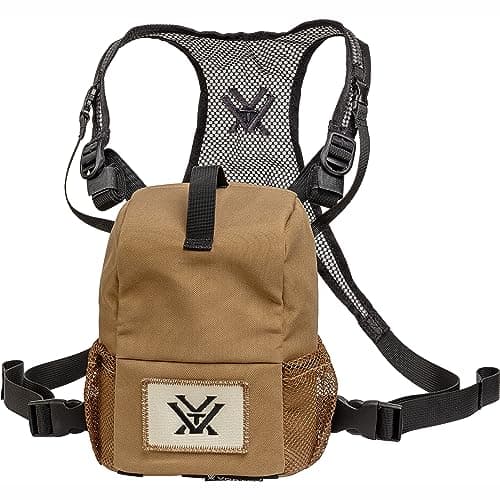
Ask a hunter why they do not glass more and you will usually get an answer about discipline. The real reason is mechanical: the binocular is annoying to carry, so it ends up in the pack, and glass in a pack does not find deer.
A harness fixes that, and it is the cheapest meaningful upgrade in the whole optics category. A $30 harness attached to a $150 binocular produces more found animals than a $400 binocular on a neck strap, because the first setup gets used.
This guide covers the three designs that actually exist, the fitment mistake that makes people return harnesses, and the specific requirement bowhunters have that nobody mentions until after the purchase.
Why a harness, not a strap
Four specific problems a neck strap creates, in the order they annoy you:
- Swing. Walking with a binocular on a neck strap means it swings into your sternum on every step. Hunters solve this by tucking it inside a jacket, which means it is not accessible, which means it is not used.
- Ground contact. The moment you kneel, crouch behind cover or sit down on a log, unsecured binoculars hit dirt. Objective lenses collect grit, and grit plus a sleeve equals scratched coatings.
- Neck load. A 25-ounce 10x50 on a thin strap for eight hours becomes a neck ache. A harness moves that to the shoulders and back.
- Weather. An open strap leaves the lenses facing the sky. In rain or snow you are wiping lenses constantly, and wiping a wet lens with a wet glove is how coatings get damaged.
The three designs, and who each one is for
| Design | How it works | Best for | Trade-off |
|---|---|---|---|
| Open strap harness | Elastic or webbing straps clip to the binocular; nothing covers the glass | Warm, dry conditions; hunters who want the fastest possible access | No lens protection at all |
| Closed chest pack | Binocular lives in a padded pouch with a magnetic or zip lid | Most hunters, most conditions; anything wet, brushy or dusty | Half a second slower; more bulk on the chest |
| Modular pouch + harness | Pouch and shoulder harness sold separately and mixed | Hunters who want a specific fit, or who already own a pack with attachment points | Costs more; requires deciding on two purchases |
For most hunters, most of the time, the closed chest pack is the correct answer. It is the only design that solves all four neck-strap problems at once.
Fitment: the mistake everyone makes
Bino harnesses are sized to the binocular, not to the person. A harness sized for a 10x42 will not close properly over a 10x50 or a 12x50, and a large harness leaves a 8x32 rattling around inside.
Before you order, check three dimensions on your binocular: overall length with the eyecups extended, width at the widest point of the hinge, and objective diameter. Then match to the size chart rather than to the model name.
Draw clearance for bowhunters
This is the requirement that never appears in product copy. A bulky chest pack sits exactly where a bowstring travels on the draw. At best it costs you a clean anchor; at worst the string contacts the pack and the arrow goes somewhere you did not intend.
Two solutions. Either run a minimal shoulder harness that holds the binocular low and flat against the chest, or run a compact pouch and practice your draw with it on - in the clothing you will actually be wearing - before opening day.
Rifle hunters do not have this problem and can buy the bigger, better-protected pack without thinking about it.
The picks at a glance
| Harness | Design | Best for |
|---|---|---|
| Vortex GlassPak Sport | Closed chest pack | The default recommendation |
| Vortex GlassPak | Basic harness | First harness, tightest budget |
| Vortex GlassPak Pro | Premium chest pack | Big binoculars, hard country |
| Badlands Bino X2 | Modular chest pack | Hunters who want expandable storage |
| Alaska Guide Creations Classic Max | Closed chest pack | Best construction, made in the USA |
| FHF Gear Airframe | Minimal shoulder harness | Bowhunters and weight-counters |
| Lone Trail chest pack | Closed chest pack | Budget alternative to the mid-tier packs |
Best overall: Vortex GlassPak Sport
The GlassPak Sport is the harness we would put on most binoculars. It is a proper padded chest pack with a closing lid, it comes in sizes so you can match it to your glass, and it costs about a third of the premium options while covering the same four failure modes.
It is not the most refined harness here. The straps are simpler than the Alaska Guide Creations or FHF options and the material is less supple. For a hunter buying their first real harness, none of that matters.
Best budget: Vortex GlassPak
The original GlassPak is the strap-style harness: it attaches to the binocular and gets the weight off the neck, with no enclosure. It solves swing and neck load, and does nothing about weather or ground contact.
Buy it if the budget is genuinely tight, if you hunt dry open country, or as a gift for someone who currently has no harness at all - going from nothing to this is a much bigger jump than going from this to a premium pack.
Vortex GlassPak Pro
The Pro is the upgraded chest pack: more padding, better weather sealing, more accessory storage and a more comfortable strap system for all-day wear. It comes in two sizes, and the large is the one to buy for a 10x50 or 12x50.
Worth the step up if you are carrying an expensive binocular through brush, or if you hunt in genuinely wet conditions where the difference between a magnetic lid and an open harness is a dry lens versus a wet one.
Badlands Bino EZ, X2 and XR Pro
Badlands builds modular systems: the harness accepts add-on pouches, so the same chest platform can carry a rangefinder, calls, a wind checker and a tag holder. That is genuinely useful for a hunter who wants everything on their chest rather than in a pack they have to take off.
- Bino EZ - the entry model in the modular family.
- Bino X2 - the mainstream choice, with more storage and better strap comfort.
- Bino XR Pro - the largest and most protective, for big glass and hard country.
Sizes matter here more than with most brands - Badlands sells medium and large versions of the same model, and they are not interchangeable.
Alaska Guide Creations Classic Max
Alaska Guide Creations makes what is probably the best-constructed harness in this list. The Classic Max is a made-in-the-USA chest pack with a magnetic closure, an integrated rangefinder pocket and enough interior room for a large binocular.
The reason to pay for it: this is a piece of gear you will keep across several binoculars and a couple of decades. The reason not to: at this price you are paying for build quality and materials, not for functionality the Vortex Sport lacks.
FHF Gear: Airframe and Overwatch
FHF built its reputation on minimal, low-profile harnesses that sit tight to the body - which makes them the natural answer to the bowhunter draw-clearance problem, and the choice for anyone counting ounces on a backcountry hunt.
The Airframe shoulder harness is sold on its own and pairs with an FHF pouch or another brand's bino case. The Overwatch system pairs a modular bino pouch with its own shoulder harness, and is the more protective of the two.
If you bowhunt, read the bow season checklist for how the harness fits into the rest of the kit.
Lone Trail chest pack
A closed chest rig at roughly half the price of the mid-tier options. It is the sensible middle if the basic GlassPak feels too minimal and the premium packs feel like too much money for a harness.
The accessory nobody buys: a tether set
A tether is a short elastic leash that connects your binocular or rangefinder to the harness so that when it comes out of the pouch, it cannot be dropped out of a tree stand or down a rock face.
It costs very little, and it is the difference between fumbling a rangefinder and watching it fall thirty feet. Buy one with any harness you take into an elevated stand.
Four harness mistakes
- Buying by brand instead of by binocular size. The single most common reason harnesses get returned. Measure your glass.
- Wearing it over a pack's sternum strap. The two compete for the same real estate. Fit the harness with your actual pack on, and adjust the pack strap down or the harness up so neither one rides on the other.
- Never practicing the draw with it. Bowhunters, this is the whole section above. Do it in your hunting clothes.
- Leaving lens covers attached inside a closed pack. Flip-down objective covers snag on the pouch lid and slow you down. In a closed harness, the pouch is the lens protection - remove the covers.
The bottom line
Buy the Vortex GlassPak Sport if you want one answer. Get the size right.
Buy the basic GlassPak if the budget is $30 - going from a neck strap to any harness is 80% of the benefit.
Buy the FHF Airframe if you are a bowhunter or you count ounces.
Buy the Alaska Guide Creations Classic Max if you want the harness to outlast the binocular.
Still choosing the glass itself? See binoculars under $200 and binoculars under $500.
Frequently asked questions
Are binocular harnesses worth it?
Yes, and they are the highest-return purchase in the optics category. A harness stops the binocular swinging on the walk in, keeps the lenses off the ground when you kneel, moves the weight from your neck to your shoulders, and in a closed design keeps rain and grit off the glass. The practical effect is that the binocular gets used instead of ending up in the pack, which is where most of them spend the season.
What size bino harness do I need?
Size to the binocular, not to your chest. Measure your binocular's overall length with the eyecups extended, its width at the widest point of the hinge, and the objective diameter, then match those to the manufacturer's size chart. A harness sized for a 10x42 will generally not close over a 10x50 or 12x50, and a large harness lets a compact binocular rattle around inside.
Can bowhunters wear a binocular harness?
Yes, but the choice matters. A bulky chest pack sits in the path a bowstring travels on the draw, which can cost a clean anchor or, in the worst case, cause string contact. Either use a minimal shoulder harness that holds the binocular low and flat, or use a compact pouch and rehearse your draw with the harness on, wearing the clothing you will actually hunt in.
Should a binocular harness have a rangefinder pocket?
If you carry a rangefinder, yes. Having both optics on the same chest platform is what makes both of them get used - a rangefinder in a pack pocket is a rangefinder you skip when a deer is already moving. Most mid-range and premium harnesses include a side pocket sized for a monocular rangefinder, and it is worth choosing the model that has one.
Do you leave lens caps on inside a bino harness?
In a closed chest pack, no. The pouch itself is the lens protection, and flip-down objective covers snag on the lid every time you pull the binocular out, which costs you the speed the harness was supposed to buy. In an open strap harness, keep the covers - there is nothing else protecting the glass.
Sources
Keep reading
Gearing up before your next hunt?
See how we evaluate gear, then dig into the reviews and buying guides — written without inventory to sell.