Buying Guide
The Best Hunting Binoculars Under $200
Under $200 is the most competitive price band in hunting optics and the one where the marketing is worst. Magnification is printed on the box; the three things that decide whether you can see a deer at last light are not.
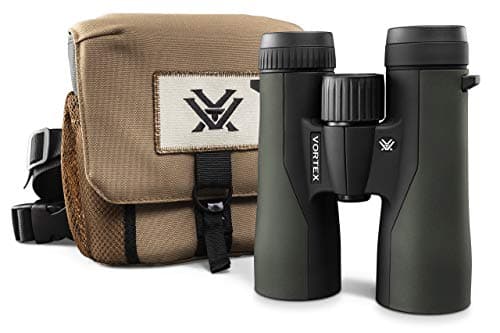
A binocular is the only piece of gear you use on every hunt, in every state, for every species, regardless of weapon. It is also the piece most hunters under-buy, because the number on the box - 10x42 - is identical on a $79 pair and a $2,500 pair.
The good news is that under $200 the field has genuinely improved. There are binoculars in this band that are sealed, nitrogen purged, fully multi-coated and backed by a real warranty, and any one of them will resolve antler tines out of brush at 300 yards in decent light.
The bad news is that the same shelf holds glass that fogs internally on the first frosty morning and never recovers. This guide is about telling the two apart.
The three specs that actually matter under $200
At this price, ignore magnification claims and check these three things in order. All of them are printed in the specification list and none of them are on the front of the box.
- Fully multi-coated, sealed and gas purged."Fully multi-coated" means every air-to-glass surface has multiple anti-reflective layers - not just the front element, which is what "coated" or "multi-coated" can mean. Sealed plus nitrogen or argon purged is what stops internal fogging when a warm binocular meets a cold morning. A binocular that fogs inside is not repairable in the field and is functionally dead for the day.
- ED or HD glass, when you can get it. Extra-low dispersion elements reduce the color fringing that shows up as a purple halo on a backlit antler tine. Under $200 it is not universal, but several models here have it.
- Warranty you can actually use.Binoculars get dropped out of stands. Vortex's VIP warranty is unconditional and transferable; Leupold, Nikon, Bushnell and Athlon all have their own terms. At this price the warranty is a meaningful part of what you are buying, because a repair often costs more than the binocular.
8x or 10x: pick by cover, not by preference
The default advice is "buy 10x," and it is wrong about half the time. The right answer follows the country you hunt:
- 10x42 for open country: crop fields, cut corn, power lines, clearcuts, western sage. You are identifying animals at distance and judging antlers, and the extra magnification does that work.
- 8x42 for timber and thick cover: hardwood ridges, swamps, still-hunting. 8x has a wider field of view, is noticeably steadier in the hand, and gathers a little more light per unit of magnification. You are picking movement out of brush at 60 yards, not counting points at 400.
- 12x50 only with support: at 12x, hand shake becomes the limiting factor. Useful from a rest or a tripod in open country, frustrating offhand.
Exit pupil and the last twenty minutes
Exit pupil is the objective diameter divided by the magnification, and it is the single number that predicts low-light usefulness. A 10x42 gives 4.2mm. An 8x42 gives 5.25mm. A 10x25 compact gives 2.5mm.
A dark-adapted human pupil opens to somewhere around 5 to 7mm depending on age, which is why an 8x42 looks brighter than a 10x42 at dusk even though both have the same objective lens. It is also why compact binoculars are pleasant at noon and nearly useless at the exact moment deer start moving.
If you hunt the last half hour of legal light - and most whitetail hunters do - this is the argument for 8x42 over 10x42 and against any 25mm or 28mm compact as a primary binocular.
Where the quality jumps happen in this price band
Prices move constantly, but the tiers inside this band are stable and worth knowing:
| Tier | What you get | Representative models |
|---|---|---|
| Around $80-100 | Sealed, purged, fully multi-coated. Usable. Dim at dawn and dusk. | Bushnell H2O, Vortex Triumph HD, Vortex Copperhead HD |
| Around $150 | HD/ED glass appears, better coatings, noticeably brighter at last light | Vortex Crossfire HD, Bushnell Engage DX, Nikon PROSTAFF P3 |
| Around $185-200 | Best glass in the band, better contrast, locking diopters and nicer bodies | Leupold BX-3 Alpine HD, Nikon PROSTAFF P7, Celestron Nature DX ED |
The jump from $90 to $150 is the biggest single improvement per dollar in the whole category. The jump from $150 to $200 is real but smaller. Below $80 you are buying a binocular-shaped object.
The picks at a glance
| Model | Config | Best for |
|---|---|---|
| Vortex Crossfire HD | 10x42 | The default answer for most deer hunters |
| Leupold BX-3 Alpine HD | 10x42 | Best optical quality at the price ceiling |
| Nikon PROSTAFF P7 | 8x42 | Timber, still-hunting, low-light work |
| Bushnell Engage DX | 10x42 | Value alternative to the Crossfire |
| Celestron Nature DX ED | 8x42 | ED glass at the price, doubles for birding |
| Bushnell H2O | 10x42 | Truck binocular / lowest we would recommend |
| Athlon Midas G2 UHD | 10x25 | Pocketable second pair, daylight only |
Best overall: Vortex Crossfire HD 10x42
The Crossfire HD is the binocular we would hand to a hunter who asked for one recommendation and gave no other information. It sits at the middle tier of this price band, adds HD glass over the cheaper Vortex models, and carries the same unconditional, transferable VIP warranty as glass costing ten times as much.
In practice that warranty is a large part of the value proposition. A binocular that gets dropped, rained on, or crushed in a pack is a binocular that gets replaced rather than mourned, and that changes how willing you are to actually carry it into bad country.
Where it gives ground: edge sharpness falls off compared with the $400-plus tier, and in the last few minutes of legal light better glass pulls ahead visibly. For the overwhelming majority of whitetail hunting, neither matters.
Best glass at the ceiling: Leupold BX-3 Alpine HD 10x42
The BX-3 Alpine HD lands right at the top of this bracket and is the best pure optic in it. Leupold's Elite Optical System coatings are aimed specifically at low-light contrast, which is the exact performance a deer hunter buys binoculars for.
Buy this one if you glass a lot, if you hunt open country, or if you expect to keep the binocular for a decade. Buy the Crossfire if you want the money back for a rangefinder.
Leupold BX-2 Timberline HD 10x42
The Timberline sits alongside the Alpine at a similar price with a slightly different emphasis - a more compact body aimed at hunters who carry rather than sit. If you find one discounted below the Alpine, it is a legitimate alternative rather than a downgrade.
Best 8x: Nikon PROSTAFF P7 8x42
The P7 is the step above Nikon's P3 line and adds a locking diopter and oil- and water-repellent lens coatings, which matter more than they sound like they do - a locking diopter means your focus setting survives being jammed into a pack, and repellent coatings mean rain beads off instead of smearing.
In 8x42 this is our pick for hardwood timber, swamp edges and anyone who does most of their glassing inside 150 yards. Wider field of view, steadier in hand, brighter at dusk.
Nikon PROSTAFF P3 8x42 and 10x42
The P3 is the value line: waterproof, fogproof, rubber armored, with a wide field of view and long eye relief. Long eye relief matters if you wear glasses in the field, and it is a specification hunters routinely forget to check until they are trying to glass through fogged lenses with a binocular that will not sit far enough from their eyes.
Both configurations are worth owning. Choose 8x for timber, 10x for fields.
Bushnell Engage DX 10x42
The Engage DX is Bushnell's answer to the Crossfire HD, at a similar price, with EXO Barrier lens coating - a hydrophobic exterior treatment that sheds water, oil and dust. On a rainy November morning that is a practical feature rather than a marketing one.
Pick it over the Crossfire if you find it cheaper or if you already run Bushnell optics. Pick the Crossfire if the warranty matters more to you.
Bushnell Prime 10x42
The Prime is the simpler, more affordable Bushnell: fully multi-coated, waterproof and fogproof, without the EXO coating. It is a solid, unremarkable binocular that does the job, and it is frequently discounted below its list price during hunting season.
Celestron Nature DX ED 8x42
The odd one out and worth considering. Celestron is an astronomy company, which means the Nature DX ED brings genuine extra-low-dispersion glass into this price band - unusual under $200 - and it shows in color fidelity and reduced fringing on high-contrast edges.
The trade is a body designed for birding rather than hunting: no camo, and the armor is less aggressive than the hunting-branded competition. If the binocular will spend time on a deck as well as in a stand, this is arguably the best optical value here.
Vortex Copperhead HD 10x42
The Copperhead is Vortex's entry HD model - the same warranty and a similar body to the Crossfire at a lower price, with a step down in coatings. It is the right answer when the budget is around $100 rather than $150, and a straightforward upgrade over anything at the drugstore-optics end of the shelf.
Vortex Triumph HD 10x42
The Triumph HD is the cheapest full-size Vortex, and its argument is entirely about the warranty. Optically it is a step behind the Copperhead and Crossfire. Practically, it is a binocular you can hand to a kid, leave in a truck, or take into a swamp without flinching, and Vortex will still replace it if it breaks.
Best under $100: Bushnell H2O 10x42
The H2O is our floor. It is O-ring sealed and nitrogen purged, which is the specification we refuse to compromise on, and it has non-slip rubber armor designed for wet hands. That is the whole pitch, and at this price it is enough.
Be honest about what it is not: it is dimmer at dawn and dusk than everything above it, and the difference is most obvious in exactly the half hour that matters most. It is a great truck binocular, a fine kid's binocular, and an acceptable primary binocular if the alternative is no binocular at all.
Compact option: Athlon Midas G2 UHD 10x25
A 25mm compact is a supplementary binocular, not a primary one. The exit pupil - 2.5mm at 10x - means it falls apart at dusk in a way that is genuinely surprising the first time you experience it.
What it is good for: a pocketable pair for scouting walks, summer glassing of food plots, or a bowhunter counting ounces. The Midas G2 UHD version brings good glass to a small body, which is the right way to buy a compact.
High power on a budget: Triumph HD 12x50
A 12x50 gives a 4.17mm exit pupil - about the same as a 10x42 - with more reach. The catch is stability: at 12x, your pulse is visible in the image. If the recipient hunts open country from a truck window, a fence post or a tripod, this is a genuinely useful tool. If they glass offhand, it will frustrate them.
What to avoid at this price
- Zoom binoculars. Anything advertised as 10-30x50 is a compromised instrument at every setting. The zoom mechanism costs optical quality and sealing.
- "Coated" or "multi-coated" without "fully." That is a specific, weaker claim, and it is the one budget brands use.
- Anything without a stated nitrogen or argon purge. Waterproof alone does not prevent internal fogging.
- Very high magnification at very low price. A $60 20x50 is not a bargain version of a good binocular. It is a different, worse product.
The bottom line
Buy the Vortex Crossfire HD 10x42 if you want one answer and are done thinking about it. Buy the Nikon PROSTAFF P7 8x42 if you hunt timber. Buy the Leupold BX-3 Alpine HD if you glass for hours and want the best optic in the band. Buy the Bushnell H2O if the budget is hard at $100 and you need something now.
Then buy a harness for whatever you choose - a binocular on a neck strap is a binocular that stays in the pack. See our binocular harness guide. Ready to spend more? Binoculars under $500.
Frequently asked questions
Are $200 binoculars good enough for deer hunting?
Yes, for the vast majority of whitetail hunting. A sealed, nitrogen-purged, fully multi-coated 8x42 or 10x42 in this range will identify deer, judge antlers at reasonable distance and pick movement out of brush. What you give up against a $500 or $1,000 binocular is brightness and contrast in the first and last twenty minutes of legal light, plus edge-to-edge sharpness during long glassing sessions.
Is 8x42 or 10x42 better for hunting?
It depends on the cover you hunt, not on which number is bigger. 10x42 is better in open country - fields, cut corn, clearcuts and western terrain - where you identify and judge animals at distance. 8x42 is better in timber and thick cover because it has a wider field of view, is steadier in the hand, and has a larger exit pupil (5.25mm versus 4.2mm), which makes it visibly brighter at dawn and dusk.
What does fully multi-coated mean on binoculars?
It means every air-to-glass surface in the optical path has received multiple anti-reflective coating layers. This is a stronger claim than 'coated' (one layer on some surfaces) or 'multi-coated' (multiple layers on some surfaces), and it directly affects how much light reaches your eye. Budget brands often use the weaker terms deliberately, so read the specification rather than assuming.
Do I need nitrogen-purged binoculars?
Yes, if you hunt in cold or wet conditions. Waterproofing keeps water out; a nitrogen or argon purge removes the moisture already inside so the internal lens surfaces cannot fog when a warm binocular meets cold air. Internal fogging cannot be wiped away and cannot be fixed in the field, which effectively ends your glassing for the day. Every binocular recommended here is sealed and purged.
Are compact binoculars good for hunting?
As a second pair, yes. As a primary hunting binocular, no. A 10x25 compact has an exit pupil of about 2.5mm, well under the 5 to 7mm a dark-adapted human pupil opens to, so it dims dramatically in the low light at dawn and dusk when deer actually move. Compacts are excellent for summer scouting walks and daytime glassing where weight matters most.
Sources
Keep reading
Gearing up before your next hunt?
See how we evaluate gear, then dig into the reviews and buying guides — written without inventory to sell.