Buying Guide
Best Deer Calls: Grunt Tubes, Bleat Cans and Rattling, by Job
A grunt tube, a bleat can and a set of rattling antlers tell a buck three different stories, and each one works in a different week of the season. Here is what each call actually says, what the best-known rattling study found, and twelve calls worth carrying this fall.
Most deer call roundups rank a grunt tube against a bleat can against a set of rattling antlers, as though they were competing for one slot in your pack. They are not. Each one tells a buck a different story, and a buck only cares about that story during certain weeks of the season. Carry the right call in the wrong week and you are just making noise. Make the wrong sound at the right moment and you can send the buck you wanted the other way.
The good news is that deer calls are some of the least expensive gear a whitetail hunter buys. The harder part is knowing which sound to make, when, and how loud. This guide starts there, with the published research on rattling and the practical rules experienced callers follow, then gives twelve calls that were in stock when we published. If you are still putting together the rest of the sit, our tree stand day pack listshows where calls belong in the pack — an outside pocket you can reach without unzipping anything.
Three calls, three different messages
Whitetails make a lot of sounds. A large 1988 University of Georgia study identified and recorded hundreds of distinct whitetail vocalizations. But the calls you can buy boil that down to three messages, plus one warning shot:
- A grunt says “another deer is here.” Bucks, does and fawns all grunt. A soft contact grunt is social. A rapid series of short grunts is a tending grunt, the sound of a buck following a doe he wants. A buck that hears it may come to see who the new deer is, or whether he can take the doe.
- A bleat says “a doe or fawn is here.” The estrus bleat, the pleading bleat a doe makes when she is ready to breed, is the one that pulls bucks. A fawn bleat mostly draws does, which matters early in the season and hardly at all in November.
- Rattling says “two bucks are fighting over a doe.” It is the loudest, most attention-grabbing sound in the kit. It draws bucks that want to watch, bucks that want to fight, and bucks hoping to slip in and take the doe while the other two are busy.
- The snort-wheeze says “back off or fight.” It is not a come-here call. It is a threat, and it gets its own section below because it is the call most likely to backfire.
Put that way, the buying decision gets simple. A grunt tube is the everyday call you carry all season. A bleat can is mostly a rut call. Rattling is a rut and post-rut call. You want one of each, not three grunt tubes.
The calendar decides which call works
The most useful thing to know about deer calling is that the same sound gets a very different response in early October than in mid-November. Roughly:
- Early season. Bucks are not yet interested in fighting or chasing does. Soft contact grunts are the safe call. A fawn bleat can bring in a curious or protective doe, which is useful if you are filling a doe tag.
- Pre-rut. Bucks are sparring, making scrapes and starting to check does. Contact grunts get more interest, and light rattling that sounds like sparring rather than a brawl starts to make sense.
- Peak rut. Tending grunts, estrus bleats and loud rattling all pull their weight, and bucks cruising for does are the most likely deer in the woods to respond to any of them.
- Post-rut. Fewer bucks respond, but the rattling research below found that a larger share of the ones that do are mature. Estrus bleats still have a job while some does are yet to be bred.
Your local rut timing matters more than any calendar in a magazine. Our guide to when deer move covers what the research says about movement, and our whitetail rut gear checklist covers the rest of the kit for the weeks when calling works best.
What the rattling research actually found
A large share of the rattling advice you read traces back to one study. Dr. Mickey Hellickson, a Texas deer biologist, ran a three-year rattling project in South Texas, including work at the Welder Wildlife Refuge, where researchers rattled from the ground while observers watched from towers. Its results, as summarized by the National Deer Association and Outdoor Life, are more specific and more useful than most of the folklore:
- Loud beats quiet, by a lot. Researchers ran 171 rattling sequences and had a 65 percent response rate, with 111 bucks responding. The 85 loud sessions attracted 81 bucks. The quieter sessions drew 30. That is nearly three times the response for going loud.
- Length did not matter. The study found no difference in response between shorter and longer rattling sessions. Rattle hard, then stop and watch.
- Morning is best. According to the NDA summary, 54 percent of responses came between 7:30 and 10:30 a.m., against 16 percent at midday and 30 percent in the afternoon.
- Weather matters. Responses went up when cloud cover was above 75 percent, and as temperature and wind went down.
- Bucks come in downwind. About 60 percent of bucks responded initially on the downwind side of the rattler. A buck that smells you before you see him is a response you never knew about.
- You will not see most of them from the ground. The person rattling on the ground failed to see 57 percent of the responding bucks that observers spotted.
- The first sequence is the best one. Response rates dropped across three back-to-back sequences, from 44 to 34 to 22 percent, though some collared bucks ignored the first round and came to the second.
- The rut draws the most bucks; the post-rut draws older ones. Peak rut produced the most responses. In the post-rut, fewer bucks came, but a larger share of them were mature.
The snort-wheeze: handle with care
The snort-wheeze is the most aggressive sound a buck makes. A 1983 study in the Journal of Mammalogy, which recorded 444 vocalizations from 40 penned deer over 13 months, described it as a sound used in dominant-subordinate situations, often made by a male in the presence of a person or another male deer that poses a threat. Does made it far less often.
That is exactly why it is risky. To a mature buck spoiling for a fight, a snort-wheeze is an invitation. To a young or non-aggressive buck, it is a reason to leave. HuntWise’s field guide puts the practical rule plainly: use it on a buck you can see, not blind, because it can alarm deer you cannot see and send a younger buck walking the other way.
Our advice: own a call that can make the sound, and use it rarely. It is a closer for a specific buck that has stopped out of range and will not come to a grunt. It is not a call to run every half-hour from a stand.
Calling a buck you can see vs. calling blind
There are two ways to use a deer call, and they call for different habits.
Blind calling means calling to deer you cannot see, hoping one is within earshot. Writing for Outdoor Life, Michael Hanback suggests grunting every 20 to 30 minutes in likely travel areas. The Missouri Department of Conservation gives the same basic advice on intensity: start with soft contact grunts and bleats before becoming aggressive.
Calling to a buck you can seeis where calls earn their money. A buck walking past out of range is the classic case: grunt loud enough for him to hear, then stop and watch his reaction. Hanback’s other rule is the one that saves hunts: do not grunt when a buck is within 75 yards and looking for you. At that range he is trying to find the deer that made the sound, and another call tells him exactly where to look.
Combinations work well during the rut. Mark Kenyon of MeatEater describes pairing a couple of doe bleats with four or five short tending grunts in rapid succession, which sounds like a buck following a hot doe. In his experience it works best on a lone buck that is cruising for does.
One more thing about tone: do not obsess over it. Hanback’s advice is not to worry too much about how your grunt tube sounds in October or December. A slightly imperfect grunt at the right moment beats a perfect one at the wrong moment.
Why grunt tubes go quiet in the cold
Late-season calling has a problem most hunters discover the hard way. A grunt tube works by pushing your breath across a reed, and your breath is warm and wet. On a cold morning that moisture can freeze on the reed, and the call squeaks, goes flat or makes no sound at all. North American Bowhunter warns that blowing a grunt tube normally in real cold can freeze it up after your first call, and suggests turning the call around and inhaling through the opposite end instead.
There are three other ways around the problem:
- Buy a call designed to break loose. Illusion says the sliding reed adjuster on its Extinguisher also breaks loose a frozen or wet reed, which is the specific reason it is our cold-weather pick.
- Carry a bleat can as the backup. A can makes its sound when you tip it over, with no breath involved. Primos describes its Original Can and Great Big Can as 100 percent freezeproof.
- Keep the tube warm. An inside pocket between calls keeps it warmer than a lanyard over the outside of your jacket.
Electronic calls and the law
Everything on this page is a mechanical call, on purpose. Electronic callers that play recorded deer sounds are restricted for deer in a number of states. Maryland’s Department of Natural Resources says it plainly: electronic calls are prohibited for the purpose of deer hunting. Georgia’s 2026-2027 regulations prohibit electronically-amplified sounds to hunt any game species, with electronic calls allowed only for bobcats, crows and foxes.
Other states allow electronic deer calls, and rules change. Check your own state’s regulations before you buy anything with a speaker. Mouth-blown grunt tubes, bleat cans and rattling devices avoid the question entirely.
What we looked for
- A clear job.Every pick does one of four things better than the alternatives at its price: grunt, bleat, rattle, or keep the other gear quiet. Nothing is here for being a “good call” in general.
- Published design details. Adjustable or fixed reed, freeze resistance, hands-free operation, material and weight where the maker lists them. Where a maker publishes very little, we say so in the cons.
- An honest price. Deer calls are inexpensive, and the budget option often does the job. Where the cheap call is the right answer, we say so.
- Currently purchasable.Every pick was checked for stock on the date this guide was published. Where the maker’s own store was sold out but Amazon had stock, we say so and link to the listing that can actually ship.
What you will not find here is a claim that we called in a buck with each of these. We have not field-tested twelve deer calls side by side, and saying otherwise would be the kind of invented testing this site exists to avoid. This guide sorts the category by what each call is for, using manufacturer specifications, published research, experienced callers’ guidance and verified current availability. Our how we test page explains the difference between field-tested and research-based reviews.
The picks at a glance
| Call | Type | Key design detail | Job it does |
|---|---|---|---|
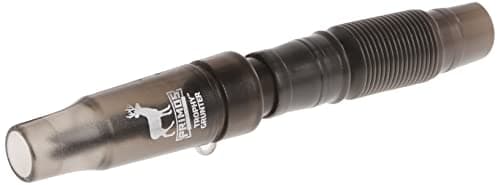
| Primos Trophy Grunter | Grunt tube | Adjustable reed, expandable hose | The everyday grunt call, on a budget |
| Illusion Extinguisher | Grunt tube | Sliding reed adjuster that frees a frozen reed | Buck, doe and fawn sounds in cold weather |
| WoodHaven Intimidator | Grunt tube | Fixed tone, grunt plus snort-wheeze | One consistent buck voice plus the challenge call |
| H.S. True Talker OG | Grunt tube | Fingertip control, five sounds | Grunts and bleats from one call |
| Primos Lil' Shawty | Hands-free call | Compact adjustable reed | Calling with a bow in your hands |
| Primos The Original Can | Bleat can | Tip-over estrus bleat, thumb hole locator | The rut's most useful doe call |
| Primos The Great Big Can | Bleat can | Larger, louder, longer bleat | Windy days and open fields |
| Primos The Can Family | Bleat can set | Lil' Can, Original Can, Great Big Can | Young doe, rut and long-range bleats |
| Illusion Black Rack | Rattling antlers | Bone-Core synthetic, two full racks | Loud rattling that sounds like antlers |
| H.S. Ruttin' Buck Bag | Rattle bag | Hardwood rods, one-hand operation | Light, quiet-carry rattling |
| Knight & Hale Pack Rack | Rattling device | Twisting high-density plastic | Rattling from a small package |
| Illusion Black Rack Silencer | Accessory | Elastic paracord, four loops | Carrying antlers without clacking |
Best budget grunt tube: Primos Trophy Grunter
If you only buy one deer call, make it a grunt tube, and if you want to spend very little, this is the one. The Trophy Grunter has an adjustable reed assembly that reproduces everything from grunts to bleats, and an expandable hose that varies the tone for loud, throaty buck sounds. That covers the soft contact grunts you use all season and the louder grunts you want in November.
It is also the grunt call this site already recommends in our gifts for new hunters and stocking stuffersguides, for the same reason: it is cheap enough that nobody needs to agonize over it, and it does the job that comes up most often. On the day this guide was published, Primos’s own store listed it as sold out, while Amazon had it in stock for less than the Primos list price.
Honest cons: an adjustable reed that can both bleat and grunt is a jack of all trades, and a dedicated bleat can is the better tool for estrus bleats. It has no freeze-resistant feature, which makes it a liability on a bitter late-December sit. And an expandable hose swinging on a lanyard can tap against a stand or tree, so tuck it away between calls.
Best adjustable call for cold mornings: Illusion Extinguisher
The Extinguisher is built around Illusion’s patented ModiSlide, a slider that changes the reed setting instantly so the call sounds like a buck, a doe or a fawn. The Amazon listing names more than ten sounds from the one call, including fawn bleats, doe grunts, estrus bleats, buck contact grunts, tending and breeding grunts, and roars. That listing describes the current 2.0 version, which Illusion says adds a deeper buck grunt setting and a flexible rubber throat tube for directional calling.
What earns it a place here is the cold. Illusion says the same slide that adjusts the tone also breaks loose a frozen or wet reed, which addresses the late-season failure described above. If you hunt into December in the North, that matters more than having ten sounds. Illusion says each call is assembled, tuned and packaged in the USA, and it sells a replacement reed and O-ring kit, so a worn reed does not mean buying a new call.
Honest cons:it costs roughly twice as much as the Trophy Grunter. Ten settings also mean ten ways to be on the wrong one when a buck steps out, so practice until you can find your grunt setting by feel. The reed and O-ring are wear parts, which is why the repair kit exists. The “99.6% approval rating” Illusion advertises comes from an NAHC field test it cites, not from independent measurement. And on Illusion’s own store, the Mossy Oak version costs more than the gray one for the same call.
Best grunt and snort-wheeze in one: WoodHaven Intimidator
The Intimidator does the opposite of the Extinguisher. It is deliberately not adjustable. WoodHaven says it has a fixed, hand-tuned buck voice with no O-ring to change, so it sounds the same every time you pick it up, and it makes a snort-wheeze without a separate call or a setting change. WoodHaven also says it takes very little air and runs from whisper-soft contact grunts to very loud calling, with a flexible tube for shaping the sound.
That combination suits a specific hunter: someone who hunts the rut, wants a buck grunt and a challenge call ready instantly, and does not want to think about settings. WoodHaven pitches it for fast, uncomplicated rut calling when consistent buck grunts and an immediate snort-wheeze matter more than multiple deer voices, which is an honest description of the trade-off.
Honest cons:one voice only. It will not bleat or make doe and fawn sounds, so you will still want a can. The fixed tone means you cannot soften it to sound like a young buck. And having a snort-wheeze one breath away makes it easy to overuse the riskiest sound in deer calling — reread the snort-wheeze section before you take it to the stand.
Best grunt and bleat in one tube: Hunters Specialties True Talker OG
The True Talker takes a different route to several sounds from one call. Instead of a slider or an O-ring, Hunters Specialties uses fingertip control to change volume, tone and direction. It lists five sounds: mature buck grunt, young buck grunt, doe bleat, fawn bleat and an aggressive buck growl. The soft rubber exterior is meant to stay grippy in wet or cold weather, and it comes with a lanyard.
The appeal is speed. You can go from a bleat to a grunt without stopping to adjust anything, which is the sequence Kenyon describes for imitating a buck trailing a doe. For a hunter who wants one call in the pocket instead of a tube and a can, this is the most practical way to do it.
Honest cons:because the voice depends on your fingers, consistency depends on practice — a slider setting stays put, finger pressure does not. It has no snort-wheeze and no freeze-resistant feature. The Amazon listing identifies it as imported, if made-in-USA matters to you. And rut hunters who lean on estrus bleats will still be better served by a dedicated can.
Best hands-free call for bowhunters: Primos Lil' Shawty
Every other grunt call on this page needs a hand, and a bowhunter with a buck at 30 yards does not have one to spare. Primos built the Lil’ Shawty for that moment: a compact, adjustable-reed, hands-free call for buck and doe sounds. Primos calls it the perfect hands-free call for bowhunters, says it is still loud enough for gun hunters, and pitches it for close encounters.
Its real job is stopping a deer or turning his head for the last few steps, when reaching for a lanyard would give you away. It is the same logic as a turkey hunter’s diaphragm call, which our turkey call guide ranks first in the buying order for the same reason: it works with your hands on the weapon.
Honest cons: Primos positions it for close encounters, so it is not the call to reach a buck crossing a distant field. It is a second call, not a replacement for a full-size grunt tube. It is small enough to lose. And like any breath-powered call, it is not immune to cold.
Best estrus bleat call: Primos The Original Can
The Can is the call most hunters picture when they hear “doe bleat,” and it has earned the reputation. You turn it upside down and back up, and it makes the quivering estrus bleat of a doe ready to breed. There is no technique to learn and no breath involved. Primos recommends it for the pre-rut, rut and post-rut, and for whitetail, blacktail and mule deer. A raised thumb hole locator helps you seal it the same way every time for a consistent sound.
It is also the most dependable cold-weather call in the kit, since there is no reed for your breath to freeze, and because it takes so little effort it is a practical way to stop a buck that is walking through a shooting lane. On the day this guide was published, Primos’s own store listed The Original Can as sold out, while Amazon had it in stock.
Honest cons: it makes one sound. Outside the breeding season an estrus bleat is the wrong message, so this is a seasonal call. Because it bleats whenever it is tipped over, pack it so it cannot roll around, or it will call on the walk in. And tipping it is visible movement, so do it slowly, or below the stand rail, when a buck is close.
Best bleat can for wind and open ground: Primos The Great Big Can
The Great Big Can is the same idea with more reach. Primos says it has been tuned to be louder and longer for long-range calling, and describes it as perfect for windy days and wide-open fields. It is listed for the pre-rut, rut and post-rut, and Primos describes it as 100 percent freezeproof.
If you hunt field edges, big agricultural country or a stand overlooking open ground where a buck may be a long way out, this can reaches deer the original may not. On the build date it was also one of the least expensive calls on this page.
Honest cons: louder is not always better. In thick timber, where a buck is likely to be close when he hears it, a big, long bleat can point him straight at your tree. It is also physically bigger, so it takes more pocket space. Most timber hunters are better served by The Original Can.
Best bleat set for the whole season: Primos The Can Family
The Can Family pack includes all three cans: the Lil’ Can, The Original Can and The Great Big Can. The Lil’ Can is the one you cannot get from the other two. It replicates the higher-pitched bleats of young does, and the pack listing describes it as suited to early or late-season hunting. Add the rut-focused Original and the long-range Great Big Can, and you have a bleat for every stage of the season and every kind of cover.
It is the sensible buy for a hunter who wants to experiment. On the build date, Primos’s own store listed the pack as sold out, while Amazon had it in stock and priced below the cost of buying the three cans separately there. We link to the listing that can actually ship.
Honest cons: most hunters end up carrying one can, not three. If you already know you hunt timber during the rut, The Original Can alone does the job. And three cans are three things to pack so they do not bleat on the walk in.
Best rattling antlers: Illusion Black Rack Rattling System
The Black Rack is a pair of synthetic antlers built to sound like real ones. Illusion says its Bone-Core construction gives very realistic, antler-like sounds, and that each piece is designed as a full rack, giving you the tines and leverage to recreate a breeding-rights fight. It is made in the USA, and Illusion lists the set at 2.2 pounds.
The black color is deliberate. Illusion says it keeps your rattling movement concealed so you can rattle at closer range when a buck is near. And because the research above found that loud sequences drew nearly three times the responses of quiet ones, a full set of antlers you can really crash together has an edge over quieter options. It is also the rattling system linked in our tree stand day pack list and gifts for hunters under $50 guide.
Honest cons:at 2.2 pounds it is the heaviest and bulkiest call on this page. Two hard antlers knock together in a pack, which is exactly why Illusion sells a separate silencer for them. Rattling with a full set takes two hands and obvious movement, so it works best from a stand with cover behind you. And the concealment benefit of the black color is Illusion’s claim, with no published measurement behind it.
Best budget rattle bag: Hunters Specialties Ruttin' Buck
A rattle bag is a mesh bag of rods that clatter together when you roll or twist it in your hand. The Hunters Specialties Ruttin’ Buck uses select hardwood rods, is built for one-hand operation, and has a rubberized grip section so you can hold on in wet or cold weather. It comes with an adjustable lanyard and a silencer strap for quiet carry.
One hand matters. It means you can rattle and keep your other hand on your bow or rifle, which a full set of antlers never allows. It is far lighter than antlers, fits a pocket, and costs about as little as any call on this page. For a hunter who wants to try rattling without carrying antlers into the woods, it is the easy starting point, and it is the bag in our stocking stuffers guide.
Honest cons: the research rewarded loud rattling, and a pocket bag is not built to match the crash of two full antlers. We have not measured its volume against antlers and will not pretend we have. You also cannot grind tines or rake brush with it the way you can with a rack. Buy it as the convenient option, not the loudest one.
Most packable rattling device: Knight & Hale Pack Rack
The Pack Rack takes a third approach. It is a patented high-density plastic device that you twist back and forth to generate fighting sounds. Knight & Hale says it produces intense rattling sequences at extreme volumes, and that the pieces connect for quiet carrying when not in use. Its dark green color is meant to blend with most camouflage, and the maker markets it for elk as well as whitetail bucks.
It suits a hunter who wants a rattling device that packs smaller than antlers and hunts on the move. Connecting it for the walk solves the clacking problem antlers have, without buying a separate accessory.
Honest cons:Knight & Hale publishes the least information of any maker on this page. We could not find a published weight or dimensions, and “extreme volumes” is marketing, not a measurement. It does not look or feel like antlers, which some hunters care about. And it still takes two hands to twist. Buy it for packability, not for the spec sheet.
The accessory that keeps antlers quiet
If you carry the Black Rack, the Black Rack Silencer fixes its biggest problem. It is an elastic paracord holder with four loops, two on each end, that secures the pair at four points so the antlers cannot knock together on the walk in, plus a smaller loop that clips it to your pack. Illusion says it also carries up to four shed antlers, which gives it a second use in late winter.
Honest cons: it is made specifically for the Black Rack, so it does nothing for any other call on this page. It is also an accessory you can approximate with a couple of heavy rubber bands or a strip of cloth tape. Buy it because it is convenient and made to fit, not because it does something a rubber band cannot.
A complete calling kit, in the order to buy it
If you are starting from nothing, this is the order that gets the most use out of the least money:
- A grunt tube. The one call that works from opening day to the last day. Start with a simple adjustable call like the Trophy Grunter.
- An estrus bleat can. Your rut call, your cold-weather backup and a low-effort way to stop a buck for the shot. The Original Can, unless you hunt open country.
- Something to rattle with. Antlers if you hunt from a stand and can carry them; a bag or a Pack Rack if you hunt on the move.
- A specialty call. A hands-free call if you bowhunt, a freeze-resistant tube if you hunt the late season, or a snort-wheeze call if you understand the risks.
Two calls are plenty for most sits. As our day pack list puts it, a hunter with six calls will use them badly. Pick the one or two that match the week you are hunting, and leave the rest in the truck.
The mistakes that cost bucks
- Grunting at a buck that is already coming. Within about 75 yards and looking for you, another grunt tells him where you are. Let him come.
- Blind snort-wheezing. It can scare off younger bucks and deer you cannot see. Save it for a buck you can see that will not come to a grunt.
- Rattling quietly and for too long. The research favored loud sequences and found no benefit to long ones. Rattle hard, stop, and watch.
- Ignoring the downwind side. Most responding bucks in the research came in on the downwind side. Set up so you can see and shoot there.
- Estrus bleats too early. An estrus bleat in early October is the wrong message for the calendar. Save it for the rut.
- Carrying calls that make noise. Antlers that clack, cans that bleat in the pack and hoses that tap the stand all cost you more than they gain.
- A frozen tube in December. Keep it in an inside pocket, and carry a can as the backup.
The bottom line
Owning the calls is half of it. For the timing, volume and setup the rattling research actually supports, see how to call deer.
The best deer call is not one call. It is a grunt tube for the whole season, a bleat can for the rut, and something to rattle with when bucks are fighting over does. That kit costs less than most single items in a deer hunter’s pack, and calls are among the few pieces of gear that bring deer to you instead of hiding you from them.
If you only buy one call this fall, buy a grunt tube, and learn the two rules that matter most: call loud enough to be heard, and stop calling once a buck is coming.
Check the Primos Trophy Grunter price on Amazon. For the rest of the season, our whitetail rut gear checklist covers what else belongs in the pack during the weeks when calling works best, and our guide to patterning deer helps you put that call in the right place to begin with.
Frequently asked questions
What is the best deer call for a beginner?
A simple adjustable grunt tube, such as the Primos Trophy Grunter. Bucks, does and fawns all grunt, so a grunt call is useful across the whole season, and an adjustable reed plus an expandable hose lets you go from soft contact grunts to louder buck grunts. Add an estrus bleat can, such as Primos The Original Can, for the rut. It needs no technique at all - you turn it upside down and back up.
When should you use a grunt call vs. a doe bleat?
A grunt call works all season, because soft contact grunts are a normal social sound; get more aggressive with tending grunts as the rut builds. An estrus bleat imitates a doe ready to breed, so it is a pre-rut, rut and post-rut call. A fawn bleat is mainly an early-season call that draws does rather than bucks. During the rut, a couple of doe bleats followed by four or five short tending grunts in rapid succession imitates a buck trailing a hot doe.
Does rattling really work for deer?
Yes, and it is the best-researched deer calling tactic. In Dr. Mickey Hellickson's South Texas research, researchers performed 171 rattling sequences and had a 65 percent response rate, with 111 bucks responding. Loud rattling drew nearly three times as many bucks as quiet rattling, sequence length made no difference, mornings were best, and peak rut produced the most responses. The post-rut drew fewer bucks, but a larger share were mature. Results will vary with local deer density and buck age structure.
Is a rattle bag as good as rattling antlers?
A rattle bag is more convenient but is not built to be as loud. The rattling research found that loud sequences drew nearly three times the responses of quiet ones, which favors a full set of antlers you can crash together. The advantages of a bag, such as the Hunters Specialties Ruttin' Buck, are one-hand operation, low weight and quiet carry. Many hunters carry a bag when hunting on the move and antlers when sitting a stand.
When should you use a snort-wheeze call?
Rarely, and at a buck you can see. The snort-wheeze is a threat sound that a 1983 Journal of Mammalogy study described as used in dominant-subordinate situations. A mature, aggressive buck may come in to fight, but a younger or non-aggressive buck may leave, and calling it blind can alarm deer you cannot see. It is most useful late in the pre-rut, during the rut and early in the post-rut, on a specific buck that has stopped out of range and will not come to a grunt.
How often should you blind call for deer?
Outdoor Life's Michael Hanback suggests grunting every 20 to 30 minutes when blind calling in likely travel areas, and the Missouri Department of Conservation recommends starting with soft contact grunts and bleats before becoming aggressive. For rattling, the first sequence produced the highest response rate in the South Texas research and responses dropped with each back-to-back sequence, so rattle hard, stop, and give deer time to come in.
Why does my grunt call stop working in cold weather?
Your breath is warm and wet, and in real cold that moisture can freeze on the reed, so the call squeaks or goes silent. North American Bowhunter suggests turning the call around and inhaling through the opposite end. You can also keep the call in an inside pocket between uses, choose a call designed to break loose a frozen reed such as the Illusion Extinguisher, or carry a bleat can as a backup - a can makes its sound without your breath, and Primos describes its Original Can and Great Big Can as 100 percent freezeproof.
Are electronic deer calls legal?
It depends on the state. Maryland's Department of Natural Resources states that electronic calls are prohibited for the purpose of deer hunting, and Georgia's 2026-2027 regulations prohibit electronically-amplified sounds to hunt any game species, allowing electronic calls only for bobcats, crows and foxes. Other states allow them, and rules change, so check your state's regulations before buying an electronic caller. Mouth-blown grunt tubes, bleat cans and rattling devices avoid the question.
How close should a buck be before I stop calling?
Outdoor Life's Michael Hanback advises against grunting when a buck is within 75 yards and looking for you. At that point he is trying to find the deer that made the sound, and another call pinpoints your position. In our view, the main exception is a single soft sound to stop a buck in a shooting lane, which is where a bleat can or a hands-free call is most useful because it takes the least movement.
Sources
- National Deer Association - '10 Tips for Rattling More Bucks Using Science', Matt Ross, November 1, 2023 (summarizing Dr. Mickey Hellickson's three-year South Texas rattling research: 54% of bucks responded between 7:30 and 10:30 a.m. vs 16% midday and 30% afternoon; responses increased as temperature and wind decreased and with cloud cover above 75%; loud sequences produced nearly three times more responses than quiet ones; 60% of bucks responded initially to the downwind side; the researcher on the ground failed to see 57% of responses spotted by observers; post-rut responses included a larger share of mature bucks)
- Outdoor Life - 'How to Rattle in a Buck: A Science-Based Guide to Rattling Tactics', Alice Jones Webb, November 1, 2024 (Hellickson research at the Welder Wildlife Refuge, San Patricio County, Texas: 171 rattling sequences, 65% response rate, 111 bucks; 85 loud sessions attracted 81 bucks while quieter sessions drew 30; no difference in response between shorter and longer sessions; response rates across three consecutive sequences of 44%, 34% and 22%, with some collared bucks ignoring the first set and approaching on the second; ground-level team members failed to see 57% of responding bucks)
- Outdoor Life - 'When and How to Use a Grunt Tube to Call in Deer' (Michael Hanback: blind call every 20 to 30 minutes; grunt to bucks slipping by out of range; do not grunt when a buck is within 75 yards and looking for you; do not worry too much about grunt tube tone in October or December. Charlie Alsheimer: the tending grunt is a series of short grunts repeated in rapid fashion; fawns, does and bucks all bleat in fall. Reference to the 1988 University of Georgia study that identified and recorded hundreds of whitetail vocalizations)
- Bowhunting.com - 'Fact or Fiction: Only Dominant Bucks Snort-Wheeze', Spencer Neuharth, October 18, 2017 (citing a 1983 Journal of Mammalogy study of 444 vocalizations from 40 penned deer over 13 months: snort-wheezes used in dominant-subordinate situations and often emitted by a male in the presence of a person or another male deer that poses a threat; females made the sound far less often)
- HuntWise - 'When to Use the Deer Snort Wheeze' (an aggressive challenge call best used in the later pre-rut, rut and early post-rut on a buck you can see; can send younger or non-aggressive bucks away and alarm deer you cannot see, so not recommended for blind calling)
- MeatEater Wired to Hunt - 'Rut Hunting Tips: Try a Doe in Estrus Call', Mark Kenyon (pairing a couple of doe bleats with 4 to 5 short grunts in rapid succession to simulate a buck following a hot doe; best success calling to a lone buck cruising for does)
- Missouri Department of Conservation - 'Deer Dialogue', Missouri Conservationist, November 2014 (deer use sounds to convey alarm, distress, social status and aggression; start out with soft passive calls such as contact grunts and bleats before becoming aggressive)
- North American Bowhunter - 'Cold Weather Deer Hunting: Be Prepared', Mike Hungle, October 6, 2025 (blowing a grunt tube normally in cold weather can freeze the call up after the first call; turn the call around and inhale through the opposite end)
- Maryland Department of Natural Resources - Other Deer Hunting Regulations ('Electronic calls are prohibited for the purpose of deer hunting')
- Georgia Hunting Regulations 2026-2027, Unlawful Activities (prohibits electronically-amplified sounds to hunt any game species, except that electronic calls may be used to hunt bobcats, crows and foxes)
- Primos Hunting - deer call listings checked 2026-09-16 (The Original Can: estrus bleat for pre-rut, rut and post-rut, whitetail, blacktail and mule deer, listed as sold out on the Primos store; The Great Big Can: tuned louder and longer for long-range calling, windy days and wide-open fields; The Lil' Can: early-season calling; The Can Family Pack, listed as sold out on the Primos store; Lil' Shawty: compact adjustable-reed hands-free call for bowhunters, loud enough for gun hunters, for close encounters; Trophy Grunter, model 707, listed as sold out on the Primos store)
- Illusion Outdoor Systems - Black Rack Rattling System, SKU 777 (Bone-Core Technology; Two Full Rack design; Black Concealment; made in the USA; 2.2 lb). Extinguisher 2.0 deer call (patented ModiSlide to sound like a buck, doe or fawn; FreezeFree design frees the call from a freeze-up; 99.6% approval rating cited from an NAHC field test; deeper buck grunt setting and one-piece throat tube in the 2.0; sold in Illusion Gray and a higher-priced Mossy Oak version). Black Rack Silencer (elastic paracord, four loops securing the set at four points, carries up to four shed antlers). Replacement reed and O-ring tuning kit for the Extinguisher
- Knight & Hale - Pack Rack, model KHD1019 (patented high-density plastic design twists back and forth to generate fighting sounds; intense rattling sequences; authentic fighting sounds at extreme volumes; connects for quiet portability; dark green color; for bucks and elk; no published weight or dimensions)
- Amazon product listings checked 2026-09-16 via the Amazon Creators API and product pages, all twelve picks in stock on that date: Primos Trophy Grunter 6-in-1 (adjustable reed assembly reproduces grunts and bleats; expandable hose for variable tones; loud, throaty buck sounds); Illusion Extinguisher (ModiSlide adjustable reed; over 10 buck, doe and fawn sounds; freeze-resistant slide breaks loose a frozen or wet reed; assembled, tuned and packaged in the USA); WoodHaven Intimidator (grunt and snort wheeze in one; intentionally not O-ring adjustable; very little air, whisper-soft to extremely loud; Inflexor tube); Hunters Specialties True Talker OG (mature buck grunt, young buck grunt, doe bleat, fawn bleat and growl; fingertip control; soft rubber exterior; lanyard; imported); Primos Lil' Shawty (hands-free, dual-reed, 5-in-1 grunt and bleat); Primos The Original Can (raised thumb hole locator); Primos The Can Family (Original Can and Great Big Can 100 percent freezeproof; Lil' Can replicates higher-pitched young doe bleats for early or late season); Hunters Specialties Ruttin' Buck Rattling Bag (select hardwood rods; one-hand operation; rubberized grip; adjustable lanyard and silencer strap)
Keep reading
Gearing up before your next hunt?
See how we evaluate gear, then dig into the reviews and buying guides — written without inventory to sell.