Gift Guide
The Best Gifts for New Hunters
Most people who quit hunting after one season quit for one of three reasons: they were cold, they were uncomfortable, or something went badly wrong. Almost every good gift for a beginner is aimed at one of those three, and almost none of them are the things a new hunter puts on a wish list.
A new hunter's first season is decided by comfort and confidence, not by equipment quality. Nobody quits because their binocular was mid-tier. They quit because they sat in the cold for five hours, could not see anything, and had no idea what to do when something finally walked out.
That makes gifting for a beginner unusually easy, because the highest-value items are cheap and specific: safety gear so nothing goes wrong, warmth so they last until prime time, and one decent optic so they can actually see what they are looking at.
Every item here was checked against Amazon's live catalog on the date at the top of this page. We do not print prices in prose - use the check-price buttons.
Why beginners quit, and what that means for gifting
Three failure modes end first seasons, and each one has a gift attached to it:
- Cold. A new hunter almost always underdresses for sitting still, because they dressed for the walk in. Socks, warmers and a cushion buy hours.
- Boredom and discomfort. A hunter with binoculars has something to do during the four dead hours. A hunter on a bare metal seat is counting minutes.
- Something going wrong. A fall, a cut, a deer down in the dark with no light and no knife. Safety and recovery gear turn a season-ending event into a story.
The order to buy things in
If you are buying more than one thing, buy in this order:
- Safety: harness, lifeline, blaze orange, first aid kit.
- Comfort: socks, hand warmers, seat cushion.
- Capability: binocular, headlamp, knife and sharpener.
- Nice to have: calls, wind checker, drag harness.
Note what is not on the list: clothing systems, packs and boots. Those are sized, personal and expensive, and a beginner has not yet learned what they prefer. Point them at our layering guide and let them buy their own.
The picks at a glance
| Gift | Priority | What it prevents |
|---|---|---|
| Full-body harness | Buy first | The most common serious hunting injury |
| Lifeline | Buy first | Falls while climbing up and down |
| Blaze orange vest | Buy first | Being invisible during firearm seasons |
| Seat cushion | Comfort | Climbing down at 3pm out of sheer discomfort |
| First binocular | Capability | Not being able to tell brush from antlers |
| Field dressing kit | Capability | Standing over a dead deer with a pocket knife |
| First aid kit | Buy first | A knife cut two miles from the truck |
A full-body safety harness
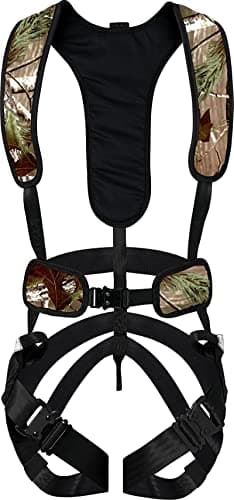
If the new hunter is going to hunt from any elevated stand, this is the first purchase, full stop. The National Deer Association, citing the Tree Stand Safety Awareness Foundation, reports roughly 3,000 treestand-related injury accidents in 2018, with ladder stands alone accounting for 20 to 25% of falls.
Buy a full-body vest-style harness rather than a belt. A vest distributes a fall load across the torso and thighs instead of the waist, and the vest-style harnesses are the ones people actually wear because they feel like clothing rather than equipment.
Sizing and the difference between models is covered in our safety harness guide.
A lifeline to go with it
The harness protects a seated hunter. The lifeline protects the climb - which is where the falls happen. The NDA notes that in 21% of treestand falls the hunter was wearing a harness at the time, meaning the equipment was present and the attachment was not.
A lifeline is a rope run from ground level to above the platform, with a sliding prusik knot you clip into before your boots leave the ground and stay clipped to all day. Buying a harness without a lifeline is buying half the system.
Blaze orange
Every state sets its own blaze orange requirement for firearm seasons - square inches, placement, whether a hat counts, and whether it applies to archery hunters during overlapping gun seasons. Check the recipient's state regulations before assuming a vest is enough.
A basic vest is inexpensive and goes over any layer system, which is why it is the right gift rather than an orange jacket the recipient may not need.
A first binocular
A beginner without binoculars spends the whole sit squinting at a brush pile that may or may not be a bedded deer. A beginner with binoculars is engaged for five hours instead of two, and that is the entire difference between a fun season and a boring one.
You do not need to spend much. A sealed, nitrogen-purged 10x42 with HD glass and a real warranty is enough to identify deer, judge antlers at moderate distance and pick out movement in timber. Buy the brand's entry model rather than an off-brand mid-model.
If your budget is higher, our binoculars under $200 guide covers the next step up.
A seat cushion
The cheapest gift on this page with the biggest behavioral effect. New hunters climb down early because the stand seat hurts, not because they have decided the hunt is over. A real cushion adds an hour or two to every sit, and the last hour of legal light is when deer move.
Merino socks and hand warmers
A beginner will show up in cotton socks. Cotton holds moisture against the skin and steals heat all day, which is why a hunter who felt fine walking in is miserable an hour later. Merino socks and a pack of air-activated warmers cost very little and fix the two most common complaints of a first season.
Why this matters is explained in our guide to staying warm on a long sit.
A rechargeable headlamp
New hunters walk in with a phone flashlight and walk out with a dead phone. A rechargeable headlamp with a red mode covers both directions: red preserves night vision on the way in and is far less likely to blow deer out of a field, and white gets you back to the truck.
A field dressing kit
The most stressful moment of a first season is standing over a dead deer at dusk with a three-inch folding knife and no idea where to start. A four-piece kit with a gut-hook skinner, a caping blade, a saw and a sheath removes half the problem, and the sheath means it lives in a pack rather than a garage drawer.
The full comparison, including replaceable-blade kits, is in our field dressing kit guide.
Field dressing gloves
Shoulder-length gloves keep a beginner's jacket sleeve out of a body cavity, and they are the safe way to handle an animal. Guidance for hunters in CWD-affected areas is explicit: wear latex or rubber gloves when field dressing, avoid cutting through brain or spinal column, bone out the meat, and check state testing guidance.
A deer drag harness
A hands-free drag harness turns a two-hour ordeal into a manageable walk, and more importantly it keeps both hands free on uneven ground in the dark. This is the item experienced hunters improvise with a rope and beginners simply suffer through.
A real first aid kit
Not a bandage tin. The realistic hunting injuries are knife cuts during field dressing, which bleed a lot, and falls. A kit with real trauma supplies and gauze belongs in a pack for anyone hunting alone, and a beginner almost always ends up hunting alone at some point in their first season.
Electronic hearing protection
For anyone who will spend time at a range sighting in, electronic muffs are the right gift: they amplify quiet sounds and cut the loud ones, so a beginner can hear range commands and conversation while still being protected. They are also useful for a new hunter who wants to hear approaching deer more clearly.
A single grunt call
One call, not a set. A beginner with six calls will use all of them badly. A single adjustable grunt tube covers the situation that actually comes up - a buck moving past out of range in late October - and teaches restraint by not offering options.
A wind checker
Costs almost nothing and teaches the single most important habit in whitetail hunting: check the wind before you choose a stand, and check it again when you get there. Thermals shift at first and last light, and a puff of odorless powder shows what the forecast cannot.
Read our honest assessment of scent control before spending money on the rest of that aisle.
Four things not to buy a new hunter
- Boots. Fit is everything, insulation depends on how they hunt, and a wrong pair is worn once. Send them our boot insulation guide instead.
- A full camo clothing system. Expensive, sized, and pattern preference is personal. Deer see movement and shape far better than they resolve pattern detail.
- A cellular trail camera with a subscription. You are gifting them a recurring bill. If you want to gift a camera, buy a standard SD-card model.
- Scent lures and attractants. Regulated differently in every state, with some states restricting natural cervid urine products entirely.
Other budgets: gifts under $50, gifts under $100, and stocking stuffers.
Frequently asked questions
What should you buy someone getting into hunting?
Start with a full-body treestand harness and a lifeline if they will hunt from any elevated stand, then blaze orange and a first aid kit. After safety, buy comfort - merino socks, hand warmers and a seat cushion - because beginners quit sits early from cold and discomfort more than from boredom. Only then move to capability items like a first binocular, a headlamp and a field dressing kit.
What is the most important piece of gear for a beginner hunter?
A full-body safety harness worn with a lifeline. Treestand falls are the most common serious hunting injury and the one most likely to end someone's participation permanently. The National Deer Association, citing the Tree Stand Safety Awareness Foundation, reported roughly 3,000 treestand-related injury accidents in 2018, and notes that in 21% of falls the hunter owned and wore a harness but was not attached at the moment of the fall - which is exactly the gap a lifeline closes.
Should I buy a new hunter boots or camo clothing?
No. Both are sized, both have strong personal preferences attached, and both fail on fit far more often than on quality. A new hunter who receives boots that do not fit will wear them once and be miserable, and camo pattern matters far less than most marketing suggests since deer respond primarily to movement and shape. Socks and a beanie are the safe clothing exceptions.
How much should you spend on a first binocular for a new hunter?
Around $100 is enough. What you need at any price is a sealed, nitrogen-purged body so it will not fog on a cold morning, fully multi-coated glass, and a company that honors a warranty. An entry model from a real optics brand beats a mid-tier model from an unfamiliar one at the same price. Spending more buys brightness in the first and last twenty minutes of legal light, which matters more to a hunter who already knows what they are looking for.
Sources
- National Deer Association - treestand accident statistics from the Tree Stand Safety Awareness Foundation (approximately 3,000 treestand-related injury accidents in 2018, down nearly 50% from 2010; in 21% of treestand falls the hunter was wearing a safety harness; ladder stands account for 20-25% of falls)
- CWD-INFO.ORG - recommendations for hunters (wear latex or rubber gloves when field dressing; bone out the meat; avoid severing brain or spinal column; avoid eating brain, spinal cord, eyes, spleen, tonsils and lymph nodes; check state wildlife and public health guidance on testing)
- Amazon product catalog - live availability, current pricing and product images verified for every item linked on this page (checked 2026-09-06)
Keep reading
Gearing up before your next hunt?
See how we evaluate gear, then dig into the reviews and buying guides — written without inventory to sell.