Gear Checklist
The Tree Stand Day Pack List
An all-day sit is a different problem than a two-hour evening hunt. You are carrying everything you need for twelve hours up a tree in the dark, you cannot go back for anything, and every item has to be silent to reach. This is the list, sorted by how likely you are to actually need each thing.
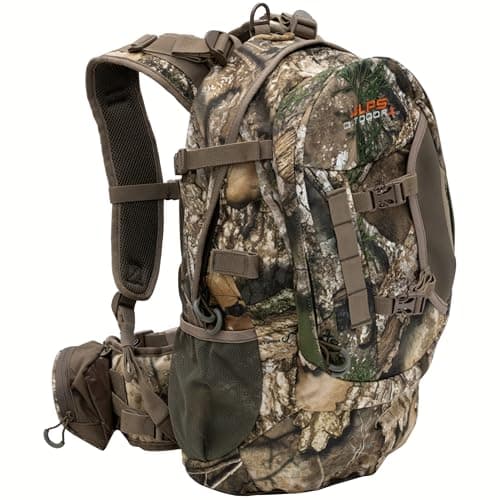
The all-day sit is the highest-percentage tactic in whitetail hunting during the rut, and it is also the one most hunters abandon by 10am - not because nothing is moving, but because they are cold, uncomfortable and out of coffee.
Your pack is what determines whether you are still there at 2pm when a buck stands up and starts cruising. That makes packing a tactical decision rather than a logistics one.
Below is the complete list, organized in four tiers by importance rather than by category, along with the packing order that keeps things silent and the short list of what deliberately stays in the truck.
The organizing principle: four tiers
| Tier | Contents | Rule |
|---|---|---|
| 1. Safety | Harness, lifeline, first aid, light, phone | Never comes out of the pack, in or out of season |
| 2. Comfort | Cushion, warmth, food, water, hooks | Determines whether you last to prime time |
| 3. Hunting | Optics, rangefinder, calls, wind checker | The reason you are up there |
| 4. Kill kit | Knife, gloves, game bags, drag, tags | Lives in a dry bag; you will need it in the dark |
If you are cutting weight, cut from tier 3 before tier 2, and never from tier 1 or 4.
Tier 0: the pack itself
For an all-day sit you want something in the 1,500 to 2,500 cubic inch range - enough for layers, food and a kill kit, small enough that it hangs on a gear hook without dominating the platform.
Three features matter more than volume. Quiet fabric, because a nylon pack against a tree is audible at fifty yards. A design that opens without dumping its contents, since you will be reaching into it thirty feet up. And a hanging loop or handle, so it lives on a hook rather than on the platform under your feet.
Full comparison in our hunting backpack guide.
Tier 1: safety - never leaves the pack
The National Deer Association, citing the Tree Stand Safety Awareness Foundation, reports roughly 3,000 treestand-related injury accidents in 2018 - down nearly 50% from 2010, but still the most common serious injury in the sport. The detail that should shape your kit: in 21% of treestand falls the hunter was wearing a harness at the time. The equipment was there; the attachment was not.
- Full-body harness - worn, not carried. Vest-style harnesses get worn because they feel like clothing.
- Lifeline - the piece that covers the climb, which is when falls happen. Left on the tree between hunts.
- First aid kit - realistic hunting injuries are knife cuts and falls. Carry gauze and a way to stop bleeding, not a box of adhesive bandages.
- Two light sources - a headlamp plus a small backup. A dead light two miles in is a genuine problem, and it always happens on the walk out with a deer down.
- A charged phone and a power bank - cold drains phone batteries quickly.
- Someone knows where you are. Free, and the most effective safety item on the list.
Getting gear up the tree
Nothing goes up in your hands. A hoist rope means the bow, the pack and the thermos come up after you do, and it removes the single most avoidable cause of a fall - climbing with a load in one hand.
Once you are settled, gear hooks and a small tree shelf turn a crowded platform into something usable. The pack goes on a hook, not on the floor where you will step on it in the dark. Check local rules first: screw-in accessories are prohibited on some public land, and strap-on versions exist for exactly that reason.
Tier 2: comfort - what keeps you there until dark
Comfort is not a luxury on an all-day sit. It is the mechanism by which you are present when the deer moves. Three items do most of the work:
- A real seat cushion. Factory stand seats compress to nothing after two seasons. This is the cheapest hour you will ever buy.
- A thermos of something hot. Warm liquid raises core temperature and resets your tolerance for another few hours. Soup beats coffee, because caffeine is a diuretic and you do not want to climb down.
- Food you can eat silently. No crinkly wrappers - repackage into a soft bag before you leave the house.
A pee bottle belongs on this list too. Climbing down at 11am to relieve yourself puts scent on the ground and movement in the woods at exactly the wrong time.
Warmth items
The single biggest mistake on an all-day sit is arriving warm. You walk in wearing your insulation, you sweat, you sit down, and that moisture takes your heat all day. Carry the insulating layer in the pack and put it on once you are settled and have stopped sweating.
- Insulating layer carried, not worn, on the walk in
- Hand warmers - loose in a pocket or a muff, never crushed inside a glove
- Toe warmers on top of the sock, over the toes
- A spare pair of dry socks, if you walked any distance
- A beanie and a face mask - both are heat retention as much as concealment
The full system is in how to stay warm in a tree stand.
Tier 3: optics and calling
Binoculars are what make an all-day sit survivable mentally - they give you something to do during four dead hours, and they let you sort a deer at 200 yards without standing up.
A rangefinder should be ranged before the deer arrives, not after. Pick two or three landmarks in each shooting lane as soon as it is light, and you never have to move when it matters.
Calls go in an outside pocket you can reach without unzipping the main compartment - a grunt tube and a rattling system cover the two situations that actually come up.
Check the wind on the way in and again from the stand. Thermals shift at first and last light, and what the forecast says at truck level is often not what the air is doing in the timber - see our honest look at scent control.
Tier 4: the kill kit
Keep this in its own dry bag inside the pack. You will open it in the dark, with cold hands, and you do not want blood on everything else you own.
- A replaceable-blade knife with spare blades in a hard container
- Shoulder-length and nitrile gloves
- Four or five game bags
- A drag strap or harness
- Tags, zip ties and a pen that writes in the cold
- Hand sanitizer and a rag
Full breakdown in our field dressing kit guide, including the disease handling guidance that argues for boning out rather than sawing bone.
The small stuff that saves a hunt
- A mini multi-tool. Pliers fix a stand pin, a broken buckle or a zipper at daylight.
- A compact folding saw. A sapling has grown into your left-hand shooting window since last October. It always has.
- A ratchet strap or two. Stand straps loosen over a season and this is how you fix one without climbing down.
- Spare batteries. Headlamp, rangefinder, whatever else takes them.
- A small square of foam or an old towel. Wipes a wet stand seat and silences a metal platform under your boots.
What to leave in the truck
- Spare optics. One binocular. You are not going to switch.
- Six calls. Two is plenty. More than that and you will use them badly.
- A full-size processing kit. The rib spreader and the fillet knife belong on a tailgate, not thirty feet up a tree.
- Anything in a hard case. Hard plastic against a metal platform is the loudest sound in the woods.
- Attractant scents. Regulations differ by state and some states restrict natural cervid urine products entirely. Check before you carry them.
The noise audit
Do this once, at home, before the season: load the pack exactly as you will hunt it, then shake it. Anything you hear, a deer at forty yards hears.
- Repackage food out of crinkly wrappers into a soft bag.
- Tape or rubber-band anything that clicks - a rangefinder against a knife, calls against each other.
- Wrap a spare-battery pack in a cloth.
- Replace hard plastic buckles that snap loudly if the pack allows it.
Packing order
Pack it the way you will need it, not the way it fits:
- Outside pockets: wind checker, calls, rangefinder, a snack. Anything you need without unzipping the main bag.
- Top of the main compartment: insulating layer, gloves, hat. You need these first, right after you sit down.
- Middle: food, thermos, spare socks.
- Bottom: kill kit dry bag, first aid, ratchet straps. Not needed until after the shot or in an emergency.
Attach the hoist rope to the outside where you can reach it before you start climbing, not buried in the pack you are about to hoist.
The full list
| Tier | Item | Notes |
|---|---|---|
| Safety | Full-body harness (worn) | Vest style gets worn |
| Safety | Lifeline | Leave on the tree between hunts |
| Safety | First aid kit | Gauze and bleeding control, not bandages |
| Safety | Headlamp + backup light | Red mode for the walk in |
| Safety | Phone + power bank | Cold drains batteries |
| Access | Hoist rope | Nothing goes up in your hands |
| Access | Gear hooks / tree shelf | Check public land rules |
| Comfort | Seat cushion | Buys you hours |
| Comfort | Thermos | Soup over coffee |
| Comfort | Silent food | Repackage at home |
| Comfort | Pee bottle | Do not climb down at 11am |
| Warmth | Insulating layer (carried) | Put on after you stop sweating |
| Warmth | Hand and toe warmers | Loose, never crushed in a glove |
| Warmth | Spare dry socks | If you walked any distance |
| Warmth | Beanie and face mask | Heat plus concealment |
| Hunting | Binocular + harness | The reason you stay engaged |
| Hunting | Rangefinder | Range landmarks at daylight |
| Hunting | Grunt call and rattling system | Two calls, not six |
| Hunting | Wind checker | Check on the way in and from the stand |
| Kill kit | Knife + spare blades | In a hard container |
| Kill kit | Gloves | Shoulder-length and nitrile |
| Kill kit | Game bags | Four or five |
| Kill kit | Drag strap or harness | Hands free on uneven ground |
| Kill kit | Tags, zip ties, cold-weather pen | In a zip bag |
| Repair | Mini multi-tool | Pliers fix most stand problems |
| Repair | Folding saw | Shooting lanes and pelvis |
| Repair | Ratchet straps | Stand straps loosen |
| Repair | Spare batteries | Headlamp and rangefinder |
Hunting a blind instead? See our ground blind kit list. Weapon-specific prep is in the rifle season checklist, the bow season checklist and the muzzleloader checklist.
Frequently asked questions
What should I pack for an all-day tree stand sit?
Four tiers. Safety first - harness, lifeline, first aid, two lights and a charged phone. Then comfort: a real seat cushion, a thermos of something hot, silent food and a pee bottle, because these determine whether you are still there when a buck moves at 2pm. Then hunting gear: binoculars, a rangefinder and two calls. Finally a kill kit in its own dry bag with a knife, gloves, game bags and a drag.
How big should a tree stand hunting pack be?
Roughly 1,500 to 2,500 cubic inches for an all-day sit. That holds layers, food and a kill kit while still hanging on a gear hook without dominating the platform. Volume matters less than three other things: quiet fabric, a design that opens without dumping its contents thirty feet up, and a hanging loop so the pack lives on a hook instead of underfoot.
Should you wear your jacket on the walk in to a tree stand?
No. Carry your insulating layer in the pack and put it on once you are settled and have stopped sweating. Arriving warm means arriving damp, and that moisture pulls heat out of you for the rest of the day regardless of how good your insulation is. This single change does more for an all-day sit than any piece of gear you can buy.
How do you get gear up into a tree stand?
With a hoist rope, always. Attach it to your pack and weapon at the base of the tree, climb unencumbered while attached to a lifeline, then pull everything up once you are settled and secured. Climbing with a load in one hand is one of the most avoidable causes of treestand falls, and a hoist rope costs less than a box of hand warmers.
What should you leave out of a tree stand pack?
Spare optics, extra calls beyond two, a full processing kit with a rib spreader and fillet knife, and anything in a hard plastic case - hard plastic against a metal platform is the loudest sound in the woods. Also check your state's rules before carrying attractant scents; several states restrict natural cervid urine products because of disease transmission concerns.
Sources
- National Deer Association - treestand accident statistics from the Tree Stand Safety Awareness Foundation (approximately 3,000 treestand-related injury accidents in 2018, down nearly 50% from 2010; in 21% of treestand falls the hunter was wearing a safety harness; ladder stands consistently account for 20-25% of treestand falls)
- CDC / NIOSH - cold stress overview and prevention (several layers of loose clothing for insulation, waterproof insulated boots, and headwear because hats reduce body heat escaping from the head)
- Amazon product catalog - live availability, current pricing and product images verified for every item linked on this page (checked 2026-09-06)
Keep reading
Gearing up before your next hunt?
See how we evaluate gear, then dig into the reviews and buying guides — written without inventory to sell.