Gift Guide
The Best Gifts for Hunters Under $50
Under fifty dollars is the hardest gift bracket in hunting, because it is exactly the price range where novelty gadgets live. The way out is to buy consumables, replacements and small upgrades - things a hunter already uses and will not spend his own money replacing.
The problem with gifting a hunter is not that he has everything. It is that he has opinions. Buy him a rifle scope, a pack or a pair of boots and you are guessing at fit, brand loyalty and a dozen preferences he has spent years forming.
Under fifty dollars, though, none of that applies - and that is exactly why this price band is the best one to shop in. You are not replacing his judgment. You are topping up the things he burns through, replacing the things he has quietly worn out, and buying the small upgrades he keeps deciding he can live without.
Every item below was checked against Amazon's live catalog on the date at the top of this page. We have deliberately not printed prices in the body copy, because gift-season pricing moves weekly and a stale number is worse than none - use the check-price buttons for whatever it costs today.
The three-category rule for gifting a hunter
Every gift that actually gets used falls into one of three buckets. If your idea does not fit one of them, it is probably going to live in the garage.
- Consumables. Things that run out every single season and get replaced grudgingly at full retail in a gas station on opening morning: hand warmers, scent spray, game bags, nitrile gloves, batteries. Nobody has ever been annoyed to receive a box of these.
- Quiet replacements. Gear that is worn out but still technically works, so it never gets replaced. Socks with thin heels. A headlamp that eats batteries. A three-season-old ratchet strap. A dull knife with no sharpener in the house.
- Upgrades he will not buy himself.The item he has looked at four times and talked himself out of because the current thing is "fine." A bino harness when the binoculars are still on a neck strap. A lifeline when he has a harness but climbs unattached. A boot dryer.
Two categories to avoid entirely
Novelty camo housewares.Camo coffee mugs, antler bottle openers, carved "gone huntin" signs. These are gifts about hunting rather than gifts for hunting, and they end up in a drawer. If you want the sentiment, put it on the card.
Anything sized or fitted. Boots, gloves, packs and outerwear all fail on fit more often than on quality, and a hunter will wear a bad-fitting item exactly once. Socks and beanies are the two exceptions, because sock sizing is forgiving and a beanie is one size.
We also do not link firearms, ammunition or reloading components anywhere on this site, gift guides included. Everything here is optics, packs, clothing, tools and accessories.
The picks at a glance
| Gift | Category | Why it works |
|---|---|---|
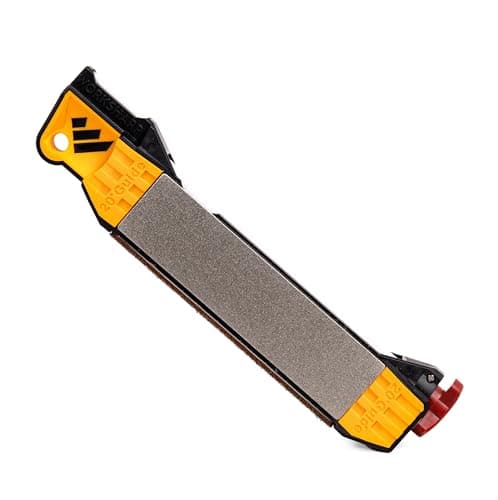
| Work Sharp Guided Field Sharpener | Upgrade | Most hunters own a good knife and no way to sharpen it |
| HotHands 40-pair box | Consumable | Gets used every cold sit until it is gone |
| Rechargeable hand warmer | Upgrade | Reusable heat plus a phone power bank in one pocket |
| Vortex GlassPak harness | Upgrade | Ends the neck-strap swing on every walk in |
| Nitecore NU30 headlamp | Replacement | Rechargeable, with a red beam for the dark walk in |
| Smartwool Hunt Classic socks | Replacement | The most-worn-out item in any hunting closet |
| HSS reflective lifeline | Upgrade | The part of the safety system most hunters skip |
| Game bags | Consumable | Needed exactly once a year, never on hand |
HotHands hand warmers, by the box
The 40-pair bulk box is the least imaginative gift on this list and the one most likely to be fully consumed. Air-activated warmers are the default heat source in a stand: they cost almost nothing per sit, need no charging, and go in boot toes, a muff, a chest pocket and a glove without any planning.
Buy the box, not the two-pack. The reason hunters run out is that they buy warmers in singles at a gas station at four in the morning. A box in the truck ends that.
Our hand warmer guide covers the disposable-versus-rechargeable question in full, including where each one actually fails.
A rechargeable hand warmer
The rechargeable version solves a different problem: it doubles as a phone power bank, it is warm on demand rather than warm for the next ten hours whether you want it or not, and it can be switched off during the walk in. The OCOOPA UT3 Pro pair is the common double-sided magnetic design with several heat levels.
Honest limitation: a battery warmer is heavier than a chemical warmer, and cold weather shortens its runtime exactly when you need it most. It is a supplement to the box of disposables, not a replacement for it.
Vortex GlassPak binocular harness
A hunter with binoculars on a neck strap is a hunter who has not yet been convinced to spend money on a harness. That makes it a perfect gift: high daily impact, low price, and he will not buy it himself.
A chest harness stops the swing on the walk in, keeps the glass out of the mud when you kneel, and puts the binoculars in the same place every time so you actually use them. The GlassPak is the entry point in the category and the one to buy when you are not sure how committed the recipient is.
If you want the full ladder from a simple strap harness to a sealed chest pack, see our binocular harness guide.
Nitecore NU30 rechargeable headlamp
Headlamps are among the most-owned and most-worn-out items in hunting. The failure mode is predictable: an old lamp with corroded AAA contacts lives in the truck, and every dark walk in gets done on a phone flashlight.
A rechargeable lamp with a dedicated red beam fixes both problems at once - red preserves night vision and is far less likely to blow out a field on the way to the stand. The NU30 is a lightweight USB-rechargeable model with white and red output.
Our headlamp roundup covers red versus green beams and the lumen numbers that actually matter for hunting.
Smartwool Hunt Classic socks
Socks are the highest-impact clothing gift under fifty dollars, because they are the layer that fails first and gets replaced last. Merino wool holds warmth when damp, resists odor across multiple wears, and does not pack flat the way a cotton-blend boot sock does after a season.
Sizing is forgiving - buy the cushion weight that matches how he hunts rather than agonizing over the size. Full cushion for stand sitting, lighter cushion for anyone who covers ground.
Full breakdown of weights and liner systems in our hunting sock guide.
Stanley Classic vacuum bottle
A thermos is the item that turns a cold sit from endurance into something closer to comfort, and the Stanley Classic is the one that survives being dropped out of a stand. The wide-mouth version is the one to buy: it takes soup, not just coffee, and it is cleanable with a hand rather than a bottle brush.
Hunter Safety System lifeline
This is the most useful gift on the page and the one nobody asks for. A harness protects a hunter who is already seated. A lifeline - a rope run from the ground to above the platform with a prusik knot that slides as you climb - protects the part of the hunt where falls actually happen: climbing up and climbing down.
The National Deer Association, citing the Tree Stand Safety Awareness Foundation, reports roughly 3,000 treestand-related injury accidents in 2018, and notes that in 21% of treestand falls the hunter was in fact wearing a safety harness - the failure was in how and when it was attached, not whether it was owned. A lifeline is exactly the piece that closes that gap.
If he does not own a harness at all, start with our safety harness guide instead.
A real tree stand seat cushion
Most hang-on and ladder stand seats are a strip of foam wrapped in mesh that compresses to nothing after two seasons. Adding a real cushion is the cheapest possible way to extend how long someone can physically sit, which in November is the same thing as extending how many deer they see.
Outdoor Edge RazorLite replaceable-blade knife
A replaceable-blade knife is the modern answer to field dressing: you snap in a new surgical-grade blade instead of stopping mid-animal to strop a dull edge. The RazorLite is the pocket-clip version, which means it can live in a pack pocket year round.
It is also a good gift for someone who already owns a nice fixed-blade knife, because it does not compete with it - it is the knife he is willing to abuse.
Black Rack rattling system
For a whitetail hunter, a rattling system is a gift with a specific season attached to it - the pre-rut and rut windows in late October and November, which is precisely the stretch a December gift gets planned around.
Synthetic rattling systems are quieter to carry than real antlers, safer to hang in a stand, and produce a more consistent sound than a bag. Pair one with a grunt tube for a complete calling setup that still comes in under fifty dollars.
Game bags
Game bags are the purest example of the consumable category: needed exactly once a year, never on hand, and the difference between meat that cools clean and meat that gets flyblown on a warm early-season evening.
A five-pack of deer-sized bags covers a whole animal with a spare. Buy them for anyone who has ever said the words "I will just use a cooler."
A merino wool beanie
One size, no fit risk, and it is close to the warmest thing you can add per ounce. A merino cuff beanie in a solid or camo pattern goes under a hood on the coldest sits and gets worn all winter off the mountain too, which is more than can be said for most camo.
PEET boot dryer
A boot dryer is a stealth upgrade. Boots that go into the mudroom wet in the evening come out wet in the morning, and damp insulation is why feet get cold on day two of a hunt no matter how many grams the boot is rated for.
The PEET Original is a convection dryer with no fan, which means it is silent and can run overnight in a hallway. It also dries gloves and liners on the same posts.
Why wet insulation costs you warmth is covered in our boot insulation guide.
Outdoor Edge WildGuide field dressing kit
A complete four-piece kit - caping blade, gut-hook skinner, bone saw and sheath - is the right gift for a hunter who has been field dressing deer with one folding knife and borrowing everything else. It is also the cheapest way to get someone a saw, which is the tool most often missing.
Our field dressing kit guide compares the full kit ladder and covers what a kit still leaves you to buy separately.
How to choose if you only buy one
Match the gift to what you actually know about the person, not to the highest-rated item on the page:
- He hunts from a tree stand: the lifeline, then the seat cushion.
- He hunts public land and walks: the bino harness, then the socks.
- He processes his own deer: the sharpener, then game bags.
- You know nothing except that he hunts: the box of hand warmers and the sharpener. Neither one can be wrong.
Working with a bigger budget? See gifts under $100, the stocking stuffer list, and gifts for new hunters.
Frequently asked questions
What is the best gift for a hunter under $50?
A guided knife sharpener. Nearly every hunter owns at least one good knife and most own no way to sharpen it properly, so a sharpener fills a real gap rather than duplicating something already in the closet. It is also usable the same week it is opened, works on broadheads and camp tools as well as knives, and does not depend on knowing his size, brand preference or hunting style.
What should you not buy a hunter as a gift?
Anything sized or fitted - boots, gloves, packs and outerwear - because fit failures mean the item gets worn once and shelved, and hunters have strong brand preferences you cannot guess. Also skip novelty camo housewares like mugs and signs; they are gifts about hunting rather than gifts for hunting. Socks and beanies are the two safe exceptions because sizing is forgiving.
Are hand warmers a good gift for a hunter?
Yes, provided you buy them by the box rather than the two-pack. Air-activated warmers are a consumable that every cold-weather hunter uses and nobody stocks up on, so they get bought in ones and twos at gas station prices on opening morning. A 40-pair box in the truck removes that entirely and will be fully used within a season.
What do you get a hunter who already has everything?
Consumables and quiet replacements. Someone with a full gear closet still runs out of hand warmers, game bags and nitrile gloves every year, and is still hunting in socks with thin heels and a headlamp that eats batteries. The category to avoid with a well-equipped hunter is anything with a strong personal preference attached - he already made that decision and paid for it.
Is a tree stand lifeline a good gift?
It is one of the best on this list, because it covers the part of the hunt where falls actually occur - climbing up and climbing down - and it is the piece hunters most often skip even when they own a harness. The National Deer Association, citing the Tree Stand Safety Awareness Foundation, notes that in 21% of treestand falls the hunter was wearing a harness at the time, meaning the attachment, not the equipment, was the failure point.
Sources
- National Deer Association - treestand accident statistics from the Tree Stand Safety Awareness Foundation (approximately 3,000 treestand-related injury accidents in 2018, down nearly 50% from 2010; in 21% of treestand falls the hunter was wearing a safety harness; ladder stands account for 20-25% of falls)
- Amazon product catalog - live availability, current pricing and product images verified for every item linked on this page (checked 2026-09-06). We do not print prices in body copy; the check-price buttons pull the current figure.
Keep reading
Gearing up before your next hunt?
See how we evaluate gear, then dig into the reviews and buying guides — written without inventory to sell.