Buying Guide
Best Hunting Binoculars Under $100
A hundred dollars buys a real binocular now - sealed, nitrogen-purged, warrantied - as long as you know which corner the maker cut. Here is what the money actually buys, the three pairs worth owning, and the honest point where spending another fifty dollars changes your hunt.
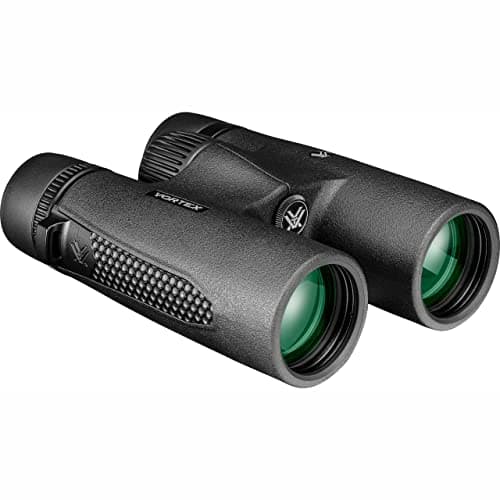
The verdict: the best hunting binocular under $100 is the Vortex Copperhead HD 10x42— Vortex's entry HD model, full-size, and carrying the same unconditional lifetime VIP warranty as glass that costs ten times more. It is the right pair for the whitetail or general big-game hunter who wants one honest binocular and does not want to think about it again. The budget pick is the Bushnell H2O 10x42, which is the cheapest pair on this page we will stand behind, because it is still O-ring sealed and nitrogen purged. And if the binocular is going to live in a truck door, get handed to a ten-year-old, or go into a swamp, buy the Vortex Triumph HD and stop worrying about it.
One framing before the picks, because it is the thing most sub-$100 roundups skip: at this price you are not choosing between good and better glass. You are choosing which corner the maker cut. Every binocular here gave something up to hit the number — lens coatings, low-light brightness, edge sharpness — and the useful question is which of those you can live without on your hunt. We will name the cut on each one.
The best hunting binoculars under $100 at a glance
| Binocular | Price & buy | Config | Sealed & purged | Warranty | Best for |
|---|---|---|---|---|---|
| Vortex Copperhead HD 10x42 | $99.00Buy | 10x42 | Yes | Vortex VIP, unconditional lifetime | Best overall under $100 |
| Bushnell H2O 10x42 | $87.29Buy | 10x42 | Yes - O-ring sealed, nitrogen purged | Bushnell limited | Budget pick |
| Vortex Triumph HD 10x42 | $99.00Buy | 10x42 | Yes | Vortex VIP, unconditional lifetime | Truck, kids, swamps |
Prices shown are from Amazon as of November 8, 2026 and change often — the button always goes to the current listing. Some links may earn us a commission at no extra cost to you.
All three are 10x42, which is deliberate. A 42mm objective is the smallest front lens that still gathers usable light at legal shooting time, and 10x is the highest magnification most people can hold steady without a rest. Smaller objectives get dim; higher magnification gets shaky. At this price there is no reason to experiment with either.
What $100 actually buys - and what it cannot
The good news first, because it is genuinely good: the floor of this market has moved. A hundred dollars now reliably buys a fully multi-coated, waterproof, nitrogen-purged, rubber-armoured roof-prism binocular from a real optics company, and in the case of both Vortex models, a warranty with no receipt, no registration, and no expiry. Fifteen years ago that combination did not exist below three figures.
Here is what it cannot buy, stated plainly:
- The last half hour of light. This is the real cost. Expensive glass earns its money in the twenty to thirty minutes either side of legal shooting time, and that is exactly where a $100 binocular shows its coatings. You will see a deer in the open at dusk with any of these. You may not be able to count tines on it.
- Edge-to-edge sharpness.Budget glass is sharp in the middle and softens toward the rim. In practice you centre what you are looking at anyway, so this matters less than a spec-sheet reader would guess — but it is why long glassing sessions tire your eyes faster.
- ED or fluoride glass.The elements that suppress colour fringing on high-contrast edges — an antler against a bright sky — live further up the ladder. The registry's under-$200 tier is where they start appearing.
- A rangefinder. Obvious, but worth saying: if you need distance, that is a different tool. See our rangefinder guide.
What $100 does buy that matters enormously: a binocular you will actually carry. The most common optics mistake we see is a hunter who owns good glass, leaves it in the truck because it is heavy or precious, and hunts with naked eyes. A cheap binocular on your chest beats expensive glass on the seat every single time.
The one spec we refuse to compromise on
| Must have | O-ring sealed; nitrogen or argon purged; fully multi-coated; rubber armour |
|---|---|
| Should have | A 42mm objective, 10x or 8x magnification, a tripod adaptor thread, and a warranty that does not require a receipt |
| Do not pay extra for | 'Night vision' or 'infrared' claims on a daylight binocular; ruby-coated lenses; zoom binoculars (the mechanism is the weak point and the image is worse at every setting) |
| Ignore | Claimed 'HD' in a model name - it is a marketing word at this price, not a glass specification |
Best overall: Vortex Copperhead HD 10x42
Best for: the hunter who wants one honest binocular at the top of this budget and does not want to think about optics again.
The Copperhead is Vortex's entry HD model and the best-balanced pair at this price. It shares a similar body and the same warranty as the Crossfire a tier above it, with a step down in coatings — which is precisely the right corner to cut, because coatings cost you the last few minutes of light rather than the daylight hours when you do most of your looking. It is the right answer when the budget is around $100 rather than $150, and it is a straightforward upgrade over anything at the drugstore-optics end of the shelf.
The honest cut: dimmer at the very edges of legal light than the Crossfire, and the focus wheel has less feel than glass further up the range. Neither will cost you a deer.
Budget pick: Bushnell H2O 10x42
Best for: the hunter whose real alternative is no binocular at all, and for anyone who needs a pair that shrugs off water.
The H2O is our floor. It is O-ring sealed and nitrogen purged — the specification we refuse to compromise on — and it has non-slip rubber armour designed for wet hands. That is the whole pitch, and at this price it is enough. It is the pair we recommend to a duck hunter who expects to drop things in water and to a new hunter who is not yet sure how much glassing their hunt involves.
Be honest about what it is not: it is dimmer at dawn and dusk than the Copperhead, and the difference is most obvious in exactly the half hour that matters most. The warranty is a conventional limited one rather than Vortex's no-questions VIP policy. It is a great truck binocular, a fine kid's binocular, and an acceptable primary binocular if the alternative is no binocular at all.
Best beater: Vortex Triumph HD 10x42
Best for: the binocular that lives in a truck door, gets handed to a kid, or goes somewhere you would not take anything you cared about.
The Triumph HD is the cheapest full-size Vortex, and its argument is entirely about the warranty rather than the glass. Optically it sits a step behind the Copperhead. Practically, it is a binocular you can hand to a ten-year-old, leave in a hot cab all summer, or take into a swamp without flinching — and if it breaks, Vortex replaces it. No receipt, no registration, no original owner requirement. For a second pair, or a first pair for someone who will be hard on it, that transfers the risk off you entirely.
The honest cut: this is the dimmest Vortex in the line, and it is the pick where we would most readily tell you to spend $20 more if the binocular is going to be your only one.
When to spend more instead
We would rather lose the sale than have you buy the wrong thing, so: there are three hunts where $100 is the wrong budget, and you should go up a tier.
- You glass for hours, not minutes. Western spot-and-stalk, or any hunt where the binocular is the primary tool rather than a confirmation device. Eye fatigue from soft edges is real over a three-hour sit behind glass. Start at the under-$200 tier, and buy a bino harnessbefore you buy better glass — it changes more about long glassing than an optical upgrade does.
- Your shot windows are at the edges of legal light. Thick timber, late rifle season, last-light field edges. This is exactly the half hour budget coatings give away, and no amount of magnification compensates. The under-$500 tier is where low-light performance stops being a compromise.
- You need more reach than 10x.If you are judging animals across canyons, a 12x50 is the next honest step — Vortex's own Triumph HD 12x50sits just above this page's ceiling. Be aware that 12x needs a rest or a tripod to be usable; our tripod guide covers that.
For everyone else — the whitetail hunter checking a field edge, the stand hunter confirming a rack at 80 yards, the hunter who mostly needs to tell a doe from a small buck at 150 — a sealed, purged, warrantied 10x42 at $100 is enough binocular, and the money you save is better spent on a harness or on boots.
The bottom line
Buy the Vortex Copperhead HD 10x42. It is the most binocular per dollar under $100, and the VIP warranty means the purchase is effectively permanent. If the budget is tighter than that, the Bushnell H2O 10x42 is sealed and purged and honest about the rest. If the binocular is going to get abused, the Vortex Triumph HDmakes that someone else's problem. Then spend the next $30 on a chest harnessrather than on glass — carrying the binocular on your sternum instead of around your neck is the single biggest improvement available to a hunter at this budget, and it is the reason the cheap pair you actually carry outperforms the good pair you leave behind.
Frequently asked questions
What are the best hunting binoculars under $100?
The Vortex Copperhead HD 10x42 is the pick for most hunters: Vortex's entry HD model, full-size, and covered by the unconditional lifetime VIP warranty that applies with no receipt and no registration. The Bushnell H2O 10x42 is the budget choice and the cheapest pair we will stand behind, because it is still O-ring sealed and nitrogen purged. The Vortex Triumph HD 10x42 is the beater pick - optically a step behind the Copperhead, but backed by the same warranty, so it is the one to hand a kid or leave in a truck.
Are $100 binoculars good enough for deer hunting?
For most deer hunting, yes. A sealed, nitrogen-purged, fully multi-coated 10x42 will let you check a field edge, confirm a rack at 80 yards, and tell a doe from a small buck at 150. What $100 does not buy is the last twenty to thirty minutes of legal light, where better coatings earn their money, or edge-to-edge sharpness over a long glassing session. If your shot windows are at the very edges of light, or you glass for hours rather than minutes, step up a tier.
What is the one specification to check on cheap binoculars?
Whether they are O-ring sealed and nitrogen purged (argon purged is equivalent). Sealing keeps water and dust out; purging replaces the air inside the barrels with dry inert gas so the internal glass cannot fog when you move between temperatures. An unsealed binocular fogs internally, keeps doing it, and eventually hazes a prism you cannot reach - and there is no repair. Plenty of binoculars under $100 skip this. Every pick on this page has it, which is exactly why they are the picks.
Should I buy 8x42 or 10x42 binoculars for hunting?
At this price, 10x42 for most hunters. The 42mm objective is the smallest front lens that still gathers usable light at legal shooting time, and 10x is about the highest magnification most people can hold steady unsupported. Choose 8x42 instead if you hunt thick timber at close range, if you have shaky hands, or if you want a wider field of view for picking up movement. Avoid anything above 10x unless you will use a rest or tripod - a 12x image is noticeably jumpy freehand.
Is a binocular harness worth it on a budget?
It is the best $30 you can spend in this price bracket - better than upgrading the glass. A chest harness holds the binocular against your sternum instead of swinging from your neck, which stops it banging a bow or rifle, keeps it out of the mud when you kneel, and means you actually bring it rather than leaving it in the truck. The most common optics mistake we see is a hunter with good glass on the seat and naked eyes in the stand.
Sources
Keep reading
Gearing up before your next hunt?
See how we evaluate gear, then dig into the reviews and buying guides — written without inventory to sell.