Buying Guide
Best Hunting Headlamps Under $50
Under $50 you can buy a genuinely good hunting headlamp - with a red mode, a USB-C port and more white output than you need. What you cannot buy is a disposable-battery fallback, which is the one thing that matters at minus five degrees at five in the morning.
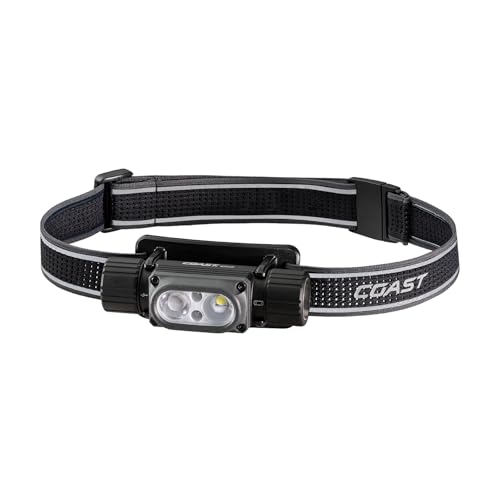
The verdict: the best hunting headlamp under $50 is the Coast WPH32R — 2,000 lumens, six modes, an IP68 waterproof rating and a magnetic base, which makes it the lamp for walking in, tracking and working at a tailgate in the rain. It is for the hunter who wants one bright, tough, do-everything light. The budget pick is the Nitecore NU30: the cheapest lamp here that still publishes a red beam alongside its 500 lumens of white, and red is the mode a hunter uses most. If ounces matter more than output, the Nitecore NU25 MCT UL is the ultralight answer at 400 lumens with selectable color temperatures.
The framing that makes this band worth its own page rather than a cheaper slice of our full hunting headlamp guide: every headlamp available under $50 today is rechargeable-only, with no disposable-battery fallback. That is one specific, verifiable limitation, it is the limitation the premium lamps are actually selling against, and it changes what you should do rather than what you should buy — because the fix is a habit and a second light, not another twenty dollars.
The best hunting headlamps under $50 at a glance
| Lamp | Price & buy | Published output | Red mode? | Power | Best for |
|---|---|---|---|---|---|
| Coast WPH32R | $49.97Buy | 2,000 lumens, 6 modes, IP68 | Yes - red beam modes | USB-C rechargeable only | Best overall; tracking and work light |
| Nitecore NU30 | $34.95Buy | 500 lumens | Yes - published white and red beams | Rechargeable only | Budget pick |
| Nitecore NU25 MCT UL | $36.95Buy | 400 lumens, warm / natural / cold / red | Yes | USB-C rechargeable only | Ultralight; close-range color accuracy |
| Nitecore NU11 clip-on | $19.95Buy | Not published on this listing | Not published | Rechargeable | The backup in the bottom of the pack |
Prices shown are from Amazon as of November 21, 2026 and change often — the button always goes to the current listing. Some links may earn us a commission at no extra cost to you.
Everything on this page had a live, buyable price under $50 when we built it. Two lamps from our full guidesit above the band and are not here: the Black Diamond Storm 500-R and the Petzl Actik Core — and the Petzl is the specific lamp this band cannot match, because its hybrid power system takes AAAs when the cell dies.
What $50 buys - and the one thing it does not
The good news first, because it is substantial. Under $50 you get more white output than you will use— the Coast publishes 2,000 lumens, which is more than the $80 lamps in our full guide — plus a published red modeon three of the four picks, USB-C charging, and in the Coast’s case an IP68 rating that is better than most of the band above it. For walking into a stand, field dressing and dragging out, that is the whole job.
Here is the honest list of what the band does not buy:
- A disposable-battery fallback. This is the real line. Every lamp here runs on a built-in rechargeable cell with no AAA option. A lamp with a dead cell is a lamp, not a light, and no amount of lumens fixes it in a truck at four in the morning. The Petzl Actik Core in our full guide exists precisely for this, and it costs more than this band.
- Published runtime figures. None of these four listings publishes an ANSI-rated runtime at high output. The full guide records runtimes for the lamps above the band; in this band you are buying an output number with no duration attached to it.
- A published weight on three of four. Only the NU25 is sold on being ultralight, and even its listing leads with lumens rather than ounces. If you count grams, weigh it when it arrives.
- A reflective or regulated-output pedigree. Premium lamps hold their brightness as the cell drains; cheap ones dim gradually. Nobody in this band publishes a regulation claim either way, so assume the output figure is a fresh-cell figure.
Why lumens is the number that lies
Lumens measure total light output, not where that light goes. A 2,000-lumen lamp throwing a wide flood and a 500-lumen lamp throwing a tight spot do completely different jobs, and the bigger number is not automatically the better hunting light.
| Flood is for working | Field dressing, setting up a stand, finding gear in a pack, reading a map. A wide, even beam at modest output is what you want with your hands a foot from your face - and a 2,000-lumen spot aimed at a deer you are gutting just blinds you off the reflected light. |
|---|---|
| Spot is for finding | Picking up eyes at distance, following a blood trail, locating a tree in the dark. This is where output genuinely helps, and where the Coast earns its place in the band. |
| Red is for not being seen | Walking in, settling into a stand, moving at first light. See the next section - this is the mode that separates a hunting headlamp from a camping one, and it is the first thing to check on any listing. |
| Beam shape is rarely published | None of these four listings publishes a beam distance, a candela figure or a flood-versus-spot breakdown. That is the category norm. Treat the lumen figure as a ceiling and judge beam shape from the product photos and the mode list. |
The red-light rule
A red beam is the single most important feature on a hunting headlamp, and it is the one most buyers ignore in favor of output. Two reasons it matters: red light preserves your own dark-adapted vision far better than white, so you can switch it off and still see; and it is markedly less alarming to game, which is why a red walk-in is standard practice for anyone entering a stand in the dark.
Three of the four picks here publish a red mode. The NU30 publishes white and red beams in its own listing title, the NU25 MCT UL publishes warm, natural, cold and red, and the Coast WPH32R publishes red among its six modes. The NU11 clip-on publishes no color modes at all, which is part of why we list it as a backup rather than a primary.
The feature to look for beyond the mode itself is red-first access: whether one click gets you red, or whether you have to cycle through white and blow your own night vision to reach it. None of these listings states which, so test it in your living room before you rely on it in the dark. Our full headlamp guide covers this in more depth across the whole price range.
Best overall: Coast WPH32R
Best for: the hunter who wants one bright, waterproof, do-everything light for walking in, tracking and working at the truck.
This is the lamp to buy in the band, and the case is that it publishes more than anything near it. Coast lists 2,000 lumens, six light modes, an IP68 waterproof rating and a magnetic base, charging over USB-C. Two of those deserve spelling out. IP68 is a full-immersion rating, which matters on a rainy drag-out far more than another few hundred lumens. And the magnetic base turns the lamp into a work light you can stick to a tailgate, a truck bed or a stand platform while you use both hands.
It is also the brightest light on this page by a factor of four, and in our full guidethe WPH32R is the lamp we name as the Amazon-stocked sibling of Coast’s red-light flagship — it shares the 2,000-lumen output, the red beam modes, the waterproof rating and the detachable body.
Honest cons: it is USB-C rechargeable only, with no AAA fallback — the step up to Coast’s own hybrid model sits above this band for exactly that reason. It is the heaviest lamp here by a wide margin; the version of this lamp in our full guide was found front-heavy enough to want the strap snugged down on long wears. Coast publishes no runtime figure for any mode on this listing. And 2,000 lumens is far more light than a close-range task needs, so you will spend most of your time on a lower mode than the one you paid for.
Budget pick: Nitecore NU30
Best for:the hunter who wants the one feature that matters — a red beam — for the least money.
The NU30 is the cheapest lamp on this page and it leads its own listing with the right thing: 500 lumens of LED output with white and red beams, rechargeable. That is a complete hunting headlamp specification stated in nine words, and five hundred lumens is genuinely plenty for a walk in, a stand setup and a field-dressing job.
It is the lamp we name in our gifts for hunters under $50 guide for the same reason: it is the cheapest thing you can hand a hunter that they will genuinely use every time they go out. Buy this one if you are unsure, and spend the difference on a second light.
Honest cons:rechargeable only, like everything in the band. Nitecore publishes the output and the beam colors on this listing but no runtime, no weight, no waterproof rating and no beam distance — it is the least-specified lamp of the three primaries here. Five hundred lumens will not reach out to pick up eyes across a field the way the Coast will. And it is an older design than the NU25 above it, which is worth knowing if you want the newer charging port.
Best ultralight: Nitecore NU25 MCT UL
Best for: the backcountry hunter counting ounces, and anyone who does close work where color accuracy matters.
The NU25 MCT UL is the specialist of the group and the most interesting lamp in the band. Nitecore publishes 400 lumens, USB-C charging, an elastic cordheadband rather than a webbing strap, and — the unusual part — multiple color temperatures: warm, natural, cold and red.
Selectable color temperature sounds like a camping feature until you field dress an animal under a cold blue LED and then under a warm one. Natural and warm light renders blood, tissue and fletching color honestly; cold white flattens everything into gray. Our full guide records that the NU25 family runs about 1.4 ounces on its cord band, which makes it the lamp you forget you are wearing.
Honest cons:the thin cord band gives up stability when you are scrambling or dragging, and there is no disposable-battery option. Four hundred lumens is the lowest output of the three primaries, so maximum throw is modest next to the Coast — it is a working and walking lamp, not a tracking light. And the color-temperature feature adds modes to cycle through, which is the opposite of what you want with cold hands.
The second light: Nitecore NU11 clip-on
Best for: every hunter on this page, as an addition rather than a choice.
Not a headlamp, and we are listing it as what it is: a small rechargeable clip-on light that goes on a cap brim, a pack strap or a jacket placket. It costs a fraction of the lamps above it and it exists on this page for one reason — it is the cheapest way to solve the band’s structural weakness. If your only light is rechargeable and it dies, a clip-on in the bottom of the pack is the difference between walking out and sitting still until dawn.
Honest cons:its listing publishes essentially nothing — no lumen figure, no runtime, no red mode, no waterproof rating — and we are not going to speculate. A clip-on also cannot be aimed independently of your head the way a headlamp can, and a cap-brim light shifts when you move your head. Treat it as insurance, not as a primary.
Batteries in the cold, which is the whole problem
Lithium cells lose capacity as temperature falls. That is physics, not a product defect, and it is why a rechargeable-only lamp is a bigger limitation in November than in July. A cell that gives you four hours in a warm house may give you noticeably less at twenty degrees in a tree stand, and none of these listings publishes a cold-weather runtime because nobody in this band does.
Four habits that cost nothing and solve most of it:
- Charge the night before, every time.Not “when it feels low”. A rechargeable lamp has no fuel gauge you can trust in the dark.
- Carry the lamp warm on the way in. An inside pocket rather than an outside one. A cell that starts warm holds up better than one that starts at ambient.
- Use the lowest mode that works. Most of a hunt needs red or low white. Saving the high mode for when you need it is the single biggest extension of runtime available.
- Own two lights. The clip-on above, or a second headlamp. This is the fix, and it is cheaper than the lamp that would have had a battery fallback.
If a disposable-battery fallback is genuinely a requirement for how you hunt — multi-day backcountry trips, or anywhere you cannot charge — then this band is not the right band and you should read our full hunting headlamp guide instead. The hybrid lamps in it cost more and are worth it for that specific case.
The bottom line
Buy the Coast WPH32Runless you have a specific reason not to — it publishes the most specification in the band, the IP68 rating is a genuine advantage in bad weather, and the magnetic base is more useful than it sounds. Take the Nitecore NU30 if price is the constraint and you want the red beam, the NU25 MCT UL if you count ounces or do close color-critical work, and add the NU11 clip-on to whichever you choose.
And be clear about the ceiling. If you need a lamp that keeps working when the cell is flat, nothing on this page is the answer — that is what the hybrid-power tier is for, and our full headlamp guide covers it. For everyone else, charging the night before and carrying a backup closes the gap for less than the price difference. If you are putting a stand kit together, our tree stand day pack list covers what goes around the light.
Frequently asked questions
What is the best hunting headlamp under $50?
The Coast WPH32R. It publishes 2,000 lumens, six light modes, an IP68 waterproof rating and a magnetic base, charging over USB-C - more specification than anything else in the band, and the IP68 rating matters more on a rainy drag-out than extra output does. The Nitecore NU30 is the budget pick and still publishes the feature that matters most to a hunter, a red beam, alongside 500 lumens of white. The Nitecore NU25 MCT UL is the ultralight choice at 400 lumens with selectable color temperatures.
Can you get a good hunting headlamp for under $50?
Yes, and the band is better than it used to be - you can buy more white output under $50 than some $80 lamps publish, plus a red mode and USB-C charging. The one thing the band cannot give you is a disposable-battery fallback: every headlamp available under $50 today is rechargeable-only, with no AAA option. That is a real limitation in cold weather, and the right answer is a habit rather than more money - charge the night before every hunt and carry a cheap second light.
Do I need a red light on a hunting headlamp?
It is the most important feature on a hunting headlamp, more important than output. Red light preserves your own dark-adapted vision, so you can switch it off and still see, and it is markedly less alarming to game than white - which is why walking into a stand on red is standard practice. Three of the four picks here publish a red mode: the Nitecore NU30 (white and red beams), the NU25 MCT UL (warm, natural, cold and red) and the Coast WPH32R among its six modes. Check whether one click reaches red, because cycling through white to get there defeats the point.
How many lumens do I need for hunting?
Far fewer than the marketing suggests, because lumens measure total output and not where the light goes. Five hundred lumens, as on the Nitecore NU30, covers a walk in, a stand setup and field dressing comfortably. Output genuinely helps for one job - picking up eyes or following a blood trail at distance - which is where the Coast WPH32R's 2,000 lumens earns its place. For close work a wide, modest flood beats a bright spot, which just blinds you off reflected light.
Are rechargeable headlamps a problem for hunting in cold weather?
They are a manageable one. Lithium cells lose capacity as temperature falls, so a lamp that runs four hours indoors may run noticeably less at twenty degrees in a stand, and none of the listings in this band publishes a cold-weather runtime. The fixes are free: charge the night before every hunt rather than when the lamp feels low, carry it in an inside pocket on the walk in so the cell starts warm, use red or low white for most of the hunt, and own a second light. If you genuinely cannot charge - multi-day backcountry trips - buy a hybrid-power lamp above this band instead.
Should I buy two headlamps?
Yes, and in this band it is close to mandatory. Every headlamp under $50 is rechargeable-only, which means a flat cell leaves you with no light at all rather than a dimmer one. A small rechargeable clip-on like the Nitecore NU11 costs a fraction of a headlamp, lives in the bottom of the pack permanently and turns the band's one structural weakness into a non-event. Buying the best sub-$50 lamp plus a backup still costs less than the cheapest lamp with a disposable-battery fallback.
Sources
- Coast WPH32R 2000 Lumen USB-C Rechargeable Headlamp - published listing specification (2,000 lumens, magnetic base, 6 light modes, IP68 waterproof)
- Nitecore NU30 500 Lumen LED Rechargeable Headlamp - published listing specification (500 lumens, white and red beams)
- Nitecore NU25 MCT UL - published listing specification (400 lumens, USB-C rechargeable, warm / natural / cold and red light, elastic cord)
- Nitecore NU11 Clip-On Light - published listing (no output, runtime or rating published)
- Black Diamond Storm 500-R - published listing specification (500 lumens, red night vision, RGB night vision), named as the tier above the band
Keep reading
Gearing up before your next hunt?
See how we evaluate gear, then dig into the reviews and buying guides — written without inventory to sell.