Buying Guide
Best Vacuum Sealers for Wild Game
A deer is not a bag of green beans. Processing one animal is two to four hours of continuous sealing on wet meat, and that is exactly the workload that kills a kitchen sealer. Here are the five machines worth owning, the two specifications that predict which ones survive, and the honest note on which brands will not publish them.
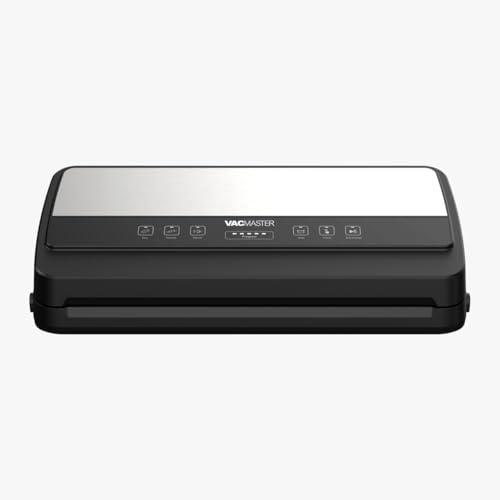
The verdict: the best vacuum sealer for wild game at a sane price is the VacMaster Sidekick— it is the cheapest machine in this guide that publishes a dual piston pump rather than leaving the pump design unstated, and its 12-inch seal bar takes a whole backstrap without cutting it to fit. That is the right machine for the hunter who processes one or two deer a year at home. The budget pick is the Weston Compact, which is the cheapest sealer here and, not coincidentally, the cheapest one that will tell you its actual vacuum pressure (23 in Hg). If you process a whole animal in a session, or more than one animal a year, skip both and buy the Weston Pro-2300: 1020 watts, a fan-cooled motor, and bags up to 15 inches wide.
The framing that makes this page different from a kitchen-appliance roundup: processing a deer is not the same job as sealing leftovers. It is two to four hours of near-continuous sealing, on meat that is wet, in bags that are wider than anything a kitchen uses. Every one of those three conditions attacks a different part of a vacuum sealer, and the spec sheets do tell you which machines are built for it — if you know which two numbers to look for, and you notice which brands do not print them.
The best vacuum sealers for wild game at a glance
| Sealer | Price & buy | Pump | Published power | Max bag width | Best for |
|---|---|---|---|---|---|
| VacMaster Sidekick | $89.99Buy | Dual piston | Not published | 12" seal bar | Best overall |
| Weston Compact | $85.45Buy | Not stated; 23" Hg published | 100 W | 11" | Budget pick |
| Weston Pro-2300 | $450.76Buy | Not stated; fan-cooled motor | 1020 W | 15" | A whole animal in one session |
| FoodSaver FM2100 | $89.99Buy | Not published | Not published | Not published | First sealer |
| FoodSaver V4400 | $234.99Buy | Not published | Not published | Not published | Mixed kitchen and game duty |
Prices shown are from Amazon as of November 8, 2026 and change often — the button always goes to the current listing. Some links may earn us a commission at no extra cost to you.
Read that table as an argument, not just a list. The two machines at the top are the two that tell you what is inside them. The two at the bottom are the two best-known names in the category, and between them they publish no pump type, no wattage and no bag width. That does not make them bad machines — the FM2100 is a fine first sealer — but it does mean you are buying on brand rather than on specification, and on a deer you want to be buying on specification.
The two specs that decide a deer season
Ignore suction claims, ignore the number of programmed modes, and ignore the marketing word “commercial.” Two things predict whether a sealer gets through a deer.
- 1. The pump, and whether the motor is cooled. A vacuum sealer fails from heat long before it fails from wear. Pull a vacuum, seal, repeat for ninety minutes and the motor heats, the thermal cut-out trips, and you stand in your kitchen with a half-cut deer waiting for an appliance to cool down. Two published specifications tell you a maker designed against that: a piston pump(the Sidekick’s dual piston arrangement) and a fan-cooled motor (the Pro-2300). A piston pump is a mechanical pump with no diaphragm to fatigue; fan cooling is the maker saying out loud that long sessions were the design case. Where neither is stated, assume neither.
- 2. Bag width, against the cut you actually make. This is the spec hunters discover too late. A whole venison backstrap is long, and the useful question is how wide a bag the machine will seal: the Weston Compact tops out at 11 inches, the Sidekick’s seal bar is 12 inches, and the Pro-2300 takes 15 inches. Four inches sounds trivial until it is the difference between bagging a loin whole and cutting it into two shorter pieces you did not want. FoodSaver publishes no maximum bag width for either machine here, so size your cuts to the bags you can buy rather than the other way round.
What the makers will not publish
We went looking for a duty cycleon every machine in this guide — the one number that would answer “how many bags in a row before it needs to rest” — and we did not find it on a single one. Not Weston, not VacMaster, not FoodSaver. That is the honest state of this category, and it is why the proxy specs above matter: when nobody will tell you the duty cycle, a published piston pump and a published cooling fan are the best evidence available.
| Vacuum pressure (in Hg) | Published by Weston only: 23 in Hg on the Compact. Not published for the Sidekick, the Pro-2300, the FM2100 or the V4400. |
|---|---|
| Pump type | Published by VacMaster only: dual piston pump on the Sidekick. Weston states a fan-cooled motor on the Pro-2300 but not the pump design. FoodSaver publishes neither for either machine. |
| Duty cycle / bags per session | Not published by any maker in this guide. Treat any specific figure you see quoted on a forum as unverified. |
| Maximum bag width | Weston Compact 11 in; VacMaster Sidekick 12 in seal bar; Weston Pro-2300 15 in; Avid Armor USV20 11.5 in seal bar. Not published for either FoodSaver. |
| Seal bar width (the weld itself) | Published by Weston on the Pro-2300 only: an extra-wide 5 mm bar. A wider weld is the thing that holds on a bag with a trace of blood in the seal area, which is the normal condition on game. |
We have not assigned a rating, a test score or an award to any machine on this page, because we have not run a controlled processing test on them. What you are reading is published manufacturer specification, labelled as such, plus the reasoning about which specs matter on game — which is a different and more honest thing than a number we made up.
Wet meat is the real failure mode
Here is what actually goes wrong, and it is not the motor. Venison is wet. Freshly boned meat weeps, and a bar sealer works by sucking air out through the open mouth of the bag — so it sucks the liquid toward the seal too. Liquid in the seal area gives you a weld that looks fine and fails in the freezer three weeks later, which is where freezer burn comes from on game that was “vacuum sealed.” Enough liquid and it goes past the seal into the machine.
Three things fix this, in order of cost:
- Chill and drain the meat first. Free, and the single biggest improvement available. Cold meat weeps far less than warm meat. If you are boning an animal the same day you shot it, get the cuts cold in a cooler before you start bagging. Pat the seal area dry with a paper towel on every bag.
- Use the moist setting and the pulse control. The FM2100 carries a dry and moist food setting; the Weston Compact has a pulse function that lets you stop the vacuum by hand the instant liquid starts to move. Pulse is the more useful of the two because it puts you in charge of the one moment that matters.
- Buy a chamber sealer.The real fix, and the subject of its own section below — a chamber machine evacuates the air around the whole bag instead of pulling it through the mouth, so liquid has nowhere to travel.
Best overall: VacMaster Sidekick
Best for: the hunter who processes one or two deer a year at home and wants the most durable pump design available under $100.
The Sidekick is our pick because of one published word: piston. VacMaster specifies a dual piston pump, and in a category where almost nobody states the pump design at all, a maker naming a piston arrangement is telling you the machine was built to keep pulling through a long session rather than to seal a sandwich. That is the exact quality a deer asks for.
The rest of the specification is unusually complete for the price: a 12-inch seal bar— an inch wider than the Weston Compact, which is enough to matter on a loin — wet and dry food sealing, built-in roll storage and a bag cutter so you cut bags to the length of the cut instead of buying pre-made sizes, and an included hose for canisters and mason jars, which is how you handle jerky and dry goods without bags at all. It runs on standard 110 V.
The honest cuts: VacMaster publishes no wattage, no vacuum pressure in Hg, and no duty cycle for it, so the piston pump is evidence of intent rather than a performance number. And 12 inches is still a countertop seal bar — if you bag whole hindquarter roasts or process more than a couple of animals a season, the Pro-2300 is the honest answer and this machine is not.
Budget pick: Weston Compact Vacuum Sealer
Best for: the hunter sealing the cuts from one deer, on a budget, who wants a published number rather than a brand promise.
This is the cheapest machine in the guide, and it is a better budget pick than its price suggests for one reason: Weston publishes 23 in Hg of vacuum pressure on it. That is the actual performance specification for a vacuum sealer, and it is the only one in this guide you can read before you buy. Everything else in this price bracket asks you to take suction on faith.
It takes bags up to 11 inches wide, draws 100 watts, and carries two features that earn their place on game: corner guides for easy bag alignment, which stops the crooked-bag seal failure that wastes a bag and a cut, and a pulse function, which is the control you want when liquid starts creeping toward the seal. For a hunter working through one animal in an evening, that is a complete enough machine.
The honest cuts: 100 watts is a countertop motor, Weston does not publish a duty cycle, and 11 inches is the narrowest bag width on this page — plan your cuts around it. Weston states the vacuum pressure but not the pump design, so unlike the Sidekick there is no published evidence about what is doing the pulling.
Best for a whole animal: Weston Pro-2300
Best for: anyone who processes a whole animal in a session, more than one animal a year, or shares a machine across a hunting camp.
The Pro-2300 is the machine to buy when the countertop sealers have already annoyed you. It is specified at 1020 watts with a fan-cooled motor— the clearest published statement in this guide that continuous running was the design case — in a stainless steel body, taking bags up to 15 inches wide across an extra-wide 5 mm seal bar (model 65-0220-W).
Those last two numbers are the real argument, not the wattage. Fifteen inches means you bag the cut you made rather than the cut the machine allows. And a 5 mm weld is materially more tolerant of a trace of moisture in the seal area than a narrow one — which, on game, is not an edge case, it is every bag. For a hunter who fills a freezer every autumn, this is the machine where the cost-per-bag-that-holds argument actually works out.
The honest cuts: it costs several times the Sidekick, it is a bench appliance rather than a countertop one and wants dedicated space, and Weston still publishes no duty cycle or vacuum pressure for it. Buy it on throughput and bag width, which are real, rather than on the implication that 1020 watts pulls a harder vacuum than 100 — nobody has published the figures that would let you make that comparison.
Best first sealer: FoodSaver FM2100
Best for: the hunter buying a first vacuum sealer, who will use it for groceries the other eleven months of the year.
The FM2100 is the sensible entry point, and the reason is the bag handling rather than the vacuum. It has one-touch sealing, a dry and moist food setting— the moist setting is the one you will use on venison — built-in roll storage and a cutter, an accessory port with a hose for canisters and jars, and starter bags and a roll in the box, so it works the day it arrives. For someone whose honest alternative is freezer paper, this is a large upgrade for not much money, and it is also a genuinely useful kitchen appliance for sous vide and bulk groceries.
The honest cuts, and they are the reason it is not our top pick: FoodSaver publishes no pump type, no wattage, no vacuum pressure and no maximum bag width for it. You are buying a known brand and a well-thought-out user experience, not a specified machine. On one deer a year with the meat chilled first and the pulse of a careful operator, that is fine. On a whole elk, it is a gamble on a number nobody will print.
Best mixed-duty: FoodSaver V4400
Best for: the household that wants one machine for game and for everyday kitchen use, and will pay for the convenience features.
The V4400 is the 2-in-1step up in FoodSaver’s line, and its headline feature is automatic vacuum sealer bag detection— the machine recognises the bag and runs the cycle without you selecting a mode. It ships as a starter kit. In a kitchen where several people use the sealer and nobody reads the panel, that removes the most common operator error, which is a real benefit rather than a gimmick.
The honest assessment for a hunter, though: the features you are paying the step-up for are convenience features, not durabilityfeatures. FoodSaver publishes no pump type, no wattage, no vacuum pressure and no bag width for the V4400 either — so against the Sidekick at a fraction of the price, you are trading a published piston pump and a published 12-inch seal bar for automatic bag detection. If the machine’s main job is groceries and its side job is one deer, that trade can be the right one. If it is the other way round, buy the Sidekick or the Pro-2300.
When to buy a chamber sealer instead
Every machine above is a bar sealer: the bag sticks out of the machine and the air is pulled out through its mouth. A chamber sealer puts the whole bag inside a sealed chamber and evacuates the air around it, then welds the bag while everything is at the same pressure. The practical difference is the one that matters on game: liquid has nowhere to travel, because there is no pressure difference pulling it toward the seal.
The Avid Armor USV20 is the compact chamber machine to look at. It is specified with a 4 L chamber and an 11.5-inch seal bar, and Avid Armor states plainly what the design is for: sealing soups, sauces and marinades— in other words, wet contents that a bar sealer cannot handle.
Bags are the running cost, and the usual mistake
The machine is the one-time cost; bags are the annual one, and this is where hunters overspend. Three things worth knowing before your first season:
- Buy rolls, not pre-cut bags.A roll plus the machine’s built-in cutter — the Sidekick and the FM2100 both have one — lets you make a bag the length of the cut. Pre-cut bags mean you either waste film on small cuts or cannot fit the big ones.
- Bar sealers need embossed or channelled bags.A smooth bag cannot be evacuated by a bar sealer, because the machine needs a channel for the air to leave through. Chamber machines use smooth bags, which are cheaper — part of the long-run economics of a chamber machine, and a reason not to buy bags before you choose a machine.
- Label before you seal, not after. Write the cut and the date on the film with a marker before the bag goes in. A year later every vacuum-sealed dark red brick in a chest freezer looks identical, and the cut you want is always at the bottom.
And the obvious one: a sealer is the last step of a chain. If the meat was not cooled fast, cut clean and trimmed of silverskin and fat, no machine saves it. Our field dressing guide covers getting the animal cooled, the field dressing kit guide covers the tools, and the meat grinder guide covers what to do with everything that is not a steak.
The bottom line
Buy the VacMaster Sidekick for one or two deer a year: it is the cheapest machine here that publishes a dual piston pump, and its 12-inch bar takes a backstrap whole. Buy the Weston Compact if you want to spend as little as possible and still have a published vacuum figure and a pulse control to fight liquid with. Buy the Weston Pro-2300if you fill a freezer every year — 1020 watts, fan-cooled, 15-inch bags and a 5 mm weld is a different class of machine and the only one here specified for continuous work. Buy the FoodSaver FM2100 as a first sealer that will also earn its counter space on groceries, and the V4400 only if automatic bag detection is worth more to your household than a published pump.
Whichever you buy, do the free thing first: get the meat cold before you bag it, and dry the seal area on every bag. That costs nothing and it prevents more failed seals than any upgrade on this page.
Frequently asked questions
What is the best vacuum sealer for deer processing?
For most hunters processing one or two deer a year, the VacMaster Sidekick. It is the cheapest machine we found that publishes a dual piston pump - a design built to keep pulling through a long session rather than seal a sandwich - and its 12-inch seal bar is wide enough to bag a backstrap whole. The Weston Compact is the budget choice and the cheapest machine that publishes its vacuum pressure (23 in Hg). If you process a whole animal in one session or more than one animal a year, buy the Weston Pro-2300 instead: 1020 watts, a fan-cooled motor, bags up to 15 inches wide and an extra-wide 5 mm seal bar.
Can a regular FoodSaver handle a whole deer?
It can seal the bags, but you are buying on brand rather than specification. FoodSaver publishes no pump type, no wattage, no vacuum pressure and no maximum bag width for either the FM2100 or the V4400, and no maker in this category publishes a duty cycle. With the meat chilled first, the seal area dried on every bag and the moist setting used, an FM2100 will get a hunter through a deer. For a whole elk, or for several animals a season, the published fan-cooled motor and 15-inch bag width on the Weston Pro-2300 is the honest answer.
Why do my vacuum-sealed venison bags fail in the freezer?
Almost always liquid in the seal. Venison weeps, and a bar sealer pulls air out through the open mouth of the bag, which drags liquid toward the weld. The result is a seal that looks fine and loses its vacuum weeks later, which is where freezer burn on 'vacuum sealed' game comes from. Three fixes, cheapest first: chill and drain the meat before you bag it, dry the seal area with a paper towel on every bag, and use a pulse control to stop the vacuum by hand the moment liquid starts to move. The permanent fix is a chamber sealer, which evacuates the air around the whole bag so liquid has nowhere to travel.
Do I need a chamber vacuum sealer for wild game?
Only if you bag wet. A chamber machine such as the Avid Armor USV20 is the right tool for marinated cuts, stock and stews made from bones and trim, brined birds and fish, because there is no pressure difference pulling liquid into the seal. It also uses cheaper smooth bags rather than the embossed bags a bar sealer requires. The trade-off is real though: a 4 L chamber will only seal what physically fits inside it, so a cut longer than the chamber cannot be sealed at all. For dry-ish cuts off one or two deer, a wide bar sealer is the more flexible machine.
What size vacuum sealer bags do I need for venison?
Wider than you think, and that is why maximum bag width is the spec to check. The Weston Compact tops out at 11 inches, the VacMaster Sidekick has a 12-inch seal bar, and the Weston Pro-2300 takes 15 inches. A whole backstrap is long, so a narrow machine forces you to cut loins into shorter pieces to fit the bag. Buy rolls rather than pre-cut bags and use the machine's built-in cutter so you can make a bag the length of the cut. Note that bar sealers require embossed or channelled bags - a smooth bag cannot be evacuated by one.
How many bags can a vacuum sealer do in a row?
No maker in this guide publishes a duty cycle, so there is no honest number to quote - treat any specific figure you see on a forum as unverified. What you can shop on are the two published proxies for continuous running: a piston pump (VacMaster states a dual piston pump on the Sidekick) and a fan-cooled motor (Weston states one on the Pro-2300). Where a maker states neither, assume the machine is designed for intermittent kitchen use, and expect to pause when the motor's thermal cut-out trips.
Sources
- VacMaster Sidekick - published listing specification (dual piston pump, 12 in seal bar, 110V)
- Weston Compact (65-2061-W) - published listing specification (23 in Hg, 100 W, 11 in bags)
- Weston Pro-2300 (65-0220-W) - published listing specification (1020 W, fan-cooled, 15 in bags, 5 mm bar)
- FoodSaver FM2100 - published listing specification
- FoodSaver V4400 - published listing specification
- Avid Armor USV20 - published listing specification (4 L chamber, 11.5 in seal bar)
Keep reading
Gearing up before your next hunt?
See how we evaluate gear, then dig into the reviews and buying guides — written without inventory to sell.