Alternatives Guide
FoodSaver Alternatives
FoodSaver is the machine most people own and the one that struggles most with the job hunters ask of it: hours of continuous sealing on wet meat in wide bags. The reason is not mysterious - it is that FoodSaver publishes almost nothing about the pump, the pressure or the bag width, and every alternative here publishes at least one of the three.
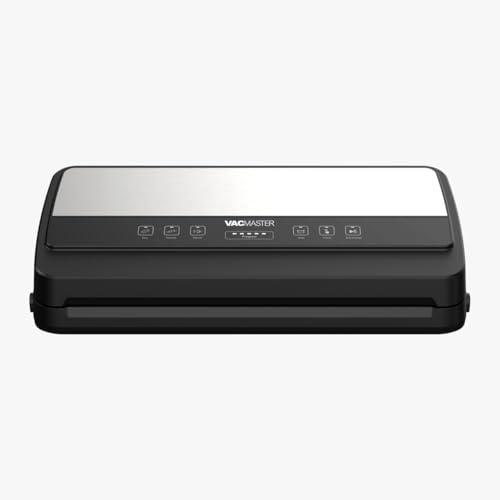
The verdict: the best FoodSaver alternative for wild game is the VacMaster Sidekick— it costs about what the FoodSaver FM2100 costs and publishes a dual piston pump, which is the design that survives repeated duty cycles rather than a handful of bags. It is for the hunter who processes a deer or two a year at home and wants the machine to still be working at bag forty. The budget pick is the Weston Compact: the cheapest machine here, and it still publishes a 23 inches of mercury vacuum figure and a 100-wattrating — two numbers FoodSaver states for neither of its machines.
The reason this page exists rather than a general sealer roundup: FoodSaver publishes no pump type, no wattage, no vacuum pressure and no bag width for either the FM2100 or the V4400. Those four numbers are precisely the ones that decide whether a machine can handle wet venison in wide bags for three hours straight. Every alternative below publishes at least one of them, and that is the whole basis on which this page ranks them.
Why hunters look past FoodSaver
FoodSaver is a kitchen appliance that hunters press into service as a processing tool, and the mismatch shows up in three predictable ways:
- Duty cycle. A deer is two to four hours of continuous sealing. A machine designed around sealing six bags of leftovers heats up, and a hot seal bar makes poor seals. No maker in this category publishes a duty cycle— not FoodSaver, not Weston, not VacMaster — so the only proxy available is the pump design and whether the motor is cooled.
- Wet meat. Game goes into the bag damp. Liquid drawn into the seal area is the single commonest cause of a failed seal, and it is the real failure mode in game processing rather than anything to do with the motor.
- Bag width. Backstraps, roasts and whole loins want wide bags. The seal bar length sets your maximum bag width, and FoodSaver does not state it for either machine. Weston publishes 11 inches on the Compact and 15 inches on the Pro-2300; VacMaster publishes a 12-inch seal bar.
What FoodSaver does and does not publish
We are being specific here rather than vague, because the gap is the argument. Across both FoodSaver machines in this comparison:
| What the FM2100 publishes | One-touch sealing, roll storage and a cutter, a dry and moist food setting, suitability for sous vide, an accessory port and hose, and starter bags and a roll in the box. All real features, all about convenience. |
|---|---|
| What the V4400 publishes | A 2-in-1 design, automatic vacuum sealer bag detection, and a starter kit. Again, convenience features - and bag detection is a genuinely useful one for a kitchen. |
| What neither publishes | No pump type. No wattage. No vacuum pressure in inches of mercury. No seal bar length or maximum bag width. No duty cycle. Those are the five figures that tell you whether a machine can process an animal, and FoodSaver states none of them on either listing. |
The alternatives at a glance
| Machine | Price & buy | Pump / power | Vacuum | Bag width | Beats FoodSaver on |
|---|---|---|---|---|---|
| VacMaster Sidekick | $89.99Buy | Dual piston pump | Not published | 12-inch seal bar | Published pump design at the same price |
| Weston Compact | $85.45Buy | 100 watts | 23 in Hg | Up to 11 inches | Published pressure, for less money |
| Weston Pro-2300 | $374.95Buy | 1020 watts, fan-cooled motor | Not published | Up to 15 inches | Bag width, power, stainless build |
| Avid Armor USV20 (chamber) | $319.00Buy | Chamber design, 4L chamber | Not published | 11.5-inch sealer | Sealing liquids at all |
Prices shown are from Amazon as of November 21, 2026 and change often — the button always goes to the current listing. Some links may earn us a commission at no extra cost to you.
The three specs that decide a game sealer
| Pump design, not wattage | A piston pump is a mechanical pump built to run repeatedly; the diaphragm pumps common in kitchen machines are cheaper and less tolerant of continuous use. VacMaster publishes a dual piston pump, which is the clearest statement of intent on this page. Wattage tells you how much electricity the machine draws, which is a proxy for capability rather than a measure of it. |
|---|---|
| Vacuum pressure in inches of mercury | This is the actual measure of how much air the machine removes, and Weston is the only maker here that publishes it: 23 in Hg on the Compact. More vacuum means less residual oxygen, which is what freezer burn comes from. It is the single most useful number in the category and almost nobody states it. |
| Seal bar length | Sets your maximum bag width and therefore what cuts you can package whole. Weston publishes 11 inches on the Compact and 15 inches on the Pro-2300; VacMaster publishes a 12-inch bar; Avid Armor publishes 11.5 inches. If you want to bag a whole backstrap rather than cut it down, this is the number to shop on. |
| And what nobody publishes: a duty cycle | Not one maker in this category states how long the machine can run continuously or how long it must rest. That is the most important unknown in game processing, and the only available proxies are the pump design and whether the motor is cooled - which is why the Pro-2300's published fan-cooled motor matters more than its wattage. |
Best overall: VacMaster Sidekick
Best for: the hunter who processes one or two deer a year at home and wants a machine that lasts the session.
This is the straight swap for a FoodSaver FM2100, at essentially the same money, and it wins on the one specification that matters most. VacMaster publishes a dual piston pump, a 12-inch seal bar, built-in roll storage and a bag cutter, wet and dry food sealing, and a hose for canisters and mason jars.
Piston pumps are the design that tolerates repeated cycles, which is exactly the demand a deer makes. The 12-inch bar is wider than the Weston Compact’s 11 inches, and the built-in roll storage with a cutter is the convenience feature that actually saves time when you are cutting forty bags to length rather than six.
Honest cons: VacMaster publishes a pump designbut no vacuum pressure, no wattage and no duty cycle — so it beats FoodSaver on disclosure without being fully transparent itself. It is a benchtop machine with a real footprint, which matters in a small kitchen. And a piston pump is a mechanical assembly: more capable than a diaphragm, and more to go wrong eventually.
Budget pick: Weston Compact Vacuum Sealer
Best for: the cheapest way to get a published vacuum figure, and the best machine for a small counter.
The Weston Compact is the least expensive machine on this page and the only one that publishes the category’s most useful number. Weston states a powerful 23 inches of mercury pump, 100 watts, bags up to 11 inches wide, corner guides for easy alignment, and intuitive controls with a pulse function.
Two of those are more useful than they look. Pulse is the feature that handles wet meat: it lets you draw vacuum in bursts and stop before liquid reaches the seal bar, which is the real failure mode in game processing. And corner guides sound trivial until you are aligning your thirtieth bag with cold, wet hands.
Honest cons:100 watts is the lowest power figure here by a very wide margin, and eleven-inch bags are the narrowest — a whole backstrap may need cutting down. There is no published duty cycle and no fan-cooled motor, so on a long session this is the machine most likely to need rest breaks. Treat it as a machine for packaging a deer over an evening, not for processing several animals back to back.
Best for a whole deer: Weston Pro-2300
Best for: processing whole animals, several a season, without stopping to let the machine cool.
This is the machine if you butcher at home seriously. Weston publishes an extra-wide 5mm seal bar taking bags up to 15 inches wide, 1020 watts, a fan-cooled motor, and stainless steel construction.
The fan-cooled motor is the specification that matters and the reason this machine is on the page. Since nobody publishes a duty cycle, active cooling is the closest thing to a published answer to the question hunters actually have: can it keep going? A 5mm seal bar also lays down a wider weld than a standard bar, which is what you want on a bag of wet meat going into a chest freezer for a year. Fifteen-inch bags take a whole backstrap without cutting.
Honest cons: it is comfortably the most expensive machine here, several times the price of the budget pick, and that is a lot of money for someone who seals one deer a year. Weston publishes the wattage and the cooling but still no vacuum pressure figurefor this model, where it does for the Compact — an odd gap on the dearer machine. It is also large and heavy, so it needs dedicated bench space rather than a cupboard.
Best for wet foods: Avid Armor USV20 chamber sealer
Best for:anyone who wants to seal liquids — marinades, stocks, soups — which no suction machine on this page can do.
The USV20 is a different kind of machine and the only one here that solves the liquid problem properly. Avid Armor publishes a chamber vacuum sealer with a compact 4-liter chamber and an 11.5-inch sealer, designed to seal soups, sauces and marinades.
The difference is mechanical rather than a matter of degree. A suction machine pulls air out of a bag through its open mouth, so liquid travels toward the seal bar — which is why every suction sealer struggles with wet contents and why the pulse function exists. A chamber machine evacuates the whole chamber around the bag, so there is no airflow dragging liquid anywhere. For marinated game, stock from bones, or a wet brine, it is the only route that works without freezing the contents first.
Honest cons:it is expensive, and if you only ever bag dry-ish cuts of meat you are paying several hundred dollars for a capability you will not use — buy the Sidekick. A 4-liter chamber is genuinely compact, which limits what fits inside it. Avid Armor publishes neither a vacuum pressure nor a duty cycle. And chamber machines use smooth chamber pouches rather than the embossed rolls everything else here takes, so your bag supply changes.
When FoodSaver is still the right buy
Three cases where we would not switch, because an alternatives page that recommends switching in every case is not an honest one:
- You already own one and seal one deer a year. A working FM2100 packaging a single animal over an evening, with rest breaks, is a solved problem. Buy bags, not a machine.
- You want bag detection and one-touch operation. The V4400’s automatic bag detection is a genuine convenience feature that none of the alternatives here publishes. If the machine lives in a kitchen and is used mostly for food storage, that is worth more than a pump specification.
- Your budget is the constraint and the FM2100 is on offer. It appears on our own wild game sealer guide for a reason. The honest ranking is: a FoodSaver you own beats a better machine you did not buy.
The bottom line
Buy the VacMaster Sidekickif you are replacing a FoodSaver and want the best machine at the same money — a published piston pump and a 12-inch bar is a real upgrade for no extra cost. Take the Weston Compact if price is the constraint and you value the published 23 in Hg figure and the pulse function. Buy the Weston Pro-2300 if you process whole animals and need the fan-cooled motor and 15-inch bags. Add the Avid Armor USV20 only if you genuinely need to seal liquids.
And remember what actually spoils game: oxygen and time. Sealing is the last step of a chain that starts in the field — our field dressing guide, hunting cooler guide and meat grinder guide cover the steps before it, and the full wild game sealer roundup compares every machine on this page against the FoodSavers in one place.
Frequently asked questions
What is the best alternative to a FoodSaver?
The VacMaster Sidekick, for wild game. It sits at essentially the same price as the FoodSaver FM2100 and publishes a dual piston pump - the design that tolerates repeated duty cycles, which is what processing a deer demands. It also publishes a 12-inch seal bar, built-in roll storage with a bag cutter, wet and dry sealing and a hose for canisters. The Weston Compact is the budget alternative and publishes a 23 inches of mercury vacuum figure, which FoodSaver states for neither of its machines.
Why do FoodSaver sealers struggle with deer meat?
Because a deer is two to four hours of continuous sealing on wet meat in wide bags, and a kitchen sealer is designed around a handful of bags of leftovers. Three things go wrong: the machine heats up and a hot seal bar makes poor seals; liquid from damp game gets drawn toward the seal area and ruins the weld; and a short seal bar limits how wide a bag you can use. FoodSaver publishes no pump type, wattage, vacuum pressure, bag width or duty cycle for either the FM2100 or the V4400, which makes it impossible to judge any of the three in advance.
What vacuum pressure do you need for sealing meat?
More is better, because residual oxygen is what causes freezer burn - and the frustrating part is that almost nobody publishes the figure. Weston is the exception here, stating 23 inches of mercury on its Compact machine. VacMaster, Avid Armor and FoodSaver publish no pressure figure at all on the listings in this comparison. In the absence of a number, the available proxies are the pump design (a piston pump over a diaphragm) and whether the motor is cooled, which is why those two features drive the ranking on this page.
Is a chamber vacuum sealer worth it for wild game?
Only if you seal liquids. A suction machine pulls air out through the open mouth of the bag, so any liquid travels toward the seal bar - which is why wet contents are the commonest cause of a failed seal and why pulse functions exist. A chamber machine like the Avid Armor USV20 evacuates the whole chamber around the bag, so nothing drags the liquid anywhere, and it will seal marinades, stock and brines that no suction sealer can handle. For dry-ish cuts of venison it is several hundred dollars of capability you will not use.
How wide a bag do you need for a deer?
Wide enough for a whole backstrap if you do not want to cut it down, and the seal bar length sets that limit. Weston publishes bags up to 11 inches on the Compact and up to 15 inches on the Pro-2300, VacMaster publishes a 12-inch seal bar, and Avid Armor an 11.5-inch sealer. FoodSaver does not publish a bag width for either machine in this comparison. If you butcher whole animals and want to package large cuts intact, buy on seal bar length first - it is the specification you cannot work around afterwards.
Should I keep my FoodSaver?
If it works and you seal one deer a year, yes - buy bags rather than a machine, and give it rest breaks through the session. The V4400's automatic bag detection is also a genuine convenience feature that none of the alternatives here publishes, so if the machine mostly lives in a kitchen that may matter more to you than a pump specification. The case for switching is specific: you process whole animals, several a season, or you need to seal liquids. Those are the jobs the alternatives on this page are built for.
Sources
- VacMaster Sidekick - published listing specification (dual piston pump, built-in roll storage and bag cutter, wet and dry sealing, hose for canisters and mason jars, 12-inch seal bar, 110V)
- Weston Compact Vacuum Sealer - published listing specification (23 in Hg pump, bags up to 11 inches wide, 100 watts, corner guides, pulse function)
- Weston Pro-2300 - published listing specification (extra-wide 5mm seal bar, bags up to 15 inches wide, 1020 watts, fan-cooled motor, stainless steel)
- Avid Armor USV20 Chamber Vacuum Sealer - published listing specification (chamber design, compact 4L chamber, 11.5-inch sealer, seals soups, sauces and marinades)
- FoodSaver FM2100 - published listing specification (one-touch sealing, roll storage and cutter, dry and moist setting, sous vide, accessory port and hose; no pump type, wattage, vacuum pressure or bag width published)
- FoodSaver V4400 - published listing specification (2-in-1, automatic bag detection, starter kit; no pump type, wattage, vacuum pressure or bag width published)
Keep reading
Gearing up before your next hunt?
See how we evaluate gear, then dig into the reviews and buying guides — written without inventory to sell.