Buying Guide
Best Hunting Face Masks
Your face is the brightest, most mobile thing about you, and covering it is the cheapest concealment upgrade in hunting. But a mask you keep pulling down is worse than no mask at all - because pulling it down is movement, and movement is what gets seen.
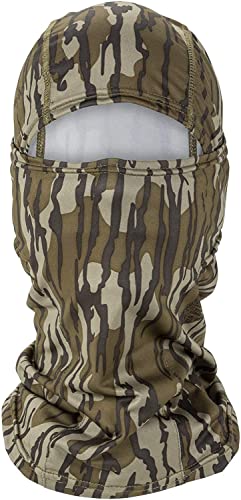
The verdict: the best hunting face mask is the North Mountain Gear Stretch Fit Balaclava — it publishes full face cover, a stretch fit, a breathable construction and a flexible hinge, which together address all three failure modes at once. It is for the hunter who sits still for hours in cool or cold weather and needs the mask to stay where it was put. The budget pick is the Hunters Specialties 3/4 Facemask: the cheapest mask here and the only one that publishes an adjustable nose piece, which is the single feature that stops a mask fogging a scope.
The reason this gets its own page rather than a line in our camo guide: a face mask is the highest-return concealment purchase in hunting and almost nobody chooses one deliberately. Your face is the brightest, most mobile thing about you, and it is the part an animal looks at. Covering it costs ten or twenty dollars. The only way to waste that money is to buy a mask you take off — which is why this page is organized around what makes a mask stay on.
The best hunting face masks at a glance
| Mask | Price & buy | Style | Published features | Season | Best for |
|---|---|---|---|---|---|
| North Mountain Gear Stretch Fit Balaclava | $21.99Buy | Full balaclava | Stretch fit, breathable, flexible hinge, full face cover | Cool to cold | Best overall |
| Hunters Specialties 3/4 Facemask | $9.97Buy | Three-quarter mask | Breathable mesh, adjustable nose piece | All seasons | Budget pick; wearing with optics |
| Sintege 3-Piece 3D Leafy Set | $20.99Buy | Three masks: 3D leafy, ghillie, full cover | Three colors, 3D full-cover headwear | Spring and early autumn | Trying styles; turkey hunting |
| CAMOTER Camo Mesh Balaclava | $9.99Buy | Mesh balaclava | Lightweight mesh, one size | Warm weather | Hot mornings; spring turkey |
Prices shown are from Amazon as of November 21, 2026 and change often — the button always goes to the current listing. Some links may earn us a commission at no extra cost to you.
The three things that decide whether a mask works
Everything else is a preference. These three decide whether you keep it on:
| It breathes well enough that you are not panting inside it | The commonest reason a mask comes off is heat, not discomfort. You walk in, you warm up, and the mask becomes unbearable within twenty minutes of sitting down. Mesh and thin knit both breathe; a fleece mask on a 55-degree morning does not. Match the fabric weight to the temperature you will be sitting in, not the temperature you set off in. |
|---|---|
| It does not fog your optic | Warm breath channelled upward off the bridge of your nose goes straight onto a scope, a red dot or your glasses. The fix is a nose piece that seals the top edge and directs breath down and out. The Hunters Specialties mask is the only one here that publishes an adjustable nose piece - and it is the cheapest mask on the page. |
| It stays put when you mount a gun or draw a bow | Bringing a stock to your cheek drags on a loose mask, which means an adjustment at the exact moment you cannot afford one. A stretch fit that grips the head, or a 3/4 mask that sits under a cap, both solve it. A loose leafy mask over a baggy hood is the configuration that moves most. |
Balaclava, 3/4 mask or leafy: which style to buy
The three styles on this page solve the same problem differently, and the right one depends on what else is on your head:
- A full balaclava covers the whole head and neck, which means complete concealment and some warmth. It is the right choice for cold-weather deer sits and the wrong one for a warm spring morning. It also works under a cap or a hood without a gap.
- A three-quarter mask covers the face and leaves the top of the head to your cap. This is the style most firearm hunters prefer: nothing bunches under a hat, the ears stay clear so you can hear, and the mask can be dropped below the chin without being removed. It is also the easiest style to wear with hearing protection.
- A 3D leafy mask breaks up the outline of your head rather than just hiding its color, which is why it is standard for turkey hunting, where a bird is looking at you from twenty yards in full daylight. The trade is bulk: leafy edges catch on brush, bowstrings and gun stocks.
If you hunt turkeys, read our turkey camo guide and what to wear turkey hunting— a turkey is a harder visual problem than a deer, and the mask matters more there than anywhere else.
The mask-and-glasses problem
If you wear glasses or shoot behind a scope, this is the deciding factor and most masks ignore it. Warm, damp breath escaping upward out of the top edge of a mask hits the nearest cold surface and condenses on it. That surface is your lens.
The mechanical fix is a nose piece: a shaped, adjustable strip along the top edge that you pinch to the bridge of your nose, sealing the gap and forcing breath downward and out to the sides instead. Of the four masks here, only the Hunters Specialties 3/4 Facemask publishes one, and it happens to be the cheapest mask on the page. If you have fought fogging before, buy that one first regardless of what else appeals.
Two habits also help with any mask: keep the mask below your chin on the walk in so you are not breathing into it while you are working, and pull it up once you are settled and cooled down. And if you run a diaphragm turkey call, check that the mouth opening of whatever you buy lines up with your mouth — a mask you have to lift to call is a mask you will stop wearing.
Best overall: North Mountain Gear Stretch Fit Balaclava
Best for: cool and cold-weather sits where you want complete coverage that stays where you put it.
This is the mask to buy for deer season, and it is the one we name in our ground blind hunting kit as the cheapest fix for blackout discipline. North Mountain Gear publishes a lightweight camo face mask in Mossy Oak Bottomland with full face cover, a stretch fit, a breathable construction and a flexible hinge.
The hinge is the feature worth paying for. A one-piece balaclava fights your jaw: open your mouth or turn your head and the whole thing shifts, usually downward off your nose. A hinged panel lets the lower face move independently, which is the difference between a mask that stays put through a four-hour sit and one you are forever adjusting. Bottomland is also the right pattern choice for a dark blind interior or bare late-season timber.
Honest cons: a full balaclava is too warm for a mild morning — buy the mesh balaclava for that. North Mountain Gear publishes no nose piece, so if you wear glasses the Hunters Specialties maskis the better first purchase. And it publishes no fabric composition and no weight, so “lightweight” and “breathable” are claims rather than figures — which is the category norm, and worth saying rather than glossing over.
Budget pick: Hunters Specialties 3/4 Facemask
Best for:anyone who wears glasses or shoots behind a scope — and anyone who wants the cheapest mask that solves a real problem.
The Hunters Specialties mask is the cheapest item on this page and the only one addressing the failure mode that ends most mask-wearing careers. Hunters Specialties publishes a breathable mesh three-quarter mask in Realtree Edge with an adjustable nose piece.
That nose piece is the whole argument. Pinch it to the bridge of your nose and breath goes down and out instead of up onto your lens, which is what makes a mask compatible with glasses, a scope or a red dot. The three-quarter cut is also the easiest style to live with for a firearm hunter: it sits under a cap without bunching, leaves your ears clear so you can hear an approach, and drops below the chin when you need a breather without coming off.
Honest cons:a three-quarter mask leaves the top of your head and your ears uncovered, so its concealment depends on your cap doing its share — it is not a standalone solution the way a balaclava is. Mesh offers essentially no warmth, so in real cold you want this under a hood or a balaclava instead. And Hunters Specialties publishes no fabric weight or composition, so judge breathability by the mesh you can see in the photos.
Best for finding your style: 3-piece 3D camo leafy set
Best for: turkey hunting, and anyone who has not yet worked out which mask style they will actually tolerate.
Face masks are genuinely personal, and no single style suits everyone — which is what makes a multi-piece set smart money rather than a compromise. Sintege publishes a three-piece set of 3D camo hunting face masks in three colors, including a camouflage leafy hat, a ghillie face covering and 3D full-cover headwear.
You find out which style you can wear for four hours without spending the price of three premium masks. And 3D leafy coverage is the right technology for spring turkey specifically: a bird at twenty yards in daylight is looking at the shape of your head, not just its color, and leafy edges break the outline in a way flat fabric cannot. It is the mask we name in our turkey camo guide as the best mask value.
Honest cons: budget masks vary in fabric quality, and in a three-pack you should expect one of the three to be the one you keep. The 3D leafy styles catch on brush, bowstrings and gun stocks, which is a real cost for a bowhunter in thick cover. And check that the mouth opening lines up if you run a diaphragm call. Sintege publishes colors and construction but no fabric detail or sizing.
Best for warm weather: CAMOTER camo mesh balaclava
Best for: warm mornings, spring turkey season, and early-season bow sits where heat is the enemy.
The CAMOTER is the most breathable option here and the cheapest way to keep your face covered when it is genuinely warm. The listing publishes a lightweight mesh camo balaclava, sold as a turkey hunting face cover in one size.
Mesh is the material that lets you sit through a 75-degree late-April morning without deciding that hiding your face is optional — which is the real alternative, and the reason this mask earns a place over a warmer, better-made one. A full balaclava cut in mesh also gives you the neck and head coverage a three-quarter mask does not, without the heat penalty.
Honest cons: mesh offers no warmth whatsoever, so it is a single-season mask rather than a year-round one. It snags easily, and cheap mesh stretches out after a season — at this price, treat it as a consumable rather than kit. There is no published nose piece, no fabric weight and no sizing beyond one size, and CAMOTER has no hunting track record to fall back on.
The other half of the job: your hands
A covered face and bare hands is half a solution. Hands are the second brightest and by far the most mobile thing about a hunter — they move every time you raise a bow, work a call or check a phone, and they move at the exact moments that matter.
A thin camo glove costs about what a face mask costs and completes the job. Our hunting glove guide covers the full range from lightweight early-season gloves to insulated winter mitts, and our early-season clothing guide covers how both fit into a warm-weather setup.
The bottom line
Buy the North Mountain Gear Stretch Fit Balaclavafor deer season — full coverage, a stretch fit and a flexible hinge is the combination that stays on. Buy the Hunters Specialties 3/4 Facemask first if you wear glasses or shoot behind a scope, because the adjustable nose piece is the only published answer to fogging on this page and it is the cheapest mask here. Buy the three-piece leafy set for turkey season or to find out what you can tolerate, and the mesh balaclava for genuinely warm mornings.
Most hunters should own two: a mesh mask for warm weather and something warmer for late season. Between them they cost less than a single box of broadheads, and they do more for your concealment than any camo pattern upgrade — which our camo patterns explainer and camo guide both make the case for in detail.
Frequently asked questions
What is the best hunting face mask?
The North Mountain Gear Stretch Fit Balaclava. It publishes full face cover, a stretch fit, a breathable construction and a flexible hinge - and the hinge is what matters, because it lets the lower face move with your jaw instead of dragging the mask down off your nose when you turn your head. The Hunters Specialties 3/4 Facemask is the budget pick and the better first buy if you wear glasses, because it is the only mask here with a published adjustable nose piece.
How do you stop a hunting face mask fogging your scope or glasses?
Buy a mask with an adjustable nose piece and pinch it to the bridge of your nose. That seals the top edge so warm breath goes down and out to the sides instead of upward onto the nearest cold lens. Of the masks here, only the Hunters Specialties 3/4 Facemask publishes one - and it is the cheapest mask on the page. Two habits help with any mask: keep it below your chin on the walk in so you are not breathing into it while you are working, and pull it up once you have settled and cooled down.
Is a balaclava or a 3/4 face mask better for hunting?
It depends on what else is on your head and how cold it is. A full balaclava gives complete head and neck coverage plus some warmth, which makes it right for cold deer sits and too hot for a mild spring morning. A three-quarter mask covers the face and leaves the top of the head to your cap, which is what most firearm hunters prefer - nothing bunches under a hat, your ears stay clear so you can hear an approach, and it drops below the chin without coming off. Many hunters own both.
Do you really need a face mask for deer hunting?
It is the cheapest concealment upgrade available, and the one most hunters skip. Your face is the brightest and most mobile part of you, and it is the part an animal looks at - a pale oval turning in a dark treeline is exactly what a deer's vision is built to detect. A mask costs around ten to twenty dollars against hundreds for a camo system. The only way to waste that money is to buy a mask you take off, which is why buying for the temperature you will sit in matters more than the pattern.
What face mask is best for turkey hunting?
A 3D leafy style, in warm-weather fabric. A turkey is a harder visual problem than a deer: it looks at you from twenty yards in full daylight, and what gives you away is the shape of your head as much as its color - which flat fabric cannot break up the way leafy edges can. A three-piece 3D set is sensible money for spring, because it lets you find the style you can sit in for four hours without buying three premium masks. Check that the mouth opening lines up if you run a diaphragm call.
What face mask should I wear in warm weather?
Mesh. A lightweight mesh balaclava is the most breathable option there is, and the practical alternative is not a better mask - it is deciding that covering your face is optional on a 75-degree morning. Mesh gives you no warmth at all, so treat it as a second mask for early season and spring rather than a year-round one, and expect cheap mesh to stretch out and snag after a season. At this price that is an acceptable trade.
Sources
- North Mountain Gear Stretch Fit Balaclava, Mossy Oak Bottomland - published listing specification (lightweight camo face mask, breathable, flexible hinge, full face cover, stretch fit)
- Hunters Specialties 3/4 Facemask, Realtree Edge - published listing specification (breathable mesh mask with adjustable nose piece)
- Sintege 3 Pcs 3D Camo Hunting Face Mask and Camo Leafy Hat Set - published listing specification (3 colors, ghillie face covering, 3D full-cover headwear)
- CAMOTER Camo Balaclava Mesh Face Mask - published listing specification (lightweight mesh turkey hunting face cover, one size)
Keep reading
Gearing up before your next hunt?
See how we evaluate gear, then dig into the reviews and buying guides — written without inventory to sell.