Buying Guide
The Best Hunting Gloves, and Why One Pair Is Never Enough
A glove warm enough for a January sit is too thick to shoot in, and a glove you can shoot in will not keep your hands working past ten in the morning. Buy both.
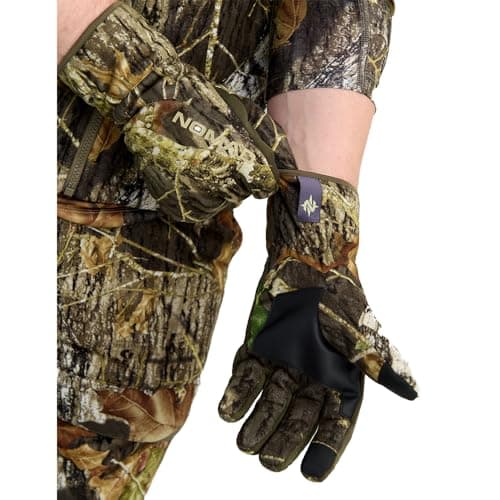
There is no single hunting glove that is both warm enough for a long cold sit and thin enough to shoot accurately in. The solution every experienced cold-weather hunter converges on is two gloves: a thin shooting liner you keep on, and a heavy over-mitt or muff you pull off in one motion when an animal appears.
Buying one glove and trying to split the difference produces a glove that is too warm to shoot in during October and too thin to sit in during December. Two cheap gloves beat one expensive one here.
The two-glove system
| The shooting glove | Thin enough to feel a trigger, a release aid or a crossbow safety. Fitted, quiet, and worn all day. This is the glove your shot depends on |
|---|---|
| The over-mitt or muff | Heavily insulated, worn over the shooting glove or clipped at your waist. It comes off in one motion - not fingers-first, which takes far too long |
| Why a mitten over a glove | Fingers share heat when they are together. A mitten is meaningfully warmer than a glove of the same insulation weight, and it is easier to strip off in a hurry |
| Where the heat pack goes | In the muff or mitt, not against your skin. It warms the air your hands return to rather than the hand you are shooting with |
What actually matters
- Trigger and release feel. The shooting glove is a precision item. If you cannot reliably find the safety or feel a release trigger through it, it is the wrong glove regardless of how warm it is.
- Fabric noise.Your hands are the closest thing to the animal when you raise a bow or a crossbow. A glove that rasps against a stock is as bad as a jacket that does — the same test from our bowhunting clothing guide applies.
- Waterproof versus breathable. Waterproof gloves keep rain out and sweat in. For a stationary sit that is the right trade; for a hard walk in it is not.
- Cuff length. A gauntlet cuff over a jacket sleeve keeps wind and snow out of the wrist gap, which is where cold gets in. A short cuff under a sleeve does not.
- Fit. Tight gloves restrict circulation and get colder, not warmer. Size for slight room, especially if you will wear a liner underneath.
Best shooting glove: Nomad VX3
Around $45 (verify current pricing) for a warm, water-resistant, quiet glove in a performance fit. The combination is the point: most gloves in this warmth range are bulky, and most gloves in this fit range are cold.
The quiet face fabric is what earns it a place for archery and crossbow hunters specifically. A glove is the last thing to touch a bow before the shot, and a noisy one gives you away at the worst possible instant.
Honest cons: the most expensive glove here, water-resistant rather than waterproof, and not warm enough on its own for a genuinely cold all-day sit. Pair it with a mitt.
Best over-mitt: BASSDASH insulated camo mittens
Around $33 (verify current pricing) for insulated, water-resistant camo mittens. This is the second half of the system, and the piece most hunters do not own.
A mitten beats a glove of identical insulation because your fingers share heat. Worn over a thin shooting glove and stripped off in one motion, it lets you sit through a January morning with hands that still work when a deer steps out.
Honest cons: you cannot do anything precise in mittens, which is the entire reason they come off. They are also bulky to stow — clip them to a harness or drop them in a jacket pocket rather than setting them down where they can fall from a stand.
Best lightweight: Mossy Oak camo gloves
Around $20 (verify current pricing) for thin camo gloves with no insulation to speak of. These are not cold-weather gloves and are not trying to be.
What they are for is concealment. In early archery season and in spring turkey woods the problem is not cold hands — it is that pale, moving hands are the most visible thing about a stationary hunter. A turkey in particular will pick out a bare wrist at forty yards, which is why our turkey hunting clothing guide treats gloves as mandatory rather than optional.
Honest cons: no warmth, and thin gloves wear through quickly at the fingertips.
Best waterproof: Carhartt Hunt insulated gauntlet
Around $31 (verify current pricing) for a waterproof, insulated glove with a gauntlet cuff. The cuff is the feature: it seals over your jacket sleeve and closes the wrist gap that lets wind and snow into an otherwise good system.
This is the right glove for waterfowl, wet late-season sits and anything involving handling cold wet gear — decoys, ropes, a waderstrap. Carhartt’s construction is genuinely durable, which matters on a glove that gets abused.
Honest cons: waterproof means it traps sweat on a long walk, and the insulation and cuff make it far too bulky to shoot in. This is an over-glove or a working glove, not a shooting glove.
Best budget mid-weight: Carhartt Hunt fleece
Around $19(verify current pricing) for a camo fleece glove. Quiet, warm for its thickness, and cheap enough to own two pairs — which you should, because gloves get wet and a dry spare in the pack ends more cold sits than any single warm glove.
Fleece is the quietest common glove material, which makes this a reasonable budget shooting glove in moderate cold as well as a mid layer under a mitt.
Honest cons: no water resistance at all, and fleece soaks quickly in wet snow.
Best waterproof value: BASSDASH insulated
Around $25(verify current pricing) for waterproof insulated camo gloves — most of what the Carhartt gauntlet offers at a lower price, without the long cuff.
A sensible pick for a hunter who wants one warm waterproof glove and pairs it with a cheap fleece liner underneath, which is a workable two-layer version of the two-glove system.
What to carry, by season and method
| Situation | Shooting layer | Warm layer | Notes |
|---|---|---|---|
| Early archery, warm | Thin camo glove | None | Concealment only. Bare hands are the giveaway |
| Spring turkey | Thin camo glove | None | Mandatory - a turkey picks out a bare wrist at 40 yards |
| Mid-season stand | Fleece or performance glove | Light mitt in the pack | Add the mitt once you are settled |
| Late-season stand | Thin performance glove | Insulated mitt or muff plus heat pack | Heat pack in the mitt, not against your hand |
| Waterfowl / wet work | Waterproof insulated gauntlet | Spare dry pair in a dry bag | Wet gloves are worse than no gloves |
| Western hiking | Light liner glove | Packable insulated glove | You will be too warm most of the day and freezing on the glassing knob |
Kings Camo also sells gloves across its camo lines if you are building a matched system — the five-layer approach is covered in our Kings XKG review.
The bottom line
Buy two gloves, not one. The Nomad VX3 is the best all-round shooting glove here and the BASSDASH insulated mittens are the cheapest way to complete the system. For early season and turkeys, the Mossy Oak lightweight pair costs less than a box of broadheads and solves a concealment problem no amount of camo on your torso fixes.
Then carry a dry spare. Wet gloves are the single fastest way to end a cold sit.
Frequently asked questions
What are the best gloves for hunting?
There is no single answer, because no glove is both warm enough for a long cold sit and thin enough to shoot accurately in. The right setup is two: a thin shooting glove you wear all day, and a heavily insulated mitt or muff you pull off in one motion when an animal appears. The Nomad VX3 is a strong shooting glove; an insulated camo mitten completes it.
Why are mittens warmer than gloves?
Because your fingers share heat when they are together rather than each being individually surrounded by cold air. A mitten is meaningfully warmer than a glove with the same insulation weight, and it is faster to strip off in a hurry - which is exactly what you need from an outer layer.
Do I need gloves for turkey hunting?
Yes. It is a concealment requirement rather than a warmth one. Turkeys have full color vision and excellent resolution, and pale moving hands are the most visible thing about a hunter sitting against a tree. Thin camo gloves cost about $20 and matter more than the pattern on your jacket.
Should hunting gloves be waterproof?
It depends on what you are doing. Waterproof gloves keep rain out and trap sweat in, which is the right trade for a stationary sit or for handling wet gear, and the wrong trade for a hard walk in. Carry a waterproof pair for wet work and a breathable pair for moving, and always keep a dry spare.
Where should I put a hand warmer?
In the muff or over-mitt, not against your skin inside the shooting glove. That way it warms the air your hands return to between periods of shooting, rather than being trapped against the hand you need to feel a trigger with. It also lasts longer without direct skin contact.
How should hunting gloves fit?
With slight room, not tight. Tight gloves restrict circulation and end up colder than looser ones with the same insulation. Size for whatever liner you intend to wear underneath, and check that you can still find your safety and feel a trigger or release with the glove on before you hunt in it.
Sources
Keep reading
Gearing up before your next hunt?
See how we evaluate gear, then dig into the reviews and buying guides — written without inventory to sell.