Buying Guide
The Best Early Season Hunting Clothes
Early season is not a lighter version of late season. The enemies are heat, sun, insects and your own sweat - and the gear that solves them is different gear entirely.
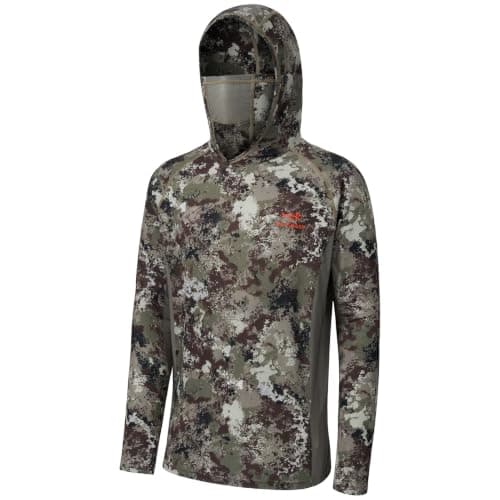
Early season hunting clothing solves four problems, and warmth is not one of them: heat, sun, insects, and the sweat you produce walking to a stand in 70-degree darkness. A lightweight version of your December kit is the wrong answer, because the December kit is designed around retaining heat you now need to shed.
Get early season right and you sit comfortably through a warm evening with your scent contained. Get it wrong and you are wet, bitten and back at the truck by six.
Early season is a different problem
| Early season | Late season | |
|---|---|---|
| Primary threat | Heat, sun, insects, sweat | Cold, wind, wet |
| Fabric priority | Breathability and fast drying | Insulation and wind blocking |
| Coverage | Full coverage for sun and insects, in light fabric | Full coverage for heat retention, in heavy fabric |
| Layer count | One or two | Three or four |
| Foliage | Green, dense, full canopy | Bare, gray and brown |
| What ends the sit | Mosquitoes and sweat | Cold hands and feet |
Note the coverage row. Both seasons want your arms and neck covered — for completely different reasons. That is why a lightweight long-sleeve beats a t-shirt in September even when it is warm.
What actually matters in September
| Breathability and drying speed | You will sweat on the walk in regardless. What matters is how fast the fabric moves that moisture and dries once you sit down. Synthetic and merino do; cotton does not |
|---|---|
| UPF sun protection | Genuinely useful on open western hunts and on afternoon sits facing west. A UPF-rated hoodie covers your arms and neck without the sweat penalty of sunscreen |
| Insect coverage | Full sleeves, a hood or neck gaiter, and a face covering. Mosquitoes and ticks end more early-season sits than any other factor |
| Green-dominant camo | Early-season woods still have full canopy and green understory. A late-season bare-branch pattern is visibly wrong in September |
| Quiet where it counts | Archery seasons open first almost everywhere, so early season is bow season. Fabric noise still matters even in a t-shirt-weight garment |
| Odor control | Warm still evenings carry scent badly and you are sweating more. This is the season where odor-adsorbing fabrics earn the most of their keep - which is not the same as earning all of it |
Best overall: BASSDASH UPF 50+ hunting hoodie
Around $30 (verify current pricing) for a long-sleeve camo hoodie with UPF 50+ sun protection and a built-in face mask. It is the single most useful early-season garment because it addresses three of the four problems at once.
The built-in mask is the detail that matters. Pulled up, it covers your face against both insects and a deer’s eyes; pulled down, it sits out of the way. That saves you carrying a separate head net and means you actually have it when the mosquitoes find you at last light.
Honest cons: the light synthetic face fabric is quieter than nylon but not as quiet as fleece, and a hood adds a little bulk near the string path for archers — see our bowhunting clothing guide for why that matters.
Best quiet shirt: ScentBlocker Fused Cotton
Around $25 for the long-sleeve version and $23for the short-sleeve (verify current pricing), in a lightweight fused-cotton construction with ScentBlocker’s odor-control treatment.
The reason to pick this over a pure synthetic is noise. Cotton-blend fabrics are quieter than most light synthetics, which matters on an early archery sit where the deer is at fifteen yards and the air is dead still.
Honest cons: cotton content means slower drying than a full synthetic, so this is the better choice for a short walk to a stand than for a long hot hike. Treat the odor-control claim as a margin, not as a substitute for hunting the right wind — our honest assessment of scent control clothing covers what these treatments do and do not do.
Best budget: Mossy Oak lightweight camo
Around $27 for the long-sleeve and $22for the four-way-stretch short-sleeve (verify current pricing). Mossy Oak’s lightweight line is the sensible answer for a hunter who needs two or three shirts rather than one.
Owning multiples matters more in early season than in any other. You will sweat through a shirt on a warm walk, and having a dry one in the pack to change into once you are settled is genuinely more effective than any odor-control treatment.
Honest cons: basic construction and no UPF rating on the standard versions. Check the specific listing if sun protection is what you are after.
Best full system: Kings XKG
If you want early-season pieces that will layer correctly with the rest of your season rather than being a standalone purchase, Kings’ XKG line covers the lightweight end of a designed system — and the same system carries you through to late season.
That is the argument for buying into a system: the early-season top is cut to sit under the mid-layer, which is cut to sit under the insulation. Pieces bought individually from four brands stack badly and add bulk in the same places.
Detail in our Kings XKG review and the value argument in Kings Camo vs Sitka.
The insect problem
- Full coverage first. Long sleeves, a hood or neck gaiter, and a face covering. Fabric is the most reliable barrier there is.
- Thin gloves. Hands are the most-bitten surface after your face. A pair of lightweight camo gloves at around $20 solves insects and concealment at the same time.
- Check for ticks properly. Early season overlaps peak tick activity in much of the country. Treat clothing with a permethrin product per label directions before the season, and do a full check after every hunt.
Sweat management and scent
Warm, still early-season evenings are the worst scent conditions of the year: thermals are unpredictable, air movement is minimal, and you have just walked in producing far more odor than you would in December.
Three things help more than any garment:
- Walk in slowly, in less clothing than feels right. The same discipline as our layering guide, applied to heat rather than cold.
- Change your shirt at the stand. Carry a dry one in a sealed bag. This is more effective than any odor-adsorbing fabric and costs almost nothing.
- Hunt the wind, always. Early season is when hunters are most tempted to rationalize a marginal wind because a stand is producing. It is also when scent carries most unpredictably.
Western early season is its own thing
September archery elk and high-country mule deer are early season by date and a completely different clothing problem by nature. You are hiking hard at altitude in strong sun, then sitting still and cold on a glassing knob, sometimes within the same hour.
- UPF matters much more. Sun at altitude in open country is punishing, and a hooded sun shirt is the standard western solution.
- Carry a packable insulating layer regardless of the forecast. Glassing at 10,000 feet at dawn is cold even in September.
- Boots become the critical item. See our mountain hunting boot guide— and the uninsulated versions, because insulated boots will cook you on a September climb.
- Pattern selection differs.Open western terrain rewards different camo from eastern timber — see best camo for elk hunting.
The bottom line
The BASSDASH UPF 50+ hoodie is the single most useful early-season garment because it handles sun, insects and concealment in one $30 piece. Add the ScentBlocker Fused Cotton long-sleeve if you hunt archery in dead-still eastern timber and want the quietest option, and buy two or three Mossy Oak lightweight shirts so you always have a dry one to change into.
Then spend the rest of your budget on thin gloves and a face covering. Those two items do more for an early-season sit than a more expensive shirt will.
Frequently asked questions
What should I wear early season hunting?
A lightweight long-sleeve camo top with sun and insect coverage, light camo pants, thin gloves and a face covering. The problems in September are heat, sun, insects and sweat rather than cold, so prioritize breathability and fast drying over insulation - and choose a green-dominant camo pattern to match full-canopy woods.
Why wear long sleeves hunting in warm weather?
Sun and insects. A UPF-rated long-sleeve covers your arms without the sweat penalty of sunscreen, and fabric is the most reliable mosquito and tick barrier there is. It also covers pale skin that would otherwise be the most visible thing about you to a deer at close range.
Do I need scent control clothing for early season?
It helps more in early season than at any other time, because warm still evenings carry scent unpredictably and you sweat far more on the walk in. But it is a margin rather than a solution. Carrying a dry shirt in a sealed bag to change into at the stand does more, and hunting the correct wind does more than both combined.
What camo pattern is best for early season?
A green-dominant pattern that matches full-canopy foliage. Late-season bare-branch patterns look obviously wrong against September greenery. In open western country the calculation differs again - lighter, more open terrain patterns work better than dense eastern timber patterns.
How do I keep mosquitoes off during early season hunts?
Full fabric coverage first - long sleeves, a hood or neck gaiter, a face covering and thin gloves. Fabric is the most reliable barrier and it solves concealment at the same time. Treat clothing with a permethrin product per label directions before the season, and do a full tick check after every hunt.
Is early season hunting clothing different for western hunts?
Substantially. Western September means hiking hard at altitude in strong sun, then sitting still and cold on a glassing knob. UPF sun protection matters much more, you need a packable insulating layer regardless of the forecast low, and boots become the critical item - uninsulated ones, because insulated boots will overheat you on the climb.
Sources
Keep reading
Gearing up before your next hunt?
See how we evaluate gear, then dig into the reviews and buying guides — written without inventory to sell.