Seasonal Guide
Spring Turkey Gear Guide: What to Buy, in the Order That Matters
You can kill a gobbler with a $19 pack of mouth calls and a shotgun that patterns. Everything after that is convenience - useful convenience, but worth buying in the right order.
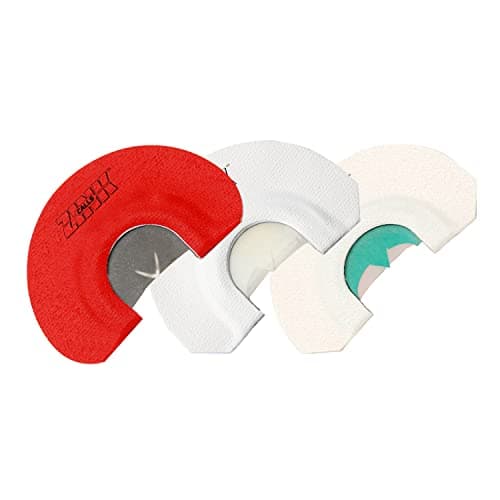
Turkey hunting has the widest gap between what you need and what gets sold of anything in the outdoor world. A hunter with a $19 three-pack of mouth calls, a shotgun that patterns tight, and head-to-toe camo will kill birds. A hunter with $2,000 of gear and no idea where the birds roost will not.
So this is a gear list in priority order, with an honest note on what each thing actually buys you. Prices are approximate mid-2026 street figures; the live price boxes are the number to trust.
The buying order that matters
| Priority | Item | Why | Rough spend |
|---|---|---|---|
| 1 | Calls (start with diaphragms) | The only piece of gear that brings the bird to you | $19-90 |
| 2 | A choke tube and a box of shells you have patterned | Determines whether the shot connects | $30 + shells |
| 3 | Full camo coverage: mask and gloves included | Turkeys see color and detail far better than deer | $60-150 |
| 4 | A vest with a padded seat | Lets you sit out a stubborn gobbler and carry calls silently | $60-200 |
| 5 | Decoys | Powerful in open country, a liability on pressured public land | $45-80 each |
| 6 | A ground blind | Essential for bowhunters and kids, optional otherwise | $83-490 |
| 7 | Everything else | Boot dryers, thermal seats, fancy strikers, gadget calls | Whatever you like |
Calls: start here
Buy calls in three families, because each one does something the others cannot, and none of them is expensive relative to what it accomplishes.
Our guide to the best turkey calls goes deeper on the three families — which reed cuts a beginner can actually run, what slate, crystal and aluminum surfaces sound like, and which calls stop working in rain.
Diaphragm (mouth) callsare the highest-value purchase in turkey hunting. They are hands-free — which is the entire point, because a bird at 40 yards means you cannot move your hands — and a three-pack costs about $19. Zink’s Triple Pak is a sensible starter set with different cuts so you can find which one your mouth actually works with.
Honest cons: there is a real learning curve, and the first week sounds bad. Start in the truck in February, not on opening morning. Latex ages, so replace them each season and keep them refrigerated in the off-season.
A pot (slate) callis the one that will call in a bird when the mouth call will not, because it produces a different tone and volume family. Woodhaven’s Cherry Classic slate at around $90 (verify current pricing) is a genuinely good custom-shop call rather than a mass-market one, and the difference in tone control is audible.
Honest cons: it requires both hands, which means using it only when the bird cannot see you. Slate surfaces need conditioning with a scuff pad, and moisture kills them — keep it dry or it simply will not sound.
A box call is the loudest tool you own and the one for locating birds at distance and cutting through wind. The Primos Hook-Up magnetic box call at around $106 (verify current pricing) uses a magnet to hold the paddle in position, which addresses the box call’s classic problem: it goes off in your vest when you do not want it to.
Honest cons: it is the most expensive call here, it is bulky, and it needs chalk and dry weather. A $40 box call kills turkeys too — you are paying for the magnet and the tone.
The choke and the pattern board
This is the second-highest-value purchase and the one most hunters never make. A turkey’s vital target is a head and neck the size of a fist. A factory modified choke throws a pattern that is adequate at 25 yards and marginal at 40; a dedicated turkey choke tightens that dramatically.
The H.S. Strut Undertaker Pro at around $30(verify current pricing) is the long-standing value answer — it has been in turkey vests for decades because it works and costs less than a box of premium shells.
But the choke is only half of it. You have to pattern the gun. Shoot your actual choke-and-shell combination at a turkey head target at 20, 30 and 40 yards, count the hits in the kill zone, and find out where your gun actually shoots. Two things come out of that:
- Your real maximum range, which is often shorter than you assumed and occasionally longer.
- Whether your gun shoots where you aim, which with a bead sight and a cheek-weld you only use once a year is a genuine question. Many turkey hunters discover a six-inch offset at 30 yards this way.
Honest cons on the choke: shell and choke combinations are idiosyncratic, and the expensive tungsten-alloy loads that pattern spectacularly cost several dollars per shot. Pattern before you commit to a case of anything.
Decoys: powerful and situational
Decoys are the most situational item in turkey hunting. In open country — fields, pastures, food plots — a decoy spread gives a gobbler something to commit to and can pull a hung-up bird the last 80 yards. In thick timber where he cannot see it until he is already in range, it does very little.
Primos Photoform Jake (around $46, verify current pricing) is the aggression play. A jake decoy provokes a territorial response from a dominant gobbler, and it is often the piece that converts a bird that answers but will not commit.
Avian-X LCD Breeder Hen (around $53, verify current pricing) is the realism play. Avian-X built its reputation on posture and paint quality, and the breeding-hen posture is the one that pairs with a jake for the classic two-decoy setup.
Honest cons, and they are real:
- On pressured public land, decoys can hurt you. Birds that have been shot at over a spread get educated fast, and a decoy in the wrong place makes a gobbler hang up out of range rather than come in.
- Safety.Carrying a decoy that looks like a turkey through the woods, in the dark, during turkey season is a genuine hazard. Cover it going in and out — never carry an uncovered decoy.
- Decoys are bulky, they take time to set, and a hunter who arrives late because he was staking decoys has already lost the morning.
The vest and the seat
The turkey vest is the piece that converts a pile of gear into a system: calls where your hand can find them without looking, shells within reach, and — the part that actually matters — a padded seat.
Turkey hunting is frequently won by the hunter willing to sit an extra 45 minutes on a bird that went quiet. Whether you can do that is a function of what you are sitting on. A vest with a real padded seat, or a kickstand frame that supports your back, is worth more birds than any call in this guide.
We cover the options at every price in our best turkey vests guide. The features that matter: a genuine seat, silent closures rather than noisy zippers, and pockets sized for the calls you actually run.
Camo and coverage
Turkeys have full color vision, visual acuity commonly described as roughly three times sharper than human 20/20, and near-360-degree awareness. That makes them a harder visual problem than deer in every respect except one — their sense of smell is poor, so you can ignore the entire scent-control industry for spring.
The rules, in short:
- Cover everything. Face mask and gloves are requirements, not accessories. Your face and hands are the palest, most mobile things about you.
- Never wear red, white or blue.Those are the colors of a gobbler’s head, and this is a safety rule before it is a concealment one — turkey hunting is the one discipline where hunters deliberately call other hunters toward them.
- Be consistent head to toe. Turkeys read pattern disruption, so one tone family across the whole outfit beats a premium jacket over mismatched pants.
- Set up against a tree wider than your shoulders. Concealment and a backstop in one decision.
Full details and specific picks are in best camo for turkey hunting, and the vision science behind it is in hunting camo patterns explained.
Blinds: for kids, bows and bad weather
A ground blind is optional for a gun hunter and close to mandatory for two groups: bowhunters, who need to draw undetected in front of the sharpest eyes in the woods, and anyone hunting with a child, who cannot sit motionless for two hours and should not have to.
The Ameristep Care Taker at around $83-115(verify current pricing) is the value entry — light enough to carry and cheap enough to own two. If you hunt turkeys seriously, the see-through-wall blinds are close to a cheat code for this species specifically: you watch a gobbler work the entire way in instead of guessing from calls. Our ground blind guide covers both.
One caution: a blind dropped the morning of a hunt is a new object in a turkey’s world. Brush it in and back it against cover, or set it up days in advance.
What to skip
| Scent control products | Turkeys have a poor sense of smell. This entire category is wasted money in spring - the one budget break spring hunting gives you |
|---|---|
| A second shotgun | The gun you own, with a $30 turkey choke and a patterned load, is a turkey gun |
| Premium tungsten shells, before patterning | They pattern beautifully and cost several dollars a shot. Find out what your gun does with normal loads first |
| A full decoy spread on public land | One jake and one hen is plenty, and on pressured ground even that can hurt you |
| Gadget calls | Push-button and novelty calls work, but a diaphragm and a pot call cover everything and cost less |
| Very expensive optics | You are shooting at 30 yards at a fist-sized target. A bead or a cheap red dot is genuinely sufficient |
The opening-morning checklist
- Diaphragm calls in a chest pocket, plus a pot call and a striker.
- Shells you have actually patterned, and the choke you patterned them with.
- Head-to-toe camo, mask and gloves on before you set up.
- Blaze orange to wear when moving between setups and carrying a bird out.
- Decoys covered on the walk in and out. Never carry one exposed.
- A vest with a real seat.
- Water and something to eat. Mid-morning birds are real, and hungry hunters leave early.
- A phone with the regulations and a map, and someone who knows where you are.
- Your tag.
Then the part no gear list covers: get there before the birds wake up, sit still, and call less than you want to.
Frequently asked questions
What gear do you actually need for spring turkey hunting?
Calls, a shotgun with a turkey choke and a load you have patterned, and full head-to-toe camo including a face mask and gloves. That is the complete list of things that determine whether you kill a bird. A vest with a padded seat is the next most valuable purchase, because it decides how long you are willing to sit.
What turkey call should a beginner start with?
A three-pack of diaphragm mouth calls, which costs around $19. They are hands-free, which matters enormously when a bird is at 40 yards and you cannot move, and they are the highest-value item in turkey hunting. Add a pot or slate call second, since it produces a different tone family that will sometimes work when the mouth call will not.
Do I need a special choke for turkey hunting?
It is the second-best money you can spend. A turkey's vital target is a head and neck the size of a fist, and a factory modified choke is marginal past about 30 yards. A dedicated turkey choke costs around $30 and tightens the pattern substantially. Then pattern the gun with your actual shells - that step tells you your real maximum range and whether the gun even shoots where you aim.
Are turkey decoys worth using?
In open country, yes - they give a gobbler something to commit to and can pull a hung-up bird the last 80 yards. In thick timber where he cannot see them until he is already in range, they do little. On pressured public land they can actively hurt you, since birds that have been shot at over a spread get educated. Always cover decoys when walking in and out; carrying an exposed turkey decoy during turkey season is a genuine safety hazard.
Do I need scent control for turkey hunting?
No. A wild turkey's sense of smell is poor, which makes spring the one season where you can ignore the scent-control category entirely and put that budget into calls, a choke or a better vest instead. Wind still matters for sound, not for scent.
What is the most common turkey hunting mistake?
Calling too much. A real hen calls and then goes quiet, and a gobbler's natural expectation is that the hen comes to him. A hunter who keeps calling after getting an answer tells the bird exactly where to stand and wait. Call sparingly, then be patient - the hunter willing to sit an extra 45 minutes on a bird that went quiet kills more turkeys than the one with better gear.
Sources
- National Wild Turkey Federation - turkey vision
- All Outdoor - turkey hunting gear list: everything you need for spring season
- Savage Arms - turkey hunting gear: getting a start in the spring woods
- iLearnToHunt - 11 spring turkey hunting tips for beginners
- Massachusetts Division of Fisheries and Wildlife - turkey hunting safety
- Outdoor Life - the best turkey hunting blinds of 2026
- Product specs, availability and pricing verified via the Amazon Creators API, 2026-08-13
Keep reading
Gearing up before your next hunt?
See how we evaluate gear, then dig into the reviews and buying guides — written without inventory to sell.