Buying Guide
Best Backpacking Stoves
Every canister stove boils water in a sheltered kitchen. The spec that separates them is what happens in a breeze above treeline at 35 degrees - and that is decided by the shape of the burner head and whether the valve is regulated, neither of which is the number on the box.
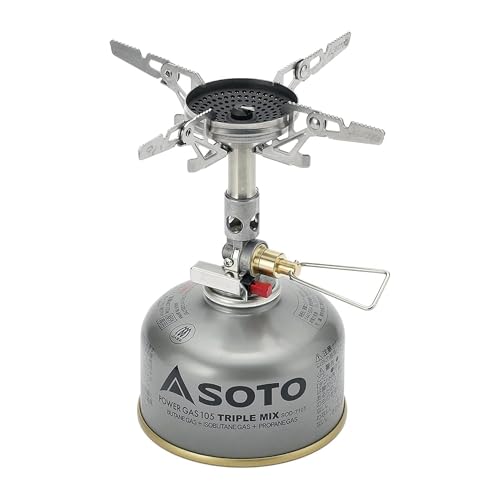
The verdict: the best backpacking stove is the Soto WindMaster — a 3.1-ounce canister stove whose concave, recessed burner head keeps its flame in wind that puts exposed burners out, with a pressure regulator for cold canisters and a micro-regulated valve that actually simmers. It is for anyone who cooks above treeline, in shoulder seasons, or in real weather. It is also the cheapest stove on this page, so it doubles as the budget pick — there is no separate one, because the best stove here is the least expensive one.
If your menu is coffee, oatmeal and freeze-dried pouches — which honestly describes most backpackers and most hunters at a spike camp — the Jetboil Flash is a different and arguably better tool: an integrated system Jetboil claims boils half a liter in roughly 100 seconds. And the MSR PocketRocket Deluxe is the stove to buy if you camp below the wind line and want the lightest full-featured burner with no loose parts.
This page covers canister stoves you carry. If your stove rides in a vehicle, you want a two-burner instead and our full camping stove guideranks those on output and cooking area — different spec, different stove, see below.
The best backpacking stoves at a glance
| Stove | Price & buy | Weight | Published output / claim | Regulated? | Best for |
|---|---|---|---|---|---|
| Soto WindMaster | $69.95Buy | 3.1 oz | Not published as BTU; built for windy weather | Yes - pressure regulator | Best overall; wind and cold |
| MSR PocketRocket Deluxe | $83.95Buy | 2.9 oz | 11,000 BTU | Yes - pressure regulator | Calm air; lightest with no loose parts |
| Jetboil Flash 1.0L | $108.74Buy | 13.1 oz (whole system) | About 100 seconds per half liter, per Jetboil | Not published | Boiling water, fast, every time |
Prices shown are from Amazon as of November 21, 2026 and change often — the button always goes to the current listing. Some links may earn us a commission at no extra cost to you.
Wind, not BTUs, is the spec that matters
Peak BTU output is the headline figure on canister stoves and it is the least useful one, because every stove in this class produces more heat than a liter of water needs. What varies enormously is how much of that heat reaches the pot when air is moving.
A canister stove in a breeze loses heat two ways at once: the flame is pushed sideways off the pot base, and cold air strips heat from the pot walls. The design answer is the shape of the burner head. An exposed burner sits proud and loses its flame first; a recessed, concave head shelters the flame inside its own rim. That is the whole mechanism, and it is why the Soto WindMaster is consistently the stove whose boil times degrade least in wind while the PocketRocket Deluxe— its only serious rival, and arguably the faster boiler in calm air — is the one that reliably loses when the wind gets up.
What a pressure regulator buys in the cold
A canister stove runs on the pressure inside its fuel canister, and that pressure falls as the canister empties and as the temperature drops. An unregulated stove therefore gets weaker through a trip and much weaker in the cold — the classic experience of a stove that boiled in four minutes in August taking ten in October.
A pressure regulator holds the gas flow steady as canister pressure falls, which means consistent output across the canister and in lower temperatures. Both the WindMaster and the PocketRocket Deluxe publish one; it is the single feature that separates a serious canister stove from a cheap one, and it is why neither of them is the cheapest stove on the market.
| Fuel type is fixed for you | Canister stoves burn isobutane-propane mix from a threaded canister. You do not choose the fuel, you choose the stove - which is worth knowing because isobutane performs better in the cold than straight butane and is why canister stoves are viable in shoulder seasons at all. |
|---|---|
| Simmer control beats peak output | If you actually cook rather than just boil, the ability to hold a low flame is what matters. The WindMaster's micro-regulated valve simmers far better than the pocket-stove stereotype and the PocketRocket Deluxe spreads heat more evenly than pencil-flame budget stoves. A boil system like the Jetboil Flash simmers poorly by design. |
| Piezo igniters are mortal | Both burner stoves publish piezo ignition, and every piezo igniter eventually fails. Carry a lighter regardless. This is not a criticism of either stove - it is the category reality, and nobody publishes an igniter cycle life. |
| What nobody publishes | No maker here publishes a boil time at a stated wind speed, a fuel consumption figure, or a cold-weather output curve. Jetboil publishes a boil-time claim in still air; Soto publishes no BTU figure at all. So the honest basis for choosing is burner geometry, regulation and weight - all three of which are published. |
Burner or boil system: the real decision
The three stoves here split into two categories, and getting this right matters more than choosing between the two burners:
- A burner— the WindMaster and the PocketRocket Deluxe — is a stove you pair with your own pot. It weighs about three ounces, packs inside a small pot with a canister, simmers, and will cook real food. You choose the pot, which means you can run a wide pan for two people or a tiny mug for one.
- A boil system— the Jetboil Flash — locks burner, windscreen and a heat-exchanger pot together into one unit. It does one thing superbly and the rest badly. It weighs several times what a burner-and-pot setup does, and real cooking in a narrow tall cup is miserable.
The honest test: write down what you will actually eat. If the answer is coffee, instant oatmeal and freeze-dried pouches, the system is the better tool and the weight penalty buys you a workflow you will use three times a day. If you cook from ingredients, or share a pan, buy a burner.
Best overall: Soto WindMaster
Best for:backpackers and spike-camp hunters who cook above treeline, in shoulder seasons, and in real weather — the people wind actually punishes.
The WindMaster earns its name and its perennial top ranking the same way: a concave, recessed burner head that keeps a grip on its flame when exposed canister stoves surrender. In comparative testing it is consistently the stove whose boil times degrade least in wind. It does that at 3.1 ounces, with a pressure regulator for cold canisters and a micro-regulated valve that simmers far better than the pocket-stove stereotype. The clip-on 4Flex four-arm pot support steadies wide pots and detaches for packing.
The four-arm support deserves a mention because it is the detail that makes the stove usable for two people. Three-arm supports are standard and fine for a mug; four arms hold a wide, heavy pot without the tipping anxiety that defines cooking on a tiny canister stove.
Honest cons:the detachable pot support is a small part you can genuinely lose, and losing it leaves you with a burner and no way to stand a pot on it — pack it with the stove, not loose in a pocket. The piezo igniter is mortal, as all of them are. Soto publishes no BTU figure at all for this stove, which makes direct output comparison impossible, and the canister is not included. And a recessed burner is only an advantage outdoors: in a sheltered kitchen the lighter PocketRocket boils just as well.
Best in calm air: MSR PocketRocket Deluxe
Best for: the ultralight generalist who wants the simplest, lightest full-featured burner and mostly camps below the wind line.
The PocketRocket Deluxe is the WindMaster’s only serious rival, and in calm air it is arguably the faster boiler: MSR publishes 11,000 BTU from a 2.9-ounce stove, with a pressure regulator, piezo ignition, and a broad burner head that spreads heat more evenly than the pencil-flame budget stoves. Its fixed, fold-out pot supports mean no loose parts, and the whole thing disappears inside a small pot with a canister.
It is the lightest stove here and the one with the least to go wrong. If you have ever lost a small component on a trip, the no-loose-parts design is worth more to you than a few seconds of boil time in a breeze.
Honest cons:its burner is less recessed than the Soto’s, so hard wind hurts it more — the one test where it reliably loses, and the reason it is not our overall pick. It also costs more than the WindMaster, which makes the wind trade-off a straightforward one rather than a compromise. The piezo igniter will eventually fail, and MSR publishes no boil time at a stated wind speed.
Best boil system: Jetboil Flash 1.0L
Best for: boil-water-only campers, coffee-dependent hunters, and anyone who values two-minute hot water over culinary ambition.
The Flash is a different tool: an integrated system where burner, windscreen and a heat-exchanger pot lock together into one 13.1-ounce unit that does one thing spectacularly. Jetboil claims roughly 100 seconds to boil half a liter. The insulated sleeve, one-step push-button auto ignition and color-changing heat indicator make it nearly idiot-proof, and the locked-together design shrugs off breeze that slows an open burner.
Read that last point carefully, because it is the interesting one: a boil system is also a wind solution. The pot sits inside the windscreen rather than above an exposed flame, which is a different route to the same problem the WindMaster’s burner geometry solves. If your cooking is genuinely all hot water, this is arguably the most weather-proof option on the page.
Honest cons:it is a boiler, not a stove — simmer control is poor and real cooking in a narrow tall cup is misery. It weighs three to four times what a WindMaster-plus-pot setup does, and it is the most expensive option here. Jetboil publishes no pressure regulator for it, so expect cold-weather output to fall off more than the two regulated burners. And the boil-time claim is a still-air figure from the manufacturer, not an independently verified one.
When a two-burner is the honest answer
If your stove rides in a vehicle to a campsite and never goes in a pack, none of the stoves above is the right purchase — and we would rather say so than sell you a three-ounce burner for a job that wants a kitchen.
A two-burner propane stove gives you something no canister stove can: two pans at once, real cooking area, and output measured in tens of thousands of BTUs. The Camp Chef Everest 2X publishes 40,000 BTU from two 20,000 BTU cast-aluminum burners, a 215 square inch cooking area, matchless ignition and a three-sided windscreen. Our camping stove guide ranks the two-burner field, and our Camp Chef alternatives page covers what to buy instead if you want that capability for less.
The useful rule: buy for how you camp, not for the trip you aspire to. Most people who own one stove should own a two-burner; most people who own two should add a canister burner for the trips they walk in to.
The bottom line
Buy the Soto WindMaster. It is the best stove here and the cheapest one, which is an unusual position and makes the decision easy: the recessed burner head is the only design feature on the page that addresses the condition that actually ruins backcountry cooking. Take the MSR PocketRocket Deluxe if you want the lightest stove with nothing to lose and you camp in shelter, and the Jetboil Flash if your menu is hot water and you want the workflow more than you want versatility.
Then think about what goes around it. A stove is one part of a camp kitchen — our camping checklist covers the rest, our backpacking tent guide and sleeping pad guide cover the other two places backpackers spend weight, and our backpacking versus camping tent comparison makes the same carry-it-or-drive-it argument about shelter that this page makes about stoves.
Frequently asked questions
What is the best backpacking stove?
The Soto WindMaster. Its concave, recessed burner head keeps hold of the flame in wind that puts exposed canister stoves out, and it does that at 3.1 ounces with a pressure regulator for cold canisters and a micro-regulated valve that genuinely simmers. It is also the cheapest stove in this comparison, so there is no trade-off to weigh. The MSR PocketRocket Deluxe is lighter at 2.9 ounces and publishes 11,000 BTU, and is the better choice if you camp in shelter and want a stove with no loose parts.
Does wind really affect a backpacking stove that much?
More than any other variable, and more than the BTU figure on the box. A canister stove in a breeze loses heat two ways: the flame is pushed sideways off the pot base, and moving air strips heat from the pot walls. The design answer is burner geometry - a recessed, concave head shelters the flame inside its own rim, while an exposed burner loses it first. That is why the Soto WindMaster's boil times degrade least in wind and why the PocketRocket Deluxe, arguably faster in calm air, is the one that loses when the wind gets up.
What does a pressure regulator do on a camping stove?
It holds the gas flow steady as canister pressure falls, which it does both as the canister empties and as the temperature drops. Without one, a stove that boiled in four minutes in August can take far longer in October on a half-empty canister. Both the Soto WindMaster and the MSR PocketRocket Deluxe publish a pressure regulator; the Jetboil Flash does not, so expect its cold-weather output to fall off more. It is the single feature that separates a serious canister stove from a cheap one.
Is a Jetboil better than a regular backpacking stove?
It is better at one thing and worse at everything else, so the answer depends entirely on what you eat. The Jetboil Flash locks burner, windscreen and a heat-exchanger pot into one 13.1-ounce unit and Jetboil claims roughly 100 seconds to boil half a liter - unbeatable if your menu is coffee, oatmeal and freeze-dried pouches. Simmer control is poor by design, cooking in the narrow cup is miserable, and it weighs three to four times what a burner and a pot do. Write down what you will actually cook, then choose.
How much does a backpacking stove weigh?
A bare canister burner is about three ounces: the MSR PocketRocket Deluxe publishes 2.9 ounces and the Soto WindMaster 3.1. Add your own pot and a canister and a complete kit is still well under a pound. An integrated boil system is a different proposition - the Jetboil Flash publishes 13.1 ounces for the whole unit, which includes its pot. Note that the canister is sold separately in every case, and that none of these makers publishes a fuel consumption figure, so you cannot calculate total trip weight from the spec sheet.
Should I buy a backpacking stove or a two-burner camp stove?
Buy for how you camp, not the trip you aspire to. If the stove rides in a vehicle to a campsite, a two-burner propane stove gives you two pans at once and real cooking area - the Camp Chef Everest 2X publishes 40,000 BTU from two cast-aluminum burners and a 215 square inch cooking surface, which no canister stove approaches. A canister burner is for the trips you walk in to. Most people who own one stove should own a two-burner; most who own two should add a three-ounce canister burner.
Sources
- SOTO WindMaster Backpacking Stove with 4Flex - published listing specification (lightweight, durable, built for windy weather, canister not included); 3.1 oz weight, recessed burner head, pressure regulator and micro-regulated valve as recorded in our camping stove guide
- MSR PocketRocket Deluxe - published listing specification; 11,000 BTU, 2.9 oz, pressure regulator, piezo ignition and fixed fold-out pot supports as recorded in our camping stove guide
- Jetboil Flash 1.0L - published listing specification (one-step auto ignition, propane/isobutane burner, hiking and outdoor cooking system); 13.1 oz system weight, Jetboil claim of roughly 100 seconds per half liter, insulated sleeve and color-changing heat indicator as recorded in our camping stove guide
- Camp Chef Everest 2X - published listing specification (40,000 BTU, two 20,000 BTU cast-aluminum burners, 215 sq in cooking area, matchless ignition, three-sided windscreen), named as the car-camping alternative
Keep reading
Gearing up before your next hunt?
See how we evaluate gear, then dig into the reviews and buying guides — written without inventory to sell.