Alternatives
Yeti Cooler Alternatives: What Actually Matches It, and Where
Yeti built this category, and the construction it popularised is no longer exclusive to it. Here is what Yeti genuinely still owns, which cheaper coolers match it on the specs that matter, and the one claim you should not give up to save money.
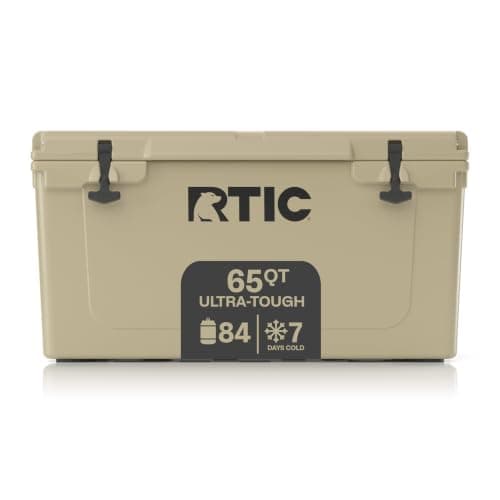
The verdict: the closest alternative to a Yeti hard cooler for most people is the RTIC 65 QT Ultra-Tough— rotomolded, in the 65-quart size that suits a family for several days, at materially less money. It is the right pick for the camper or hunter who has decided they want rotomolded construction and does not need the brand. If what you actually dislike about premium coolers is the weight, buy the RTIC Ultra-Light 52 QT, which RTIC states is 30% lighter than rotomolded construction. The budget pick is the Coleman Classic 62 Qt— not a Yeti alternative at all in construction terms, and the honest answer for a great many campers who were never going to use the ice life they were paying for.
We are going to do this properly, which means being fair to Yeti. It built this category, the coolers are genuinely well made, and there is one specific claim on them that none of the alternatives below can offer you. We will name it.
What Yeti is actually known for
Three things, and it is worth separating them because only one of them is still exclusive.
- Rotomolded construction.Yeti's own FAQ describes the Tundra and Roadie coolers as rotomolded — the same process used to make whitewater kayaks — which produces a seamless, thick-walled body with insulation foamed into the cavity. This is what made the coolers famous and what makes them hold ice for days. It is also no longer exclusive: rotomolding is a manufacturing process, not a patent moat, and every pick below except the Coleman uses it.
- A five-year warranty on hard coolers.Retailer listings for the Tundra 45, 65 and Haul consistently state a five-year limited warranty, and Yeti's own FAQ sets out the exclusions — commercial use, structural alteration, stress beyond the material limits, and normal wear and tear are not covered. Terms vary by country.
- IGBC bear-resistant approval — and this is the exclusive one. Yeti's FAQ states that the Interagency Grizzly Bear Committee has approved the Tundra and Roadie for use on public lands and in national parks occupied by grizzlies. Two things to understand about that: the approval is conditional on using the specified padlocks— retailer listings describe two padlocks through both front corner lock points, and one specifies extra-long shank locks — and the requirement varies by model, so confirm it on Yeti's own site for the exact cooler before you rely on it.
Everything outside that one claim is a value argument, and that is where the picks below live.
The alternatives at a glance
| Cooler | Price & buy | Capacity | Construction | Matches Yeti on | Gives up |
|---|---|---|---|---|---|
| RTIC 65 QT Ultra-Tough | $269.00Buy | 65 qt | Rotomolded | Construction and multi-day ice life | Bear certification; brand resale value |
| RTIC Ultra-Light 52 QT | View at Amazon | 52 qt | Lighter-weight hard build (RTIC states 30% lighter than rotomolded) | Hard-cooler durability at a weight you can lift alone | Some insulation versus a full rotomolded wall |
| RTIC 20 QT | $135.20Buy | 20 qt | Rotomolded | Construction where the abuse actually happens | Capacity; cost per quart |
| EchoSmile 12 Quart | $103.99Buy | 12 qt | Rotomolded | The construction, at the lowest entry price | Capacity - this is a personal cooler |
| Coleman Classic 62 Qt | $74.99Buy | 62 qt | Classic injection-moulded | Nothing - it is a different product class | Ice life, impact resistance, bear certification |
Prices shown are from Amazon as of November 8, 2026 and change often — the button always goes to the current listing. Some links may earn us a commission at no extra cost to you.
Closest match: RTIC 65 QT Ultra-Tough
Best for: the family or camp that wants rotomolded construction in the size most people actually need, and does not need a certified bear container.
A rotomolded 65-quart cooler is the size and construction combination that suits the most people: enough capacity for a family for several days, and enough insulation that the ice is still there on day three. RTIC's position in this category has always been the same — comparable construction to the most expensive premium brands at a lower price — and if you have decided you want a rotomolded cooler, this is where the value is.
Honest cons, and they are not small: it is very heavy. A loaded 65-quart rotomolded cooler is a genuine two-person lift and it takes up substantial trunk space. If you camp alone or drive a small vehicle, size down rather than buying this and resenting it. You also give up the IGBC approval discussed above, and — worth saying plainly — the resale value of the better-known brand, which is real.
If weight is the problem: RTIC Ultra-Light 52 QT
Best for: anyone who has learned that a cooler they cannot lift alone is a cooler that stays in the car.
A 52-quart hard cooler that RTIC states is 30% lighterthan rotomolded construction. That is the entire pitch, and it addresses the single biggest real-world complaint about premium coolers — including Yeti's. Weight matters more than buyers expect: a loaded cooler you cannot move by yourself gets dragged across a campsite until something breaks, or never comes out of the vehicle at all. Thirty percent is the difference between a two-person lift and a one-person one.
Honest cons: lighter construction means somewhat less insulation than a full rotomolded build, so you trade a little ice life for the weight saving, and it still costs premium money. If your trips are three days or shorter and the cooler has to move more than twice, this is the better buy than the 65.
The drinks cooler: RTIC 20 QT
Best for:the second cooler in a two-cooler camp — the one that gets opened constantly.
A rotomolded 20-quart, and the second half of the two-cooler system we argue for in our camping coolers guide. Buying a good one is more logical than it first appears. The drinks cooler is the one that gets opened forty times a day, sits in the sun by the fire, and rides in the boat — it takes the abuse. Putting the rotomolded construction where the abuse is, and the cheap cooler where the lid stays shut, is arguably the correct way round.
Honest cons: expensive for its capacity, and 20 quarts fills quickly once you add ice.
Cheapest rotomolded: EchoSmile 12 Quart
Best for:a personal cooler — a day on the water, a lunch box that lives in a truck.
A 12-quart rotomolded cooler: small, genuinely well insulated, and the cheapest way to own the construction this whole category is built on. The realistic use case is personal rather than family — a day on the water, a lunch cooler that lives in a truck, or keeping one specific thing cold that you do not want buried in the family cooler.
Honest cons: 12 quarts is small, and it is expensive per quart. This is a specialist purchase rather than a main cooler, and anyone shopping it as a Yeti replacement should understand they are replacing a Roadie-class personal cooler, not a Tundra.
Budget pick: Coleman Classic 62 Qt
Best for: the camper whose trips are two nights, near ice, and who was never going to use multi-day ice retention.
This is the pick that is not a Yeti alternative at all, and including it is the most useful thing on this page. A classic injection-moulded cooler gives up ice life, impact resistance and certification — and for a very large number of campers, none of that was ever going to matter. If you drive to a campground with a shop, camp two nights, and top up ice on the way, a 62-quart classic cooler does the job for a fraction of the money and weighs half as much empty.
Be honest with yourself about your trips before you spend rotomolded money. Our camping coolers guideworks through what ice retention claims actually mean and the techniques that extend any cooler's ice life — pre-chilling, block ice, and keeping the lid shut — which in practice move the number more than the construction does on a short trip. For hunting-specific use, where the cooler's job is getting meat cold fast, see our coolers for hunting guide.
The one thing not to give up to save money
| Give up freely | The brand name, the resale value, and the sticker on the lid. None of these keep ice. |
|---|---|
| Give up with care | Insulation thickness. A lighter hard cooler trades ice hours for liftability - a good trade on short trips, a bad one on a week-long hunt. |
| Do not give up | IGBC bear-resistant certification, if you camp or hunt where a land manager requires it. No pick on this page has it. Buy a certified container and the locks it specifies. |
| Also do not give up | Capacity honesty. A cooler is rated by volume, not by volume of food - plan on roughly a third to a half of the stated quarts going to ice. |
The bottom line
Yeti is not overpriced so much as it is priced for a specification most campers do not use. If you want the construction, the RTIC 65 QT Ultra-Tough is the closest honest match and the pick for most people. If the weight is the thing you actually hate, the RTIC Ultra-Light 52 QT fixes the real problem. Put rotomolded construction on the drinks cooler with the RTIC 20 QT if you run a two-cooler camp, and take the EchoSmile 12 Quart if you only ever needed a personal cooler. And if your trips are short and your campground sells ice, buy the Coleman Classic 62 Qt, spend the difference on a better tent or a sleeping pad, and sleep better for it. The one place to stop optimising for price is grizzly country, where certification is the whole point of the cooler.
Frequently asked questions
What is the best Yeti cooler alternative?
For most people, the RTIC 65 QT Ultra-Tough. It uses the same rotomolded construction that made this category - a seamless thick-walled body with insulation foamed into the cavity - in the 65-quart size that suits a family for several days, at materially less money. If the weight of premium coolers is your real complaint, the RTIC Ultra-Light 52 QT is a hard cooler RTIC states is 30% lighter than rotomolded construction. And if your trips are two nights near a shop that sells ice, the honest answer is a classic Coleman and spending the difference elsewhere.
Are cheaper rotomolded coolers really as good as a Yeti?
On construction, broadly yes - rotomolding is a manufacturing process rather than a proprietary technology, and Yeti's own FAQ describes it as the same process used to make whitewater kayaks. Where the differences remain are warranty terms (retailer listings consistently show a five-year limited warranty on Yeti hard coolers, with exclusions for commercial use, structural alteration and normal wear), resale value, which is genuinely higher for the better-known brand, and bear-resistant certification. Treat ice-retention marketing claims from any brand sceptically: pre-chilling the cooler, using block ice and keeping the lid shut move the number more than brand does.
Do Yeti alternatives have bear-resistant certification?
None of the picks on this page does, and that is the one place we tell readers not to economise. Yeti's FAQ states the Interagency Grizzly Bear Committee has approved the Tundra and Roadie for use on public lands and in national parks occupied by grizzlies - and critically, that approval is conditional on using the specified padlocks, described by retailers as two padlocks through both front corner lock points, with at least one listing specifying extra-long shank locks. Requirements vary by model. If a land manager requires a bear-resistant container where you camp or hunt, buy a cooler that appears on the IGBC's own certified product list and buy the locks it specifies.
Is a rotomolded cooler worth it for a weekend camper?
Often not. The premium buys multi-day ice retention and impact resistance, and a two-night trip to a campground with a shop uses neither. A classic 62-quart cooler weighs roughly half as much empty, costs a fraction as much, and will hold ice through a weekend if you pre-chill it and use block ice. Spend rotomolded money when your trips run three days or longer, when you are far from a resupply, when the cooler rides in a boat or a truck bed, or when you need it to cool game meat quickly.
What size cooler should I buy instead of a Yeti Tundra 65?
Match the size to who lifts it. A loaded 65-quart rotomolded cooler is a two-person lift, so if you camp solo or with one other person, a 45-to-52-quart cooler is usually the better buy even though it looks like a downgrade on paper - the RTIC Ultra-Light 52 QT exists for exactly this reason. Also remember that a third to a half of the rated capacity goes to ice, so a 65-quart cooler is not 65 quarts of food. Running two coolers - a big one that stays shut for food, a small rotomolded one for drinks - keeps ice longer than one large cooler opened constantly.
Sources
- YETI FAQ - rotomolded construction and IGBC grizzly approval (lock requirement)
- YETI - Tundra hard cooler range and warranty terms
- evo - YETI Tundra 65 listing (five-year limited warranty)
- Interagency Grizzly Bear Committee - certified bear-resistant products
- RTIC - Ultra-Light hard cooler range (30% lighter claim)
- RTIC - Ultra-Tough hard cooler range
Keep reading
Gearing up before your next hunt?
See how we evaluate gear, then dig into the reviews and buying guides — written without inventory to sell.