Buying Guide
Best Duck Calls
Duck calls are the one category in waterfowl hunting where nobody publishes a measurable specification - no decibels, no reed thickness, no bore dimension. So the honest criteria are structural: how many reeds, what the barrel is made of, and whether you can tune it. Here is how those three decide your purchase.
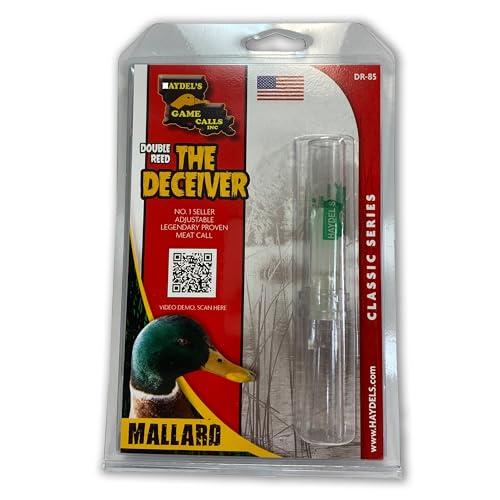
The verdict: the best duck call for almost everyone is the Haydel’s DR-85 — a double reed, which is the right architecture for anyone who is not already a competent caller, and adjustable, which is the only feature in this whole category that lets you correct a call that sounds wrong rather than replace it. The budget pick is the Primos Original Wench, which publishes a tuning hole that shifts pitch high or low for under twenty dollars. For wind and open water, the Buck Gardner Double Nasty’s polycarbonate barrel is the pick, and the easiest call here to get a duck sound out of on your first morning is Duck Commander’s Sarge.
And the pick we would push hardest on an experienced hunter who thinks he has this covered: the Whistling Dixie 6-in-1 whistle, which costs less than half of any mallard call here and covers five species the mallard call does not. Most blinds have four mallard calls in them and no whistle. That is backwards, and the section on it explains why.
The best duck calls at a glance
| Call | Price & buy | Reeds | Material | Tunable? | Best for |
|---|---|---|---|---|---|
| Haydel’s DR-85 Mallard | $24.95Buy | Double | Not published | Yes - published adjustable | Best overall |
| Primos Original Wench | $15.59Buy | Not published | Super-hard polycarbonate | Yes - tuning hole varies pitch | Budget pick |
| Buck Gardner Double Nasty | $29.99Buy | Double | Polycarbonate | Not published | Wind, open water |
| Duck Commander The Sarge | $24.99Buy | Double | Not published | Friction-fit reeds | Easiest to blow |
| Whistling Dixie 6-in-1 | $11.27Buy | Whistle - no reed | Not published | n/a | Pintail, wigeon, teal, wood duck |
| Haydel’s DP-05 pack | $39.99Buy | Double (DR-85) + wood duck | Not published | DR-85 is adjustable | Best two-call start |
| RNT Daisy Cutter | $155.06Buy | Single | Not published on this listing | Single reeds are tuned by the caller | Experienced callers |
Prices shown are from Amazon as of November 21, 2026 and change often — the button always goes to the current listing. Some links may earn us a commission at no extra cost to you.
Notice how many cells read “not published”. That is not us failing to look it up — it is the state of the category, and the next section is about what to do with it.
Why there are no specs in this category
We write a lot of gear pages on this site, and duck calls are the most spec-free category we cover. There is no published decibel figure, no reed thickness, no bore diameter and no frequency range on any call on this page. What listings give you instead is adjectives: “intense volume”, “smooth nasally tone”, “legendary proven meat call”.
Those adjectives are not lies, and in a category where the output is a sound a human produces with his own air, they may be the only honest way to describe the thing. But they are not comparable between makers, so we refuse to rank calls on them. Three structural facts are published, and they are what this page ranks on:
| Reed count | Single or double. This is the biggest difference between any two duck calls and it determines how hard the call is to use. Published on most listings. |
|---|---|
| Barrel material | Polycarbonate, acrylic or wood. Changes volume, tone and how the call behaves wet and cold. Published on some listings - the Primos Wench and the Buck Gardner Double Nasty both state polycarbonate; Haydel's and Duck Commander state nothing. |
| Whether you can tune it | The genuinely useful one, and the rarest. Haydel's publishes the DR-85 as adjustable. Primos publishes a tuning hole on the Wench that varies pitch high or low. Nobody else on this page publishes a tuning feature. A call you can adjust is a call you can fix. |
Anything beyond those three — how “raspy” a call is, how it compares to another brand’s at distance — depends on the person blowing it as much as on the call, and we are not going to invent a measurement to pretend otherwise.
Single reed or double reed: the decision that matters
If you take one thing from this page, take this. Reed count is the difference that decides whether a call works for you, and the expensive, famous, competition-grade calls are mostly single reeds — which is precisely why they are the wrong first purchase.
| Double reed | Two reeds stacked. They damp each other, which makes the call forgiving: inconsistent air pressure still comes out sounding like a duck, and the raspy hen-mallard tone that works on most hunts is the call's natural voice. Lower ceiling on volume and range. This is the right call for a beginner, for an intermediate caller, and for most hunters permanently. |
|---|---|
| Single reed | One reed. Far more range - from a whisper-quiet feed chuckle to a hail call that carries across open water - and far more responsive to air control, which means it rewards a good caller and exposes a poor one instantly. A single reed in untrained hands squeals and cracks, and a squeal on a wary flock is worse than silence. |
| How to decide in one question | Can you already blow a clean five-note hail call on someone else's call? If yes, buy a single reed. If no, or if you are not sure, buy a double reed and spend the saved money on decoys. The RNT Daisy Cutter on this page is an excellent single reed and costs roughly six times the DR-85; it will not make you sound better if you cannot already blow one. |
Polycarbonate, acrylic or wood
The second published fact, where it is published at all. Material changes volume and tone, and it changes how a call behaves in the conditions duck hunting actually happens in — wet, cold, and dropped in a boat.
| Polycarbonate | The default and the right default. Hard, loud, cheap, and effectively immune to water and cold - which matters, because a duck call spends its life soaked. Primos describes the Wench's barrel as super-hard polycarbonate for intense volume, and Buck Gardner states polycarbonate on the Double Nasty. Every call under thirty dollars on this page is in this class. |
|---|---|
| Acrylic | The premium material: denser and harder than polycarbonate, which is why competition callers use it - more volume ceiling and a crisper, more consistent tone, and it is dimensionally stable so the tuning holds. The cost is the price, which is typically four to six times a polycarbonate call for a difference most hunters cannot produce. |
| Wood | Mellower, softer, quieter - traditionally the timber hunter's choice, because flooded hardwoods at thirty yards is a soft-calling situation and a loud call is a liability there. The trade is that wood moves with moisture, so tone can shift over a season and it wants to be dried rather than thrown in a wet bag. |
Our honest read: buy polycarbonate unless you have a specific reason not to. It is the material that survives a duck season, and the money you would spend going to acrylic buys a lot more hunting in the form of decoys, a better pair of waders, or a rain shell that keeps you in the blind until the afternoon flight.
The one-call trap
Here is the mistake we see most often, and it costs nothing to avoid: hunters buy a mallard call, then another mallard call, then a third, and never buy a whistle or a wood duck call.
A mallard call makes one species’ sounds. A six-in-one whistle covers drake mallard, pintail, wigeon, wood duck, teal and sandhill crane, which is five more birds than the mallard call reaches, and the drake mallard whistle is the sound that fills the gap in a hen-only calling sequence — because a real raft of mallards is not all hens. On the days when teal, wigeon or wood ducks are what is actually flying over your spread, the whistle is the only call in the bag that speaks to them.
The arithmetic is absurd in the whistle’s favor. It is the cheapest thing on this page by a wide margin — a small fraction of the premium single reed — and it adds species rather than nuance. If you own one duck call and are about to buy a second, buy a different kind of call, not a better version of the one you have.
The same instinct applies across call categories on this site: turkey hunters who own three mouth calls and no locator call, and deer hunters who own a grunt tube and no bleat can, are making the identical error.
Best overall: Haydel's DR-85 Mallard
Best for: the first duck call you buy, and for a great many hunters the only one they ever need.
This is the call to buy. Haydel’s publishes it as a double reed, adjustablemallard call — and those two words together are why it is the top pick. Double reed means it is forgiving enough to produce a convincing hen mallard before you have any real air control. Adjustable means that if it sounds too high, too low, or sticks when it gets wet, you can fix it instead of buying another call.
That second point is worth dwelling on, because it is the one thing in this category that behaves like a real specification. Reeds shift. They get a piece of grass under them, they take a set after a cold morning, they stick. On a call with no adjustment you are stuck with whatever it does; on an adjustable call you re-seat the reed and carry on hunting. Haydel’s is the only maker on this page that publishes adjustability as a feature on a standalone mallard call.
Honest cons: Haydel’s publishes no barrel material on this listing, where Primos and Buck Gardner both state polycarbonate — so on the second of our three criteria it tells you nothing. “Legendary proven meat call” is marketing language, not evidence, and we are reporting it as the maker’s claim rather than endorsing it. As a double reed it has a lower volume ceiling than a single reed, which is a real limit on big open water in wind. And adjustable means there is something to get wrong: set the reeds badly and the call sounds worse than a fixed one.
Budget pick: Primos Original Wench
Best for: the cheapest call here that still gives you a way to change how it sounds.
The Original Wench is the least expensive call on this page apart from the whistle, and it is the budget pick rather than merely the cheap option because of one published feature: a tuning hole that varies pitch high or low. Primos also states a super-hard polycarbonate barrel for intense volume— so this is the only call on the page that publishes both a tuning feature and a barrel material.
Pitch control is more useful than it sounds. Hen mallards are not all the same pitch, and more importantly a flock that has been hunted all season gets cagey about a sound it has heard repeatedly. Being able to shift a call’s pitch is a cheap way to not sound like the same hunter every morning, and on public land that is worth real money.
Honest cons: Primos does not publish a reed countfor the Original Wench, which is the single most important fact about a duck call — so the one criterion that decides whether a call suits a beginner is the one this listing omits. The Wench family is built around volume and a raspy voice, which is the wrong character for soft calling in flooded timber. And it is a Primos call in a famous line with several variants (the Timber Wench is a different animal), so check you are ordering the one you mean.
Best for wind: Buck Gardner Double Nasty
Best for: open water, big marshes and the windy mornings when a quiet call does not reach.
Buck Gardner publishes this as a double reed polycarbonate call in camo green and smoke, and it is the pick when the problem is distance rather than finesse. Polycarbonate is the hard, loud material in this category, and a double reed in a hard barrel is the combination that gets you volume without giving up the forgiveness that makes a double reed worth owning.
That combination is genuinely useful. The standard problem with recommending a double reed is the volume ceiling; the standard problem with recommending a single reed is that most hunters cannot control it. A hard-barreled double reed is the honest middle: louder than a softer double reed, still self-correcting when your air is not perfect.
Honest cons: Buck Gardner publishes no tuning or adjustment featureon this listing, so if it ends up sounding wrong you have fewer options than with the DR-85 or the Wench. It is the most expensive polycarbonate call on this page and it tells you less about itself than the cheaper Primos does. A loud call is a liability in timber and on small water, where the problem is being too much rather than not enough. And camo green on a smoke barrel is cosmetic — it has no effect on anything a duck notices.
Easiest to blow: Duck Commander The Sarge
Best for: a brand-new caller, or a call for a kid who is going to blow it constantly in the truck.
Duck Commander publishes The Sarge as a double-reed, friction-fit call with a smooth nasally tone. The friction-fit detail is the one that matters for a beginner: the reeds are held by friction rather than clamped with hardware, which means the call comes apart and goes back together by hand for cleaning, with nothing to over-tighten and no tool required.
“Smooth nasally” is also a fair description of where this call sits. It is less raspy than the volume-first calls above, which makes it the easiest on this page to produce a clean, non-squeaky quack from on a first morning. For a hunter whose immediate goal is “sound like a duck at all” rather than “work a wary flock”, that is the right target.
Honest cons:friction fit cuts both ways — reeds held by friction can shift, and a shifted reed mid-hunt is a call that squeals. Duck Commander publishes no barrel material and no tuning adjustment, so it is thinner on our criteria than the DR-85 at a similar price. The smooth tone that makes it easy also makes it less cutting in wind. And it costs more than the Primos Wench while publishing less, so you are paying something for the name.
The call most hunters skip: Whistling Dixie 6-in-1
Best for: literally everyone reading this page, and it is the cheapest thing on it.
Hunters Specialties publishes this as a six-in-one waterfowl whistleproducing the vocalizations of drake mallard, pintail, wigeon, wood duck, teal and sandhill crane. No reeds, nothing to tune, nothing to learn beyond which hole and how hard.
Two reasons it earns a place above calls costing three times as much. First, the drake mallard whistle: a real raft of mallards is drakes and hens, and a hunter working only a hen call is presenting an all-female flock, which is not what the birds overhead are listening for. Adding drake whistles to a hen sequence is the single cheapest realism upgrade available. Second, the other four species: when teal, wigeon or wood ducks are what is working your spread, a mallard call is the wrong language, and this is the only thing in most bags that speaks the right one.
A whistle is also the easiest call in waterfowling to be good at within one session, which matters, because the fastest way to improve your calling is to add a sound you can make correctly rather than a sound you make badly.
Honest cons:it does not make a hen mallard quack, a greeting call or a feed chuckle, so it is strictly an addition rather than a first purchase. Six functions in one body means switching between them takes practice. Hunters Specialties publishes no material and no dimensions. And check your state’s rules before using the sandhill crane function — crane seasons and permits are tightly controlled and vary a great deal by state, so a crane vocalization is not something to use casually.
If you would rather have the whistle functions built around a fluttering roll, Primos publishes the High Roller with a built-in roller bar that creates an automatic fluttering whistle and reproduces pintail, mallard, wigeon and teal. Fewer species than the Whistling Dixie and more money, but the automatic flutter is a genuinely hard sound to make by mouth.
Best two-call start: Haydel's DP-05 pack
Best for: starting with two different species instead of one, in a single purchase.
Haydel’s publishes the DP-05 pack as including the DR-85— our top pick above — and the GW-01, a wood duck call. That is exactly the structure we argue for in the one-call trap section: two different kinds of call rather than one call and a spare.
A wood duck call deserves its reputation. Wood ducks respond to their own squeal in a way that does not require subtlety, and in flooded timber and on small creeks they are often the bird actually in front of you. If you already intended to own the DR-85 and you hunt where wood ducks are, compare the pack price against the DR-85 on its own before you buy — the second call may cost you very little.
Honest cons:you are buying a call you may not need — if there are no wood ducks where you hunt, the pack is a worse deal than the DR-85 by itself. Haydel’s publishes no detail at all about the GW-01 in this listing beyond its model number. And a bundle locks you to one maker’s pair rather than letting you combine the best double reed with the best whistle, which for most hunters would be the stronger two-call starting set.
The single reed worth the money: RNT Daisy Cutter
Best for: a caller who already blows a clean single reed and wants a competition-grade one.
RNT’s Daisy Cutter is one of the best-known single reed calls in waterfowling and it is the only call on this page in the premium tier. We are including it for completeness and as an honest ceiling, not as a recommendation to most readers.
A single reed in competent hands does things a double reed cannot: the full volume range from a hail call that carries over open water down to a quiet, precise feed chuckle, with the tonal control that comes from one reed responding directly to your air. If you are already there, this is a call worth owning.
Honest cons, and they are the reason this is last:it costs roughly six times the DR-85, and a single reed will not make a developing caller sound better — it will make his mistakes louder and more audible to the birds. RNT publishes no barrel material, no reed detail and no tuning informationon this listing, which is remarkably little for the most expensive product on the page. There is no correlation between price and birds killed in this category that we can demonstrate. And if you are reading a page titled “best duck calls” to work out what to buy, the honest answer is almost certainly not this one — buy the DR-85 and the whistle and spend the difference on decoys.
The honest part: calling less is usually better
We would be doing you a disservice if a page about buying duck calls did not say this plainly: the call is one of the least important things in a duck hunt, and the most common calling error is doing too much of it.
Ducks commit to a spread because the spread looks right, the hunters are hidden, and nothing sounds wrong. A caller who works every bird that appears is adding the one variable most likely to go wrong. The standard advice from people who kill a lot of ducks — get their attention, then shut up as they work — is advice about restraint, and no purchase on this page substitutes for it.
Where the money actually goes further:
- Concealment. Birds circling see you before they hear anything wrong. A brushed-in blind beats a better call every single time.
- Staying in the blind. The afternoon flight happens after the hunters who got wet and cold have left. Waders that do not leak and hands that still work put more birds in the bag than any call upgrade.
- Decoys and spread. The visual presentation does the heavy lifting. Calling is what gets a bird to look at it.
- Practice, which is free. The difference between a hunter who sounds like a duck and one who does not is hours on a cheap call, not dollars on an expensive one.
The bottom line
Buy the Haydel’s DR-85 and the Whistling Dixie 6-in-1 whistle. That is under forty dollars at the prices on this page, it is a double reed you can actually learn on plus five species the mallard call cannot reach, and it is a better two-call set than most people assemble for triple the money. Take the Primos Original Wench if you want to spend less and still be able to change the pitch, the Buck Gardner Double Nasty if you hunt big open water in wind, and The Sarge if the goal is the easiest possible first duck sound.
Leave the RNT Daisy Cutteruntil you can already blow a single reed cleanly — it is an excellent call and the wrong first one. And keep the whole category in proportion: nobody in duck hunting publishes a measurable specification for a call, which should tell you something about how much of the outcome it controls. Spend on concealment and on staying dry, and spend your practice time instead of your money.
Frequently asked questions
What is the best duck call for beginners?
A double reed, and the Haydel's DR-85 is the one to buy. Two stacked reeds damp each other, which means inconsistent air pressure still comes out sounding like a duck - the forgiveness that a new caller needs. The DR-85 is also published as adjustable, so if a reed shifts or the call sounds too high or low you can fix it rather than replace it. Duck Commander's Sarge is the easiest call here to get a clean quack from on a first morning thanks to its smoother, less raspy tone, and the Primos Original Wench is the cheapest call that still lets you change pitch.
Single reed or double reed duck call?
Double reed for almost everyone. A double reed is forgiving and self-correcting, and its natural raspy hen-mallard voice is what works on most hunts. A single reed has far more volume and tonal range - a hail call that carries across open water down to a quiet feed chuckle - but it responds directly to your air, so it rewards a good caller and exposes a poor one instantly, and a squeal on a wary flock is worse than silence. One question decides it: can you already blow a clean hail call on someone else's call? If not, buy a double reed and put the saved money into decoys.
Are expensive acrylic duck calls worth it?
Only if you can already produce what they make possible. Acrylic is denser and harder than polycarbonate, which gives more volume ceiling, a crisper tone and tuning that holds its setting - real advantages for a competition-level caller. But it typically costs four to six times a polycarbonate call, and nobody in the category publishes a measurable specification you could use to verify the difference. Buy polycarbonate unless you have a specific reason not to: it is loud, cheap and effectively immune to the water and cold a duck call lives in, and the difference in price buys waders or decoys that affect the hunt more.
Do I need a duck whistle?
Yes, and it is the most under-bought call in waterfowling. A mallard call makes one species' sounds; a six-in-one whistle such as the Hunters Specialties Whistling Dixie covers drake mallard, pintail, wigeon, wood duck, teal and sandhill crane. The drake mallard whistle matters because a real raft of mallards is drakes and hens, so a hunter working only a hen call is presenting an all-female flock. And on days when teal, wigeon or wood ducks are working your spread, a mallard call is the wrong language. It is also the cheapest call on this page and the easiest to be genuinely good at inside one session.
How many duck calls do you need?
Two, and they should be different kinds rather than two mallard calls. A double reed mallard call plus a whistle covers the overwhelming majority of what you will meet on a marsh, for under forty dollars at current prices. The common mistake is buying a second and third mallard call - more nuance on a sound you already have - instead of adding a species. If you hunt flooded timber or small creeks, a wood duck call is the third one worth owning, and Haydel's DP-05 pack bundles one with the DR-85.
Does the duck call brand matter more than how you call?
No, and it is not close. Ducks commit to a spread because the decoys look right, the hunters are hidden, and nothing sounds wrong - calling is what gets a bird to look at the presentation, not what closes the deal. The most common error is calling too much: get their attention, then stay quiet while they work. Nobody in this category publishes a decibel figure, reed thickness or bore dimension, which should itself tell you how much of the outcome the call controls. Concealment, dry feet and warm hands keep you hunting into the afternoon flight, and practice on a cheap call beats an expensive one you blow badly.
Sources
- Haydel's Game Calls DR-85 Mallard Duck Call - published listing specification (double reed, adjustable)
- Primos Hunting Original Wench Duck Call - published listing specification (tuning hole varies pitch high or low, super-hard polycarbonate barrel)
- Buck Gardner BGC Double Nasty Duck Call - published listing specification (double reed, polycarbonate)
- Duck Commander The Sarge Duck Call - published listing specification (double reed, friction fit, smooth nasally tone)
- Hunters Specialties Whistling Dixie 6-in-1 Waterfowl Whistle - published listing specification (drake mallard, pintail, wigeon, wood duck, teal, sandhill crane)
- Haydel's Game Calls DP-05 Duck Call Pack - published listing (includes DR-85 and GW-01)
- RNT Rich-N-Tone Daisy Cutter Duck Call - published listing
- Primos High Roller Duck Call - published listing specification (built-in roller bar creates automatic fluttering whistle; pintail, mallard, wigeon, teal)
Keep reading
Gearing up before your next hunt?
See how we evaluate gear, then dig into the reviews and buying guides — written without inventory to sell.