Buyer's Guide
Best Hunting Boots for Wide Feet
A wide foot is not solved by going up a size - it is solved by buying a boot that is published in a wide width, on a last that was not designed around a narrow one. Here are four that are, with the exact widths and sizes each maker publishes.
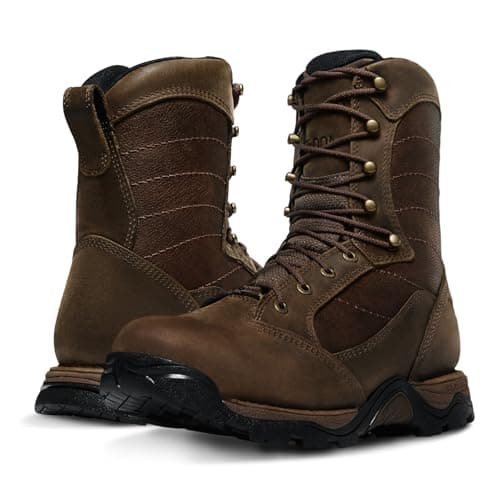
For most wide-footed hunters the answer is the Danner Pronghorn 8-inch 400G. The all-leather version is published in D and EE, the GORE-TEX version in Medium and Wide, and even in the standard width it suits wide feet better than most mountain lasts. It is also the most versatile boot here, which matters because a wide foot already narrows your choices — you do not want the width decision to also lock you into one kind of hunt.
For cold, wet, sedentary hunting, the Irish Setter Elk Tracker 860 is published in D and EE across sizes 8 through 14. For mountain hunting, Kenetrek publishes the Mountain Extreme 400in narrow, medium and wide — with a caveat about which sizes the wide run covers. And if the answer to your foot shape is a rubber boot, the LaCrosse Alphaburly Pro solves the problem with a gusset rather than a width.
The verdict
There is one rule that does most of the work here: buy a published width, not a bigger size. Going up half a size to get width adds length your heel does not want, which lets the foot slide, which is how you get blisters and a bruised toe on a downhill. A wide last is wider at the ball and the forefoot while keeping the heel pocket where it belongs.
The practical problem is that fewer hunting boots publish a wide width than you would hope, and the ones that do not publish one are not quietly generous — mountain boots in particular are built on deliberately snug lasts. So this page is organized around what the makers actually publish.
Published widths, boot by boot
| Boot | Widths published | Size run | Construction |
|---|---|---|---|
| Danner Pronghorn 8-inch, all-leather 400G (style 41345) | D and EE (extra wide) | Men's | Full-grain leather, 400g insulation, GORE-TEX, Vibram Pronghorn outsole |
| Danner Pronghorn 8-inch 400G GORE-TEX (style 41341) | Medium and Wide (EE) | Men's | Leather and nylon, 400g insulation, GORE-TEX |
| Irish Setter Elk Tracker 860 | D and EE | 8-12, 13, 14 | 12 in, all-leather upper, 1000g Thinsulate, GORE-TEX |
| Kenetrek Mountain Extreme 400 | Narrow, medium, wide | Narrow 8-11.5, 12, 13; medium 7-11.5, 12, 13, 14, 15, 16; wide 8-11.5, 12-13 | Full-grain leather mountain boot, 400g insulation |
| LaCrosse Alphaburly Pro | No separate width - adjustable neoprene gusset | Men's 6-15, women's 5-11 | Rubber over neoprene, uninsulated or 400g / 800g / 1000g / 1600g |
Everything in that table is the maker’s own published sizing. Two honest notes. First, Kenetrek’s wide run does not extend as far as its medium run — medium goes to 16, wide stops at 13 — so a size 14 wide foot is not served by that boot. Second, Danner uses different width labels on the two Pronghorn constructions (D/EE on the all-leather, Medium/Wide on the GORE-TEX version), so check the style number rather than the model name.
Why wide feet and hunting boots fight
| Mountain lasts are narrow on purpose | A snug forefoot stops the foot sliding when you are side-hilling on a steep face. That is a feature for a narrow foot and a liability for a wide one, which is why the premium mountain boots are the hardest category to fit. |
|---|---|
| Insulation eats width before it eats length | 1000g of Thinsulate takes up space inside the same shell. A boot that fits in the uninsulated version can be tight in the heavily insulated one - compare within the same insulation weight. |
| Rubber boots have no width at all | Pull-on rubber boots are not lasted in widths. They work for wide feet when they are cut generously or use an adjustable gusset, which is a different kind of solution to the same problem. |
| Half a size up is not a width | It adds length at the heel and toe without adding meaningful room at the ball. The result is a foot that moves inside the boot, which is worse on a long day than a boot that is slightly snug. |
| Where you are wide matters | A wide forefoot with a narrow heel is a different fit problem from a uniformly wide foot. A wide width helps the first case at the ball but may leave heel slip, which lacing technique and the right sock can address. |
Best overall: Danner Pronghorn 8-inch 400G
Who it is for: the wide-footed hunter who wants one boot for early-season walking and cold-weather sitting.
An 8-inch full-grain leather upper, 400g insulation, a GORE-TEX lining and a Vibram Pronghorn outsole. 8 inches is the do-everything height, 400g suits a hunter who keeps moving, and the line extends up to 1,200g if you need more. It also fits wide feet better than most mountain lasts even in the standard width, which is the practical reason it leads this page.
On widths: the all-leather version is published in D and EE, and the GORE-TEX version in Medium and Wide. Confirm the style number on the listing you buy, because the two constructions use different width labels.
Honest cons: 400g is light for an all-day December sit without a heat source, and leather takes a real break-in — Danner itself recommends planning for break-in time over your first few weeks of wear.
Best for cold: Irish Setter Elk Tracker 860
Who it is for:the wide-footed hunter who sits still in the cold — late-season stands, ground blinds, and wet mornings.
A 12-inch boot with 1000g Thinsulate, a GORE-TEX membrane and an all-leather upper, published in D and EE across sizes 8-12, 13 and 14. The EE run covering size 14 is worth noting, because that is exactly where several other makers’ wide options stop.
Honest cons: 1000g and a 12-inch upper is a lot of boot to walk miles in, and heavy insulation consumes internal volume, so try it in the width you think you need rather than assuming your uninsulated size carries over.
Best mountain boot: Kenetrek Mountain Extreme 400
Who it is for:the wide-footed mountain hunter whose size falls inside Kenetrek’s wide run.
Kenetrek publishes the Mountain Extreme 400 in narrow, medium and wide, with narrow in 8-11.5, 12 and 13; medium in 7-11.5, 12, 13, 14, 15 and 16; and wide in 8-11.5 and 12-13. That is a genuine wide option in a premium mountain boot, which is rare — and it is also the clearest example on this page of why you check the width run and not just whether a width exists.
Honest cons: the wide run stops at 13 while medium goes to 16, so larger wide feet are not served. We have not found an EE designation published for this boot, only “wide,” which is not necessarily the same thing as Danner’s EE. Kenetrek also publishes a deliberate break-in protocol, which tells you what the leather is like out of the box.
Best rubber boot: LaCrosse Alphaburly Pro
Who it is for: hunters who want scent-reducing rubber, and whose fit problem includes calf circumference as well as foot width.
Rubber boots are not lasted in widths, so the Alphaburly Pro solves the problem differently: a durable neoprene gussetin the upper that adjusts with a strap and accommodates a wide range of calf sizes, with LaCrosse’s Active Fit keeping the foot stable without restricting movement. Available in men’s 6-15 and women’s 5-11, uninsulated or with 400g, 800g, 1000g or 1600g insulation.
On sizing, goHUNT’s staff guidance is to order true to size unless you are between sizes, in which case size down. Honest cons: there is no width option, so if your problem is specifically a wide forefoot rather than a wide calf, a lasted leather boot in EE is the better tool.
The fit checks to run
| Try them at the end of the day | Feet swell. A boot fitted at 8am on a cold morning can be a boot that pinches at 4pm on day three of a hunt. |
|---|---|
| Wear your hunting socks | A midweight merino sock is a different fit from a cotton gym sock, and it is a bigger difference than half a size. |
| Check the ball, not the toe | Width is a forefoot measurement. If the widest part of your foot sits behind the widest part of the boot, the boot is too long - which is what happens when people size up instead of going wide. |
| Test the downhill | Lace up and walk down a slope or a staircase. If your toes touch the front, the boot is too long or laced wrong, and that is the failure mode that ends hunts. |
| Heel lift of about a quarter inch is normal when new | More than that and the heel pocket is wrong for you, and no width will fix it. Less than that in a stiff leather boot may become a hot spot before the boot breaks in. |
Sock thickness is a width adjustment
The cheapest fit tool you own is your sock. If a wide boot is marginally loose, a cushioned sock fills it; if a standard boot is marginally tight, a thinner merino sock buys back real volume. This is also the right way to fine-tune after you have committed to a width, because it is reversible and costs a fraction of a boot.
Who the Darn Tough Hunting Boot Midweight is for:a wide-footed hunter who needs cushioning without bulk — merino, midweight rather than heavy, so it fills a boot without re-creating the tightness you were trying to escape.
One thing not to do: double-socking to fill a boot that is too wide. Two layers slide against each other, and the sliding is what raises blisters.
Frequently asked questions
What are the best hunting boots for wide feet?
The Danner Pronghorn 8-inch 400G for most hunters - the all-leather version is published in D and EE, the GORE-TEX version in Medium and Wide, and the last suits wide feet better than most mountain boots even in the standard width. For cold, sedentary hunting the Irish Setter Elk Tracker 860 is published in D and EE through size 14, and for mountain hunting Kenetrek publishes the Mountain Extreme 400 in narrow, medium and wide.
Should I buy a bigger size if I have wide feet?
No. Sizing up adds length at the heel and toe without adding meaningful room at the ball of the foot, so the foot slides inside the boot - which causes blisters and bruised toes on descents. Buy a published wide width instead, which widens the forefoot while keeping the heel pocket where it belongs.
Do hunting boots come in EE width?
Some do. Danner publishes the all-leather Pronghorn 8-inch 400G in D and EE, and the GORE-TEX version in Medium and Wide. Irish Setter publishes the Elk Tracker 860 in D and EE in sizes 8-12, 13 and 14. Kenetrek publishes the Mountain Extreme in narrow, medium and wide, but we have not found an EE designation for it - 'wide' and 'EE' are not automatically the same measurement across brands.
Are mountain hunting boots bad for wide feet?
They are the hardest category to fit, by design. A snug forefoot keeps the foot from sliding when you are side-hilling a steep face, which is a benefit for a narrow foot and a problem for a wide one. If no wide width in a mountain boot fits you, a less aggressive hunting boot or a gusseted rubber boot that actually fits will serve you better than a technical boot in the wrong shape.
What rubber hunting boots are good for wide feet and wide calves?
The LaCrosse Alphaburly Pro. Rubber boots are not lasted in widths, so it uses an adjustable neoprene gusset with a strap that accommodates a wide range of calf sizes, with Active Fit keeping the foot stable. It comes in men's 6-15 and women's 5-11, uninsulated or with 400g to 1600g insulation. goHUNT's guidance is to order true to size, and to size down if you are between sizes.
Does insulation affect boot width?
Yes, and it is a common source of fit surprises. A boot with 1000g of Thinsulate has less internal volume than the same shell uninsulated, so a size and width that fit in the lighter version can pinch in the heavier one. Compare boots within the same insulation weight, and try them with the socks you actually hunt in.
Can thicker socks fix a boot that is too wide?
A single cushioned sock can take up modest extra volume, and it is the cheapest and most reversible fit adjustment available. Do not double-sock to fill a boot that is genuinely too wide - two layers slide against each other and that sliding is what raises blisters. If one midweight merino sock does not settle the fit, the boot is the wrong shape.
Sources
- CampSaver - Danner Pronghorn 8in All-Leather 400G hunting boot (style 41345) published in men's D and Extra Wide (EE) widths
- CampSaver - Danner Pronghorn 8in 400G GORE-TEX hunting boot (style 41341) published in Medium and Wide widths
- CampSaver - Irish Setter Elk Tracker 860 published specifications: 12 in boot, 1000g Thinsulate, GORE-TEX membrane, all-leather upper, available in sizes 8-12, 13, 14 in D and EE widths
- EuroOptic - Kenetrek Mountain Extreme 400 published sizing: men's whole and half sizes in narrow, medium and wide; narrow 8-11.5, 12, 13; medium 7-11.5, 12, 13, 14, 15, 16; wide 8-11.5, 12-13
- goHUNT - LaCrosse Alphaburly Pro: gusseted upper with adjustable neoprene gusset fitting a wide range of calf sizes, Active Fit, men's sizes 6-15 and women's 5-11, uninsulated or 400g/800g/1000g/1600g; sizing guidance to order true to size and size down if between sizes
- Danner - new boots care guide: plan for break-in time over the first few weeks of wear, with longer for thicker leathers and stiffer components
- Prices, product images and stock status via the Amazon price layer, refreshed daily
Keep reading
Gearing up before your next hunt?
See how we evaluate gear, then dig into the reviews and buying guides — written without inventory to sell.