Buying Guide
Best Rangefinders Under $200
Two hundred dollars is the band where a rangefinder stops being a toy and starts being a tool - but it is also where the maximum-range numbers on the box become least honest. Here are the three worth owning, what each one's range figure is actually measured against, and the one feature that changes a shot.
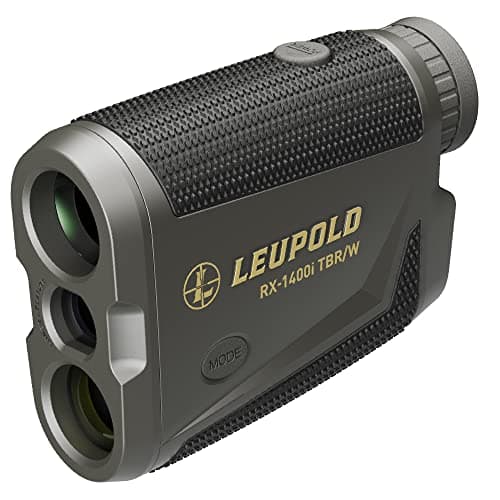
The verdict: the best rangefinder under $200 is the Leupold RX-1400i TBR/W Gen 2 with Flightpath— it is the only unit in this band that publishes angle compensation, which means it gives you the horizontal distance your scope turret or your pin actually needs rather than the line-of-sight number, and the Flightpath feature extends that to archery. It is the pick for the hunter who shoots from a treestand or across any ground that is not flat, and it sits right at the top of the band. The budget pick is the Halo Optics XL 450— the cheapest unit here by a wide margin, and the honest answer when the real alternative is guessing the distance. If you glass as much as you range, the Vortex Sonora HD 1800is the pick: fully multi-coated glass, tripod adaptable, and Vortex’s unlimited, unconditional warranty.
One framing before the picks, and it is the reason this band needs its own page rather than a price filter on a bigger list: under $200 the number printed largest on the box is the number least likely to describe your hunt. “1800 yards” is not a figure about deer. The three units here state their ranging capability on three different bases, and the most expensive one does not have the biggest number. Understanding why is most of what it takes to buy well at this price.
The best rangefinders under $200 at a glance
| Rangefinder | Price & buy | Published range basis | Angle compensation | Warranty | Best for |
|---|---|---|---|---|---|
| Leupold RX-1400i TBR/W Gen 2 | $199.99Buy | Not stated on the listing | Yes - TBR/W, plus Flightpath for archery | Not stated on the listing | Best overall |
| Vortex Sonora HD 1800 | $184.87Buy | 1,800 yd max reflective | Not published | Unlimited, unconditional | Glass and warranty |
| Halo Optics XL 450 | $59.99Buy | Not stated on the listing | Not published | Not stated on the listing | Budget pick |
Prices shown are from Amazon as of November 8, 2026 and change often — the button always goes to the current listing. Some links may earn us a commission at no extra cost to you.
Three units is the whole honest list at this price, and that is deliberate. We only include a rangefinder in a price band when it has a live, buyable price under the number on the page, and this band is tight — the Leupold sits at the very top of it. If a price moves above $200 the button above will still take you to the current listing, so check the live figure rather than trusting a number typed into prose.
The maximum-range number is not a deer range
This is the single most important thing to understand in this band, and the Vortex listing states it openly: 1,800 yd max reflective range. Note the word reflective. That figure is what the laser achieves against a highly reflective target — a sign, a building, a rock face — under good conditions. A deer is not reflective. It is a soft, matte, irregular, hair-covered object, and it returns far less of the laser pulse than a billboard does.
Makers who publish a full specification usually give three figures: a reflective range, a tree range, and a deer range, each shorter than the last. The marketing uses the first one. So when you read “1800” on the box, read it as “the laser and processor are capable, and the deer figure is a fraction of this.”
Our rangefinder buying guide goes through the full set of specs and how to read them; this page is specifically about what the $200 ceiling does and does not buy.
The one feature worth the top of the band
If you spend up to the top of this band, spend it on angle compensation. Here is why it matters more than any other feature at this price.
A rangefinder measures the straight-line distance from you to the animal. Gravity, however, only acts over the horizontalcomponent of that distance. Shoot steeply downhill from a treestand, or steeply uphill across a canyon, and the line-of-sight number is longer than the distance your bullet or arrow is actually affected by — so holding for the line-of-sight reading makes you shoot high.
Leupold’s TBR/W— True Ballistic Range with Wind — is the feature that resolves this, and the RX-1400i Gen 2 is the only unit in this band that publishes it. Flightpath is the archery-specific extension of the same idea. Neither Vortex nor Halo publishes angle compensation on the units here.
| Who needs it most | Treestand hunters, anyone hunting broken or mountainous ground, and every bowhunter - an archery trajectory is affected far more by a few yards of error than a rifle trajectory is. |
|---|---|
| Who can skip it | A hunter shooting across flat ground from a ground blind or a field edge. On level terrain the horizontal distance and the line-of-sight distance are the same number, and angle compensation changes nothing. |
| What it does not do | It does not calculate your drop for you from a figure you have not supplied. A ballistic feature is only as good as the inputs you set up, and the honest baseline is that it gives you the correct distance to work from. |
What each maker publishes - and does not
We went through the published specification for all three units, and the pattern is worth stating plainly, because it is the real quality signal in this band:
- Vortex publishes the most. The Sonora HD 1800 listing states HD optics, a 1,800 yd max reflective range, fully multi-coated lenses, tripod adaptability and an unlimited, unconditional warranty. It also tells you the honest basis of its range figure, which not everyone does.
- Leupold publishes the feature set rather than the numbers.The RX-1400i listing names TBR/W and Flightpath and the display colour — the capabilities that differentiate it — but no maximum range, warranty term or optical specification appears on the listing itself.
- Halo publishes almost nothing.The listing is essentially the model name. No range basis, no optical specification, no warranty term. That is worth knowing before you buy, and it is not a reason to avoid it — it is a reason to buy it for what it is rather than what you hope it is.
We have not bench-tested these three against each other and have not given them scores, ratings or awards. Everything above is published manufacturer specification, labelled as such. Where a maker publishes nothing, this page says so.
Best overall: Leupold RX-1400i TBR/W Gen 2 with Flightpath
Best for:treestand hunters, bowhunters, and anyone whose ground is not flat — the hunter who wants the distance that matters, not the distance that is measured.
This is the unit to buy, and the reason is a single capability nothing else in the band offers. TBR/W gives you an angle-compensated range, which is the number a ballistic turret or a pin gap actually needs; Flightpathapplies that thinking to an arrow’s trajectory. If you hunt from an elevated stand or across broken country, every other feature in this price bracket is secondary to getting the distance right in the first place.
It is also the practical ceiling of the band. The Leupold sits at the very top of what $200 buys, which means two things: you are getting the most capable unit the band contains, and you have no headroom — a single price move puts it out of this page. Check the live price on the button rather than a number in prose.
The honest cuts: Leupold publishes no maximum range figure, no optical specification and no warranty term on this listing, so the feature set is what you can verify and the rest is not. The ballistic features need setting up to be useful — they give you the right distance out of the box, but a drop solution is only as good as the data you feed it. And if your hunting is genuinely flat-ground, you are paying for a feature that will not change a single shot; buy the Sonora instead.
Best glass and warranty: Vortex Sonora HD 1800
Best for: the hunter who glasses as much as they range, hunts flat or rolling ground, and wants a warranty that outlives the unit.
The Sonora is the best-specified rangefinder in this band and the one we would pick for flat-country hunting. It publishes HD optics and fully multi-coated lenses, which is the specification that governs the thing that actually goes wrong at a realistic distance: getting a clean reading on a dark animal in poor light. It is tripod adaptable, which matters more than it sounds if you range at long distance from a sitting position — a handheld unit shakes, and a shaking unit reads the brush in front of the animal. And it carries Vortex’s unlimited, unconditional warranty, which is the only warranty term published by any maker in this band.
It is also the most honest listing of the three: Vortex states that the 1,800 yards is a max reflective figure rather than letting you assume it is a deer figure. A maker who labels its own headline number accurately is telling you something about the rest of the spec sheet.
The honest cut, and it is the reason this is not our top pick: Vortex does not publish angle compensation on this unit.On level ground that costs you nothing. From a treestand, or anywhere steep, it is the one gap that matters — and it is exactly what the Leupold has. If you hunt both kinds of country, buy the Leupold; if you glass long and shoot level, buy this.
Budget pick: Halo Optics XL 450
Best for: the hunter whose real alternative is estimating the distance, and anyone who wants a rangefinder in the truck, the blind and the pack without owning three expensive ones.
The XL 450 is our budget pick, and it is a genuine pick rather than a filler entry, because the gap between no rangefinder and a working rangefinder is far larger than the gap between a cheap one and a good one. A hunter who guesses 220 yards when it is 290 is going to miss, or worse, wound. A hunter with any functioning laser is not. At a fraction of the price of the other two, that is the most consequential upgrade on this page.
It is also the right second unit: a rangefinder for the blind, the truck door or the kid, where you want the capability present rather than precious. The same logic we apply to budget binocularsapplies here — the cheap one you actually have with you beats the good one you left at home.
The honest cuts, and they are real: Halo publishes essentially nothing about this unit — no range basis, no optical specification, no warranty term. You are buying on price and on the brand’s position in the category, not on a spec sheet. Expect it to be slower and less certain than the other two on a dark animal in low light, which is precisely when you want a reading. Buy it as a capable-enough tool and a sensible second unit, not as a bargain version of the Leupold.
When to spend past $200
We would rather you bought the right tool than the one in this band, so here are the two situations where $200 is the wrong budget.
- You are a serious bowhunter.Archery is where small distance errors have large consequences, and where a dedicated bow rangefinder’s angle compensation, pin gap display and fast acquisition earn their money. The Leupold’s Flightpath is the entry to that thinking; a unit built for it is the full version. Our bow hunting rangefinder guide covers that tier, and the Leupold RX-FullDraw 5 is the obvious step up.
- You range past 500 yards on game regularly. At that point you need a reliable deer-range figure rather than a reflective one, and better glass to confirm what you are ranging. Our full hunting rangefinder guide covers the units above this band.
For everyone else — the whitetail hunter confirming 180 yards across a field, the stand hunter who wants to know whether that trail is 25 or 35, the Western hunter checking a stalk — a unit from this page is enough rangefinder, and the money you save is better spent on a harness so you actually carry it.
The bottom line
Buy the Leupold RX-1400i TBR/W Gen 2 if your ground is not flat or you shoot a bow: angle compensation is the only feature in this band that changes where you hold, and nothing else here has it. Buy the Vortex Sonora HD 1800if you hunt level country and glass as much as you range — it is the best-specified unit here, the only one with a published warranty, and the only one that labels its own range figure honestly. Buy the Halo Optics XL 450 if the alternative is guessing, or as the second unit that lives in the blind.
And whichever you buy, stop reading the big number on the box. The specification that matters at 200 yards on a dark animal in failing light is the glass and the processor, and none of the three will range a deer anywhere near its advertised maximum.
Frequently asked questions
What is the best rangefinder under $200?
The Leupold RX-1400i TBR/W Gen 2 with Flightpath. It is the only unit in this band that publishes angle compensation, which gives you the horizontal distance a ballistic turret or a bow pin actually needs rather than the line-of-sight reading - the feature that stops you shooting high from a treestand or across a canyon. The Vortex Sonora HD 1800 is the better pick for flat-country hunters who glass a lot, on fully multi-coated HD optics, tripod adaptability and an unlimited unconditional warranty. The Halo Optics XL 450 is the budget choice and the right answer when the alternative is estimating the distance.
Does a 1,800-yard rangefinder really range 1,800 yards on a deer?
No, and the Vortex listing is honest about why: that figure is a maximum reflective range, measured against a highly reflective target such as a sign or a rock face under good conditions. A deer is matte, soft, irregular and hair-covered, and returns far less of the laser pulse, so the deer figure is a fraction of the reflective one. Makers publishing a full specification normally give three separate numbers - reflective, tree and deer - and the marketing quotes the first. At realistic hunting distances the thing that actually varies is how quickly and reliably you get a reading in poor light, which is governed by the optics and processor rather than the headline range.
Is angle compensation worth it on a cheap rangefinder?
It is the single feature worth spending to the top of this band for, if your ground is not flat. A rangefinder measures straight-line distance, but gravity only acts over the horizontal component of it - so from an elevated stand or across steep ground the line-of-sight reading is longer than the distance your bullet or arrow is actually affected by, and holding for it makes you shoot high. Leupold's TBR/W resolves that and Flightpath extends it to archery. If you hunt flat ground from a blind or a field edge, the two numbers are the same and angle compensation changes nothing, so buy the better glass instead.
How many rangefinders are actually available under $200?
Very few, which is why this page lists three rather than ten. We only include a unit when it has a live, buyable price below the number in the title, and this band is tight - the Leupold RX-1400i sits right at the top of it, so a single price move takes it out of the band. Check the live price on the buy button rather than trusting any figure typed into an article, including ours.
Is a $60 rangefinder better than no rangefinder?
Substantially, and that is the honest case for the Halo XL 450. The gap between estimating a distance and measuring it is far larger than the gap between a cheap rangefinder and a good one. A hunter who calls 220 yards when it is really 290 will miss or wound; a hunter with any working laser will not. Be clear about what you are buying, though: Halo publishes essentially nothing about this unit - no range basis, no optical specification, no warranty term - so expect it to be slower and less certain on a dark animal in low light than the Leupold or the Vortex.
Should I buy a rangefinder or better binoculars first?
They answer different questions, so it depends on your hunt. Binoculars find and judge the animal; a rangefinder tells you the number you need for the shot. If you hunt open or broken country where you must judge whether an animal is in range at all, the rangefinder is the bigger gain. If you hunt timber or field edges where everything is inside a known distance, better glass does more for you. For most hunters at this budget the cheapest honest answer is one of each - a sub-$100 binocular and a sub-$200 rangefinder - plus a chest harness so you actually carry both.
Sources
- Leupold RX-1400i TBR/W Gen 2 with Flightpath - published listing specification
- Vortex Sonora HD 1800 - published listing specification (HD optics, 1,800 yd max reflective, fully multi-coated, tripod adaptable, unlimited unconditional warranty)
- Halo Optics XL 450 - published listing
- Leupold RX-FullDraw 5 - published listing specification
Keep reading
Gearing up before your next hunt?
See how we evaluate gear, then dig into the reviews and buying guides — written without inventory to sell.