Buying Guide
Best Trail Cameras Under $100: The Camera Is the Cheap Part
At this budget the purchase price is the smallest number in the decision. A $70 cellular camera can cost you more by next October than a $190 SD camera will in five years - so the first question is not which camera, it is whether you want a bill.
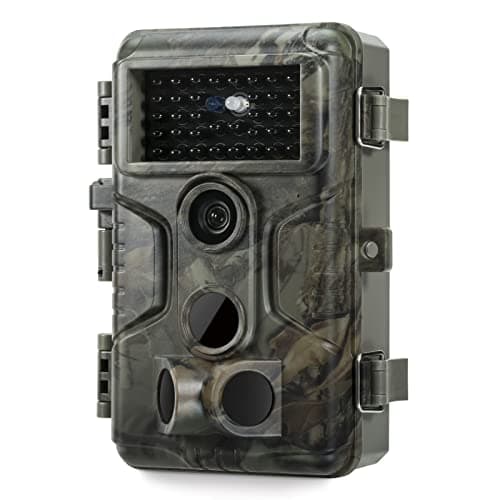
The best trail camera under $100 for most hunters is the GardePro A3S, and the reason has nothing to do with megapixels. It is an SD card camera, so the price on the listing is the entire price — there is no plan, no per-photo tier and no bill next season. At this budget that is the whole argument. Every dollar a cellular camera spends on an LTE radio, a dual-SIM board and an antenna is a dollar that did not go into the sensor or the night flash, and then it asks you for more money every month on top.
If you do want photos on your phone, there is exactly one honest sub-$100 route: the Spypoint Flex M, because Spypoint is the only major platform with a genuine free plan tier — roughly 100 photos a month, which is thin but real. And if you have already decided you will pay for a plan, the Moultrie Edge 3 is the best hardware that fits inside $100. Below, the three of them, and the first-year arithmetic nobody does before clicking buy.
The cost that actually decides it
Every other trail camera guide ranks cameras on trigger speed, resolution and detection range. Those matter, and we cover them below. But under $100 the three cameras worth owning are close enough on all three specs that none of them wins or loses on hardware. What separates them by a factor of several is what happens after the box is open.
A cellular camera is not a camera you bought. It is a camera you are renting the use of. The photos live on the manufacturer’s servers and reach you through their app, and that service is billed per camera, per month, for as long as you want to see pictures. An SD card camera is a thing you own: you walk to it, pull the card, and that is the end of the transaction forever.
What a sub-$100 camera costs in year one
Here is the same question priced out, using plan rates we verified against manufacturer and specialist retailer listings in August 2026 for our cellular trail camera plan comparison. Camera prices move constantly — see the live figures beside each pick — so these rows isolate only the recurring side.
| Camera and plan | Recurring cost, year one | What you get |
|---|---|---|
| GardePro A3S (SD card) | $0 | Everything the camera records, on a card you pull yourself. No app, no account, no tier |
| Spypoint Flex M, free tier | $0 | About 100 photos per month to your phone. Workable on a low-traffic trail, not on a feeder |
| Spypoint Flex M, Basic annual | $48 per camera | The step most free-tier users take by week three of the rut |
| Spypoint Flex M, Standard annual | $84 per camera | The plan most people actually end up on |
| Moultrie Edge 3, annual-rate plan | About $108 per camera at $8.99/mo | 1,000 images plus 10 videos a month - more than the camera cost |
| Moultrie Edge 3, Unlimited annual rate | About $156 per camera at $12.99/mo | Unlimited images plus 50 videos a month |
Read the bottom two rows again. On a Moultrie Edge 3 the plan costs more in twelve months than the cameradid. Multiply by three cameras, which is what most people actually run, and the cellular decision is a four-hundred-dollar-a-year decision wearing a ninety-nine-dollar price tag. That is not an argument against cellular — saved trips and less pressure on a spot are worth real money. It is an argument for making the decision with the number in front of you.
Figures are calculated from published rates, exclude promotions and taxes, and are an illustration rather than a quote. Plans change often; confirm current pricing on the brand’s own site before you commit.
The three cameras compared
| Camera | Type | Photo | Trigger | Detection | Night flash | Recurring |
|---|---|---|---|---|---|---|
| GardePro A3S | SD card | Up to 32MP (manufacturer claim) | Rated 0.1 s | Rated to about 85-100 ft | No-glow 940nm | None |
| Spypoint Flex M | Cellular (dual-SIM LTE) | 28MP, 720p video | Rated 0.4 s | Rated to about 90 ft | Low-glow infrared | Free tier to $120/yr |
| Moultrie Edge 3 | Cellular (all four US carriers) | 40MP, 1080p video | Rated 0.5 s | Rated to about 100 ft | Low-glow infrared | About $108-156/yr |
Every figure above is the manufacturer’s or retailer’s published rating, not our measurement. Treat trigger speeds and detection ranges at this price as best-case numbers — they are measured with a warm target crossing the center of the sensor at a convenient speed, and the field never offers that. The ranking they support is the right order; the absolute values are optimistic.
What you give up under $100 - and what you should not
| Give up: video quality and length | Budget cameras shoot short clips at modest resolution, and cellular models send a thumbnail rather than the clip. If video is the point, this is not the budget. |
|---|---|
| Give up: megapixels that mean anything | Nearly every sub-$100 camera advertises an interpolated figure far above its true sensor resolution. Judge image quality from sample photos, never from the number on the box. |
| Give up: warranty depth and support | A pro-grade camera carries a multi-year warranty and a phone number. At this price you are buying a disposable asset - plan on replacing rather than repairing. |
| Do NOT give up: no-glow or low-glow flash | A white-flash or bright red-glow camera on a pressured property educates deer and advertises itself to thieves. All three picks here use an infrared flash, and that is non-negotiable. |
| Do NOT give up: lithium batteries | Alkalines are the single commonest cause of a dead camera in November. This is the one place where spending $40 protects the $70 you just spent. |
| Do NOT give up: a real card | Use a name-brand SD card inside the camera's supported capacity and format it in the camera before the first sit. Card failures look exactly like camera failures. |
Best overall under $100: GardePro A3S
The A3S is the camera we would put on most trees at this budget, and it has been one of the longest-running best sellers in the category with a very large verified-owner base. GardePro rates it at a 0.1-second trigger, up to 32MP stills with a Starvis low-light sensor, 1296p video and a no-glow 940nm night flash— the invisible kind. It runs on eight AA cells or a 12V input and carries an IP66 weather rating.
What makes it the pick is not any one of those specs. It is that an A3S costs you nothing after the purchase, which means you can hang three of them for what one cellular camera plus one season of plan costs. Density beats features in scouting: three cameras covering three trails tell you far more about a property than one camera texting you photos of the wrong one.
Honest cons: you have to walk in to pull the card, which is exactly the human pressure cellular cameras exist to remove, so this is the wrong pick for a spot you are trying not to disturb. There is no app, no GPS theft recovery and no remote settings change — what you set in September is what you get in November. And the 32MP claim is interpolated, like everyone else’s at this price.
Best cellular under $100: Spypoint Flex M
The Flex M is the cheapest sensible way to get photos onto your phone, and the reason is the plan rather than the hardware: Spypoint is the only major platform offering a genuine free tier— roughly 100 photos per month per camera. That is the only route to cellular scouting with a $0 recurring cost, which is why it belongs on this page at all. The camera itself is rated at 28MP stills with 720p video, a 0.4-second trigger and about 90 feet of detection, and it uses dual preactivated SIMs to pick whichever US carrier is strongest where it hangs.
Be realistic about 100 photos. On a lightly used trail that is a month of useful intelligence. On a feeder, a mineral site or a scrape in the last week of October, you will burn it in two days and spend the rest of the month blind. The free tier is a reconnaissance budget, not a monitoring budget — and Spypoint knows that, which is what the $48 and $84 annual steps are for.
Honest cons: 720p video and a 0.4-second trigger are the weakest of the three on paper, the free tier throttles exactly when you most want photos, and you are choosing Spypoint as your platform for the life of the camera.
Best hardware at the top of the budget: Moultrie Edge 3
If you have already accepted a monthly bill, the Edge 3 is the best camera that fits inside $100. It is rated at 40MP stills, 1080p video, a 0.5-second trigger and a 100-foot detection range, with a low-glow flash, built-in memory, a live aim feature for pointing it correctly, remote settings changes and connectivity to all four major US carriers rather than one. Moultrie Mobile also integrates with onX, which is genuinely useful if you already map that way.
The catch is the one in the table above: Moultrie’s plans start around $8.99 a month on the annual rate and run to roughly $12.99 for unlimited, so the first year of service costs more than the camera. Buy it because you want the hardware and the platform, not because the camera price looked like a bargain.
Honest cons: the 0.5-second trigger is the slowest published figure of the three, which matters on a trail crossing rather than a feeder; the recurring cost is the highest here; and like every cellular camera it is a brand commitment, not just a purchase.
Buy the batteries with the camera
The commonest way a budget trail camera fails is not a defect. It is a set of alkaline AAs that lost voltage the first cold night in November and left you with a camera full of nothing for the three weeks that mattered. Lithium AA cells are rated from roughly -40°F to 140°F with very long shelf life, and they hold voltage nearly flat instead of sagging as they drain — a camera reads a sagging battery as a dead one.
A 24-pack covers three eight-cell cameras for a season. On a sub-$100 build it is the highest return per dollar you can spend, which is why we list it as a pick rather than an afterthought. Our trail camera battery and solar guide covers the solar side, which matters much more on a cellular camera because the radio is the real draw.
If your budget can stretch
One camera is worth naming above the line even though it does not belong on this page: the Tactacam Reveal Ultra. It sits clearly above $100, and we would take it over either cellular camera here if the money exists, because auto-carrier connectivity and Tactacam’s support record are what you are actually buying in a cellular camera. Our best cellular trail cameras guide ranks that whole tier, and best trail cameras covers the SD side without a price cap.
The bottom line
Decide the recurring cost first and the camera chooses itself. If you want no bill, buy the GardePro A3S— and buy two or three of them, because coverage is what scouting actually rewards. If you want photos on your phone for nothing, the Spypoint Flex M on the free tier is the only honest sub-$100 route, with its limits understood. If you are going to pay a plan anyway, the Moultrie Edge 3 is the best hardware inside the budget.
Check the GardePro A3S price on Amazon, put lithium cells in it, and then do the thing that decides whether any of this works: set it up properly. At this budget the setup is worth more than the camera.
Frequently asked questions
What is the best trail camera under $100?
The GardePro A3S for most people. It is an SD card camera, so the purchase price is the whole price - no plan and no monthly bill - and it covers the essentials with a no-glow 940nm night flash, a rated 0.1-second trigger and 1296p video. If you specifically want photos sent to your phone, the Spypoint Flex M is the only sub-$100 camera with a genuine free plan tier.
Can you get a cellular trail camera for under $100?
Yes - the Spypoint Flex M and Moultrie Edge 3 both sell under $100. The camera is the cheap part. Spypoint offers a free tier of roughly 100 photos a month per camera, and paid plans run about $48 to $120 a year; Moultrie's plans start around $8.99 a month on the annual rate, which means the first year of service costs more than the camera does. Price the plan before you price the camera.
Is a cheap trail camera worth it?
For coverage, yes. Three inexpensive cameras on three trails tell you more about a property than one expensive camera on the wrong one. What you give up is video quality, warranty depth and support, and any megapixel claim is interpolated at this price. What you must not give up is an infrared no-glow or low-glow flash and lithium batteries - those two things decide whether a budget camera works at all.
Do I need a subscription for a trail camera?
Only for a cellular camera. An SD card camera stores photos on a card you pull yourself and has no recurring cost ever. Cellular cameras bill per camera per month for the service that delivers photos to your phone, and the camera is locked to that one brand's platform for its lifetime - you cannot move a Spypoint camera onto Moultrie's plan or the reverse.
How many megapixels does a trail camera need?
Fewer than the box claims, and the number is close to meaningless at this price. Nearly every budget camera advertises an interpolated resolution well above its true sensor output, so a 40MP claim and a 32MP claim may come from similar hardware. Judge a camera from sample photos - especially night photos - and treat megapixels as marketing.
What batteries should I use in a budget trail camera?
Lithium AA cells. They are rated from roughly -40 to 140 degrees Fahrenheit and hold voltage nearly flat as they drain, while alkalines sag in the cold and a camera reads a sagging battery as a dead one. Alkaline batteries are the commonest reason a cheap camera has no photos from the coldest, best week of the season.
Is the Spypoint free plan actually usable?
On a low-traffic trail, yes. Roughly 100 photos a month is enough to learn whether deer use a crossing and roughly when. On a feeder, mineral site or a hot scrape in late October you will exhaust it in a day or two and then see nothing for the rest of the month. Treat it as a reconnaissance budget rather than a monitoring one.
Sources
- GardePro A3S published specifications - up to 32MP stills, 1296p video, rated 0.1 s trigger, Starvis low-light sensor, no-glow 940nm night flash, eight AA cells or 12V input, IP66
- Spypoint Flex M published specifications - 28MP stills, 720p video, rated 0.4 s trigger, about 90 ft detection, dual preactivated SIM multi-carrier LTE (USA)
- Moultrie Edge 3 published specifications - 40MP stills, 1080p video, rated 0.5 s trigger, 100 ft detection range, low-glow flash, built-in memory, live aim, connectivity to all four major US carriers
- Cellular plan rates (Spypoint free tier plus $48/$84/$120 annual; Moultrie $8.99-$12.99 per month on annual rates) as verified against manufacturer and specialist retailer listings in August 2026 for our plan comparison
- Energizer Ultimate Lithium AA published operating range of -40 to 140 degrees Fahrenheit and long-term storage rating
- Prices, product images and stock status via the Amazon price layer, refreshed daily
Keep reading
Gearing up before your next hunt?
See how we evaluate gear, then dig into the reviews and buying guides — written without inventory to sell.