Buying Guide
The Best Tree Stand Safety Harnesses, and How to Use One Properly
A harness only helps if you are attached from the ground up, and only saves you if you can get weight off your legs after a fall. Both of those are buying decisions.
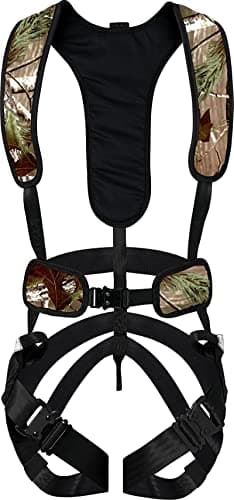
A tree stand safety system is three parts, not one: a TMA-certified full-body harness, a way to stay connected during the climb (a lifeline, or a lineman’s belt while hanging a stand), and a suspension relief strap so a fall does not become a medical emergency while you wait. Most hunters buy the first and skip the other two.
The three non-negotiables
| 1. A full-body harness, TMA-certified | Full-body means shoulder, chest and leg straps distributing load across your torso. Certification to the ASTM standards recognized by the Treestand Manufacturers' Association means it has been tested as a fall-arrest system under real loads. A belt or chest-only harness is not a fall-arrest device |
|---|---|
| 2. Continuous connection from the ground | A lifeline - a rope anchored above your stand and running to the ground - lets you clip in before you leave the ground and stay attached the whole way up and down. A lineman's belt does the same job while you are hanging a stand or climbing with sticks |
| 3. A suspension relief strap | A loop you can stand in after a fall to take pressure off the leg straps. Without it, hanging in a harness can become life-threatening in a short time. This is the cheapest piece of the system and the one most often missing |
If your budget only stretches to two of those three, buy the harness and the relief strap. A harness that eventually kills you by suspension is not a safety system.
Why the climb is the dangerous part
The mental model most hunters carry is that the danger is falling asleep in the stand. The actual distribution is different: a large share of falls happen during ascent and descent, and around one in five occur before the hunter has attached to the tree at all.
That is why the TMA guidance and every stand manufacturer say the same thing: wear the harness from the moment you leave the ground until your feet are back on solid ground. Climbing sticks ice up, ladder-stand rungs are slick in the dark, and the transition from stick to platform — where you are shifting weight, reaching and often carrying a bow — is the single highest-risk moment of the day. That transition only exists in a stick setup, which is one reason our climbing stick and hang-on stand guide treats sticks, platform and harness as one purchase.
A lifeline solves this. It costs less than a box of broadheads, hangs permanently on the tree, and means you clip in at the base and unclip at the base. Set them up on every stand you hunt, in daylight, before the season — the same trip you use to hang a stand or check a camera.
Suspension trauma, and the strap that prevents it
If you fall and the harness catches you, you are hanging vertically with leg straps compressing the femoral veins. Blood pools in your legs and stops returning to your heart efficiently. This is suspension trauma — also called orthostatic intolerance — and it can become dangerous in a matter of minutes, not hours.
The countermeasure is trivially simple: a suspension relief strap, a short loop attached to the harness that you deploy and stand in after a fall. Taking your weight onto your legs restores circulation and turns a lethal situation into an uncomfortable wait.
Alongside it, three habits that cost nothing:
- Carry a phone on your body, not in your pack. A pack hanging on a stand hook is useless if you are hanging six feet below it.
- Tell someone where you are and when you will be back. Every time, including the short evening sit.
- Keep a knife accessible. Cutting yourself free onto the ground is sometimes the correct decision, and it is only available if you can reach the knife.
Best overall: Hunter Safety System X-1
The X-1 Bowhunter harness at roughly $70 (verify current pricing) is the harness most experienced treestand hunters end up in. It is lightweight, designed specifically around drawing a bow, and comfortable enough to wear for a full sit without fighting it.
Comfort is a safety feature, not a luxury. A harness that is hot, restrictive or catches on your string is a harness you will start leaving in the truck by mid-October. The X-1 is cut to stay out of the way, which is why it stays on.
It comes in a genuine range of sizes including 2XL/3XL, which matters — a harness that does not fit properly is not doing its job.
Honest cons: it is not the cheapest, and like most harnesses the relief strap and lifeline are separate purchases you should budget for.
Best full-featured: Summit Pro Safety Harness
At roughly $110(verify current pricing), the Summit Pro is the most substantial harness here. Summit builds climbing stands, so its harnesses are designed around the specific movement pattern of a climber — the repeated stand-and-sit cycle that puts a hunter in and out of tension dozens of times on the way up.
If you hunt from a climbing stand rather than a fixed one, that design focus is worth paying for. See our guide to the best climbing tree stands for the stands it pairs with.
Honest cons: the most expensive harness on this page, and heavier than the HSS X-1 — which matters on a long walk in.
Best value: Muddy Magnum Elite
Around $53 (verify current pricing) for a full-body harness from a well-established treestand brand. This is the sensible answer for a hunter buying a second harness to leave in a box blind or to keep in the truck for a guest.
The case for a spare harness is stronger than it sounds. The most common reason a hunter climbs without one is that theirs is in the other truck, at camp, or on a different jacket. A cheap second harness removes that excuse entirely.
Honest cons: less refined and less comfortable over a long sit than the HSS, and the straps are bulkier under a jacket.
Cheapest TMA-style option: QOGIR harness
At roughly $50 (verify current pricing), the QOGIR is a lightweight adjustable full-body harness aimed squarely at the price-sensitive end of the market.
One firm instruction applies to any harness at this price: verify the certification claim on the listing before you buy. The relevant question is whether it is built and tested to the ASTM standards recognized by the TMA. If a listing does not say so clearly, buy a harness from a brand that does. This is not a category to save $20 in.
The lineman's belt and relief strap
The Muddy Magnum lineman’s belt package at roughly $40(verify current pricing) bundles the three accessories most harnesses do not include: a lineman’s belt, a tree strap and a suspension relief strap.
| Component | What it does | When you need it |
|---|---|---|
| Lineman's belt | Wraps around the tree and clips to both hips, letting you lean back and work with both hands free | Hanging a stand, climbing with sticks, trimming shooting lanes |
| Tree strap | The anchor point above your head that your tether attaches to | Every fixed-position stand. Set it above head height so a fall is short |
| Suspension relief strap | A loop you stand in after a fall to take pressure off the leg straps | Always. This is the piece that turns a survivable fall into a survived one |
| Lifeline (separate purchase) | A rope from the ground to above your stand with a sliding prusik knot, keeping you attached throughout the climb | Every stand you hunt regularly. Hang them before the season |
Fitting and inspecting a harness
- Fit it wearing your hunting clothes. A harness adjusted over a t-shirt in August will be loose over a full layering system in December. Adjust for the bulkiest configuration you will hunt in.
- Leg straps snug, not slack. You should be able to slide a flat hand under them and no more. Slack leg straps allow a longer fall and concentrate load badly.
- Tether short. Attach the tree strap above head height and keep the tether short enough that you cannot fall past your platform. A long tether is a long fall.
- Inspect every strap and stitch before each season. UV, abrasion and rodent damage all degrade webbing. Any cut, fray, chemical stain or heat damage retires the harness.
- Retire it after a fall. A harness that has arrested a fall has absorbed energy it cannot absorb twice. Replace it.
- Check the manufacturer’s service life. Most webbing safety equipment carries an expiry regardless of apparent condition. Read the tag.
The bottom line
A harness only helps if you are attached at the moment you fall. For the sequence that keeps you connected from the ground up, see how to hang a treestand by yourself.
Buy the Hunter Safety System X-1 if you want the harness you will actually keep wearing, the Summit Pro if you hunt from a climber, and the Muddy Magnum Elite as a second harness so there is never a reason to climb without one.
Then spend another $40 on the pieces that make it a system: a lineman’s belt, a suspension relief strap, and a lifeline on every stand you hunt. That last $40 is the best safety money in hunting.
Check the Hunter Safety System X-1 price on Amazon. If you would rather stay on the ground entirely, our ground blind vs tree stand comparison covers that trade honestly.
Frequently asked questions
Do I really need a tree stand safety harness?
Yes, and you need to wear it from the moment you leave the ground. Around 21% of treestand falls happen before the hunter has attached to the tree at all, and a large share of the rest occur during ascent and descent rather than while seated. A harness put on after you sit down protects you for the least dangerous part of the hunt.
What is a suspension relief strap and do I need one?
It is a short loop attached to your harness that you deploy and stand in after a fall, taking your weight off the leg straps. Hanging vertically in a harness compresses the femoral veins and causes blood to pool in the legs - suspension trauma - which can become life-threatening in minutes. It is the cheapest part of the system and the most commonly missing.
What is a lifeline for tree stand hunting?
A rope anchored above your stand and running to the ground, with a sliding knot your tether clips to. You attach at the base before you leave the ground and stay attached the whole way up and down. It is the single most effective way to eliminate the unattached-climbing risk, and it costs less than a box of broadheads.
What is the difference between a lineman's belt and a safety harness?
A lineman's belt wraps around the trunk and clips to both hips, letting you lean back and work with both hands free while hanging a stand or climbing with sticks. It is a work-positioning device, not a fall-arrest device. The full-body harness is what arrests a fall. You use both, at different moments.
How do I know if a harness is TMA certified?
Look for a clear statement that the harness is designed and tested to the ASTM standards recognized by the Treestand Manufacturers' Association as a full-body fall-arrest system. If a budget listing does not state this plainly, buy from a brand that does - this is not a category to save twenty dollars in.
When should I replace a tree stand harness?
Immediately after any fall it has arrested, because the webbing has absorbed energy it cannot absorb twice. Also replace it if you find any cut, fray, chemical stain, heat damage or rodent damage, and check the manufacturer's stated service life - most webbing safety equipment expires on a date regardless of how good it looks.
Sources
- Summit Treestands - safety harness guidance and full-body fall arrest system requirements
- iLearnToHunt - elevated hunting fall arrest systems (TMA/ASTM certification, unattached-fall figure)
- Malta Dynamics - guide to choosing a treestand harness (suspension trauma and relief straps)
- Product specifications, availability and pricing verified via the Amazon Creators API, 2026-08-19
Keep reading
Gearing up before your next hunt?
See how we evaluate gear, then dig into the reviews and buying guides — written without inventory to sell.