Buying Guide
What Grain Broadhead Should You Use on a Crossbow?
Start at 100 grains, because that is what crossbow packages are tuned and sighted with and what nearly every crossbow-rated head is built in. Move to 125 only when you have a specific reason - and know that a heavier insert does the same job for less disruption.
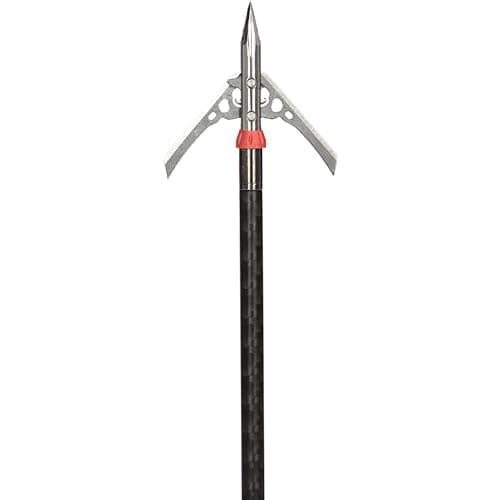
Use 100 grains unless you have a specific reason not to. It is the crossbow standard, it is the weight package bows ship sighted for, and it is the weight nearly every crossbow-rated head is actually built in. 125 grains moves your balance point forward and buys penetration, at the cost of a new zero and a shorter point-blank range.
The part most articles skip: head weight is a small slice of total arrow weight, and the insert is a cheaper, less disruptive place to add grains. Here is the whole decision, in the order it actually matters.
The short answer
| Default | 100 grains. Crossbow packages are sighted with 100-grain points, and the crossbow-specific heads worth buying are overwhelmingly built at 100 grains. |
|---|---|
| Move to 125 if | You are hunting something bigger than deer, your FOC is under about 10 percent, or you want more penetration and are willing to re-sight and accept more drop past 30 yards. |
| Never go below | Your crossbow maker's published minimum total finished arrow weight. That figure is a safety floor, not a preference - going under it is treated as a dry-fire-class risk. |
| The real lever | FOC, not head weight. 12 to 15 percent FOC is the commonly recommended window for broadhead flight, and you can reach it with inserts without changing heads at all. |
Why 100 grains is the crossbow default
Three reasons stack up, and together they are hard to argue with.
Your bow was sighted with it.Crossbow packages ship with field points and a scope sighted at a factory velocity that assumes a specific finished arrow weight, and the point in that calculation is almost always 100 grains. Change the head weight and you are not adjusting a rifle scope’s turret for a known offset — you are starting your sight-in over.
The crossbow-rated heads are built in it. Crossbow launch forces break heads that are fine on a compound, which is why makers build crossbow-specific versions. The Rage Hypodermic Crossbow NC is a 100-grain head; the Muzzy Trocar HBX is 100 grains; the Slick Trick Magnum 100 is, as the name says, 100 grains. The choice of weight is partly made for you by what exists.
You do not need the penetration.A typical modern crossbow produces 120 to 220 ft-lb at the muzzle against an Easton-published deer recommendation of 25 to 41 ft-lb. The classic argument for 125 grains — a low-poundage bow that needs help driving through — mostly does not apply to a 400 FPS crossbow shooting whitetails.
What 125 grains actually buys
| 100 grains | 125 grains | |
|---|---|---|
| Availability in crossbow-rated heads | Wide - the default | Limited; SEVR is a notable exception |
| Front-of-center balance | Lower FOC for the same shaft | Immediately higher FOC |
| Penetration | Ample for deer at crossbow energies | Better through hide and bone |
| Trajectory past 30 yards | Flatter | More drop; shorter point-blank range |
| Sight-in | What your package was set for | Requires a full re-sight |
| Broadhead flight | Good if FOC is already in range | More forgiving when FOC was marginal |
The general case for heavier heads is real: heavier heads penetrate hide, bone and muscle better than lighter heads that travel slightly faster, which is the same physics as the arrow-weight argument. The conventional dividing line comes from compound bows — under about 55 pounds of draw weight, 100 grains is recommended so you keep arrow speed, and higher draw weights can afford 125 for the penetration.
FOC: the number that matters more than head weight
Front-of-center is the percentage of your arrow’s total weight that sits forward of its balance point. It is what actually decides whether a broadhead flies like your field points, and the commonly recommended window is 12 to 15 percent as the balance between stability and trajectory.
| Under 10 percent | Expect broadhead flight trouble - groups that open up as soon as you screw a head on. |
|---|---|
| 12 to 15 percent | The recommended balance of stability and trajectory; the window to aim for. |
| Above 15 percent | Penetration keeps improving, at the cost of more drop at distance. |
This reframes the whole question. If your broadheads are not grouping with your field points, the problem is more likely low FOC than the wrong head weight — and going from 100 to 125 grains is one of several ways to fix it, not the only one.
Head weight is not arrow weight
A 25-grain change in head weight is a 25-grain change in a finished arrow that might weigh 400 to 450 grains. That is roughly six percent — enough to move your point of impact, nowhere near enough to transform penetration on its own.
For comparison, the TenPoint EVO-X CenterPunch16 finishes at 410 grains with a 92-grain brass insert and about 17 percent FOC. The insert alone is close to the weight of the broadhead. If your goal is front weight, the insert is the bigger and cheaper lever.
The zero shift nobody warns you about
Changing head weight changes total arrow weight, which changes velocity, which changes trajectory. Your 20-yard zero may survive; your 40- and 50-yard marks will not. A crossbow scope with fixed stadia or a speed dial makes this worse, not better, because the reticle assumes the velocity it was set for.
So budget the change properly: new heads, a target, and an afternoon. If you are not willing to re-sight, stay at the weight your bow is already zeroed for — that is a completely legitimate reason to buy 100-grain heads.
Crossbow-rated heads, by weight
| Head | Weights offered | Type | Cut | Why it is on this list |
|---|---|---|---|---|
| Rage Hypodermic Crossbow NC | 100 gr | Mechanical (rear-deploy) | 2 in | Crossbow-specific and collarless - the default choice at the default weight |
| Muzzy Trocar HBX | 100 gr | Hybrid (fixed + mechanical) | 1 in fixed + 1.625 in mechanical | 100 grains with a fixed cutting tip, for hunters who want penetration insurance |
| SEVR Titanium 2.0 | 100 or 125 gr | Mechanical (rear-deploy) | 2 in | The head that genuinely gives you the weight choice, and is rated for the fastest crossbows |
| Slick Trick Magnum 100 | 100 gr | Fixed, 4-blade | 1.125 in | The compact fixed profile most often reported to match field-point impact at crossbow speed |
Who each is for. Buy the Hypodermic if you want the standard answer and a big wound channel on deer. Buy the Trocar HBX if you want a fixed tip leading the cut without leaving 100 grains. Buy SEVR Titanium 2.0if you specifically want to try 125 grains, because it is the one here that offers it — it is sold per head at premium prices, so a full quiver costs real money.
The cheaper way to add front weight
If what you actually want is more FOC and more penetration, buy it at the insert rather than the head. A brass insert adds 50 to 90 grains in the right place, keeps you on a 100-grain head so your head options stay open, and — unlike a head swap — it is a change you make once to the arrow rather than every time you replace a blade.
You still have to re-sight after adding weight anywhere. The advantage of doing it at the insert is that you only do it once.
What your crossbow's maker expects
Before ordering, check two published numbers in your manual: the minimum finished arrow weight in grains, and the required nock type. The weight figure is the hard limit — it includes your broadhead, and dropping under it is treated as a dry-fire-class risk rather than a performance preference.
Owners of closed-system bows have less to decide. Ravin bows take Ravin’s proprietary clip-on nock arrows, and TenPoint states that using a moon or capture nock in any of its crossbows voids the warranty. In both cases the arrow is chosen for you and the head weight is the only variable left — which is another reason to leave it at 100 grains and spend the attention on shot placement.
Frequently asked questions
What grain broadhead should I use for a crossbow?
100 grains, unless you have a specific reason to change. It is the weight crossbow packages are sighted with, and it is the weight nearly every crossbow-rated broadhead is built in - the Rage Hypodermic Crossbow NC, Muzzy Trocar HBX and Slick Trick Magnum 100 are all 100-grain heads. Moving to 125 grains means re-sighting and accepting more drop past 30 yards.
Is 100 or 125 grain better for a crossbow?
100 grains is better for most crossbow hunters because it matches the factory sight-in and has far more crossbow-rated options. 125 grains penetrates hide and bone better and raises your front-of-center, which helps if your FOC is under about 10 percent or you are hunting something larger than deer. The trade is a full re-sight and a shorter point-blank range.
What grain broadhead for deer with a crossbow?
100 grains is ample. A modern crossbow produces roughly 120 to 220 ft-lb at the muzzle against Easton's published 25 to 41 ft-lb recommendation for medium game, which includes deer. The penetration argument for heavier heads comes from low-poundage compound bows and does not have much force at crossbow energies on a whitetail.
Do I have to re-sight my crossbow if I change broadhead weight?
Yes, past the closest distances. A 25-grain change in head weight changes total arrow weight, which changes velocity and trajectory. A 20-yard zero may survive; 40- and 50-yard marks generally will not, and crossbow scopes with fixed stadia or a speed dial assume the velocity they were set for. Budget an afternoon with a target before you hunt the new setup.
What is a good FOC for a crossbow arrow?
12 to 15 percent is the commonly recommended window as the balance between stability and trajectory. Below about 10 percent you should expect broadhead flight problems - groups that open up when you screw a head on. Above 15 percent penetration keeps improving but the arrow drops more at distance. For reference, the TenPoint EVO-X CenterPunch16 is published at about 17 percent FOC with a 92-grain brass insert.
Can I use a regular compound bow broadhead on a crossbow?
Sometimes, but it is the wrong default. Crossbow launch forces are higher than a compound's, which is why makers sell crossbow-specific versions of popular heads - the Rage Hypodermic Crossbow NC and Muzzy Trocar HBX are both built for crossbows. If you use a non-crossbow-rated head, check the maker's published maximum FPS rating for that model rather than assuming the word 'broadhead' covers it.
Does a heavier broadhead increase kinetic energy?
Slightly, and less than people expect. Kinetic energy is speed squared times total arrow weight divided by 450,800, so 25 extra grains on a 425-grain arrow is about a six percent weight increase, partly offset by the speed you lose. If raising energy is the goal, a brass insert adds 50 to 90 grains for less money and leaves your head options open.
Sources
- Petersen's Hunting - why you should switch to heavier broadheads: heads of 125 grains or slightly more penetrate hide, bone and muscle better than lighter heads that travel slightly faster
- Archery Country - what grain broadhead should I use: 100 grains recommended under about 55 lb draw weight for arrow speed, 125 grains for better penetration at higher draw weights, and 12 to 15 percent FOC as the recommended balance between stability and trajectory
- TenPoint - EVO-X CenterPunch16 specifications: 410 grains finished, 92-grain brass insert, about 17 percent FOC, Alpha-Nock HP
- TenPoint Crossbows FAQ - can I use a moon or capture nock: use of a moon or capture nock in any TenPoint crossbow voids the warranty
- Easton Archery kinetic-energy recommendations by game class, as published in Bowhunt America's arrow kinetic energy calculator - medium game (deer, antelope) 25 to 41 ft-lb
- Prices, product images and stock status via the Amazon price layer, refreshed daily
Keep reading
Gearing up before your next hunt?
See how we evaluate gear, then dig into the reviews and buying guides — written without inventory to sell.