Buying Guide
Are Crossbow Bolts Universal? What Actually Has to Match
Short answer: no, and the reason matters more than the answer. Of the four specs that decide whether a bolt fits your crossbow, three are safety specs - get them wrong and the bow can dry-fire. Only one is a performance preference. Here is how to check all four in about two minutes.
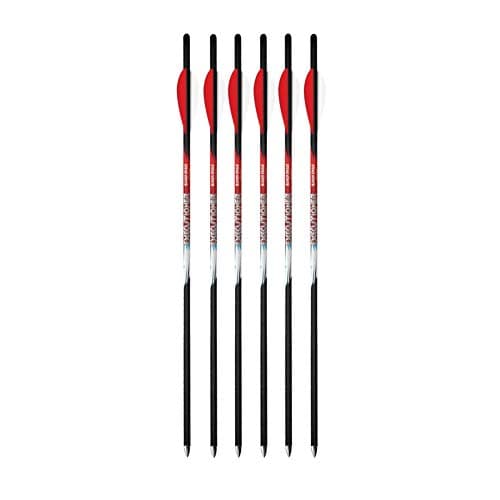
No. Crossbow bolts are not universal, and the reason is worth more to you than the answer: three of the four things that have to match are safety specs rather than preferences. Get the length, the nock or the weight wrong and the consequence is not a bad group — it is a string skipping the arrow, which is a dry fire, which cuts strings, derails cables, cracks limbs and occasionally hurts people.
The good news is that checking is quick and completely deterministic. Your crossbow’s manual names a minimum arrow length, a required nock type and a minimum finished weight. Match those three and the fourth — shaft bore, which decides which inserts and points thread in — follows from the arrow you bought. Here is each one in order of consequence, what the brands actually require, and a two-minute check to run before you add arrows to a cart.
The short answer, and the useful one
The honest version of “are crossbow bolts universal?” has three parts, and most articles only give you the first:
| Across brands: no | Different makers require different nocks and different minimum lengths, and two of them - Ravin and TenPoint - run genuinely closed nock systems. An arrow that is correct for one can void the warranty on another. |
|---|---|
| Within a brand: usually, but not always | TenPoint publishes a 20-inch minimum for most of its bows, 22 inches for the Vapor, and 18 inches for the Wicked Ridge Ranger family. Same maker, three different answers - so 'it's a TenPoint arrow' is not a fitment check. |
| At the business end: yes, mostly | Field points and broadheads are standardized on an 8-32 thread, so the point you screw into a correctly fitted arrow is very likely to be interchangeable. The shaft is the part that is not. |
In other words: the front of the arrow is close to universal and the back of it is not. Which is unfortunate, because the back is the end the string hits.
The four specs that decide fitment
| Spec | Where to find it | What happens if it is wrong | Type |
|---|---|---|---|
| Minimum arrow length | Your manual, or the maker's FAQ by model | Too short and the string can leave the arrow early - a partial or full dry fire | Safety |
| Nock type | Your manual; makers are explicit about this | The string rides over or under the nock and skips the arrow entirely | Safety |
| Minimum finished weight | Your manual, stated in grains including the point | Below the floor the bow dumps energy it cannot transfer - treated as a dry-fire-class risk | Safety |
| Shaft bore / insert fit | The arrow's own spec, not the bow's | Inserts and outserts will not seat; you cannot fit points reliably | Fit |
1. Minimum arrow length (safety)
Length is model-specific, not brand-specific, and it is published. TenPoint’s own FAQ is the clearest example of why you cannot generalize even inside one company:
| Most TenPoint, Wicked Ridge and Horton bows | 20 inches minimum - these were designed around a 20-inch arrow |
|---|---|
| TenPoint Vapor | 22 inches minimum |
| Wicked Ridge Ranger, Lady Ranger and Ranger X2 | 18 inches minimum |
| Compact and bullpup bows generally | Often shorter, and often a hard maximum rather than a minimum - several 30-inch bullpups ship 20-inch arrows and will not take longer ones |
Two practical notes. First, a shorter bow does not automatically mean a shorter arrow is allowed — length requirements track the rail and the power stroke, not the overall length of the bow. Second, some bows constrain you at the top end too: if your crossbow ships 20-inch arrows and has a short rail, buying 22-inch shafts because they were on sale is not a neutral decision.
If you are shopping for the bow rather than the arrows, this is one of the specs worth checking before you buy, alongside the ones we cover in best crossbows under $1,000 and most compact crossbows— a bow that eats an unusual arrow length commits you to buying that length for the life of the bow.
2. Nock type (safety)
The nock is the single most important fitment spec, because it is the interface between a string moving at several hundred feet per second and the arrow it is supposed to push. If the string can slip over or under the nock, it skips the arrow and the bow effectively dry-fires.
- Flat nock— a plain flat back. No indexing, so vane orientation does not matter, but string engagement is comparatively loose and it is the design most associated with shoot-over and shoot-under. It cannot be used on a rail-less crossbow.
- Half-moon (moon) nock — a shallow groove cut into a flat nock. It must be indexed to the string when you load it; loaded rotated wrong, the bow can dry-fire or partially dry-fire. The most common hunting nock on the open market.
- Capture / full-containment nock— longer ears and a deeper groove that hold the string positively. These were developed as crossbows got narrower and stored more energy, which is exactly when a string is most able to find its way past a shallow nock.
- Omni-Nock— TenPoint’s design using six micro-grooves to form three string channels, so there is no wrong rotation to load it in.
- Alpha-Nock— TenPoint’s current design for ultra-narrow bows, which the company says it can be used in any TenPoint, Wicked Ridge or Horton crossbow without voiding the warranty, even on bows that originally specified a flat nock or an Omni-Nock.
- Ravin’s clip-on nock— fully proprietary. Ravin arrows and nocks work only as a system, because the arrow rides a frictionless rail rather than a flight groove.
The practical upshot: nock type is the spec most likely to be wrong when someone buys arrows on price, because the shaft, the vanes and the length can all look right on the listing photo while the nock is incompatible. Our best crossbow bolts guide ranks arrows on straightness, weight and nock once you know which nock you need.
3. Shaft bore and inserts (fit)
This is the spec that confuses people most, because two different diameters get quoted and they measure different things. A crossbow shaft has an outside diameter (what the rail and quiver see) and an inside diameter or bore (what inserts, outserts and nocks thread into). Fitment lives on the inside.
| 22/64 shafts | About .344 in outside - the long-standing full-size crossbow convention. Inserts are frequently maker-specific: TenPoint sells 22/64 inserts engineered for its own Pro Elite bolts rather than as a generic part. |
|---|---|
| 9mm / .300 in bore shafts | Easton's 9mm crossbow bolts publish a .300 in inside diameter and are described as taking universal bolt components - this is the size where 'universal' components genuinely means something. |
| Micro-diameter shafts | Smaller-bore shafts take their own inserts and half-outs. Light, stiff and tolerant of high speed, but definitively not interchangeable with 22/64 components. |
The honest conclusion: an insert advertised as “universal” is universal within a bore size, not across them. Treat the insert as part of the arrow you are buying rather than as a part you will source later, and if you are replacing components, match them to the shaft’s published bore rather than to the word on the packet.
4. Finished weight (safety floor, then preference)
Every crossbow publishes a minimum finished arrow weight in grains— shaft, insert, vanes, nock and point together. That figure is a safety floor, not a suggestion: a bow firing an arrow lighter than its minimum cannot transfer all the energy it stored, and the leftover goes into the bow. Makers treat going under it in the same family of risk as a dry fire, and it is just as likely to end a warranty claim.
Above that floor, weight becomes preference, and the trade is the familiar one: a heavier arrow carries more momentum and penetrates better, a lighter one flies flatter. A typical full-size hunting setup lands around the 400-to-450-grain mark with a 100-grain point — and note that the point is part of the total, so swapping a 100-grain head for a 125 changes your finished weight by a quarter of an ounce and your zero with it.
Speed also affects what you can put on the front. Published maximum FPS ratings exist on some broadheads and they must be checked per model rather than assumed from the word “crossbow” — we go through that in crossbow vs bow broadheads, and the arrow-weight-and-trajectory side in how far a crossbow can shoot.
What genuinely is universal
It is worth being precise about the parts that dointerchange, because the blanket answer “nothing is compatible” sends people to the dealer for parts they could buy anywhere:
- Point and broadhead threads. The 8-32thread is the common standard — Easton describes its inserts as compatible with common 8-32 broadheads — so a correctly fitted arrow will take essentially any screw-in field point or broadhead of that thread.
- Vanes and fletching. A re-fletch is a re-fletch. Profile affects stability rather than fitment.
- Rail lube, string wax and cocking devicesare bow accessories, not arrow components, and are broadly cross-compatible — see crossbow cocking devices.
- Nocks within a system. Nocks are replaceable, which is the quiet answer to a lot of fitment problems: a correctly sized shaft can often be re-nocked to the type your manual demands. Some arrows ship with more than one style in the box for exactly this reason.
Fitment by brand
| Your crossbow | Nock requirement | Length | What to buy |
|---|---|---|---|
| Ravin | Ravin's proprietary clip-on nock only | Ravin's own arrow spec | Ravin arrows, full stop - the bow is warrantied around the system |
| TenPoint / Wicked Ridge / Horton | Alpha-Nock or Omni-Nock per model; moon and capture nocks void the warranty | 20 in most models, 22 in Vapor, 18 in Ranger family | TenPoint-spec arrows such as the EVO-X CenterPunch line |
| CenterPoint | Factory nock per model; the CP400 takes its own dedicated nock | Commonly 20 in; several compacts are 20 in maximum | CenterPoint factory arrows, or a third-party arrow re-nocked to spec |
| Barnett, Killer Instinct, and most open-market bows | Usually half-moon or flat - check the manual, do not guess | Commonly 20 or 22 in | An arrow supplied with both nock styles, so you fit the right one |
| Excalibur and other recurve crossbows | Flat nocks are common; rail-less designs rule flat nocks out | Per model | Check the manual before anything else - recurve fitment differs from compound |
The widest-fitting arrow we know of: Black Eagle Executioner
For the large middle of the market — Barnett, Killer Instinct, older bows of every stripe — the Executioner is as close to a universal crossbow arrow as the category offers, and the reason is specifically a fitment reason rather than a quality one: it comes in 20 and 22 inch lengths, in your choice of ±.003 or ±.001 straightness, and Black Eagle ships it with both half-moon and flat nocksand brass inserts. You fit the nock your manual names instead of hoping the factory guessed right. Bare shafts run about 323–326 grains, so a finished arrow with a 100-grain head sits right in the usual hunting window.
Honest cons.No capture or proprietary nock option means it is the wrong arrow for TenPoint and Ravin bows — it does not solve those, it just does not pretend to. The .001 version creeps toward premium pricing. And stock on this listing has been very thin; check the live row rather than assuming availability.
Ravin: a closed system, and why
If you own a Ravin, this section is mercifully short: your choice is made. Ravin bows are engineered and warrantied around Ravin’s own arrow-and-clip-nock system, because the arrow rides a frictionless rail rather than sitting in a flight groove. That is not manufacturer gatekeeping for its own sake — the nock has a different job on that platform than it does on a conventional rail.
Honest cons.Per-arrow cost is the highest here and you cannot shop around, so arrows are a standing line in the cost of Ravin ownership rather than a one-time purchase. Third-party clip-nock shafts exist; using them puts both your warranty and your dry-fire risk on you. Budget accordingly — we said the same in best crossbow for the money, and the platform argument is in Ravin vs TenPoint.
TenPoint, Wicked Ridge and Horton
TenPoint is the brand with the most explicit published rules, which makes it the easiest to get right and the most expensive to get wrong. Moon and capture nocks void the warranty across the range. Alpha-Nocks are usable across TenPoint, Wicked Ridge and Horton bows per the company, including on bows that originally specified a flat nock or Omni-Nock — but if your bow requires Alpha-Nocks, a moon or capture nock is not a substitute. Minimum length is 20 inches for most models, 22 for the Vapor, 18 for the Ranger family.
The EVO-X CenterPunch16 is the reference arrow for the compacts that take it: each shaft inspected to ±.001, packs weight-matched to about a grain, a finished weight of 410 grains within a grain, a heavy 92-grain brass insert putting front-of-center at 17 percent, and the Alpha-Nock HP with its deep groove and elongated ears.
Honest cons.Premium priced, and the 16-inch length plus Alpha-Nock fitment means it belongs on the bows it was designed for — the Havoc RS440 and Siege RS410 are named on the listing. This is a system arrow, not a universal one. Confirm your model’s minimum length before ordering 16-inch shafts.
CenterPoint
CenterPoint has an enormous installed base and the low-drama answer for most of it is the house arrow: the factory nock your Amped, Sniper or Sinister was tuned and warrantied with, in the length your model takes. The CP400is the instructive exception — it uses its own dedicated nock, which CenterPoint sells separately, and which is about as clear a demonstration as you could want that nock fitment is model-specific rather than brand-specific.
Honest cons.House arrows are rarely the best-made arrows available at the price, and the straightness tolerance is a value tolerance rather than a match one. The trade-off is that they are unambiguously the right fitment, which on this particular spec is worth more than tolerance. Several CenterPoint bullpups also cap arrow length at 20 inches — see our Sinister 430D review for an example of that constraint in practice, and the CenterPoint brand guide for the range.
The two-minute check before you order
| 1. Open the manual to the arrow page | Write down minimum length, required nock, and minimum finished grain weight. If the manual is lost, every major maker publishes these by model on its own site. |
|---|---|
| 2. Read the listing for the nock, not the shaft | The shaft, vanes and length are easy to see in a photo. The nock is the spec that decides safety, and it is usually one line of text. |
| 3. Add up the finished weight | Shaft plus insert plus vanes plus nock plus your point. Confirm the total clears your bow's minimum with the point you actually hunt. |
| 4. Check the bore before buying components | Inserts, outserts and nocks are 'universal' only within a bore size. Match them to the shaft's published inside diameter. |
| 5. Flex-test every arrow before every use | Grip the shaft with both hands, twist, flex and squeeze, listening for cracking, and rotate around the full circumference. Any sign of damage and the arrow is finished - a cracked carbon shaft can come apart at the shot. |
Once fitment is settled, the quality question is a separate and much more enjoyable one: best crossbow bolts ranks arrows on straightness, weight matching and nock design, and best crossbow broadheads covers what goes on the front. If your groups are the actual problem rather than your arrows, start with how to sight in a crossbow.
Frequently asked questions
Are crossbow bolts universal?
No. Four specs have to match - minimum arrow length, nock type, finished weight and shaft bore - and three of them are safety specs rather than preferences. Two major brands run closed systems: Ravin bows take only Ravin's proprietary clip-on nock arrows, and TenPoint states that using a moon or capture nock in any of its crossbows voids the warranty. The one genuinely interchangeable part is the point: broadheads and field points are standardized on an 8-32 thread.
Will any 20-inch bolt fit my crossbow?
Not necessarily. Length is only one of the four fitment specs, and it is the easiest one to get right. A 20-inch arrow with the wrong nock is still the wrong arrow, because the nock is what the string engages. Check your manual for the required nock type and the minimum finished grain weight as well as the length, and confirm all three on the listing before ordering.
What happens if you shoot a bolt that is too short or too light?
Both are treated as dry-fire-class risks. An arrow under the published minimum weight means the bow cannot transfer all the energy it stored, and the surplus goes into the bow itself. An arrow shorter than the minimum, or one whose nock lets the string ride over or under it, can let the string leave the arrow early - which cuts strings, derails cables, can crack limbs and occasionally injures the shooter. It will also end a warranty claim.
What is the difference between a half-moon and a flat nock?
A flat nock is a plain flat back with no indexing, so vane rotation does not matter when you load it - but string engagement is comparatively loose and it is the design most associated with shoot-over and shoot-under, and it cannot be used on a rail-less crossbow. A half-moon nock has a shallow groove that must be indexed to the string every time you load; loaded rotated wrong, the bow can dry-fire or partially dry-fire. Use whichever one your manual names, not whichever one came in the box.
Can I put different nocks on my existing crossbow bolts?
Usually yes, and it is the standard fix for a fitment mismatch - nocks are replaceable components, and some arrows ship with more than one style in the box for exactly that reason. Two conditions apply: the replacement nock has to match the shaft's bore, and it has to be a nock type your crossbow's maker permits. TenPoint specifically says that if your bow requires Alpha-Nocks you cannot substitute a moon or capture nock, so re-nocking is not a way around a closed system.
Do crossbow bolts and arrows mean the same thing?
In practice yes - the modern products sold as crossbow 'bolts' and crossbow 'arrows' are the same thing, and the makers themselves use both words. Historically a bolt was shorter and often unfletched. Nothing about fitment depends on which word a listing uses, which is worth knowing because searching one term and not the other will hide half the market from you.
Are crossbow broadheads interchangeable between bolts?
Mostly, because the 8-32 thread is the common standard across screw-in points and broadheads, so a correctly fitted arrow will accept essentially any broadhead of that thread. Two caveats: changing head weight changes your finished arrow weight and therefore your zero, and some broadheads carry a published maximum FPS rating that must be checked per model rather than assumed from the word 'crossbow'.
Sources
- TenPoint Crossbows FAQ - what is the minimum arrow length that I can shoot with my crossbow: 20 in minimum for most TenPoint, Wicked Ridge and Horton bows; 22 in for the TenPoint Vapor; 18 in for the Wicked Ridge Ranger, Lady Ranger and Ranger X2
- TenPoint Crossbows FAQ - can I use a moon or capture nock: 'No. Use of a moon or capture nock out of any of our crossbows will void the warranty,' and Alpha-Nock-required bows cannot substitute a standard moon or capture nock
- TenPoint Crossbows - the Alpha-Nock: usable in any TenPoint, Wicked Ridge or Horton crossbow without voiding the warranty, including bows that originally required a flat nock or Omni-Nock; 28 percent accuracy claim on ultra-narrow bows
- TenPoint Crossbows - are you using the best nock for crossbow bolts: flat, half-moon and capture nock characteristics, indexing requirement and shoot-over / shoot-under failure modes
- American Hunter - TenPoint introduces the all-purpose Omni-Nock (six micro-grooves, three string channels)
- Ravin Crossbows - arrows and nocks: the proprietary clip-on nock system
- TenPoint - EVO-X CenterPunch16 specifications: +/-.001 straightness, weight-matched packs, 410 grains, 92-grain brass insert, 17 percent FOC, Alpha-Nock HP
- Black Eagle Arrows - Executioner crossbow arrows: 20 and 22 in, .003 and .001 options, both half-moon and flat nocks supplied
- CenterPoint Archery - crossbow arrows, including the CP400's dedicated nock
- CenterPoint Archery - arrow and bolt safety: never use an arrow with any sign of damage; flex and inspection procedure
- Easton 9mm crossbow bolts - .300 in inside diameter, described as fitting universal bolt components; Easton 4mm 8-32 half-outs described as compatible with common 8-32 thread broadheads
Keep reading
Gearing up before your next hunt?
See how we evaluate gear, then dig into the reviews and buying guides — written without inventory to sell.