Buying Guide
The Best Break Barrel Air Rifles (and How to Shoot One)
A break barrel needs nothing but pellets - no pump, no tank, no compressor. It also recoils in two directions, which is why most people shoot them badly.
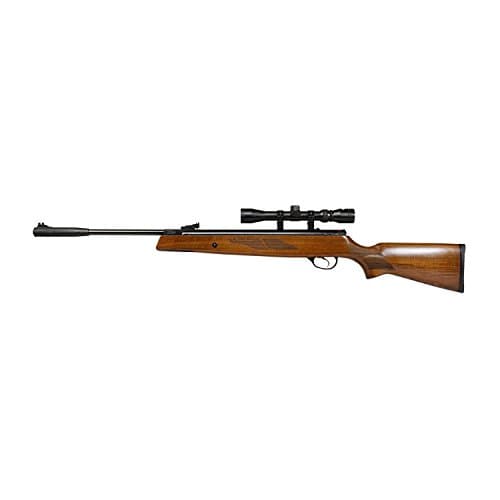
A break barrel air rifle is completely self-contained. You cock it by folding the barrel, load one pellet, and shoot. No pump, no tank, no compressor, no fill fittings — nothing between you and pest control except a tin of pellets.
The cost of that independence is a recoil cycle unlike anything else in shooting: the piston drives forward, then the rifle jumps back. That double impulse happens while the pellet is still in the barrel, which is why a break barrel that groups an inch for one shooter groups four for another with the same rifle.
Why buy a break barrel at all
| Break barrel | PCP | |
|---|---|---|
| Equipment needed | Pellets only | Pump, tank or compressor - $70 to several hundred |
| Cost of entry | $90 to $300 | $265 and up, plus fill gear |
| Shots before refill | Unlimited - cock and go | 20 to 100+ per fill, then you stop |
| Ease of accurate shooting | Demanding - technique-sensitive | Easy - almost no recoil to disturb the shot |
| Noise | Moderate to loud unless moderated | Generally quieter |
| Maintenance | Occasional seal service | Fill discipline, o-rings, regulator |
| Best for | Occasional pest control, remote use, low budget | Volume shooting, precision, quiet work |
The killer feature is the third row. A break barrel never runs out. If you shoot a few times a month around a barn or a garden, the PCP equipment chain is overhead you do not need. Our PCP vs break barrel comparison works through the decision in full.
Gas piston vs spring: the one spec that matters
Break barrels come with one of two power plants, and the difference is genuinely worth paying for.
| Coiled spring (springer) | The traditional design. Cheap and proven, but the spring weakens if left cocked, behaves differently in cold weather, and produces a harsher, more variable firing cycle |
|---|---|
| Gas piston / gas ram | A sealed gas cylinder in place of the spring. More consistent shot to shot, unaffected by being left cocked, better in cold, and a smoother firing cycle that is easier to shoot well. Marketed as Vortex by Hatsan and IGT by Gamo |
| Practical difference | A gas piston is easier to shoot accurately and holds its performance longer. On a rifle you intend to keep, it is the better buy - and most rifles on this page have one |
The artillery hold, and why yours groups badly
The reason is mechanical. In a firearm, the bullet has left the barrel before recoil moves the gun. In a spring or gas-piston airgun, the piston slams forward and the rifle jumps back while the pellet is still traveling down the barrel. Anything that changes how the rifle moves during that window changes where the pellet goes.
A firm grip does not stop the movement; it makes it inconsistent, because your grip pressure varies shot to shot. A loose, repeatable hold lets the rifle do the same thing every time. That is the artillery hold.
- Rest the forend on an open, flat palm rather than gripping it.
- Keep the same hand position on the stock every shot — mark it if you have to.
- Light shoulder contact. Do not pull the rifle in.
- Never rest the forend directly on a hard bag or bench — rest your hand on the bag instead.
- Follow through. Hold the sight picture for a full second after the shot.
Best overall: Hatsan Mod 95 Vortex QE
Around $203(verify current pricing) in .22, with Hatsan’s Vortex gas piston and Quiet Energy moderator. It is the most complete break barrel here: the right power plant, real noise reduction, and a build that outlasts the budget tier.
The moderator matters more than most buyers expect. Break barrels are loud, and if you are shooting pests near neighbors, noise is what turns a useful tool into a complaint.
Honest cons: heavy, single shot, and the factory scope is the weak point — budget to replace it. It also has a firm cocking effort that some shooters find tiring.
Best multi-shot: Gamo Swarm Magnum 10X GEN3i
Around $299 (verify current pricing) for a 10-shot inertia-fed break barrel rated at 1,300 fps in .22. The magazine is what makes it interesting.
Traditional break barrels are single shot: break, load a pellet by hand, close, shoot. The Swarm system indexes a new pellet from a 10-round magazine as you cock, so a follow-up shot takes a second rather than fifteen. For pest control where a second target presents itself immediately, that is a real capability change.
Honest cons: 1,300 fps in .22 comes from very light alloy pellets, and those are not what you should hunt with — expect meaningfully lower real-world velocity with proper lead pellets. The magazine adds complexity to a design whose appeal is simplicity. Our full Swarm Magnum review has the detail.
Best value multi-shot: Gamo Swarm Maxxim 10X GEN2
Around $210 (verify current pricing) for the same 10-shot magazine concept at 1,000 fps in .22. It saves you roughly $90 against the Magnum and gives up top-end velocity you probably should not be using anyway.
For pest control inside 30 yards with proper lead pellets, the Maxxim and the Magnum will do very similar work. This is the sensible pick of the two.
Honest cons: same magazine complexity, same reliance on the artillery hold, and the same factory scope caveat.
Quietest for the money: Gamo Swarm Whisper .22
Around $164(verify current pricing) for a .22 break barrel with Gamo’s Whisper noise-dampening system. If your shooting happens where sound is the constraint — suburban gardens, close neighbors, quiet mornings — this is the priority.
Noise reduction on airguns is also an accuracy consideration. Pellets approaching the sound barrier become unstable, so a rifle that is quieter is often a rifle that is shooting at a more accurate velocity. If noise is your main constraint, our roundup of the quietest air rifles for backyard shooting ranks break barrels and PCPs on report rather than power.
Honest cons: less powerful than the Magnum, and moderators add length to a rifle that is already long.
Cheapest real one: Umarex Prymex .22
Around $90(verify current pricing). The Prymex is the honest floor of this category — a functional .22 break barrel rather than a toy.
Buy it to find out whether airgunning is for you, to keep in a barn, or to hand to someone learning. At this price it is genuinely disposable, and a season with one teaches you more about what you actually want than any amount of reading.
Honest cons: coarse trigger, basic sights and scope, and shot-to-shot consistency that will limit your groups regardless of technique. The artillery hold is not optional here — it is the only way this rifle shoots at all.
Best .177: Gamo Wildcat Whisper
Around $148 (verify current pricing) for a .177 break barrel with the IGT gas piston, Whisper moderation and a 4x32 scope included.
This is the pick if your use is backyard targets and casual plinking rather than hunting. The .177 shoots flatter, pellets are cheaper, and the gas piston gives you the smoother firing cycle that makes paper accuracy achievable. For hunting, choose one of the .22 rifles above — the reasoning is in our .22 caliber guide.
Why the factory scope usually fails
Break barrels destroy scopes. The double-direction recoil is harder on optics than a centerfire rifle is, and it fails scopes in a way most are not designed for — the forward impulse drives internals in the opposite direction to what a firearm scope expects.
- Buy a scope rated for spring-piston airguns. This is a real specification, not marketing. A rifle scope that survives a magnum centerfire may not survive a springer.
- Use a scope stop. Airgun rails are shallow and scopes creep backwards under recoil. A stop pin or a stop-equipped mount prevents it.
- Expect close focus limits. Many rifle scopes will not focus inside 20 or 30 yards, which is where most airgun shooting happens. Airgun-specific scopes parallax down to 10 yards or less.
Our air rifle scope guide covers the models built for this. Combine that with the right pellet from our pellet guide and a mediocre break barrel starts shooting like a much better one.
The bottom line
If $200 is a hard ceiling, read best air rifles under $200first — at that price a recoilless multi-pump is usually easier to shoot well than any break barrel here.
The Hatsan Mod 95 Vortex QE is the best all-round break barrel here: gas piston, real moderation, .22 caliber and a build that lasts. If you want fast follow-up shots, the Gamo Swarm Maxxim gives you the 10-shot magazine for $90 less than the Magnum. If noise is your constraint, the Swarm Whisper. If you are simply finding out whether you like this, the Umarex Prymex at $90.
Then learn the artillery hold before you blame the rifle. It is the difference between a two-inch group and a six-inch one with identical hardware.
Still weighing powerplants? Our roundup of the best air rifles of 2026 puts break barrels up against PCPs and multi-pumps and names a pick for each job.
Frequently asked questions
What is the best break barrel air rifle?
The Hatsan Mod 95 Vortex QE in .22 at around $203 is the best all-round choice - it has a gas piston rather than a coiled spring, a genuine noise moderator, and a build that outlasts the budget tier. For fast follow-up shots the Gamo Swarm Maxxim's 10-shot magazine is the better pick, and the Umarex Prymex at $90 is the cheapest genuinely usable option.
Is a gas piston better than a spring air rifle?
Yes, for most buyers. A gas piston is more consistent shot to shot, does not weaken if you leave the rifle cocked, performs better in cold weather, and produces a smoother firing cycle that is easier to shoot accurately. Hatsan calls it Vortex and Gamo calls it IGT; the price difference is small enough to be worth paying on a rifle you intend to keep.
Why does my break barrel air rifle shoot inaccurately?
Almost always because you are holding it too firmly. In a springer or gas-piston airgun, the piston slams forward and the rifle jumps back while the pellet is still in the barrel, so anything that changes how the rifle moves changes where the pellet lands. Use the artillery hold - forend resting on an open palm, light shoulder contact, identical hand position every shot.
What is the artillery hold?
A deliberately loose, repeatable hold for spring and gas-piston airguns. Rest the forend on an open flat palm rather than gripping it, keep the same hand position every shot, make only light shoulder contact, never rest the forend directly on a hard bag, and follow through for a full second after the shot. It is the opposite of correct firearm technique and it is essential here.
Do I need a special scope for a break barrel air rifle?
Yes. The double-direction recoil of a break barrel destroys scopes not built for it, including many that survive centerfire rifles fine. Buy one rated specifically for spring-piston airguns, fit a scope stop because airgun rails let scopes creep backwards, and check the close-focus limit - many rifle scopes will not focus inside 20 to 30 yards.
Are advertised break barrel velocities accurate?
They are measured with the lightest alloy pellets a rifle is rated for, which are not what you should hunt with. A rifle advertised at 1,300 fps in .22 will shoot meaningfully slower with proper lead hunting pellets - and that slower, heavier pellet is usually both more accurate and more effective on game.
Sources
Keep reading
Gearing up before your next hunt?
See how we evaluate gear, then dig into the reviews and buying guides — written without inventory to sell.