Buying Guide
Quietest Air Rifles: What Actually Makes an Airgun Backyard-Quiet
A shroud is only one of the three sounds your neighbors hear. Here is what each of them costs you, which rifles genuinely solve the problem, and the one free change that quiets almost any air rifle you already own.
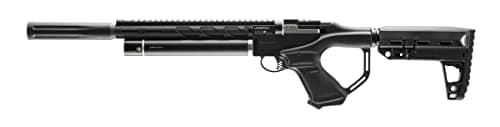
Nobody shops for a quiet air rifle because they want to be sneaky. They shop for one because the yard is small, the fence is close, and the difference between a hobby they can do on a Tuesday evening and one they can only do somewhere else is a matter of a few decibels.
The problem is that “quiet” is the least standardized claim in the airgun business. There is no agreed test, no agreed distance and no agreed unit — one maker advertises a percentage, another advertises decibels, and a third simply calls the barrel a moderator and leaves it there. Airgun Depot puts it plainly: a uniform standard measurement has not been set across manufacturers. So this guide starts with the physics, which does not vary by brand, and only then gets to the rifles.
An air rifle makes three sounds, not one
Shroud marketing only addresses one of them. Buy for the shroud alone and you will fix a third of the problem, then wonder why the neighbor still looks over.
- Muzzle report— the burst of compressed air leaving the barrel behind the pellet. This is the one a shroud, a baffle stack or an integral moderator works on, and it is the loudest single source on a powerful PCP, because a PCP dumps a larger volume of air at higher pressure than a springer ever does.
- Mechanical noise— the spring, piston, hammer and valve doing their work. On a spring or gas-piston rifle this is a real, separate sound: a twang and a thump you hear at the gun rather than downrange. No moderator touches it, which is why a moderated springer never goes truly silent, and why PCPs start with an advantage they did not have to engineer.
- Impact noise— the pellet hitting whatever you are shooting at. Ignored in every product listing, and on a well-moderated rifle it is routinely the loudest thing happening. We deal with it further down, because it is also the cheapest to fix.
The pellet is the volume knob
This is the part that saves people the most money, so it comes before the picks. A pellet that exceeds the speed of sound produces a sonic crack, and that crack happens in front of the muzzle, where no shroud, baffle or moderator can reach it. Airgun Depot places the barrier at roughly 1,060 to 1,200 fps depending on conditions, with 1,125 fps the usual working figure. Go past it and, in their words, you lose one of the main benefits of an airgun.
The cleanest demonstration comes from Hard Air Magazine’s chronograph work on the Umarex Gauntlet 2 in .22. One rifle, one fully shrouded barrel, three pellets:
| 10.03 gr H&N Field Target Trophy Green | 1,160.90 fps - supersonic, so it cracks on every shot. 30.49 ft-lbs |
|---|---|
| 14.3 gr Crosman Premier HP | 1,066.76 fps - under the barrier on a cool day, close to it on a warm one. 36.14 ft-lbs |
| 25.39 gr JSB Jumbo Monster | 897.58 fps - comfortably subsonic, and the most energy of the three. 45.43 ft-lbs |
Read that table twice. The heaviest pellet was the quietest andthe most powerful. Light, fast pellets are a marketing device rather than a performance one — HAM notes that above about 1,125 fps a pellet breaks the sound barrier and causes a loud sonic boom, and the destabilization on the way back down through the transonic range costs you accuracy into the bargain.
So before you buy anything, put heavier pellets in the rifle you already own. In .22 that usually means moving from the 11–14 grain range up to 18–21 grains. Our air rifle pellet guidecovers which weights suit which powerplant, and the H&N Baracuda Match in 21.14 grains is the default heavy .22 pellet for exactly this job.
What actually makes a rifle quiet
| Powerplant | PCPs have no spring or piston, so mechanical noise is minimal - but they release the most air, so they need the shroud. Multi-pumps are the quietest of all at low pump counts. Springers and gas pistons always keep a mechanical thump no moderator can remove |
|---|---|
| Integral shroud vs muzzle device | A full-length shroud wraps the whole barrel and gives the escaping air a long, baffled path. A short muzzle moderator has far less volume to work with. Both beat a bare crown; the shroud beats the muzzle device |
| Published velocity | The most useful proxy on a spec sheet. A rifle advertised at 1,300 fps is telling you it is designed to go supersonic with the ammunition it was tested with. A rifle rated 800-900 fps in .22 with lead is telling you it never will |
| Caliber | .177 is the loud caliber, because reaching a given energy needs more speed from a lighter pellet. In .22 and up, the same energy arrives at a lower velocity - which is why the quiet-rifle conversation is mostly a .22 conversation |
| Power you do not need | Muzzle report scales with the air you dump. A 45 ft-lb rifle and a 13 ft-lb rifle do not sound alike even at identical pellet speeds. Buy the power the quarry needs, not the number on the box |
| Your backstop | Free to fix and routinely the loudest element in a small yard. A steel plate rings; a dense, enclosed, absorbent backstop does not |
How to read the makers' noise claims
Three brands in this guide publish three incompatible claims, and it is worth knowing what each one is actually saying.
- Gamosays Whisper Fusion makes a rifle “up to 89.5 percent quieter than a standard air rifle,” achieved by routing the pellet through two chambers that compress and prevent noise expansion. Percent-quieter is not an acoustic unit. It cannot be converted to decibels, and no reference gun, distance or method is stated.
- Hatsansays its QuietEnergy shroud and integrated sound moderator makes a rifle “approximately 50% quieter than without it.” Same unit problem, but a far more modest claim — and Hatsan at least defines the comparison as the same rifle with and without the system.
- Umarex claims roughly 8 dBof reduction for the Gauntlet 2’s four-baffle moderator over the first-generation gun. This is the only claim of the three expressed in a real unit, and 8 dB is a genuinely meaningful difference. Hard Air Magazine, to their credit, say openly that they assess airgun sound subjectively rather than by measurement.
None of that makes any of the three rifles bad. It means you should treat noise claims as direction rather than data, and weight the physics — powerplant, caliber, pellet weight, velocity — far more heavily than the number on the box.
Shrouds, moderators and the legal line
Every rifle in this guide is quiet because of hardware the factory built into it. That distinction matters, and it is the reason we do not recommend screw-on aftermarket moderators.
Separately, quiet is not the same as legal. Many municipalities restrict or prohibit discharging any air gun inside city limits regardless of how little noise it makes, and some states add rules on top. Read your local ordinance before you buy, not after. Our hunting air rifle guide covers the state-level side of this for quarry and caliber.
This is general information rather than legal advice. If you are unsure about a specific device or a specific yard, ask someone qualified in your jurisdiction.
The picks at a glance
| Rifle | Powerplant | Noise hardware | Best for |
|---|---|---|---|
| Umarex Notos Carbine .22 | Regulated PCP | Shrouded barrel, 3-baffle SilencAir | Backyard shooting, first quiet rifle |
| Benjamin Marauder .22 Semi-Auto | Regulated PCP | Full-length shroud, integrated suppression | Full hunting power with suburban discretion |
| Umarex Gauntlet 2 SL22 | Regulated PCP | Full shroud, 4-baffle moderator | Long sessions - 60+ shots per fill |
| Hatsan Flash QE .22 | Unregulated PCP | QuietEnergy shroud + integrated moderator | Most full-size PCP per dollar |
| Crosman 362 .22 | Multi-pump pneumatic | None needed at low pump counts | The cheapest genuinely quiet option |
| Hatsan Mod 95 Vortex QE .22 | Gas piston | QuietEnergy shroud + integrated moderator | Quiet without owning fill gear |
| Gamo Swarm Whisper .22 | Gas piston (IGT) | Whisper dampener in the barrel sheath | Cheapest quiet multi-shot break barrel |
| Gamo Whisper Fusion Mach 1 .22 | Gas piston (IGT Mach 1) | Whisper Fusion double chamber | Gamo's most heavily moderated barrel |
Best overall for backyard shooting: Umarex Notos Carbine .22
The Notos is the rifle we would hand to someone whose only stated requirement is “my neighbors cannot hear this.” It is a compact regulated PCP carbine with a shrouded barrel and a three-baffle SilencAir system, and critically it is not built to chase a velocity headline — which is what keeps it under the sound barrier by design rather than by luck.
Hard Air Magazine’s test gun averaged 877.12 fpswith 10.03-grain H&N Field Target Trophy Green pellets and 686.11 fpswith 21.14-grain H&N Baracuda Match — and the Baracudas were also the most accurate pellet they tested in it. Subsonic at both ends of the weight range. Shot-to-shot standard deviation came in at 2.35 fps, and the regulator held for 21 consistent shots per fillbefore dropping off at its 1,900 psi setpoint. HAM’s summary is about as direct as reviews get: “This is definitely a backyard-friendly airgun with a quiet report that’s very unlikely to disrupt the neighbors.”
It sits in the low-to-mid three-figure bracket, which for a regulated, shrouded PCP is the bargain of this list. The short carbine format is a real advantage around outbuildings and fencelines, too.
Honest cons: 21 shots per fill is the lowest count here, so you will be filling often. No fill equipment is included, and a PCP without an air supply is an ornament — budget for a pump or a compressor on top of the rifle. It is also a light, short gun, which is pleasant to carry and slightly less steady offhand than a full-size rifle.
Quietest at full hunting power: Benjamin Marauder .22 Semi-Auto
If the requirement is real hunting energy and suburban discretion, the Marauder is still the benchmark, and it has been for well over a decade. Its full-length barrel shroud acts as an integrated moderator over the entire barrel rather than a stub at the muzzle, and that length is why it does the job so much better than a bolt-on device.
Benjamin rates it up to 1,000 fps, which is an alloy-pellet best case. With the lead hunting pellets you would actually use, independent chronograph testing puts it around 840–940 fps— under the barrier, where it belongs. That is roughly 28–33 ft-lbs, which is genuine small-game and pest power. Our full Benjamin Marauder .22 review has the rest of the numbers.
Honest cons: it is the most expensive rifle on this page by a wide margin, sitting in the upper three-figure bracket. It is a full-size, heavy rifle. And the same caution applies as everywhere else here — feed it light alloy pellets to chase the 1,000 fps rating and you will undo the shroud you paid for.
Most shots per fill: Umarex Gauntlet 2 SL22
The Gauntlet 2 is the rifle for someone who wants a long, quiet session without walking back to the pump. It runs a fully shrouded barrel with a four-baffle integrated moderator — Umarex claims roughly 8 dB over the first-generation gun — on a 24 cubic-inch bottle filled to 4,500 psi and regulated down to a 1,900 psi setpoint. Hard Air Magazine measured 62 consistent shots before it fell off the regulator.
It is also the rifle that proves this guide’s central point, which is why its chronograph data appears above rather than here. Same gun, same shroud: 1,160.90 fps with light 10-grain pellets and a sonic crack, or 897.58 fps with 25-grain pellets, more energy, and a report HAM described as being drowned out by the sound of the pellets hitting the earth backstop. Buy this one and commit to heavy pellets; it is not a rifle you can feed carelessly and still call quiet.
Honest cons: the 4,500 psi fill pressure effectively rules out hand pumping as a long-term plan, so a compressor or a tank is part of the real purchase price — see our guide to compressors, pumps and tanks. It is a large, heavy rifle, and its noise behavior is entirely conditional on your ammunition choice.
Best budget PCP with a factory moderator: Hatsan Flash QE .22
The Flash QE is the most full-size, moderated PCP you can buy for the money. Hatsan fits its QuietEnergy fully shrouded barrel and integrated sound moderator — the system it rates at approximately 50% quieter than the same rifle without it — to a 5.9 lb rifle with a 12-shot rotary magazine and a 165cc cylinder filling to 200 bar (2,900 psi), good for a stated 24–30 shots per fill.
That 2,900 psi fill is a genuine advantage for a quiet-rifle buyer: it is the one PCP here a good hand pump can keep up with indefinitely, which holds down the real cost of getting shooting. Our PCP buying guide goes deeper on shot count and the cost of entry.
Honest cons: read the velocity spec before you assume it is quiet. Hatsan publishes 1,000 fps in .22 with leadand 1,120 fps with lead-free, and 38 FPE of maximum energy. A light lead pellet out of this rifle runs close enough to the barrier that the shroud is fighting the powerplant. Heavy pellets are not optional here. It is also unregulated, so the shot string wanders more than the Notos or the Gauntlet, and Hatsan’s fit and finish are visibly below the Marauder’s.
Quietest for the least money: Crosman 362 .22
The cheapest genuinely quiet air rifle is not a moderated anything. It is a multi-pump, and the reason is structural: you decide how much air goes into the shot, so you decide how loud it is. At two or three pumps the 362 is a quiet backyard plinker; at eight it is a 13 ft-lb pest gun. Nothing else on this page gives you a volume control.
It is also recoilless, which removes the mechanical thump that follows a springer around, and it costs a fraction of every PCP here with no fill equipment to buy at all. Crosman rates it up to 875 fps with alloy pellets; Hard Air Magazine chronographed roughly 611 fps average with 18.13-grain lead. Deeply subsonic at every pump count. Our full Crosman 362 review covers where the budget shows.
Honest cons: it is single-shot, and eight pumps between full-power shots is slow, genuine work. There is more plastic in it than a lifetime purchase should have. And the quiet is conditional on restraint — pumped to maximum it is not a silent rifle, just a reasonable one.
Best quiet break barrel: Hatsan Mod 95 Vortex QE .22
If you do not want to own an air compressor, this is the quiet rifle to buy. The Mod 95 pairs Hatsan’s QuietEnergy fully shrouded barrel and integrated sound moderator — which the company says reduces down-range noise by up to 50% — with a Vortex gas piston and a walnut stock.
The number that matters is the velocity spec: 800 fps with lead pellets in .22, for 21 FPE of maximum muzzle energy. That is a rifle engineered to sit under the sound barrier with the ammunition you should be shooting anyway, and it is why this springer behaves better in a small yard than several more powerful ones. The gas piston also cocks more smoothly than a steel spring and does not weaken when left cocked or shot in the cold. It has been our budget break-barrel pick for a while; the break barrel roundup has the wider comparison.
Honest cons: it is a springer, so the mechanical thump at the gun stays no matter what the shroud does — you will hear it even when your neighbor does not. It needs the artillery hold to shoot well, it is heavy for a break barrel, and the bundled scope is the usual weak link.
Cheapest quiet multi-shot: Gamo Swarm Whisper .22
The Swarm Whisper is the least money that buys a quiet break barrel you do not have to reload every shot. It combines Gamo’s 10X Quick-Shot rotary magazine with an IGT gas piston and the Whisper sound-dampening system built into the polymer-sheathed barrel, and it ships with a 4x32 scope.
Ten shots without breaking the barrel matters more than it sounds for pest work in a small yard, where the second shot usually needs to arrive before the animal has finished reacting to the first.
Honest cons: Gamo publishes 975 fps in .22, which is a light-pellet figure and close enough to the barrier that pellet choice is doing a lot of the work here. It runs the standard single-chamber Whisper dampener rather than the Fusion double chamber, so it is the quieter option in its price class, not the quietest here. It is less powerful than Gamo’s Magnum, and the moderated barrel makes an already long rifle longer.
The double-chamber one: Gamo Whisper Fusion Mach 1 .22
Whisper Fusion is the top of Gamo’s noise-reduction range: a standard Whisper barrel fused with a Bull Whisper barrel so the pellet passes through two chambers that compress and prevent noise expansion. Gamo claims it makes a rifle up to 89.5 percent quieter than a standard air rifle. As a piece of engineering it is the most moderator Gamo puts on a barrel, and on a 6.61 lb single-shot break barrel with an IGT Mach 1 gas piston and the adjustable CAT trigger it makes a capable hunting rifle.
Buy it if you want the most heavily moderated Gamo barrel available and you intend to shoot heavy lead. Skip it if you want the quietest rifle on this page, because the powerplant is working against the moderator.
Honest cons: this is a magnum-class powerplant, and Gamo markets the platform on velocity — the .177 version is advertised up to 1,420 fps with PBA Platinum ammunition, which is far supersonic and will crack loudly through any number of chambers. The .22 is the version to buy for quiet, and even then the marketed velocity is an alloy-pellet figure. The 89.5 percent claim has no stated method, distance or reference gun behind it. And it is single-shot, with a heavy cocking stroke that demands the artillery hold.
Your backstop may be the loudest thing in the yard
Impact noise is the source nobody budgets for and the one you can fix today. Hard Air Magazine’s Gauntlet 2 testing recorded the point exactly: the thump of heavy JSB pellets hitting the earth backstop sounded louder to the shooter than the gun firing. A cheap steel plate is a bell. Moderate the muzzle and then hang a gong behind the target and you have solved nothing.
The straightforward fix is a trap built for more than it will ever see. A boxed steel trap rated for .22 and .17 rimfire will absorb any airgun pellet on this page without complaint, and the enclosed box shape muffles the impact far better than an open plate. Line the back of any trap with duct seal putty or a rubber mat and you kill most of the remaining ring for a few dollars.
One caveat worth stating: a rimfire-rated trap carries a 30-yard minimum distance for actual .22 rimfire ammunition. That restriction does not apply to airgun pellets, which is precisely why buying over-rated steel is the safe move for airgun use.
Which should you buy?
| If you... | Buy | Why |
|---|---|---|
| Want the quietest rifle for a small yard | Umarex Notos Carbine .22 | Shrouded, regulated, and subsonic by design rather than by pellet discipline |
| Need real hunting energy but have close neighbors | Benjamin Marauder .22 Semi-Auto | A full-length shroud on a 28-33 ft-lb rifle - nothing else does both this well |
| Shoot long sessions and hate refilling | Umarex Gauntlet 2 SL22 | 62 regulated shots per fill, and genuinely quiet on heavy pellets |
| Want a full-size PCP for the least money | Hatsan Flash QE .22 | Factory shroud and moderator, and a 2,900 psi fill a hand pump can keep up with |
| Do not want to own fill equipment at all | Crosman 362 .22 or Hatsan Mod 95 Vortex QE | The 362 lets you dial noise by pump count; the Mod 95 is 800 fps with lead and moderated from the factory |
| Want quiet plus a magazine, cheaply | Gamo Swarm Whisper .22 | Ten shots and a Whisper barrel at the bottom of the price range |
| Already own an air rifle you find too loud | Heavy pellets and a better backstop | The two cheapest changes available, and between them they fix most of the problem |
The bottom line
If you buy one thing from this page, make it the Umarex Notos— it is the rifle whose design goals and your goals actually match. If you need hunting power in a suburb, the Marauder is worth its premium and has been for years. If you want quiet without ever owning a compressor, the Crosman 362 and the Hatsan Mod 95 Vortex QE are the two honest answers at opposite ends of the price range.
But the change that helps most people costs very little and does not involve a new rifle at all: shoot heavier pellets, and shoot them into something that does not ring. Almost every complaint about a loud air rifle traces back to a light pellet going supersonic, a bell of a backstop, or both — and neither of those is a problem a shroud was ever going to solve.
Check the Umarex Notos price on Amazon. If you are still choosing a platform rather than a specific rifle, start with PCP vs break barrel— the powerplant decision drives most of the noise outcome — or with our air rifle buying guide if you are at the very beginning.
Frequently asked questions
What is the quietest air rifle you can buy?
Among widely available rifles, shrouded PCPs are the quietest, and the Umarex Notos and Benjamin Marauder are the two most consistently described as backyard-friendly. But the quietest setup is not only about the rifle: a shrouded PCP shooting light pellets above about 1,125 fps will produce a sonic crack no shroud can suppress, while a modest multi-pump like the Crosman 362 at two or three pumps is quieter than either.
Does a shroud or moderator make an air rifle silent?
No. A shroud or integrated moderator addresses muzzle report only. It does nothing about the mechanical noise of a spring or gas piston, and nothing about the sound of the pellet hitting your backstop - which on a well-moderated rifle is often the loudest thing happening. It also cannot touch a sonic crack, because that happens downrange of the muzzle.
Do heavier pellets make an air rifle quieter?
Usually yes, and it is the cheapest change you can make. Hard Air Magazine's chronograph testing of the Umarex Gauntlet 2 in .22 recorded 1,160.90 fps with 10.03-grain pellets - supersonic, so it cracks - against 897.58 fps with 25.39-grain pellets from the same rifle. The heavy pellet was subsonic and also produced more muzzle energy, at 45.43 ft-lbs against 30.49.
Are air rifle moderators legal in the US?
Integral shrouds fitted by the manufacturer to a purpose-built airgun are ordinary features of the rifles sold here. Detachable add-on moderators are a different matter: under 18 U.S.C. 921(a)(25) a firearm silencer is any device for silencing, muffling or diminishing the report of a portable firearm, and ATF has stated that numerous paintball and airgun silencers tested by its Firearms Technology Branch were determined to be firearm silencers by design and function, which places them under the National Firearms Act. State and local rules vary on top of that. This is general information, not legal advice.
Is a PCP or a break barrel quieter?
A well-shrouded PCP is quieter overall, because it has no spring or piston making mechanical noise and because manufacturers give PCPs the better moderators. But a PCP releases a much larger volume of high-pressure air, so an unshrouded PCP can be louder than a moderated springer. A springer's mechanical twang is also more audible to the shooter than to a neighbor, which is why perceptions differ depending on who is standing where.
Is .177 or .22 quieter for backyard shooting?
.22 is generally the quieter choice. Reaching a given muzzle energy in .177 requires a lighter pellet moving faster, which puts .177 magnum rifles near or over the sound barrier as a matter of design. In .22 the same energy arrives at a lower velocity, comfortably below the crack, which is why almost every rifle in this guide is a .22.
How loud is an air rifle in decibels?
It depends entirely on where you measure. Airgun Depot recorded the same shot at 101.8 dB at the shooter's ear, 97.9 dB at ten feet and 76.7 dB at 25 yards. There is no uniform standard measurement across airgun manufacturers, so decibel figures quoted without a stated distance and method are not comparable between guns.
Sources
- Airgun Depot - Understanding Airgun Loudness (three noise sources; 101.8 dB at ear / 97.9 dB at 10 ft / 76.7 dB at 25 yards; no uniform standard across manufacturers)
- Airgun Depot - Sound Barrier FPS (barrier broken between 1,060 and 1,200 fps depending on conditions; supersonic pellets destabilize and crack)
- Hard Air Magazine - Umarex Gauntlet 2 Review .22 Caliber (chronograph data by pellet weight, 62 consistent shots, 4,500 psi fill / 1,900 psi regulator, backstop louder than the gun, 8 dB manufacturer claim)
- Hard Air Magazine - Umarex Notos CRK Air Rifle Review .22 Caliber (877.12 fps with 10.03 gr, 686.11 fps with 21.14 gr, 21 consistent shots, 2.35 fps standard deviation, backyard-friendly assessment)
- HatsanUSA - Flash QE product specifications (.22: 1,000 fps lead / 1,120 fps lead-free, 38 FPE, 12-shot magazine, 165cc cylinder at 200 bar, 24-30 shots per fill, 5.9 lbs)
- HatsanUSA - MOD 95 Combo Vortex QE specifications (.22: 800 fps lead / 1,000 fps lead-free, 21 FPE, Vortex gas piston, QuietEnergy reduces down-range noise by up to 50%)
- American Rifleman - Gamo Releases New Noise Dampening Technology (Whisper Fusion dual-chamber design, "up to 89.5 percent quieter than a standard air rifle")
- Airgun Depot - Gamo Whisper Fusion Mach 1 product page (IGT Mach 1 gas piston, 6.61 lbs, CAT trigger, .177 up to 1,420 fps with PBA Platinum)
- Cornell Legal Information Institute - 18 U.S.C. 921(a)(25), definition of "firearm silencer" and "firearm muffler"
- ATF Questions and Answers - paintball and airgun silencers tested by the Firearms Technology Branch determined to be firearm silencers by design and function
- Product titles, specifications, availability and pricing verified via the Amazon Creators API, 2026-08-24
Keep reading
Gearing up before your next hunt?
See how we evaluate gear, then dig into the reviews and buying guides — written without inventory to sell.