Comparison
PCP vs Break Barrel: Which Air Rifle Platform Should You Buy?
A break barrel needs nothing but pellets and is genuinely hard to shoot well. A PCP is easy to shoot well and needs a fill system. That is the whole trade, and it decides itself once you know how you will use it.
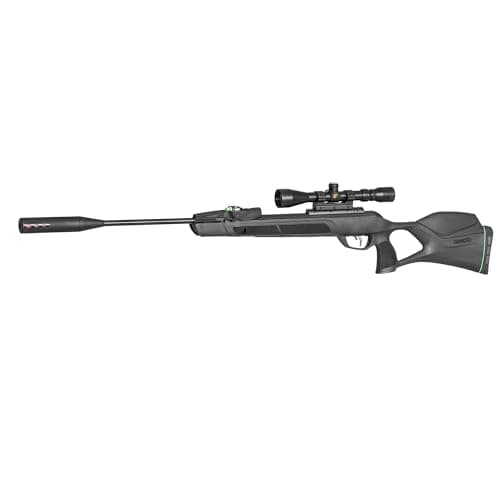
Buy a break barrel if you want a self-contained rifle that needs nothing but pellets, and you are willing to learn a specific shooting technique to get accuracy out of it. Buy a PCP if you want accuracy immediately, repeat shots, and real quietness — and you can accept that the rifle is only about two-thirds of the purchase.
That is the honest summary, and unlike most gear comparisons this one usually resolves itself cleanly. The two platforms are not competing for the same buyer as much as the price overlap suggests. Here is why.
How each one works
| Break barrel (spring-piston or gas-piston) | You crack the barrel to cock a spring or gas ram. Pulling the trigger releases a piston that slams forward, compressing a column of air that pushes the pellet. Everything needed to fire the rifle is in the rifle |
|---|---|
| PCP (pre-charged pneumatic) | An onboard reservoir holds air at high pressure - typically 3,000 psi or more. The trigger opens a valve that releases a metered amount. You fill the reservoir from a pump, tank or compressor |
| The mechanical consequence | A break barrel produces violent internal movement in both directions during the shot cycle. A PCP produces essentially none. That single difference drives every other item on this page |
Head to head
| Break barrel | PCP | |
|---|---|---|
| Self-contained | Yes - pellets and nothing else | No - needs a pump, tank or compressor |
| Recoil | Significant, and in two directions | Effectively none |
| Hold sensitivity | High - requires a specific loose 'artillery hold' to group | None - shoot it off a bag or bipod like a rimfire |
| Ease of accuracy | Hard. The rifle is capable; the shooter is the limit | Easy. Point of impact is consistent from the first day |
| Repeat shots | One shot, then cock again - real effort with a magnum spring | Magazine-fed bolt or sidelever; immediate follow-ups |
| Noise | Spring twang plus muzzle report; harder to suppress | Shrouded barrels are standard; genuinely quiet |
| Power ceiling | Good, and it plateaus | Higher, and scales with caliber |
| Shots before servicing | Effectively unlimited - just cock it | 20 to nearly 100 per fill depending on design and caliber |
| Cold weather | Unaffected | Unaffected (unlike CO2) |
| Entry cost | ~$150-300 all in | ~$450-600 all in, minimum |
| Maintenance | Spring or gas ram eventually wears; seals age | Seals and O-rings; regulators can drift |
| Best at | Casual plinking, occasional pests, low total spend | Accuracy, volume shooting, quiet suburban pest control, hunting |
Hold sensitivity: the beginner trap
This is the single most important thing to understand before buying a break barrel, and almost no retail listing mentions it.
When a spring-piston rifle fires, the piston slams forward and then the rifle recoils back. That double movement happens while the pellet is still in the barrel. If you hold the rifle rigidly — the way you would hold a .22 rimfire, gripped tight and rested hard on a bag — the rifle cannot move consistently, and your groups open up dramatically.
The fix is the artillery hold: rest the rifle on your open palm rather than a hard surface, let it sit loosely, and let it recoil the same way every shot. It works, and learning it is genuinely satisfying — but it is a skill, and a beginner who does not know it exists concludes the rifle is inaccurate and gives up.
The true cost of each
| Break barrel | PCP | |
|---|---|---|
| Rifle | $150-300 for a good one | $200-700 |
| Fill equipment | None | Hand pump ~$70-190, tank ~$300-600, compressor ~$300-900 |
| Scope | Must be rated for spring-piston recoil - ordinary scopes get destroyed | Any quality scope works |
| Ongoing | Pellets | Pellets, plus tank refills or compressor running costs |
| Realistic total | ~$200-400 | ~$450-1,200 |
The scope line is a real and frequently overlooked cost. A spring-piston rifle’s two-way recoil destroys scopes that were never designed for it — including expensive centerfire scopes. You need an airgun-rated optic. See best air rifle scopes for what that means.
The fill-equipment line is the PCP’s equivalent. Shot count per fill therefore matters enormously if a hand pump is your plan — the difference between a rifle that gets ~24 shots per fill and one that gets close to 100 is the difference between an afternoon of shooting and an afternoon of pumping. Our PCP air rifle guide covers that math in detail, and our guide to compressors, pumps and tanks covers what to actually buy to fill one.
If you buy a break barrel
Gamo Swarm Magnum.The Swarm line solved the break barrel’s worst ergonomic problem — single-shot loading — with a 10-round rotary magazine that indexes as you close the barrel. You still cock for every shot, but you are not fumbling a pellet into a breech with cold fingers. It is the most practical break barrel for pest control, and we cover it fully in our Gamo Swarm Magnum review.
Honest cons: magnum springers are heavy, hard to cock, and the most hold-sensitive of the class. The included optics on package guns are usually the first thing to replace.
Hatsan 95.The traditionalist’s pick: a full-size wood-stocked springer with a Turkish-made action, sold at a price that undercuts the equivalent European rifles by a wide margin. Single-shot, heavy, and rewarding to shoot once you have the hold sorted. It appears in both our best air rifles and hunting guides.
Honest cons: single-shot only, heavy, and the trigger needs work out of the box. Hatsan’s finish quality is functional rather than refined.
If you buy a PCP
Umarex Gauntlet 2.Factory-regulated, full-length shrouded barrel, and the best shot count in its price class — in independent comparison a .25-caliber Gauntlet 2 delivered close to 100 shots before dropping off the regulator. If you are filling by hand, that number is the most important spec you can buy.
Honest cons: heavy and bulky, and subjective testing puts its noise level somewhat above a Benjamin Marauder despite the shroud. If quiet is your deciding factor, our roundup of the quietest air rifles ranks both platforms on report rather than power.
Air Venturi Avenger.The learning platform: regulator, hammer spring and transfer port are all user-adjustable, so you can tune it for high shot count or high power depending on the day’s job. Excellent performance for the money.
Honest cons: materials and build quality sit below the Benjamin Marauder, and stock shot count is modest — roughly 24 per fill in one comparison — until you tune it.
The verdict: pick this if
| Buy a break barrel if... | You want one self-contained rifle, you shoot occasionally, your total budget is under about $350, you like the idea of learning a technique, or you need something that works anywhere with no support equipment - a cabin, a farm, a truck |
|---|---|
| Buy a PCP if... | You want accuracy without a learning curve, you shoot volume, you need quiet for suburban pest control, you want repeat shots, you are hunting small game where precision matters, or you have any physical reason to avoid cocking a magnum spring repeatedly |
| Buy a break barrel first if... | You are genuinely unsure. A $200 springer tells you whether you enjoy airgunning, and it stays useful as a truck or barn gun after you move up |
| Skip straight to a PCP if... | You already know you want accuracy at 50 yards, or you are buying primarily for hunting rather than plinking |
One last framing that helps people decide: a break barrel is a rifle you shoot the way the rifle demands. A PCP is a rifle that shoots the way you demand. Neither is better — they are different hobbies that happen to share a pellet.
For specific model picks in each direction, see best PCP air rifles, best air rifles, and best air rifles for hunting.
Frequently asked questions
Is a PCP air rifle better than a break barrel?
More accurate and far easier to shoot accurately, yes - a PCP has essentially no recoil and no hold sensitivity, so it prints consistent groups off a bag or bipod from day one. But it is not self-contained: you need a hand pump, tank or compressor, which adds $70 to $900 to the purchase. A break barrel needs nothing but pellets.
Why is my break barrel air rifle inaccurate?
Almost always hold technique rather than the rifle. A spring-piston rifle's piston slams forward and the rifle recoils while the pellet is still in the barrel, so gripping or resting it rigidly produces inconsistent movement and scattered groups. The fix is the artillery hold - rest the rifle loosely on an open palm and let it recoil the same way every shot.
Do I need a special scope for a break barrel air rifle?
Yes. Spring-piston rifles recoil in two directions during the shot cycle, and that reverse impulse destroys scopes designed for firearms - including expensive centerfire optics. You need an airgun-rated scope. PCPs have no such requirement, so any quality scope works on one.
How much does it really cost to get into PCP air rifles?
Budget $450 to $600 minimum. A usable PCP starts around $200-250, and you must add a fill source: a high-pressure hand pump for roughly $70-190, a carbon fiber or SCBA tank for $300-600 plus refills, or an electric compressor for $300-900. The rifle alone is not a working setup.
Which is quieter, a PCP or a break barrel?
A PCP, and it is not close. Shrouded barrels and integral moderators are standard on air rifles, and a well-shrouded PCP is quiet enough for suburban pest control. A spring-piston rifle produces both a muzzle report and a mechanical spring twang, and the twang is the part you cannot suppress.
Should a beginner start with a break barrel or a PCP?
If you are unsure whether airgunning is for you, start with a break barrel - a $200 springer answers that question cheaply and remains useful as a barn or truck gun afterward. If you already know you want accuracy at distance, or you are buying primarily for small-game hunting, skip straight to a PCP and save yourself the intermediate purchase.
Sources
- Umarex USA - a complete guide to PCP airguns
- Brocock - PCP air rifles: regulated or unregulated?
- Airgun Depot - Benjamin Marauder vs Air Venturi Avenger vs Umarex Gauntlet 2
- Hard Air Magazine - Umarex Gauntlet 2 review, .22 caliber
- The Airgun Centre - what is a PCP air rifle?
- Pinty - how many shots do you get from a PCP air rifle?
- Product specs, availability and pricing verified via the Amazon Creators API, 2026-08-13
Keep reading
Gearing up before your next hunt?
See how we evaluate gear, then dig into the reviews and buying guides — written without inventory to sell.