Buying Guide
The Best .22 Air Rifles, and Why .22 Is the Right Caliber
The .177 is faster and cheaper to feed. The .25 hits harder. The .22 sits between them and quietly beats both for almost everything a hunter does with an airgun.
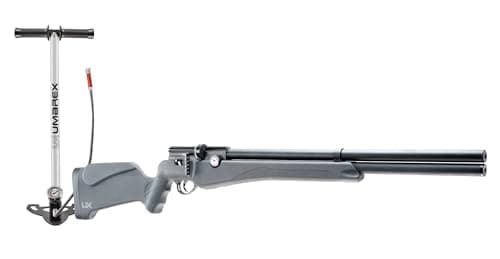
The .22 is the default hunting airgun caliber because a heavier pellet carries its energy further and transfers more of it on impact than a lighter, faster .177 does — while costing far less to feed and shoot than a .25. Almost every airgun hunter ends up here, whatever they started with.
This guide explains the caliber argument first, because getting that right matters more than which rifle you pick, then covers the best .22 rifles across every power plant from a $90 break barrel to a $707 semi-automatic PCP. If you have not settled on a caliber at all, our guide to the best air rifles of 2026 works the powerplant and caliber decisions from scratch.
Why .22 is the default caliber
Airgun marketing sells velocity, which pushes buyers toward .177 because a lighter pellet always reads faster on a chronograph. For hunting that is the wrong metric.
- Heavier pellets retain energy better.A .22 pellet is roughly twice the mass of a .177 at the same profile. It sheds velocity more slowly downrange, so the energy gap in the rifle’s favor widens with distance.
- Heavier pellets transfer more energy. A light, fast pellet is more likely to pass through a small animal without dumping its energy. That is the difference between a clean kill and a wounded animal that gets away.
- Heavier pellets buck wind better. Airgun pellets are extraordinarily wind-sensitive. Mass helps.
- .22 is quieter for the same energy. Lower velocity for the same muzzle energy means less chance of the pellet approaching the sound barrier, which is where airguns get loud and accuracy falls apart.
.177 vs .22 vs .25
| .177 | .22 | .25 | |
|---|---|---|---|
| Typical use | Target, plinking, pest control at close range | General hunting and pest control | Larger quarry - raccoon, groundhog |
| Trajectory | Flattest | Moderate arc, manageable | Most curve, most holdover |
| Energy transfer | Often over-penetrates small game | Best balance for squirrel and rabbit-sized quarry | Highest, but overkill on small game |
| Wind drift | Highest | Moderate | Lowest |
| Pellet cost | Cheapest | Moderate | Highest |
| Rifle availability | Very wide | Widest for hunting models | Limited, mostly PCP |
| Air efficiency (PCP) | Most shots per fill | Fewer than .177 | Fewest shots per fill |
The practical summary: .22 for hunting, .177 if you only punch paper, .25 only if your quarry is genuinely larger than a squirrel and you are prepared to pay for pellets and air. Our picks by quarry guide takes that further for specific animals.
Best overall: Umarex Origin .22
Around $343 (verify current pricing) and — the important part — it includes a hand pump. That is what makes it the best overall .22 rather than just a good one.
The hidden cost of PCP ownership is the fill equipment. A hand pump alone typically runs $70 to $100, and a compressor considerably more. A rifle that ships with the pump removes the most common reason people buy a PCP and then never shoot it.
Honest cons: hand-pumping a PCP to fill pressure is genuine physical work, and it gets old faster than you expect. Budget for a compressor eventually if you shoot volume. The rifle is also heavier and bulkier than a break barrel.
Best value: Crosman C362
Around $124 (verify current pricing) for a variable-pump single-shot .22. The variable pump is the feature that makes this rifle interesting: you choose how many pump strokes to put in, which lets you choose your power level shot by shot.
Three pumps for a backyard target session, eight for a squirrel at 25 yards. No fill equipment, no compressed air, no springer recoil. For a hunter who wants one air rifle that does everything without an equipment chain behind it, this is the most sensible purchase on the page.
Honest cons: single shot and slow to reload, pumping between shots is tedious, and top-end power is modest against a PCP. Our full Crosman 362 review covers the known quirks.
Cheapest usable: Umarex Prymex .22
Around $90 (verify current pricing) for a break-barrel .22. This is the entry point, and it is a genuine one rather than a toy.
If you want to find out whether airgun hunting suits you before committing to a fill-equipment chain, buy this, buy a tin of decent pellets, and shoot it for a season. The knowledge is worth more than the difference in price to a better rifle.
Honest cons: break barrels have a distinctive two-way recoil that makes them harder to shoot accurately than any PCP, and cheap ones are inconsistent shot to shot. The factory scope on budget combos is usually the first thing to replace — see our air rifle scope guide.
Best break barrel: Hatsan Mod 95 Vortex QE
Around $203(verify current pricing) for a gas-piston break barrel with Hatsan’s Quiet Energy moderator. The two features in that sentence are the reason it beats cheaper springers.
A gas piston (Vortex) replaces the coiled spring with a gas ram. It is more consistent shot to shot, does not weaken from being left cocked, and behaves better in cold weather. The QE moderator matters if you are shooting anywhere near neighbors.
Honest cons: still a break barrel, so it still needs the artillery hold and still punishes inconsistent technique. Heavy for its class.
Best compact PCP: Umarex Notos Carbine .22
Around $265 (verify current pricing) for the cheapest genuine PCP here, in a short carbine format that suits moving through cover and shooting from awkward positions.
Compactness is under-rated in a pest-control rifle. Barns, outbuildings and fencelines are tight places to swing a full-length rifle, and the Notos handles them.
Honest cons: no fill equipment included, so add $70 to $100 for a pump before you can shoot it. Low shot count per fill compared with larger-reservoir PCPs.
Best shot count: Umarex Gauntlet 2 SL22
Around $370 (verify current pricing) for a regulated PCP with side-lever cocking. The regulator is the point: it delivers each shot at a consistent pressure regardless of how full the reservoir is, which flattens the velocity spread and gives you far more usable shots per fill.
Side-lever cocking is faster and smoother than a bolt, which matters when a second shot is needed. For anyone shooting real volume, this is the rifle that makes filling worthwhile.
Honest cons: no fill equipment included, and this is where the PCP equipment chain becomes a real budget line. See our PCP guide for the full cost of entry.
Best premium: Benjamin Marauder BP22SAS
Around $707(verify current pricing) for a semi-automatic .22 PCP. Benjamin’s build quality is the best on this page and the semi-auto action is genuinely useful for pest work where follow-up shots matter.
Buy it if airgunning is a serious pursuit rather than an occasional one. Our Benjamin Marauder review covers it in detail, and the Benjamin brand guide puts it in the context of the range.
Honest cons: five times the price of the Prymex for accuracy improvements that will be invisible until your technique is good. Still needs fill equipment on top.
Pellet choice matters more in .22
| Domed pellets | The default for hunting and for accuracy at range. Best ballistic behavior and most consistent across rifles |
|---|---|
| Hollow point pellets | More energy transfer on impact, less penetration. Sensible on squirrel and rabbit-sized quarry at short range |
| Pointed pellets | Marketed for penetration, usually less accurate. Rarely the right answer |
| Wadcutters | Flat-fronted, for paper targets at close range. Poor ballistics beyond about 20 yards |
| Weight | Heavier pellets in .22 fly slower but hold energy better. Every barrel has preferences - buy several tins and test |
Airguns are far more pellet-sensitive than firearms are ammunition-sensitive. Two tins that shoot identically in one rifle can group two inches apart in another. Our air rifle pellet guide covers what to test and in what order.
The bottom line
For who makes what across the category, see air rifle brands compared; if the budget is the constraint, best air rifles under $200 covers the sub-$200 field in detail.
Buy .22. For most people the right rifle is the Umarex Origin, because it includes the pump and removes the barrier that stops new PCP owners shooting. If you want zero equipment chain, the Crosman C362 at $124 does everything with nothing behind it. If you are testing the water, the Umarex Prymex at $90 is a real rifle at an unreal price.
Check the Umarex Origin .22 price on Amazon, and see PCP vs break barrel if you have not settled the power plant question yet.
Frequently asked questions
Is .22 or .177 better for an air rifle?
.22 for hunting, .177 for target shooting and cheap plinking. A .22 pellet is roughly twice the mass of a .177, so it retains energy better downrange, transfers more of it on impact rather than passing through, and drifts less in wind. The .177 is flatter-shooting and cheaper to feed, which is what makes it the better paper-punching caliber.
What is the best .22 air rifle?
For most buyers, the Umarex Origin at around $343 - largely because it includes a hand pump, which removes the fill-equipment barrier that stops many new PCP owners from actually shooting. If you want no equipment chain at all, the Crosman C362 variable-pump at around $124 is the most sensible purchase on the market.
Is .25 caliber better than .22 for air rifle hunting?
Only for larger quarry. A .25 hits harder and drifts less, but it drops faster, costs more per pellet, and gives you fewer shots per fill on a PCP. On squirrel and rabbit-sized game it is genuine overkill. Choose .25 if you are regularly taking raccoon or groundhog-class animals.
How much power does a .22 air rifle need for hunting?
Enough to reliably reach vital organs at the ranges you actually shoot, which for squirrel and rabbit-sized quarry means a well-placed pellet more than a big number. Placement matters far more than muzzle energy in airgun hunting - and always check your state and local regulations, which vary considerably on what may be taken with an airgun.
Do I need a PCP or is a break barrel enough for .22?
A break barrel is enough for close-range pest control and casual hunting, and needs no equipment behind it. A PCP is easier to shoot accurately because it has no recoil cycle to disturb the shot, and it is quieter and more consistent. The catch is fill equipment, which adds $70 to $100 for a hand pump or considerably more for a compressor.
What pellets should I use in a .22 air rifle?
Start with domed pellets - they have the best ballistic behavior and are the most consistently accurate across different rifles. Hollow points make sense on small game at short range where energy transfer matters more than penetration. Buy several brands and weights and test them, because airguns are far more pellet-sensitive than firearms are ammunition-sensitive.
Sources
Keep reading
Gearing up before your next hunt?
See how we evaluate gear, then dig into the reviews and buying guides — written without inventory to sell.