Buying Guide
Best Climbing Sticks and Hang-On Stands for Mobile Hunting
A stick-and-hang-on setup will put you in trees a climber cannot touch - but only if you buy enough sticks to actually get up there. Here is the height math nobody prints on the box, what each attachment system costs you in noise and cold-weather fumbling, and eight in-stock picks from a budget steel starter set to an 11-pound aluminum platform.
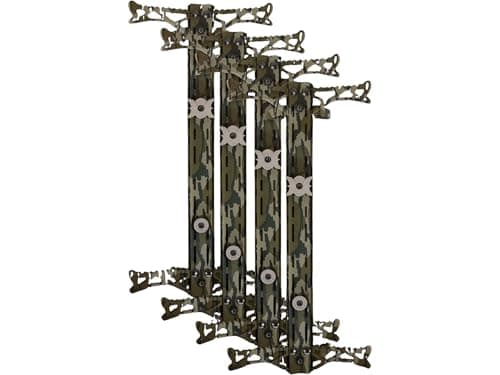
A climbing stand needs a straight, smooth, branch-free tree, and the best-looking sign in the woods is rarely next to one. That is the entire argument for a stick-and-hang-on setup: three or four sticks and a light platform will put you up a crooked oak, a limby cedar or a leaning hickory that a climber cannot work at all, and the whole kit fits on your back for the walk in. Saddle hunters carry the same sticks for the same reason.
What nobody prints on the box is the arithmetic. A four-pack of 20-inch sticks does not put you 20 feet up — Muddy publishes 12.5 feet of climbing height for four of its 20-inch sections spaced 18 inches apart, and a three-pack of 32-inch steel sticks covers about eight. Buying one set and discovering you are hunting at 11 feet is the most common mistake in this category, and it is expensive because the fix is buying more sticks. So this guide starts with the height math and the weight math, then names eight setups that are in stock as of the publication date.
The picks at a glance
Four stick sets and four hang-on stands. Weights and capacities are the manufacturers' published figures, and prices come from the live listings rather than a number typed once and forgotten:
| Product | Price & buy | Type | Published weight | Best for |
|---|---|---|---|---|
| Hawk Helium Gen 2, 20", 4-pack | $154.34Buy | Aluminum sticks | 2.5 lbs per stick / 10 lbs | Best sticks overall |
| XOP X2 double-step, 3-pack | $149.99Buy | Aluminum sticks, 350 lb rated | 26 oz per stick | Saddle and deep-woods mobility |
| Muddy The Pro, 4-pack | $127.04Buy | Aluminum sticks | 2.5 lbs per stick / 10 lbs | Four-stick value |
| Guide Gear Quick, 3-pack | $69.99Buy | Steel sticks, 32-inch | About 6 lbs per stick / 18 lbs | Cheapest way in |
| Hawk Helium Pro | $209.99Buy | Aluminum hang-on, 24x30 platform | 12 lbs | Best hang-on overall |
| Hawk Helium Ultra Lite | $199.99Buy | Aluminum hang-on, 20x24 platform | 11 lbs | Lightest pack-in platform |
| Millennium M50 | $159.99Buy | Steel hang-on, 24x33 platform | 20 lbs | All-day comfort |
| Muddy XL hang-on + 3 sticks | $227.98Buy | Stand and sticks package | 19 lbs (frame) | Complete first setup |
Prices shown are from Amazon as of October 9, 2026 and change often — the button always goes to the current listing. Some links may earn us a commission at no extra cost to you.
How many sticks it actually takes
Stick height is a function of three numbers: the length of the stick, the spacing you can safely leave between sections, and whether you use aiders. Manufacturers publish the answer for their own products, and the answers are lower than most buyers assume:
| Muddy The Pro, 4 x 20-inch sections | 12.5 feet of climbing height with 18 inches between sections (Muddy's published figure) |
|---|---|
| Guide Gear Quick, 3 x 32-inch sections | About 8 feet, in three heavier steel sections |
| XOP X2, double-step | 17 inches step to step, with aider attachment points built into every stick |
| Muddy XL package | Stand rated to 20 feet of hanging height - the three included sticks do not reach it on their own |
Twelve and a half feet is a legitimate bowhunting height in the right cover, and plenty of mature bucks have been killed from 12 feet. But if you want the 17 to 20 feet most treestand hunters describe as normal, a four-pack of short sticks is the beginning of the purchase, not the end of it. Your options are to buy five or six sections, buy longer sticks, or add aiders — short webbing or cable steps that hang below the bottom step and stretch the reach of each stick.
The tree matters as much as the stick. Muddy's Pro sticks specify a minimum 9-inch tree diameter, while the XOP X2 is rated for trunks from 6 to 23 inches. If your best sign is a pole timber stand of skinny maples, that difference decides which set you can actually hang.
Weight is a system number, not a stick number
Per-stick weight is the number that gets advertised, and it is the wrong number to shop on. What goes on your back is the stand plus the sticks plus a harness, a lifeline and whatever is in your pack. Run the arithmetic on published weights and the spread is enormous:
| Hawk Helium Ultra Lite + 4 Helium sticks | 11 lbs + 10 lbs = about 21 lbs of climbing system |
|---|---|
| Hawk Helium Pro + 4 Helium sticks | 12 lbs + 10 lbs = about 22 lbs |
| Millennium M50 + 4 Helium sticks | 20 lbs + 10 lbs = about 30 lbs |
| Millennium M50 + 3 Guide Gear steel sticks | 20 lbs + 18 lbs = about 38 lbs, for roughly 8 feet of climb |
Thirty-eight pounds is a fine setup to carry 200 yards to a stand you hang in August and hunt all season. It is a miserable one to carry a mile into public land in the dark, and the hunters who quit going deep usually quit because of the pack, not the walk. Decide which hunter you are before you shop: hang-and-leave setups can be heavy and cheap, while carry-every-time setups have to be light, and light costs money in this category.
For reference on where the ceiling sits, Outdoor Life's 2026 climbing-stick test weighed a carbon set at 3 pounds 11.6 ounces— 14.9 ounces per stick — against 6 pounds 12 ounces for a four-pack of aluminum X2s and 10 pounds 5 ounces for three folding aluminum sticks. The carbon sets are real, and they are also several times the price; more on that below.
Rope buttons, cam straps and ratchets
How a stick attaches to the tree decides how much noise you make at 5:40 a.m. and how much you fumble at 20 degrees. There are three systems on this page:
- Rope and button.A short rope loops the tree and seats over a button or cleat on the stick. Hawk's Gen 2 sticks use the Hawk Button with a Helium rope; Muddy uses a rope cam. It is the quietest and fastest system once learned, weighs almost nothing, and is the least forgiving in the dark for a first-timer.
- Cam strap.A webbing strap with a metal cam buckle, standard on XOP sticks and the Hawk Helium Pro's tree attachment. Foolproof, adjustable to nearly any trunk, and heavier than rope — Outdoor Life's testers specifically flagged the weight of the X2's included buckles as its drawback.
- Ratchet strap. Found on hang-on stands like the Helium Ultra Lite, which pairs a silent pull-tight strap with a ratchet. It pulls the platform tightest to the tree and is the loudest thing in your pack if you run it on a quiet morning.
Whichever system you buy, straps are wear items, not permanent hardware. Webbing left on a tree all season takes UV, water and freeze-thaw cycles, and a strap that looks fine can be well past its service life. XOP notes its cam straps are ASTM tested with a DWR water-repellent finish and UV treatment, which helps and does not make them eternal. Inspect every strap before the season and replace anything chalky, stiff, frayed or faded.
What the capacity rating and ASTM certification mean
Nearly everything here carries a 300-pound rating; the XOP X2 is rated to 350. That number is not your body weight — it is you, your clothing, your boots, your pack, your bow or rifle, and anything hanging off the stand. A 230-pound hunter in November layers with a loaded pack is closer to the line than he thinks.
The certification most hunters have seen on a hang tag is the Treestand Manufacturers Association mark, and the substance behind it is the ASTM standard. ASTM F3249 "covers requirements for treestands, climbing sticks, and tripod/tower stands that are used for hunting, photographing, or general observation," and it "establishes minimum warning and package labeling, instructional content, safety device requirements, and physical testing parameters." Notably, it covers climbing sticks explicitly, in both continuous and sectional forms, and it does not permit partial compliance. Millennium states that the M50 "meets or exceeds TMA standards," and XOP publishes ASTM F2123-21, F3249-20 and F3545-22 for the X2. If a stick set names no standard at all, that silence is information.
The transition is where hunters fall
The moment you step off the top stick onto the platform — shifting weight, reaching, usually carrying something — is the highest-risk second of the hunt, and it is a moment that only exists in a stick-and-hang-on setup. The Tree Stand Safety Awareness Foundation, citing a ten-state multi-year study, reports that 99% of fall victims were not attached at the time of the fall, 86% were not wearing a harness, and 35% of falls involved inspection elements— equipment that failed, wore out or was set up wrong.
The fix is not complicated and it is not optional: wear a full-body harness, use a lineman's belt while you hang sticks and the stand, and run a lifeline so you are connected from the ground to the platform and back down. The Helium Pro and Ultra Lite both ship with a harness and a lineman's strap; a lifeline is a separate purchase and the single cheapest safety item in this category. Our tree stand safety harness guide covers harnesses, lifelines and the attachment rules in detail, and the bow season gear checklist puts stand hanging in the order it should happen.
One more practical rule that comes straight out of that inspection statistic: hang your sticks in daylight, climb them once before you hunt them, and re-check the straps after any stretch of hard weather. A stick that shifted an inch since October is a different stick.
Sticks and a hang-on, or a climber?
A climbing stand is faster, quieter to carry as one piece, and completely dependent on finding a straight tree with no branches for 20 feet. A stick-and-hang-on setup works on almost any tree, lets you hang exactly where the sign is, and can be left up or carried in and out. The cost is time in the tree and a more complicated climb.
| If this is your situation | Buy this |
|---|---|
| Straight, limbless hardwoods and you hunt alone in the dark | A climber — see the best climbing tree stands |
| Crooked, limby or cedar-heavy timber, or you hang where the sign is | Sticks and a hang-on - this page |
| Public land where stands cannot be left overnight | Lightest sticks and lightest platform you can afford |
| Private ground, hang once, hunt all season | Heavier steel stand with a real seat, cheaper sticks |
| No usable tree at all - fields, CRP, pine plantations | A ground blind — see ground blind vs tree stand |
Best sticks overall: Hawk Helium Gen 2, 20-inch
The Helium is the default aluminum stick for a reason: it hits the weight, the price and the quiet all at once. Each 20-inch section weighs 2.5 pounds, carries a 300-pound rating and gives you a 10-inch step width, which is the difference between a boot that lands and a boot that hunts for the step. Gen 2 adds an angled footpeg, the Hawk Button with a lightweight Helium rope for attachment, TreeDigger teeth that bite bark rather than roll on it, overmolded attachment hooks that kill metal-on-metal noise, and a Silent Stack nesting system so four sticks ride as one quiet bundle instead of a wind chime.
Honest cons: four 20-inch sticks is around 12 to 13 feet of climb, so plan on a fifth section or aiders if you want to hunt higher; the rope-button attachment is quick once you have done it fifty times and fiddly the first ten, especially in gloves; and the camo version linked here typically costs more than the plain finish for identical hardware.
Who they're for: the hunter buying one set of sticks to cover hang-on, saddle and public-land duty without spending carbon money.
Best for mobility: XOP X2 double-step
The X2 is the stick that mobile and saddle hunters keep landing on, and Outdoor Life named it the best budget pick in its 2026 test at a measured 6 pounds 12 ounces for four. Each stick runs 26 ounces in 6061/7075 aluminum, carries a 350-poundrating — the highest here — and uses a double step with 17 inches between steps, a 10-inch step width and a 5-inch standoff that keeps your boot off the trunk. It fits trees from 6 to 23 inches, stacks flat or side by side on XOP's Slide-Lock system, and has aider attachment points built in for amsteel, cable or webbing aiders. XOP publishes ASTM F2123-21, F3249-20 and F3545-22 compliance.
Honest cons: the included cam-strap buckles are heavy, which is exactly the drawback Outdoor Life's testers flagged — a lot of weight-conscious hunters swap them for rope or amsteel; cam straps are also slower and noisier than a rope button; and a three-pack is a starting point, not a 20-foot setup.
Who they're for: saddle hunters, one-and-done public-land setups, and anyone over 250 pounds geared up who wants the extra 50 pounds of rating.
Best four-stick value: Muddy The Pro
Muddy publishes the numbers most brands leave out, which makes The Pro easy to buy honestly: four 20-inch sections, 2.5 pounds each and 10 pounds total, a 300-pound capacity, a rope cam attachment system, aluminum bark biters, and 12.5 feet of climbing height when the sections are set 18 inches apart. Sections install independently, so you can leave one low or skip a bad spot on the trunk.
Honest cons: the published minimum 9-inch tree diameterrules out skinny pole timber, which is a real limitation in young stands; 12.5 feet is a bowhunting height, not a rifle-tower height, so budget for extra sections; and at 9.25 inches the step is narrower than the Hawk's ten.
Who they're for: the hunter who wants four documented, rope-cam sticks and would rather spend the savings on a lifeline than on ounces.
Cheapest way in: Guide Gear Quick climbing sticks
If the budget is the constraint and the stand never moves, welded steel still works. The Guide Gear Quick sticks are three 32-inch sections that cover about 8 feet, rated to 300 pounds, with an anti-slip double-step design and a strap-on attachment on each section. They are typically the least expensive honest climbing sticks on the market.
Honest cons: they weigh roughly 6 pounds per section and 18 pounds for the set, which is nearly double an aluminum four-pack for two-thirds of the height. That is a hang-it-in-August-and-leave-it product, not something to pack a mile. Steel is also colder, louder against a buckle and quicker to rust where the powder coat chips.
Who they're for: private ground, permanent sets, and first-year hunters who need to get into a tree this season without spending three figures.
Best hang-on overall: Hawk Helium Pro
The Helium Pro is the stand most stick setups should be built around. It weighs 12 pounds, carries 300 pounds, and gives you a 24 x 30-inchall-welded aluminum platform — big enough to turn and shoot from, which the ultralight platforms are not. The seat is pressure-relieving memory foam rather than a nylon sling, and the package ships with a cam buckle tree strap, a full-body harness with a lineman's climbing strap, a tree strap and a pair of backpack straps, so the only thing missing on day one is a lifeline.
Honest cons: 12 pounds is light for a full-size platform and heavy next to a minimalist saddle platform; the cam-buckle attachment is slower than a rope on a cold morning; and a memory foam seat holds water if you leave it out in the rain for a month.
Who it's for: the hunter who wants one stand that packs in reasonably and still sits like a real treestand for a full-day rut sit.
Lightest pack-in platform: Hawk Helium Ultra Lite
Hawk publishes 11 pounds and a 20 x 24-inch platform for the Ultra Lite, with a low-profile aluminum frame, an adjustable memory foam seat and a silent pull-tight strap for attachment; retailer listings put it on the same 300-pound rating as the rest of the Helium line. Paired with four Helium sticks it is a 21-pound climbing system, which is genuinely packable for a mile-in hunt.
Honest cons: you pay for the pound you save in platform real estate — a 20 x 24-inch deck is tight for standing, turning and drawing a bow, and hunters with big boots notice it first; and low-profile frames put your feet closer to the trunk, which some shooters like and some hate. Sit on one before you commit to all-day sits.
Who it's for: mobile public-land hunters counting ounces who still want a padded seat at the end of the walk.
Best seat: Millennium M50
Ask hunters who sit from dark to dark what stand they use and Millennium comes up over and over, because the company solved the seat instead of the scale. The M50 is 20 pounds of steel with a 300-pound capacity, a 24 x 33-inch platform and the patented ComfortMAX contoured sling seat measuring 20 x 16 inches, which folds up and out of the way for a standing shot. It attaches with Millennium's CamLOK receiver system, and Millennium states the stand "meets or exceeds TMA standards."
Honest cons: 20 pounds of steel is a hang-and-leave stand — pairing it with steel sticks puts you near 40 pounds on your back; a sling seat collects less water than foam but is bulkier to pack; and steel is colder against your legs in late season than aluminum, for whatever that is worth at 15 degrees.
Who it's for: the November all-day sitter on ground he controls, who would rather carry weight once in September than fidget through the rut.
Best complete first setup: Muddy XL hang-on with 3 sticks
Buying a stand and sticks separately is the right way to build a setup you will keep; buying them together is the cheapest way to get into a tree this weekend. This package pairs Muddy's XL hang-on — a 25 x 34-inch platform, a 19-pound aircraft-grade aluminum frame, a 300-pound capacity and a rated hanging height of up to 20 feet on trunks from 9 to 20 inches— with three climbing sticks in the box. The platform is the largest on this page.
Honest cons: three sticks do not reach the stand's 20-foot rating — that number describes how high the stand may be hung, not how high the included sticks climb, so expect to add a section or two; and 19 pounds plus sticks is a carry-it-once weight, not a mobile one. The 9-inch minimum trunk applies here too.
Who it's for: a first treestand setup, a spare set for a guest, or a second stand on a property you already hunt.
What to buy with it
A stick-and-hang-on setup is incomplete out of the box. Budget for these before your first hang:
- A harness you will actually wear, and a lifeline.Non-negotiable given the fall statistics above — see our tree stand safety harness guide.
- A pack that carries a platform. Stand-carry straps work; a pack with a load shelf works better. Our hunting backpack guide covers the frames that haul weight, and the tree stand day pack list covers what goes inside.
- A quiet way to get gear up the tree. A hoist rope keeps your hands free on the climb and your bow off the sticks.
- Cold-weather layers built for sitting still.A mobile setup gets you sweaty on the way in and frozen an hour later — how to stay warm in a tree stand is the fix, and it starts with the walk-in, not the parka.
The bottom line
Sticks are half the setup. For the hanging procedure itself — the lineman’s belt method, the stick-count math and the lifeline — see how to hang a treestand by yourself.
Buy the height first. Decide whether you hunt at 12 feet or 18, then buy enough sticks to get there before you shop platforms. For most hunters that means a four-pack of Hawk Helium Gen 2 sticks plus a fifth section, or three to four XOP X2 sticks if you are saddle hunting or want the 350-pound rating, hung under a Hawk Helium Pro if you want one stand that does everything. If the stand is going up in September and staying up, the Millennium M50 is the most comfortable seat here and the weight stops mattering. If you just need to be in a tree this weekend, the Muddy XL package is the fastest honest way there, and the Guide Gear sticks are the cheapest.
Then wear the harness on the way up. Ninety-nine percent of the people who fell were not attached when it happened, and the stick-to-platform step you take in the dark is the exact moment that statistic is about.
Frequently asked questions
How many climbing sticks do I need to reach 20 feet?
More than one four-pack of short sticks. Muddy publishes 12.5 feet of climbing height for four 20-inch sections set 18 inches apart, and three 32-inch steel sticks cover about 8 feet. To hunt at 17 to 20 feet you generally need five or six 20-inch sections, longer sticks, or aiders. XOP's own guidance is that the number depends on stick length, step spacing, aider use, hunting height and tree shape, and warns not to assume every configuration reaches the same height.
What is an aider, and should I use one?
An aider is a short webbing, cable or rope step that hangs below a stick's bottom step to stretch the reach of each section, so fewer sticks get you higher. It works, and it changes the climb: XOP, which builds aider attachment points into the X2, notes that aiders demand practice because finding a flexible step in the dark is different from stepping onto fixed aluminum. Practice with one a few feet off the ground before you trust it at hunting height.
Are climbing sticks and hang-on stands safe?
They are as safe as your attachment habits. ASTM F3249 covers treestands, climbing sticks and tripod stands, setting minimum labeling, instruction, safety-device and physical-testing requirements, and TMA-member manufacturers build to those standards. The failure mode is almost never the stick: the Tree Stand Safety Awareness Foundation reports that 99% of fall victims were not attached at the time and 86% were not wearing a harness. Wear a full-body harness, use a lineman's belt while hanging, and run a lifeline from the ground up.
Climbing sticks or a climbing tree stand?
Climbing stands are faster and simpler but need a straight, branch-free trunk for 20 feet. Sticks and a hang-on work on crooked, limby or cedar-heavy trees, let you hang exactly where the sign is, and split into pieces for packing. If your best trees are straight hardwoods, a climber is less work; if they are not, sticks are the only option that gets you there.
What weight capacity do I need in a tree stand?
The published rating covers you plus everything you are carrying: clothing, boots, pack, bow or rifle, and anything hung on the stand. Most sticks and hang-ons here are rated to 300 pounds and the XOP X2 to 350. If you are a large hunter in late-season layers with a loaded pack, take the higher rating rather than doing arithmetic at 18 feet.
Can I leave climbing sticks and a stand in the tree all season?
Mechanically yes on private ground, but the straps are the weak point. Webbing takes UV, rain and freeze-thaw cycles all season, and 35% of treestand falls in the Tree Stand Safety Awareness Foundation's data involved inspection elements - gear that failed or was set up wrong. Inspect and replace straps that are faded, stiff, chalky or frayed, re-check hardware after storms, and check your state's rules for public land, where leaving stands overnight is often prohibited.
Rope attachment, cam strap or ratchet - which is best?
Rope-and-button systems (Hawk's Helium rope, Muddy's rope cam) are the lightest, quietest and fastest once you have practiced them, and the fiddliest in gloves the first few times. Cam straps (XOP, the Helium Pro tree strap) are the most forgiving and adjust to any trunk, but the buckles add weight - Outdoor Life's testers named exactly that as the X2's drawback. Ratchet straps pull a platform tightest to the tree and are the loudest thing you will do on a quiet morning.
Sources
- Hawk Treestands — Helium 20" Climbing Stick 4-Pack, Gen 2 (angled footpeg, Hawk Button with Helium Rope, Silent Stack nesting, TreeDigger teeth)
- Sportsman's Warehouse — Hawk Helium Gen 2 20-inch climbing stick 4-pack published specs (2.5 lbs per stick, 300 lb capacity, 20-inch length, 10-inch step width)
- XOP Outdoors — X2 climbing stick specifications (26 oz per stick, 350 lb rating, 17-inch step-to-step, 10-inch step, 5-inch standoff, fits 6-23 inch trees, Slide-Lock, aider attachment points, ASTM F2123-21 / F3249-20 / F3545-22)
- XOP Outdoors — Best climbing sticks for hunting: how to choose the right XOP setup (stick count depends on length, spacing, aiders, height and tree shape; aiders demand practice)
- Muddy Outdoors — The Pro Climbing Sticks specifications (4 x 20-inch sections, 2.5 lbs each / 10 lbs total, 300 lb capacity, 12.5 ft at 18-inch spacing, rope cam attachment, minimum 9-inch tree diameter)
- Sportsman's Guide — Guide Gear Quick Climbing Sticks, 3-pack (three 32-inch steel sections, about 8 feet of height, 300 lb capacity, strap-on double-step design)
- Hawk Treestands — Helium Pro Hang-On specifications (12 lbs, 300 lb capacity, 24 x 30-inch platform, memory foam seat, includes harness with lineman's strap, tree straps and backpack straps)
- Hawk Treestands — Helium Ultra Lite specifications (11 lbs, 20 x 24-inch platform, adjustable memory foam seat, silent pull-tight strap, aluminum construction)
- Millennium Outdoors — M50 Hang-On specifications (20 lbs, 300 lb capacity, 24 x 33-inch platform, 20 x 16-inch ComfortMAX seat, CamLOK receiver, "Meets or exceeds TMA standards")
- Outdoor Life — The Best Climbing Sticks of 2026, Tested and Reviewed (measured weights: carbon set 3 lbs 11.6 oz / 14.9 oz per stick; XOP X2 6 lbs 12 oz for four, named best budget with heavy included buckles as the con; telescoping stick collapses 20 inches to 13 1/8 inches; folding aluminum 10 lbs 5 oz for three)
- ASTM International — F3249 Standard Specification for Treestands, Climbing Sticks, and Tripod or Tower Stands (scope covers climbing sticks in continuous and sectional forms; minimum warning and package labeling, instructional content, safety device requirements and physical testing parameters)
- Tree Stand Safety Awareness Foundation — fall statistics from a ten-state multi-year study (Mayhew, 2017): 99% of fall victims were not attached at the time, 86% were not wearing a harness, 35% of falls involved inspection elements
Keep reading
Gearing up before your next hunt?
See how we evaluate gear, then dig into the reviews and buying guides — written without inventory to sell.