Comparison
Ground Blind vs Tree Stand: Which One Should You Hunt?
One puts you above a deer's eye line and inside its nose's reach. The other hides you completely and does nothing about your scent. The right answer depends on your ground.
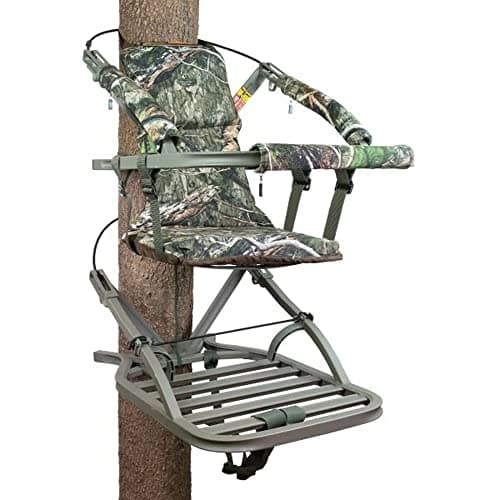
A tree stand lifts you above a deer’s normal eye line and gives you a wider view; a ground blind hides you completely and lets you move, fidget and stay warm. Neither solves scent, and the choice is usually decided by your terrain rather than your preference.
The short version: climb if you hunt timber with usable trees and want maximum visibility and mobility. Sit in a blindif you hunt open ground, field edges, or anywhere without a straight tree — or if you are hunting with a child, in bad weather, or with a body that no longer enjoys ladders.
The quick verdict
| Choose a tree stand if... | You hunt timber with straight, healthy trees; you want to see further and shoot in more directions; you move stands often to follow sign; and your scent stream benefits from being 20 feet up |
|---|---|
| Choose a ground blind if... | You hunt fields, prairie, CRP or anywhere without suitable trees; you hunt with kids or a partner; you sit through rain and hard cold; you have mobility limits; or you cannot sit still for hours without moving |
| Choose both if... | You hunt more than one property or more than one season. They solve different problems and most hunters who do a lot of sitting end up owning both |
Head to head
| Tree stand | Ground blind | |
|---|---|---|
| Visibility | Excellent - see over brush and further down trails | Limited to what the windows show |
| Concealment of movement | Moderate - you are exposed, relying on height and stillness | Excellent - you are inside a box |
| Scent control | Slightly better - scent disperses from height, but thermals still carry it down | No advantage; scent exits at nose level |
| Weather protection | None | Substantial - rain, wind and snow all manageable |
| Comfort on long sits | Limited by harness, seat and cold | Good - chairs, heaters, room to move |
| Safety risk | Real - falls happen, and mostly during the climb | Essentially none |
| Setup effort | Climbing stands are fast; hang-ons need sticks and time | Fast to pop up, but should be set well before you hunt |
| Terrain requirement | Needs a straight, healthy tree of the right diameter | Needs flat ground and something to break the outline |
| Mobility | High with a climber - move on fresh sign the same day | Moderate - portable but bulky, and needs to age in place |
| Hunting with a partner or child | Difficult and often unsafe | Easy - two-person blinds are standard |
| Typical cost | $365 - $500 for a good climber, plus harness | $110 - $250 for a good blind, plus a chair |
Scent: the real difference
The most common myth about tree stands is that height solves scent. It does not. It helps a little — your scent stream disperses over a wider area from 20 feet than from 5, and it may pass over a deer’s head at close range. But thermals sink in the evening and rise in the morning, and your scent lands somewhere regardless of altitude.
A ground blind offers no scent advantage at all in most cases, though a fully enclosed blind with the windows managed can contain some odor. The realistic assessment for both: you hunt the wind, or you get busted. Our honest look at scent control clothing covers why the products cannot substitute for that.
Concealment and movement
This is where a blind genuinely wins and it is not close. Inside a blind you can shift, scratch, check your phone, drink coffee and reposition a chair. Deer see a dark hole in a fabric box, not a person. That freedom is worth more than most hunters admit, because the alternative — sitting motionless for five hours — is a discipline that fails long before the sit does.
A tree stand relies on you being above the animal’s normal scanning height and staying still. It works, and it has an advantage a blind cannot match: 360-degree visibility. You see deer coming from any direction and can plan the shot rather than react to a window.
The blind’s cost is exactly that: it turns your field of view into a set of rectangles. Deer that appear outside a window are deer you never see, and see-through mesh designs exist precisely to soften that. Our ground blind guide covers the see-through options.
Terrain decides more than preference
Most of this argument is settled by where you hunt before you ever weigh the merits.
- Mature timber with straight trees. Tree stand. This is the terrain climbers were built for.
- Field edges, food plots, prairie, CRP. Ground blind. There is often no tree at all, and if there is, it stands alone and you are silhouetted in it.
- Swamps and river bottoms.Usually a stand, if the trees allow — a blind on saturated ground is miserable.
- Cut-over, young growth, pine plantations. Blind. The trees are the wrong diameter for a climber and the cover is at ground level anyway.
- Steep hill country.Stand, and often lower than you would elsewhere — a hillside gives you elevation for free.
Safety, and the honest cost of height
A ground blind carries essentially no injury risk. A tree stand does, and it is the single strongest argument for the blind.
Around 21% of treestand falls happen before the hunter is attached to the tree at all, and a large share of the rest occur during ascent and descent rather than while seated. This is a manageable risk, but managing it is not optional: a TMA-certified full-body harness worn from the moment you leave the ground, a lifeline so you are never disconnected during the climb, and a suspension relief strap so a caught fall does not become a medical emergency.
If that sounds like equipment you will not consistently use, that is a genuine reason to hunt a blind. Our harness guide covers the full system.
Comfort, weather and long sits
The rut rewards all-day sits, and all-day sits are decided by comfort. A blind lets you bring a real chair, block the wind, stay dry in rain, and run a heater in a way a stand never will. That is often the difference between sitting until dark and climbing down at three.
A stand has one comfort advantage worth naming: airflow on a warm early-season evening. A fabric blind in September is a hot box, and the mosquitoes find you inside it just as readily.
| Condition | Better option | Why |
|---|---|---|
| Hard rain | Ground blind | Dry, and the rain masks noise for both you and the deer |
| High wind | Ground blind | Stands sway and the cold is punishing at height |
| Deep cold, all-day sit | Ground blind | Wind block, room to move, and a heater is possible |
| Warm early season | Tree stand | Airflow. A blind in September is a hot box |
| Snow on the ground | Either | A blind stands out badly against snow unless brushed in or a snow cover is used |
Crossbow and bow considerations
The weapon changes the calculation more than people expect.
- Crossbows favor blinds, with a caveat.No draw cycle means no movement to conceal, which suits a blind. But crossbow width matters enormously in a confined space — a wide conventional crossbow will hit the frame swinging through a window. Narrow reverse-draw bows solve it, which is why our compact crossbow guide treats cocked width as a primary specification.
- Vertical bows favor stands.A blind restricts the draw cycle and the shot angles available, and a tall bow needs headroom most blinds do not have. Blind-specific bowhunting works but requires practice from a seated position — see our bowhunting clothing guide for the draw-clearance issues that compound it.
- Shot angle differs. From a stand you are shooting down, which changes the angle through the vitals and can produce a single-lung hit if you forget it. From a blind you are level, which is the angle every practice session prepares you for.
What each actually costs
| Tree stand, realistic total | A good climbing stand runs roughly $365 to $500, plus $50 to $110 for a harness and around $40 for a lineman's belt, tree strap and suspension relief strap. Budget for a lifeline per stand as well |
|---|---|
| Ground blind, realistic total | A good blind runs roughly $110 to $250, plus a decent chair. Add stakes and tie-downs, because an unstaked blind in wind is a kite |
| The hidden cost of a blind | Time. A blind dropped in place the morning you hunt it is a new object in a deer's world. Set it weeks ahead and brush it in |
| The hidden cost of a stand | Discipline. The safety system only works if you use it every single time, including the short evening sit you almost skipped |
If you choose a tree stand
The Summit Viper SD at roughly $375(verify current pricing) is the default climbing stand recommendation — a closed-front design that is secure and comfortable for long sits. The Summit OpenShot SD at roughly $365is the bowhunter’s version, with an open front that leaves the draw and shot unobstructed.
Full range and honest trade-offs in our guide to the best climbing tree stands. Whichever you buy, buy the harness system with it, not later.
If you choose a ground blind
The Barronett Big Cat at roughly $200(verify current pricing) is the pick if two people will be inside — and if you are taking a child hunting, two people will be inside. The TIDEWE 270 See-Through at roughly $110addresses the blind’s biggest weakness by letting you see out through the walls rather than only through windows.
More options and the see-through versus traditional argument in our ground blind guide.
Why most serious hunters end up with both
The honest answer to this comparison is that it is not really a versus. A climber lets you react to fresh sign in timber the same afternoon you find it. A blind lets you hunt the field edge, take a child, and sit out a cold rain that would end a stand hunt in an hour.
If you are buying your first setup and hunt timber, buy the climber and the harness. If you hunt fields or hunt with someone else, buy the blind. Then add the other one the following season, because the property you cannot currently hunt well is the one it unlocks.
Check the Summit Viper SD price on Amazon or the TIDEWE 270 blind.
Frequently asked questions
Is a ground blind or tree stand better for deer hunting?
It depends on your terrain more than your preference. Tree stands win in mature timber with straight trees, giving you 360-degree visibility and the ability to move stands on fresh sign. Ground blinds win on field edges, prairie, CRP and cut-over where there is no usable tree - and any time you are hunting with a child, in hard weather, or with mobility limits.
Does a tree stand help with scent?
Only slightly. Height disperses your scent stream over a wider area and it may pass over a deer's head at very close range, but thermals sink in the evening and rise in the morning, so your scent lands somewhere regardless. Neither setup solves scent - you hunt the wind or you get busted.
Can you bowhunt from a ground blind?
Yes, but it takes practice. A blind restricts your draw cycle and limits shot angles to what the windows allow, and a tall vertical bow needs headroom many blinds do not have. Practice drawing and shooting seated before the season. Crossbows suit blinds better because there is no draw cycle - though a wide crossbow will catch the window frame, which is why cocked width matters.
How dangerous are tree stands?
Falls are a real risk and around 21% of them happen before the hunter has attached to the tree at all, with a large share of the rest during ascent and descent. The risk is manageable with a TMA-certified full-body harness worn from the ground up, a lifeline so you are never disconnected while climbing, and a suspension relief strap. Ground blinds carry essentially no equivalent risk.
When should I set up a ground blind before hunting it?
Weeks ahead where possible. A blind dropped in place the morning you hunt it is a new object in a deer's world and mature deer notice. Set it early, brush it in with natural material from the area, stake it down, and let the deer accept it as part of the landscape before you sit in it.
Which is cheaper, a ground blind or a tree stand?
A ground blind, once you account for the whole system. A good blind runs roughly $110 to $250 plus a chair. A good climbing stand runs $365 to $500, and the safety equipment that makes it responsible to use - harness, lineman's belt, relief strap and a lifeline per stand - adds another $90 or more on top.
Sources
Keep reading
Gearing up before your next hunt?
See how we evaluate gear, then dig into the reviews and buying guides — written without inventory to sell.